
Boat bilge odor can come from residue and recurring water in low points, but sanitation plumbing, shower sumps and damp cabin materials may also contribute. Inspect the source before choosing a remedy: clean contamination, repair leaks and remove remaining water. Drying connected bilge areas does not fix every boat smell.
Why does water remain after the bilge pump stops?
A conventional bilge pump operates within the limits of its intake, controls and installation. Water may remain below the intake or automatic shutoff level. Other pockets can sit in compartments that do not drain toward the pump. Discharge-hose drain-back and the boat’s trim can also affect what remains.
There is no universal remaining depth. Some low-profile pumps and remote pickups remove shallower water than others. Our guide to water left behind after bilge pumping explains those differences.
Why does my boat smell musty?
A musty smell is a reason to inspect the boat, not proof of a single cause. Bilge water can contain dirt, salt, oil residue or organic material. Damp, contaminated surfaces can develop odors, and air movement can carry those smells into connected spaces.
Check sanitation hoses and fittings, drains, leaks, wet upholstery and poorly ventilated lockers as well as the bilge. A clean-looking cabin does not rule out a wet space beneath it. Odor alone cannot identify a contaminant or diagnose mold.
Cleaning removes accumulated residue. Drying addresses moisture. Repairing a leak stops that source of incoming water. A lasting improvement may require all three; an air freshener does none of those jobs.
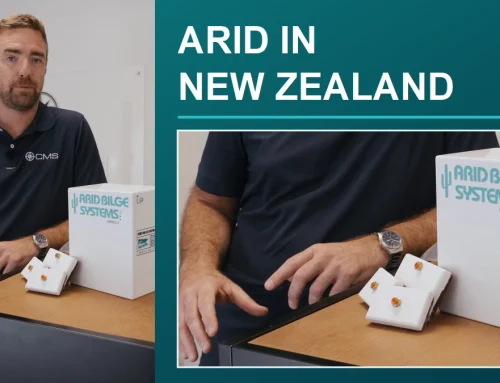
Watch a two-second close-up of standing bilge water to see water and visible residue around a conventional pump.
Boat odor checklist: where to start
Start where the smell is most noticeable, then inspect connected spaces. These checks help organize the search; they do not prove the cause.
- Near a head or shower: check accessible sanitation hoses, connections, drains and the shower sump. A dry main bilge does not establish that these separate areas are clean and dry.
- Near air conditioning: check the condensate pan and its drain for standing water or residue. Follow the equipment manufacturer’s maintenance instructions.
- In a berth or locker: inspect the underside of cushions, stored fabrics and accessible surfaces behind them. Note returning dampness after rain or time with the cabin closed.
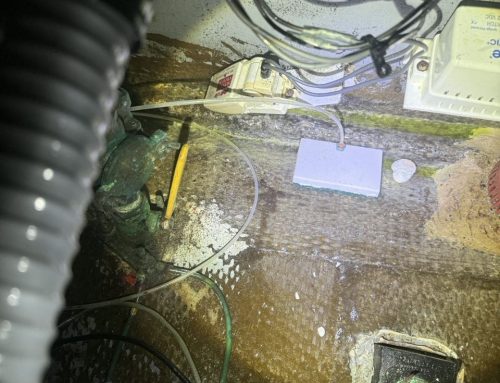
- Beneath the cabin sole: check the main bilge and separate low points. Record whether water returns after a trip, washdown or air-conditioning use. Use the wet-zone inspection guide to map the places the main pump cannot reach.
Why does my boat still smell after cleaning?
Recheck the same locations on the next visit. If the bilge is dry but the smell remains, extend the inspection to drains, sanitation plumbing and damp materials. If water returns, investigate its source before repeating the cleanup. Keep a simple record of the location, recent boat use and dated photographs so a marine service technician can follow the pattern.
For a closer look at this recurring problem, read why a boat still smells after cleaning. It separates residue left behind from new water arriving between visits, with a short checklist to bring to your service technician.
What helps with mildew in a boat cabin?
Mold or mildew in a sailboat or powerboat calls for both moisture control and appropriate cleanup. Check leaks, condensation, damp fabrics and poorly ventilated lockers as well as recurring bilge water. Arid collects residual water at connected pickup locations; it does not clean affected surfaces or remediate existing mold or mildew. Cabin ventilation and other moisture sources need separate attention.
Will a mildew cleaner solve the moisture problem?
A mildew-stain cleaner and a residual-water system address different jobs. Follow the material manufacturer’s cleaning guidance for affected surfaces, then investigate why the area stays damp. Removing liquid at a bilge pickup does not dry every cushion or locker, and cleaning a surface does not repair a leak. Keep the cleanup and moisture-source checks on the same maintenance list.
Why does mold keep returning on my boat?
Recurring growth is a reason to revisit the moisture problem as well as the cleanup. Check the underside of berth cushions, the backs of stored items and accessible locker surfaces for returning dampness. Note whether the area becomes wet after rain, washdowns or air-conditioning use. Cleaning a visible patch does not establish that the surrounding material is dry or that the water source has been fixed.
For a step-by-step record of what becomes damp and when, use our boat mold and moisture inspection guide.
For real boat examples, watch Kevin Wensley of Hylas Yachts discussing residual water, condensation and rainwater (from 3:23) and Chris describing condensation and a powerboat refit. Chris describes additional cleaning and mold remediation. Each installation and maintenance history is different.
Read the full Hylas Yachts builder interview and Captain Chris Zasky’s refit story aboard Divine Intervention for more context on the wet areas and maintenance described in these videos.
Watch a builder explain residual bilge water
The interview starts here at 3:23, when Kevin Wensley turns to the small amounts of water that can remain below deck.
Commissioning rainwater — 3:57
Kevin Wensley, describing the H57 in this interview. Transcript excerpt edited for readability:
This boat’s only just been commissioned, and we were stepping the mast. When it rained, some of the water got in down the mast and got into the main bilges there. I was just checking it out earlier before you came along, and I opened it up — bone dry.
What causes condensation in a boat cabin?
Water can evaporate at ordinary temperatures. Warming can increase evaporation, while ventilation and the layout of connected compartments affect where moisture travels. Condensation may form where humid air reaches a sufficiently cool surface.
If you use a hygrometer, record the location, temperature, relative humidity and whether the cabin is closed or the air conditioning is running. Compare readings under similar conditions and check nearby surfaces for condensation. One cabin reading cannot show whether a hidden locker or bilge compartment is dry. Keep checking the actual wet locations.
Why is there rust or corrosion in the bilge?
Persistent dampness can contribute to corrosion on clamps, fasteners and electrical terminals. Salt, contamination, dissimilar metals and electrical conditions also matter. A drier bilge reduces one source of moisture exposure; it does not eliminate galvanic corrosion, stray-current faults or every cause of equipment failure.
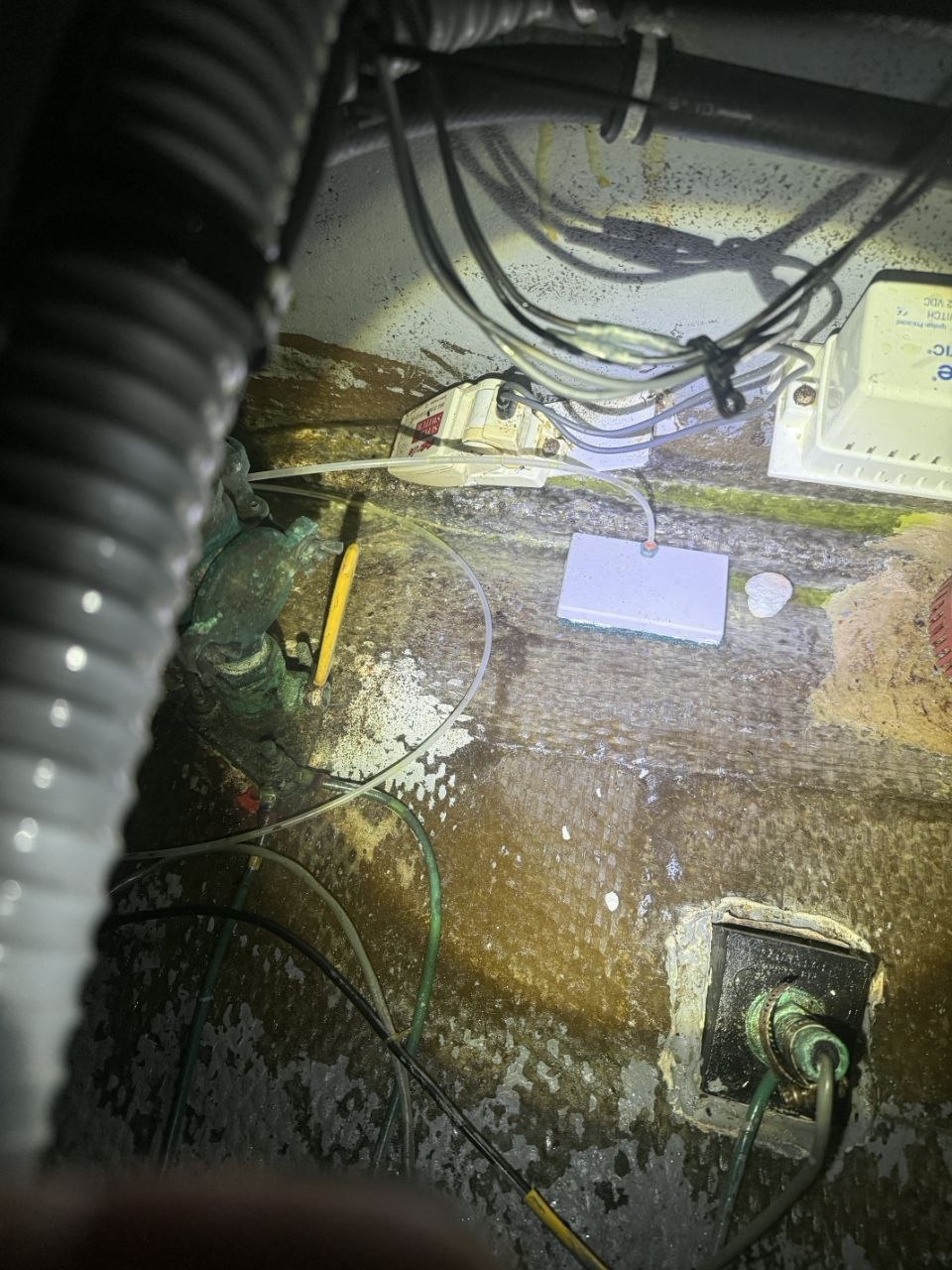
For a useful service record, photograph the affected part and the surrounding wet area separately. Note whether the change is new or returning. Have the fitting, its attachments and any suspected electrical corrosion assessed by the appropriate marine professional; a dry bilge or a cleaned surface does not establish that a component is sound.
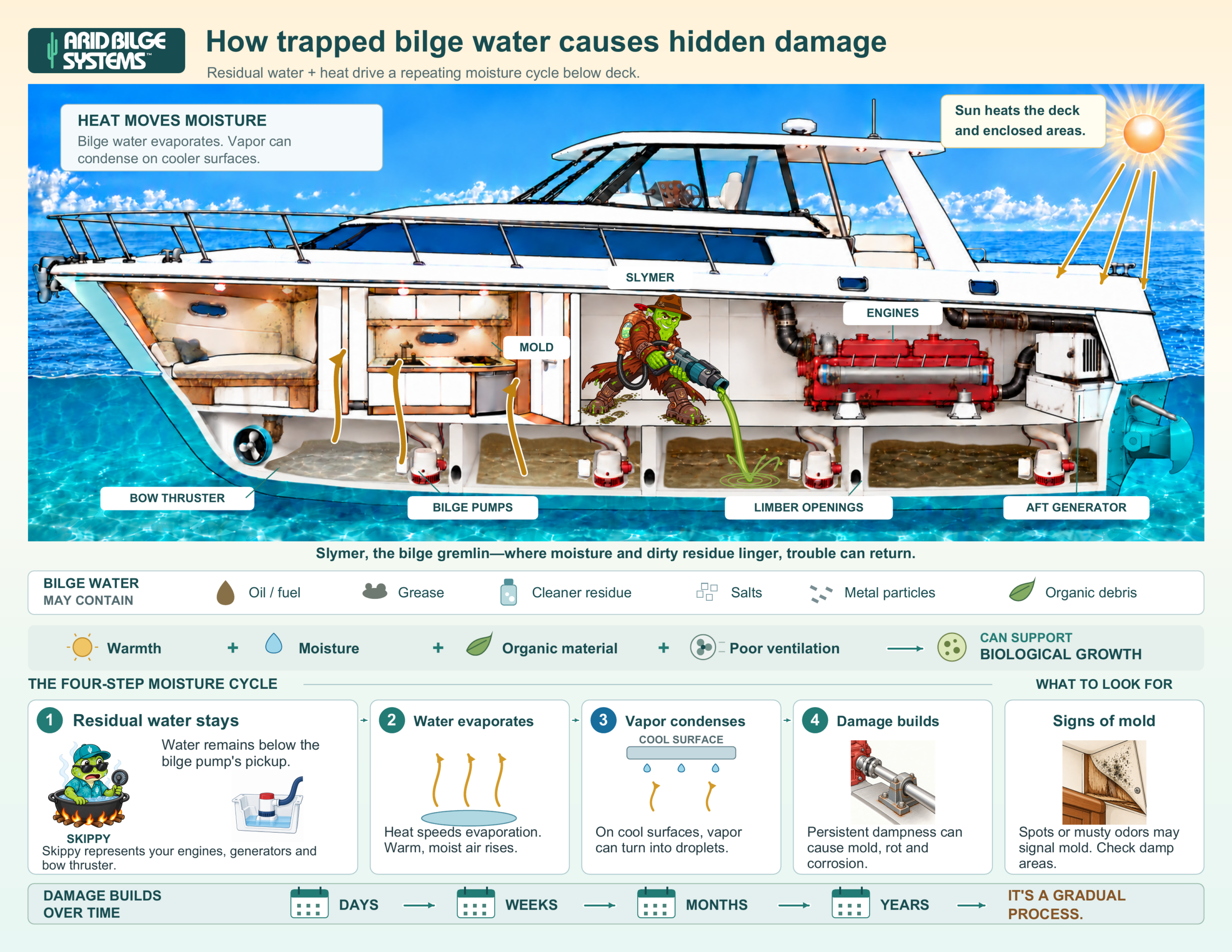
View full size diagram
Why is there rust on my boat’s stainless fittings?
Stainless steel can corrode. Water trapped beneath a fitting can create conditions for crevice corrosion, and brown streaks can be a clue rather than just a cosmetic problem. This can happen around metal hardware on a fiberglass boat too; it is not limited to metal hulls.
Record where staining starts and whether it returns. Have suspect fittings assessed, especially where they carry loads or keep water out of the boat. Cleaning away a stain does not establish that the underlying part is sound. Marine consultant Steve D’Antonio explains the connection between trapped water and stainless-steel staining.
Arid removes residual fluid at connected bilge pickups. It cannot dry every space beneath deck fittings, restore damaged metal or replace inspection and repair.
Different metals need different corrosion checks
For rust or corrosion inside a boat, identify the affected component and its material before choosing a repair. Record what the part does, such as a hose clamp, deck fitting or electrical terminal, and whether its condition has changed. Rust on iron or steel, staining around stainless fittings and corrosion on aluminum do not all call for the same response.
Mercury’s corrosion guidance describes white deposits and surface damage on exposed aluminum. Do not judge the condition of a part from its color alone.
Different metals that are electrically connected and share a conductive liquid can cause galvanic corrosion, which consumes the more active metal. Manufacturer-specified anodes, coatings and electrical protection serve functions that a dry-bilge system does not replace.
Victron explains how faulty or damaged DC installations can add stray currents to a corrosion problem. Suspected electrical damage needs assessment by a qualified marine electrical or corrosion professional.
For the separate concerns of metal hulls and electrical protection, read our metal-hull corrosion guide.
What should I check before treating bilge smell?
- Locate the wet areas. Inspect accessible low points with the boat in its normal floating position. Include compartments away from the main pump.
- Look for a pattern. Note whether water returns after rain, a washdown, air-conditioning use or a trip. Take dated photographs from the same position.
- Inspect the source. Check accessible drains, hoses, fittings and nearby surfaces. Have unexplained water ingress or damaged equipment assessed.
- Clean appropriately. Remove debris and residue using methods suitable for the boat and installed equipment. Arrange appropriate collection or treatment of contaminated fluid.
- Check again. Compare the same locations after cleaning and repairs. Returning water tells you that further investigation is needed.
There is no dependable “days to odor, months to corrosion” timetable for every boat. Temperature, contamination, materials, ventilation and maintenance vary. Use the condition of your own compartments and equipment to guide inspection.
How does automatic residual-water removal help?
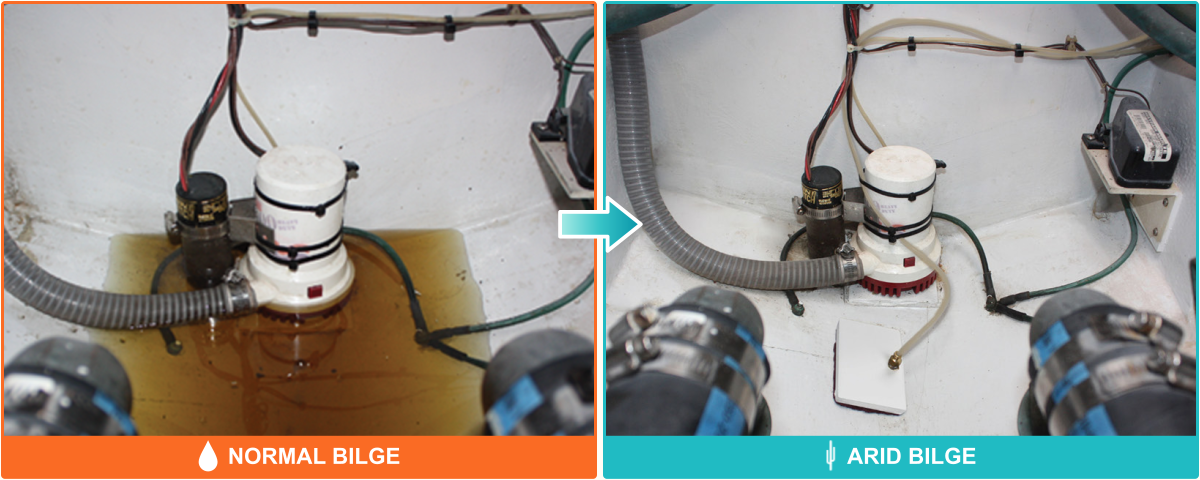
Arid collects residual fluid through pickups at connected low points. Vacuum draws the fluid into a central collection chamber; air pressure then moves it through the discharge arrangement. The model, pickup positions, maintenance and sources of returning water all affect the installation’s results.
Removing recurring standing bilge water can make those locations drier and easier to inspect. It can also make a fresh wet trail easier to notice. The system does not identify or repair the leak, clean the compartment or remove every source of boat odor.
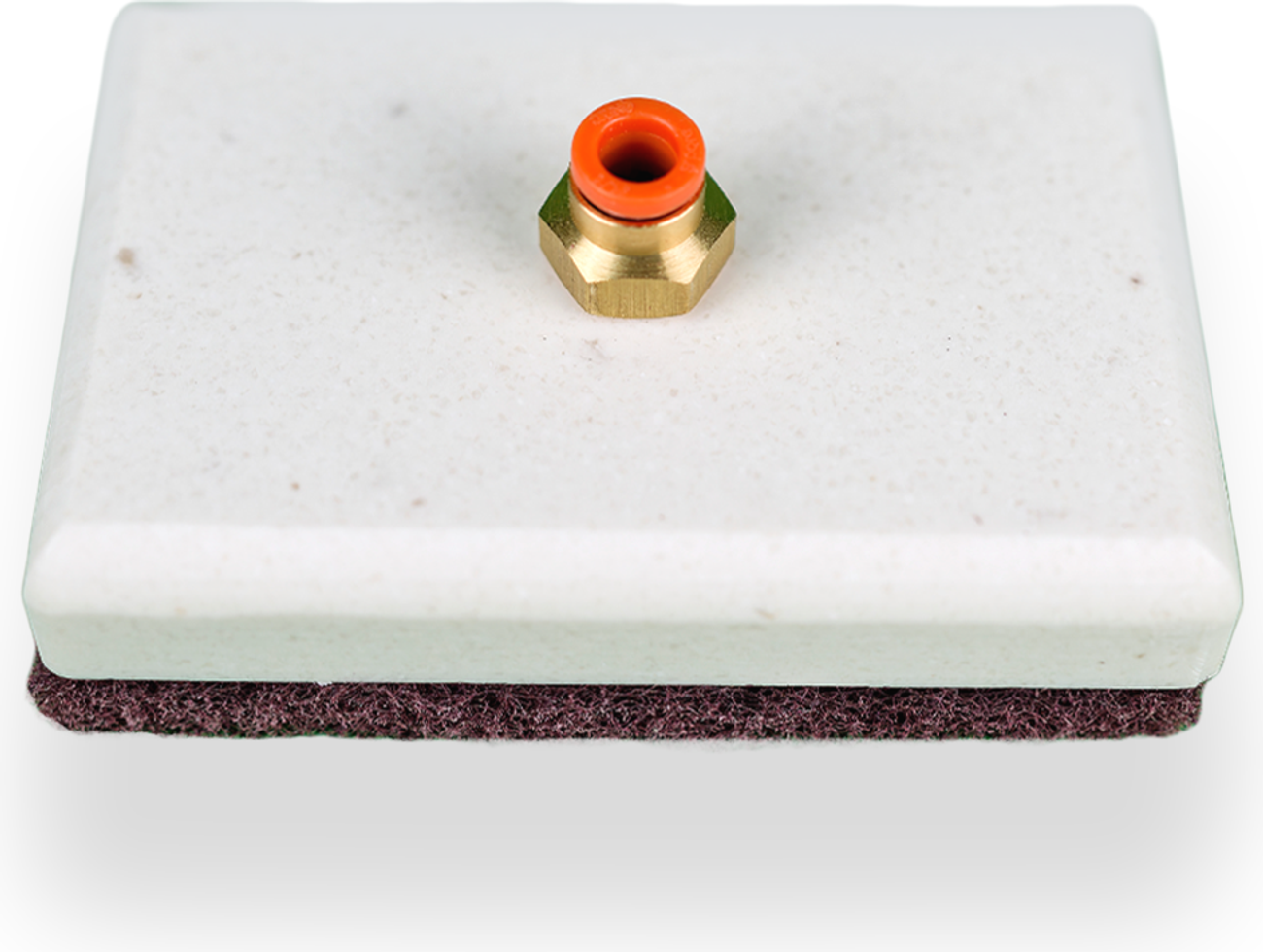
Keep the boat’s specified conventional bilge pumps and alarms operational. Residual-water removal complements their role. Neither a drying system nor an ordinary bilge pump should be assumed capable of controlling flooding from hull damage. Investigate unexpected water ingress promptly.
Moving fluid does not make it clean. Oil, fuel or other contamination still needs appropriate handling. Read our bilge-water care guide and the instructions for your model before changing a maintenance routine.
Which wet locations should I map first?
Map the compartments that stay wet, document what returns and address its source. Then consider whether separate residual-water pickups would help with the pools that remain. The wet-zone guide can help you organize that survey.
See how Arid works. For a visual explanation, follow the water from pickup to discharge. Bring photographs and access notes to an Arid dealer when discussing a system for your boat.
Once you have mapped the wet areas, compare Arid systems for your boat’s wet-zone layout. For a two- or three-zone installation, see the Series 2 selection and installation guidance. Confirm the model’s pickup, tubing and mounting requirements before ordering.
Common questions
Will drying the bilge remove every boat odor?
No. It can help when recurring bilge water contributes to the smell. Sanitation problems, contaminated surfaces, wet fabrics and other moisture sources need their own investigation and care.
Does water below the pump mean the pump is faulty?
Not necessarily. Intake height, control settings, hose routing and compartment layout influence residual water. Check the pump’s instructions and investigate changes in its normal operation.
Does a dry bilge system replace a cabin dehumidifier?
No. Arid collects liquid water through pickups at connected low points. An air dehumidifier removes water vapor from the surrounding air. Removing standing bilge water reduces one potential source of evaporation; it does not set or guarantee cabin relative humidity. Ventilation, leaks, wet materials and condensation still need separate attention.
In the KATINSKY owner interview, Greg describes condensation inside the hull and using a separate dehumidifier alongside Arid. His account illustrates complementary use, not a measured humidity test.
Does a dry bilge prevent all corrosion?
No. Reducing moisture exposure can help, but corrosion also depends on materials, salts, coatings and electrical conditions. Continue the boat’s corrosion-protection and electrical-maintenance checks.
Further reading: BoatUS on finding boat-odor sources and EPA on moisture control and cleaning existing mold. EPA’s guide concerns buildings; it explains general moisture principles, not Arid’s marine performance.
What actually removes bilge odor?
The answer depends on the source. Clean accumulated residue, repair leaks and address sanitation or drainage faults. Then remove residual water from the low points that remain wet. Arid is supplemental, not a replacement for conventional bilge pumps and alarms; removing water does not repair a leak or clean contaminated surfaces.
If an oil sheen is present, investigate its source and handle contaminated fluid appropriately. The Eco-Drain oil-separation guide explains where separation fits, compatible installations and retained-oil maintenance. An oil separator does not repair an oil leak or establish that every discharge is appropriate.
Does bilge drying solve liveaboard moisture throughout the cabin?
No. Arid removes liquid at connected pickups; it does not control cabin relative humidity. For a liveaboard, inspect condensation, damp fabrics, lockers and ventilation as well as the bilge. Record humidity and temperature under comparable conditions, and address the source of returning water. A separate dehumidifier and residual-water system do different jobs.