A strong metal hull still needs attention to the water trapped inside it.
Standing bilge water can contribute to corrosion and conceal damage in hard-to-reach compartments. Removing residual water gives the crew a cleaner baseline for inspection, while corrosion itself still needs a proper diagnosis.
The Buckpasser Experience
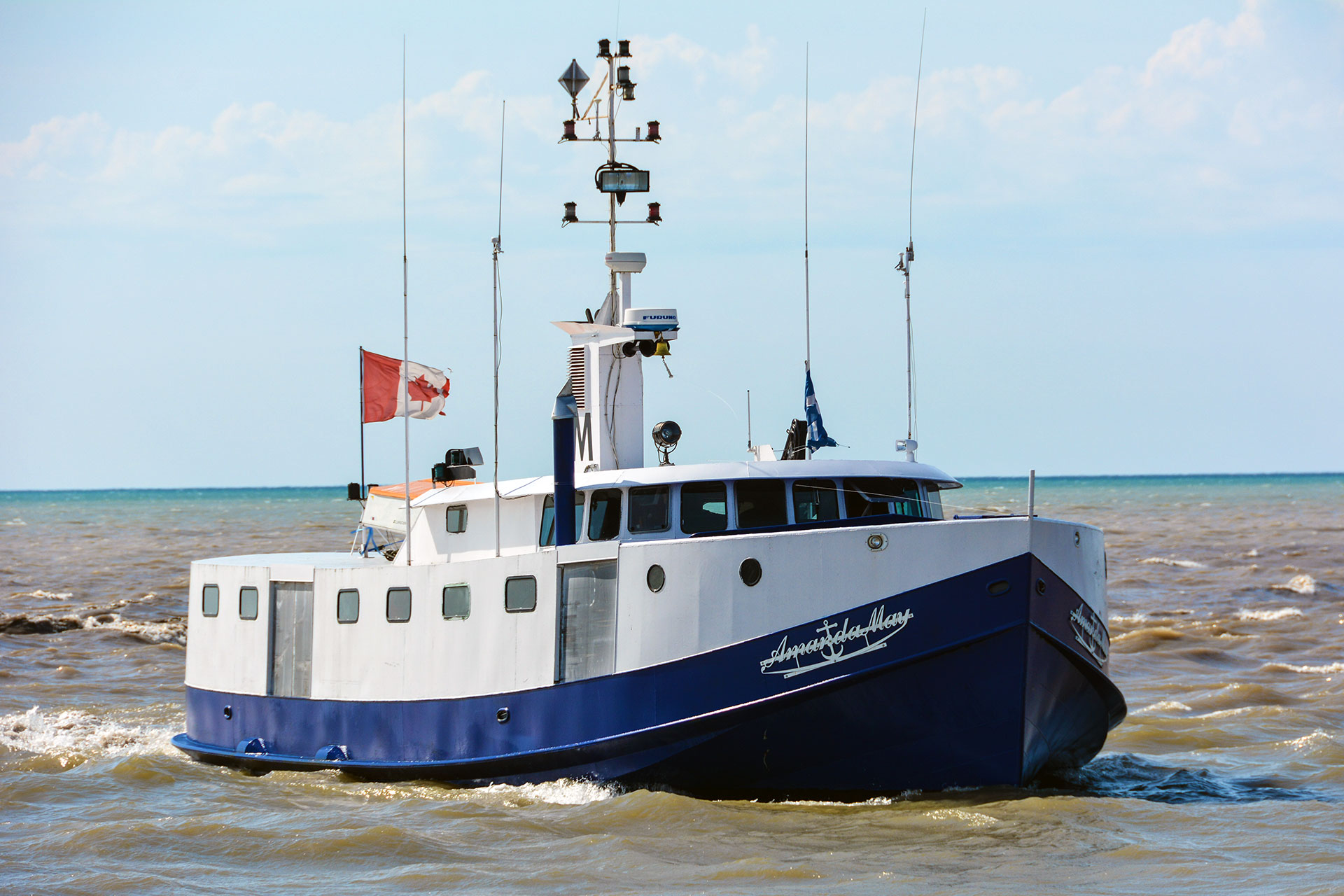
Buckpasser is a 120-foot aluminum motor yacht built in 1985 by Hitachi Zosen. The captain contacted Arid after finding severe pitting and corrosion in areas with stagnant bilge water.
We inspected the vessel at Bradford Marine and recommended an Arid Bilge Series 9 system with nine pickup zones, an Eco-Friendly Discharge Companion and an Eco Alarm System. After installation, the crew reported drier bilge zones and fewer odor issues. The clear-view chamber also gave the captain a way to observe the collected fluid.
A further inspection found a fist-sized cavity beneath a sealed hatch. The reported repair cost was $40,000–$50,000. The case shows why accessible inspection points and routine checks matter: removing standing water cannot repair existing metal loss.
The lazarette also showed widespread corrosion. Automated residual-water removal addressed the standing water there as part of the vessel’s broader maintenance work.
What should I check for aluminum-boat bilge corrosion?
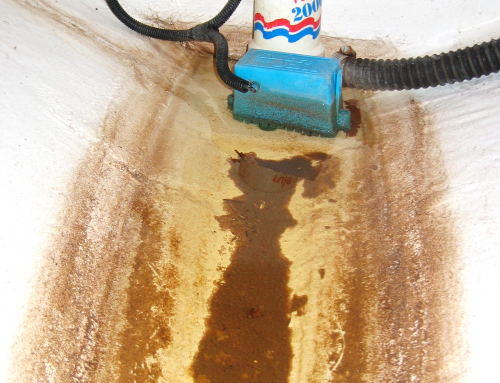
Rust refers to corrosion products of iron or steel. Aluminum can corrode and pit too, but that damage is not iron rust. Record which component and metal are affected; stain color alone does not establish the cause. Our wet-zone inspection guide helps you look for trapped water in nearby compartments. Removing that water does not replace assessment or repair of damaged metal.
- Standing water: note where it collects and whether it returns after removal.
- Pitting or corrosion: have a qualified marine professional assess metal loss and its cause.
- Deposits and staining: record changes so they can be compared at the next inspection.
- Hidden compartments: identify spaces that cannot be checked through existing access points.
Photographs and notes help the crew track a change over time. If corrosion is found, investigate the water source and relevant electrical or material conditions as well as removing the water.
Galvanic corrosion, stray current and ‘electrolysis’
‘Boat electrolysis’ is often used as a broad label; the cause still needs to be identified. Galvanic corrosion occurs when electrically connected, dissimilar metals share an electrically conductive liquid. Stray-current corrosion involves unintended electrical current, such as current from a damaged DC installation. These mechanisms need their own inspection and protection; see Victron’s explanation of marine electrical corrosion.
Removing standing bilge water can reduce one source of moisture exposure and make wet trails easier to inspect. It does not repair wiring faults, replace anodes or restore damaged metal. Unexplained pitting or rapid metal loss calls for a qualified marine assessment.
For cabin humidity and condensation, see how standing bilge water contributes to moisture damage.
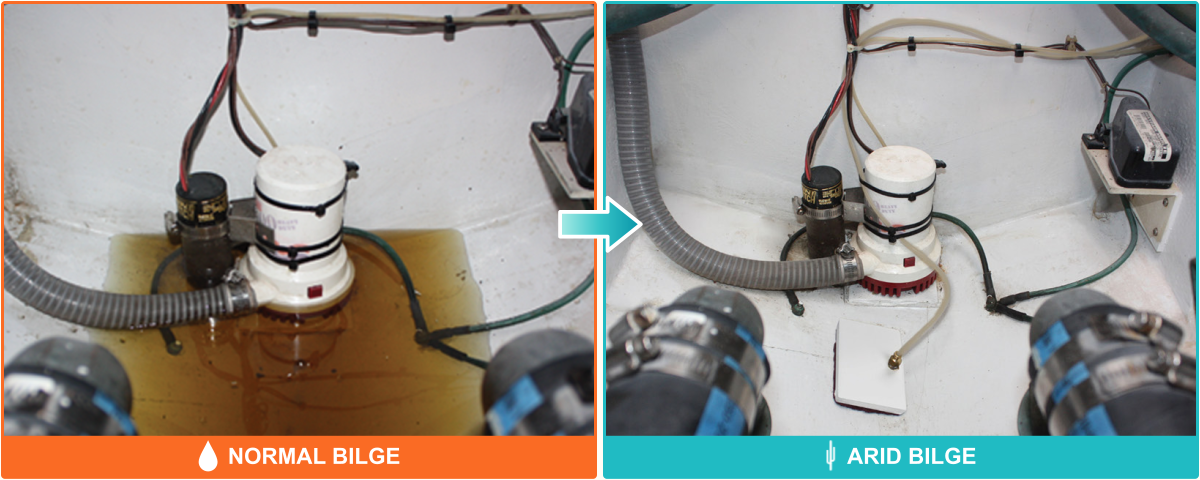
Before and after: seeing the pickup at work
Where a Dry Bilge System Helps
Arid uses a centralized vacuum system to remove residual water from connected pickup zones. It works alongside conventional bilge pumps, which remain essential for handling larger volumes of water.
By reducing standing water in those zones, the system can make machinery spaces easier to inspect and help limit one source of moisture below deck. The discharge and alarm equipment should be selected for the vessel and maintained according to its instructions.
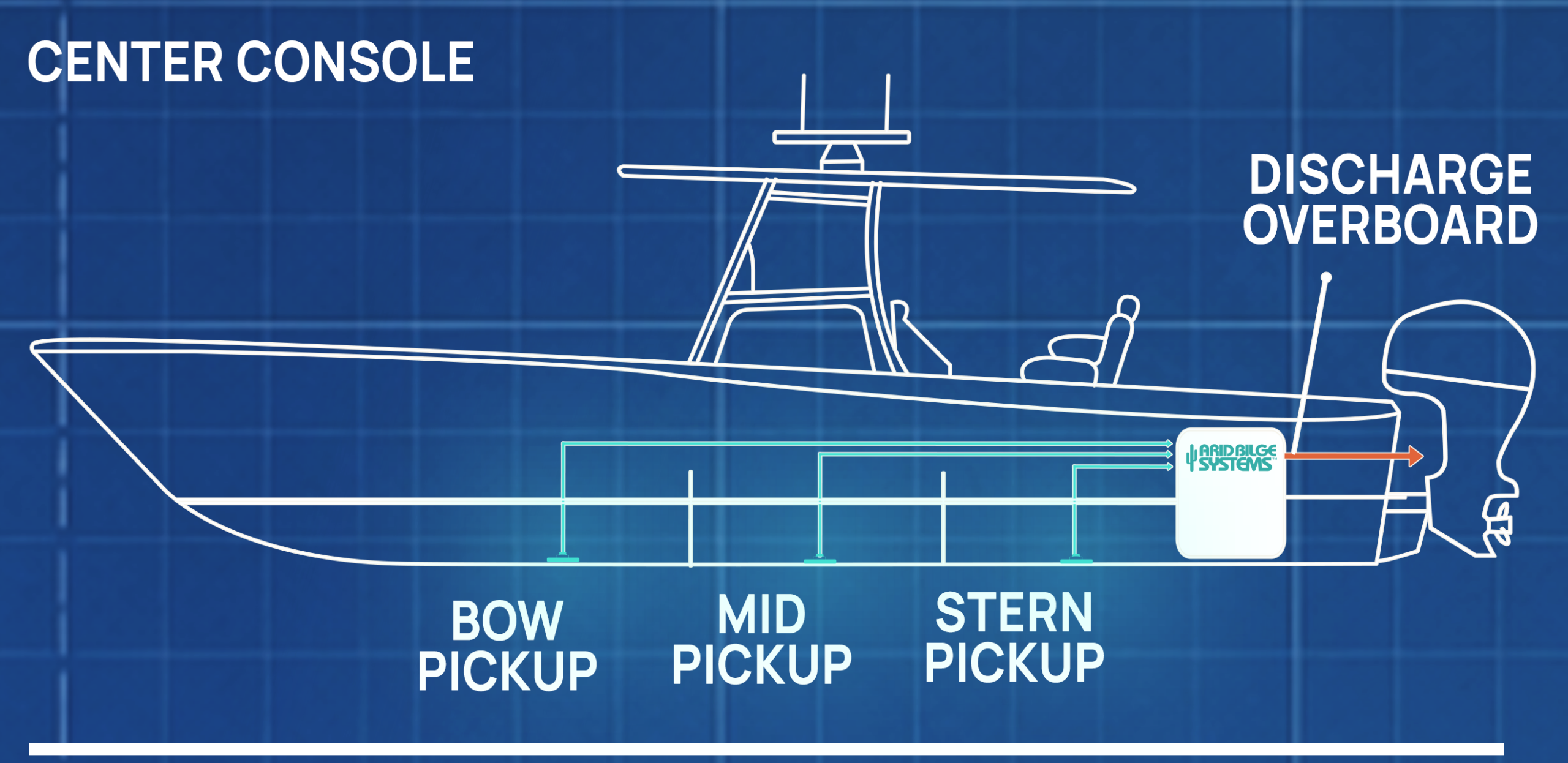
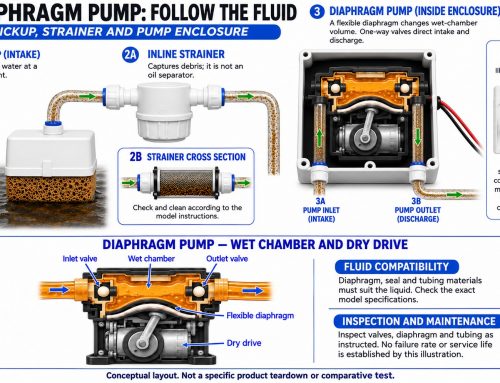
- Collect: vacuum draws residual water through the pickup and intake tubing into the collection chamber.
- Discharge: air pressure moves collected liquid from the chamber through the discharge line.
- Check connected zones: the system follows its model-specific operating sequence. The compressor moves air; bilge liquid follows the collection and discharge path.
For a builder perspective, read Rozema Boat Works: dry bilges for aluminum boats.
Why builders choose Arid: explore the benefits for builders and owners, and read our boat-building story.
Build It into the Maintenance Routine
- Check the hull’s accessible internal surfaces regularly.
- Keep pickups clean and confirm that water reaches them.
- Investigate recurring water, new staining and changes in system activity.
- Have existing corrosion assessed and repaired; drying the bilge does not reverse damage.
On metal-hulled yachts, residual-water control is one part of the maintenance plan. Sound electrical systems, appropriate corrosion protection and regular inspections remain important.
Plan a dry bilge system for your aluminum boat
For an aluminum boat, choose a dry bilge system around the low points that stay wet after ordinary pumping. Map each compartment, confirm that water can reach its pickup, and plan accessible tubing and equipment. Arid removes residual water at connected pickups while the boat’s conventional bilge pumps remain in service.
- Photograph the wet areas. Include the surrounding frames, bulkheads and access openings. Separate pockets may need separate pickups, even when they are close together.
- Plan for installation and maintenance. Check the selected model’s intake count, electrical supply, mounting space and tubing limits against its installation manual. Leave access to inspect and clean the pickups.
- Assess the metal separately. Have existing pitting or corrosion investigated. Drying helps expose surfaces for inspection; it does not restore lost metal or correct electrical faults.
Use our dry bilge installation preparation guide to gather the layout and measurements. See how Arid collects and discharges residual water, then ask Arid to review your aluminum boat’s pickup plan or call 954-478-7066.