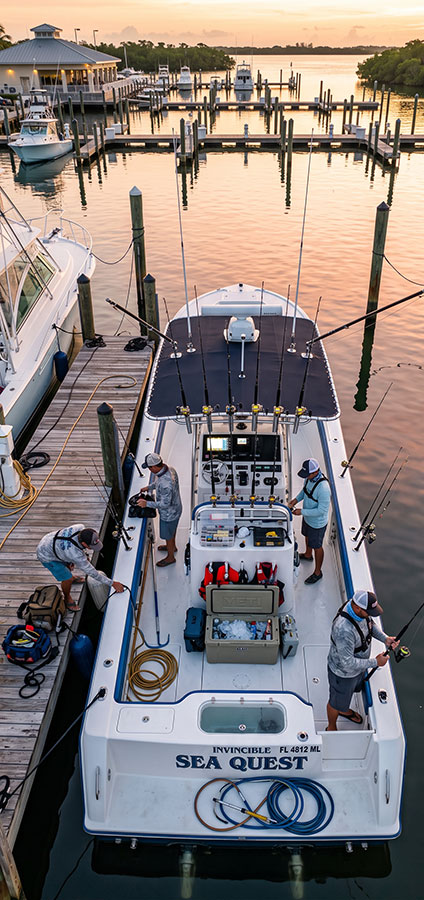
Center consoles are built to be used hard.
They run offshore, fish in rough water, sit at the dock, get rinsed down constantly, and often carry a serious amount of equipment in a compact footprint. Even though many center consoles are designed to be simple, open, and easy to maintain, they still have one hidden area that owners often overlook:
…The Bilge
That is why dry bilge protection matters on center consoles.
An Arid Bilge System helps remove the residual water that traditional bilge pumps leave behind, keeping the boat cleaner, drier, fresher, and easier to inspect.
Center Consoles Still Have Wet Zones
Many boat owners think of center consoles as simple boats.
Compared to larger yachts, they may not have full engine rooms, cabins, generators, or complex mechanical spaces. But that does not mean they are free from moisture problems.
These may include:
- Aft bilge areas
- Forward bilge pockets
- Anchor locker drainage areas
- Console compartments
- Rigging tunnels
- Fish box drain areas
- Livewell plumbing areas
- Under-deck compartments
- Machinery or pump spaces
- Areas around batteries, pumps, hoses, and fittings
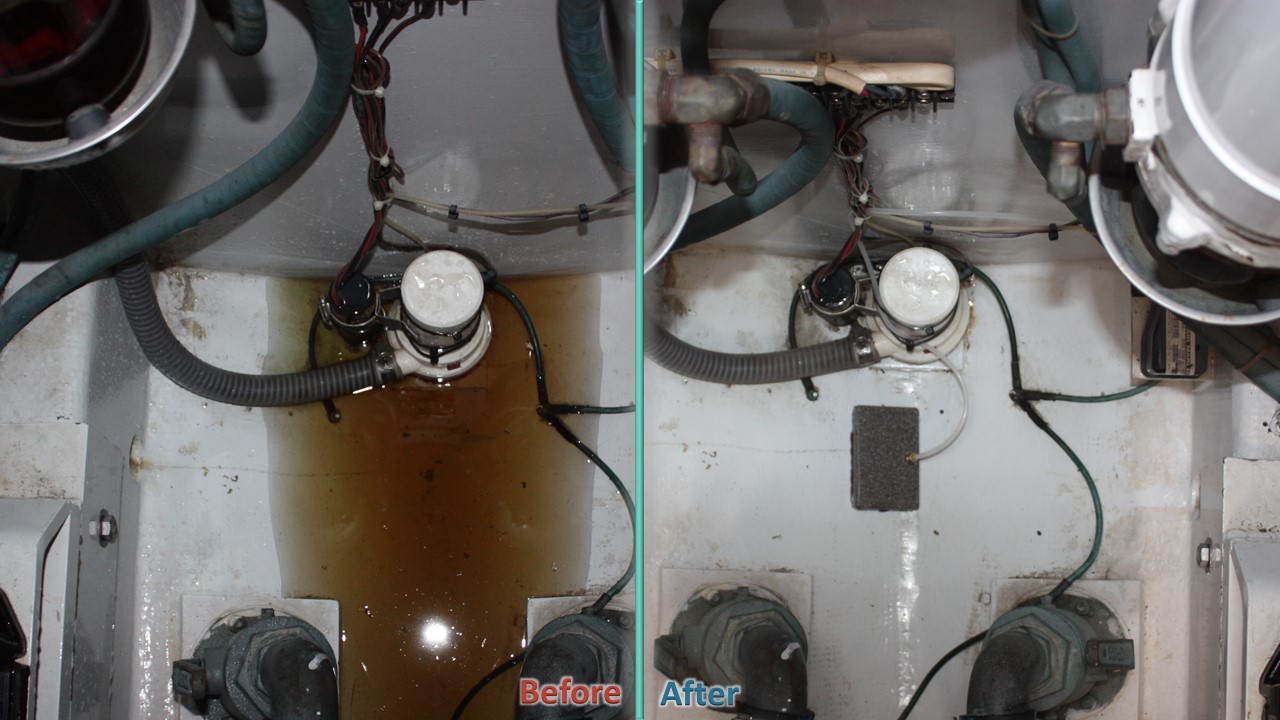
Some of these areas are easy to see. Others are hidden below deck or behind access panels. The issue is not always large amounts of water. The bigger problem is often the small amount of residual water that never fully leaves the boat.
Bilge Pumps Are Important, But They Do Not Finish the Job
A traditional bilge pump is an emergency water removal device.
It is designed to activate when water rises high enough to trigger the float switch. When that happens, the pump moves water out of the boat.
That is important. Every boat still needs properly working bilge pumps.
But bilge pumps are not designed to remove the last small amount of water from the bottom of the bilge.
They usually leave residual water behind because the pump sits above the true low point, the float switch needs a certain water level to activate, and the bilge shape may prevent all the water from reaching the pump.
On a center console, that leftover water can sit under the deck, around pumps, near wiring, beneath batteries, or in hidden compartments.
Arid is designed to remove that leftover water.
The bilge pump handles emergency water.
Why Center Consoles Need Dry Bilge Protection
- Musty odor
- Corrosion on clamps and fittings
- Rust on hardware
- Moisture around electrical connections
- Mold and mildew conditions
- Premature aging of pumps and components
- Dirty bilge conditions
- Harder service inspections
- Reduced owner confidence when hatches are opened
The Aft Bilge Is Usually Only Part of the Story
Most center console owners think first about the aft bilge.
That makes sense. The aft bilge is where water often collects, where the bilge pump is usually located, and where many pumps, plumbing connections, and drains are found.
But the aft bilge may not be the only wet zone.
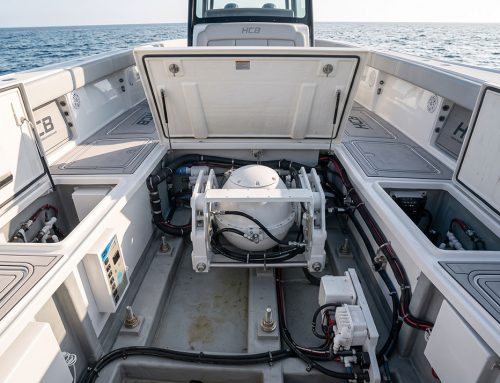
Water can also collect forward, midship, inside rigging tunnels, beneath deck compartments, or around drains and plumbing. A boat may have water sitting in several different areas even when the main bilge pump area looks normal.
This is why a center console should be evaluated by wet zones, not just by boat length.
A smaller center console may only need one pickup. A larger center console may need two or three. A premium offshore center console may benefit from even more coverage depending on the layout.
Matching the Right Arid System to the Boat
The right system depends on the number of wet zones.
A Series 1 may be the right fit for a smaller center console with one primary wet zone, usually in the aft bilge area.
A Series 2 may be the right fit for a center console with two or three wet zones, such as an aft bilge, forward compartment, and console or midship area.
A Series 4 may be used on larger center consoles or more complex installations where several low points need to be managed separately.
The goal is not to oversell the system. The goal is to match the system to the boat.
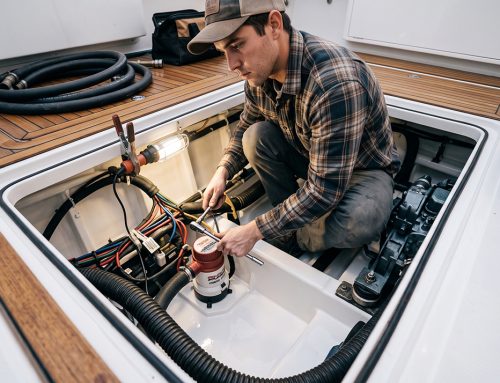
The installer should walk the vessel, identify where fluid naturally collects, and choose the system that covers those zones properly.
Pickup Placement Matters
The pickup is what actually removes the water.
For a center console, pickup placement is critical because the lowest point may not always be where the bilge pump is located.
A bilge pump may be positioned for emergency water removal, but the last small amount of water may sit somewhere else. That is where the Arid pickup should go.
- The aft bilge low point
- A forward bilge pocket
- A V-bottom channel
- A midship low point
- A console compartment low area
- A drain collection area
- A rigging tunnel low spot
- A hidden under-deck pocket
A Cleaner Bilge Makes Service Easier
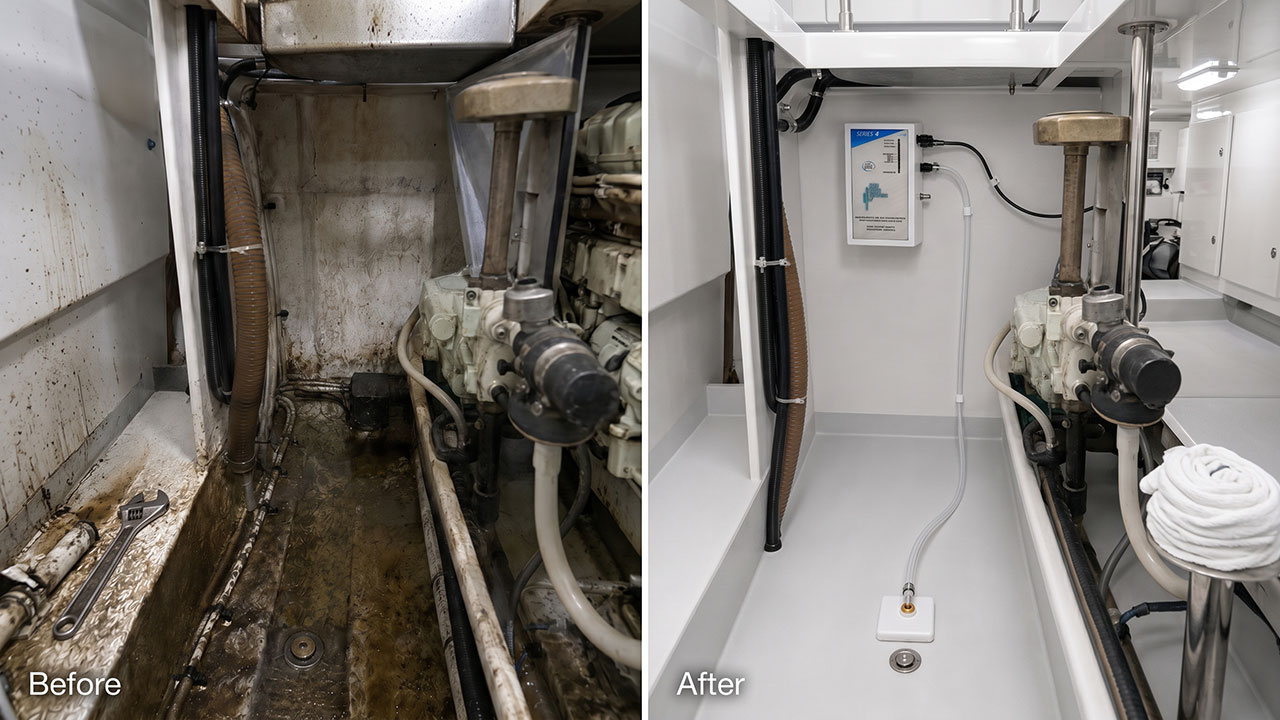
One of the biggest advantages of a dry bilge is visibility.
When a bilge is already wet, small problems are easier to miss. A slow leak, loose fitting, drain issue, or plumbing problem can blend into the water that is already sitting there.
When the bilge is normally dry, new water becomes easier to notice.
That can help owners, captains, and technicians identify issues sooner.
On center consoles, this can be especially useful because so many systems are packed into tight below-deck spaces. A dry bilge makes it easier to inspect pumps, hoses, clamps, fittings, batteries, wiring, and drains.
Dry Bilges Help Protect Electrical and Mechanical Components
Modern center consoles carry more equipment than ever.
Moisture below deck can create a harsh environment around those components.
Saltwater, humidity, and standing bilge water can contribute to corrosion on terminals, clamps, fasteners, fittings, and brackets. Over time, that environment can make service more difficult and increase the chance of avoidable maintenance issues.
A dry bilge helps reduce that moisture exposure.
It does not replace proper electrical installation, sealed connections, maintenance, or inspection. But it supports a cleaner environment around the systems that keep the boat running.
Better Owner Experience
A center console is supposed to feel clean, capable, and ready.
Owners notice when they open a hatch and see standing water, brown residue, odor, slime, or corrosion. Even if the boat runs perfectly, a wet bilge can make the vessel feel neglected.
A dry bilge changes that impression.
When the bilge is clean and dry, the boat feels better maintained. The owner has more confidence. The dealer has a stronger story. The builder has a cleaner premium option to offer.
Below-deck cleanliness supports that experience.
Center Consoles Get Washed Down Constantly
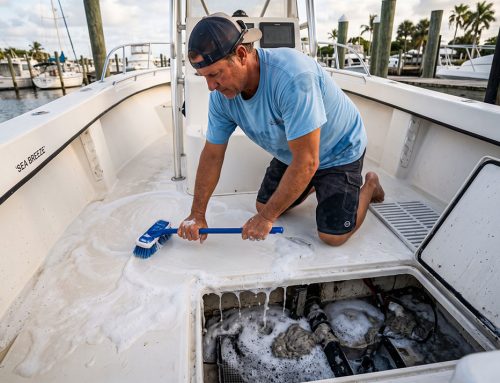
Center consoles are often rinsed after every trip.
That is good maintenance, but all that water has to go somewhere.
Deck washdowns, rainwater, fish box drainage, livewell overflow, and cleaning water can all contribute to moisture below deck.
The key is to use smart washdown habits.
During heavy soap washdowns, the Arid system should be turned off at the breaker so excessive foam does not enter the system. After the bulk soapy water has been cleared and the boat has been rinsed thoroughly, the Arid system can be turned back on to finish drying the remaining residual water.
Simple habits like this help protect the system and keep the boat cleaner.
A Strong Upgrade for Premium Center Consoles
Dry bilge protection is especially valuable on premium center consoles.
These boats are no longer simple fishing platforms. Many are high-end, highly finished, expensive vessels with advanced systems, beautiful hardware, serious electronics, and yacht-level expectations.
Owners expect the boat to look and feel premium everywhere, not just above deck.
That includes the bilge.
A dry bilge system helps support that premium experience by reducing standing water, improving cleanliness, helping control odor, and making below-deck inspection easier.
For builders and dealers, Arid is a strong upgrade because it is easy to explain:
Bilge pumps are for emergency water. Arid is for keeping the boat dry every day.
Final Takeaway
Center consoles may be open, rugged, and easy to use, but they still have hidden wet zones below deck.
An Arid Bilge System helps remove that leftover water from the places where it actually collects.
For center console owners, that means a cleaner bilge, a fresher boat, easier inspections, and better long-term protection.
It belongs on serious center consoles too.
Arid Bilge Systems — Dry. Fresh. Protected.