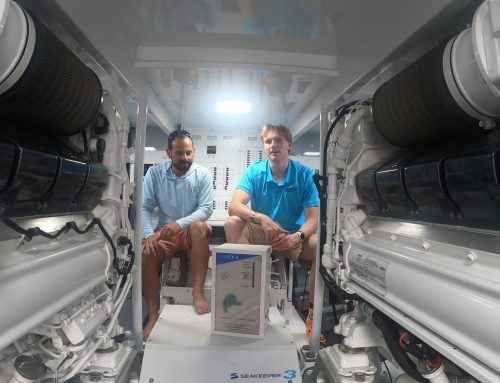
A cruising yacht is also a place to live. The cabins and salon get most of the attention, but the compartments beneath them deserve a place in the conversation. Arid supplies Hylas Yachts, and Kevin Wensley’s interview with Alfred Baurley aboard an H57 explains that relationship through the practical details of life below deck.
The Bill Dixon-designed Hylas H57 is a bluewater sailing yacht with interior customization among the builder’s priorities. For an owner planning extended time aboard, the equipment behind that interior matters alongside the layout itself: where it operates, which spaces it serves and how it can be maintained.
Small amounts of water still need a plan
Wensley gives a specific example from commissioning: rain entered while the mast was being stepped. He says the compartment was dry when he checked it before the interview. He also discusses water returning through bilge-pump plumbing after a pump stops. These are observations about the yacht and installation being discussed, rather than a promise that water can never enter a Hylas.
Arid’s role is to remove residual water alongside the yacht’s conventional bilge pumps. The collection and discharge cycle explains how low-point pickups serve a central unit. Investigating a new leak and caring for existing pumps remain part of owning the boat.
Fit the equipment around the living space
On the installation Wensley describes, the central unit sits in the insulated engine compartment. He explains that this keeps operating noise away from the living area. Collection points serve the main bilge below the salon and an aft area near the steering equipment.
That is useful information to carry into a handover. Ask to see each pickup, follow its tubing route and identify the access needed for cleaning and service. Keep that map with the installed model’s manual. It gives the next person caring for the yacht something more useful than a general instruction to check the bilge.
See the water-routing animation
This silent animation shows pickups in separate low areas connected by tubing to a central Arid unit, with collected water moving through a discharge line.
Carry the layout into the ownership conversation
Before agreeing an installation, walk through the boat with the people who will maintain it. Can the unit be reached without dismantling unrelated fittings? Which floor panels reveal the collection points? Where will electrical specifications and service instructions be kept?
The boats differ, but the placement question also appears in our Midnight Express conversation with Eric Glaser. Our Albemarle conversation with Keith Privott considers the care given to finished bilge spaces. On the H57, Wensley makes the placement question personal: the machinery has to work within a yacht that people sail, clean and live aboard.
Edited interview highlights from Hylas Yachts
This summary draws on the conversation aboard the H57. Watch the video above for the complete interview.
The small amount a bilge pump leaves behind
Wensley describes a yacht designed to stay dry, while acknowledging that some water still reaches the bilge. His example is rain entering while the mast was being stepped during commissioning. When he checked the compartment before the interview, he found it dry.
The discussion also covers water that can return from bilge-pump plumbing after a pump stops. For Wensley, removing that residual water is part of keeping the spaces below deck pleasant to use. He connects the condition of those compartments with the smell and overall feel of the yacht.
Place equipment around the way people live aboard
On this installation, the central Arid unit sits in the insulated engine compartment. Wensley explains that the placement keeps operating noise away from the living space. He describes pickups serving the main bilge beneath the salon and an aft area near the steering equipment.
Those details make the installation concrete: a central unit needs a suitable location, and the collection points need to reach the areas where water remains. Access for inspection and service belongs in that planning, too.
Installation support and electrical planning
Wensley speaks positively about communication between Arid, the Hylas factory and the service team. He describes support with installation details and questions from owners, alongside the wider service relationship Hylas maintains with its customers.
The conversation also touches on electrical demand and the resources available aboard a sailing yacht. Those comments concern the equipment discussed in this interview. Use the manual for the installed model when checking current electrical specifications and maintenance requirements.
The recurring point is comfort backed by practical details: where water collects, where equipment is fitted and how the people caring for the yacht can reach it.
Why builders choose Arid: explore the benefits for builders and owners, and read our boat-building story.