
Overlooked Wet Zones & How To Never Miss Them Again
Ask most owners where water collects on their boat, and they will usually point to the engine room or the bilge area beneath the floor. That is the obvious answer, but it is only part of the problem.
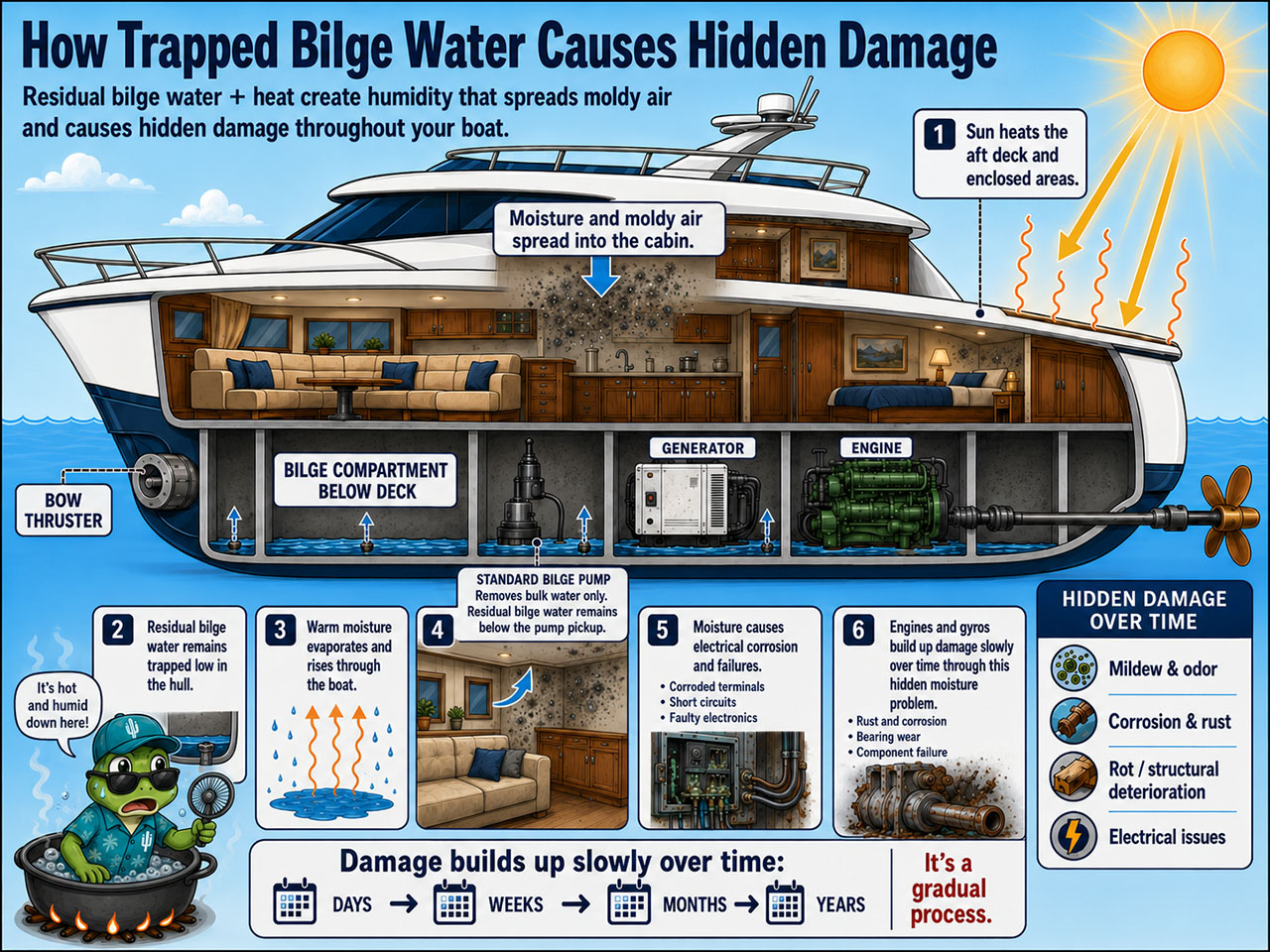
Water collects anywhere gravity sends it and nothing carries it away. On a modern boat, that often means small, hard-to-reach spaces that can hold moisture for months without anyone noticing. These areas are worth identifying because they can create the same odor, humidity, corrosion, and service issues as the main bilge. They are simply harder to see and harder to trace.
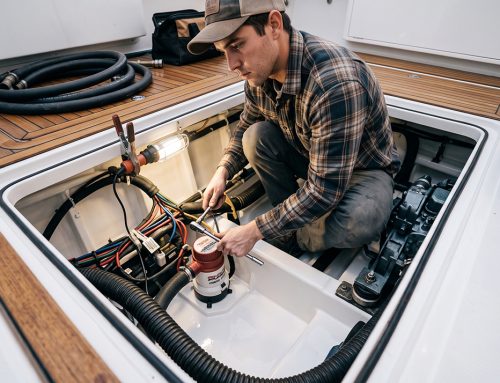
This is where an Arid Bilge System goes beyond a standard bilge pump. Instead of only reacting to larger amounts of water at the main bilge pump location, Arid is designed to remove residual water from the small wet zones traditional pumps leave behind.
Air Conditioning Drip Pans
An air conditioning unit pulls humidity out of the cabin air, and that condensate has to land somewhere. The drip pan catches it. On a hot, humid day, the unit can produce water steadily for hours, and the pan sits in a warm, enclosed space with limited airflow.
That creates a small standing pool that may never fully dry. It evaporates, raises the humidity around it, and condenses on cooler nearby surfaces. The pan is doing its job. It simply has no way to remove that water from the boat by itself.
Shower Sumps
A shower sump collects gray water and holds it until a pump clears it. What the pump does not fully clear is the residue at the bottom, and that residue is not clean water. It can contain soap, hair, organic material, and other contaminants.
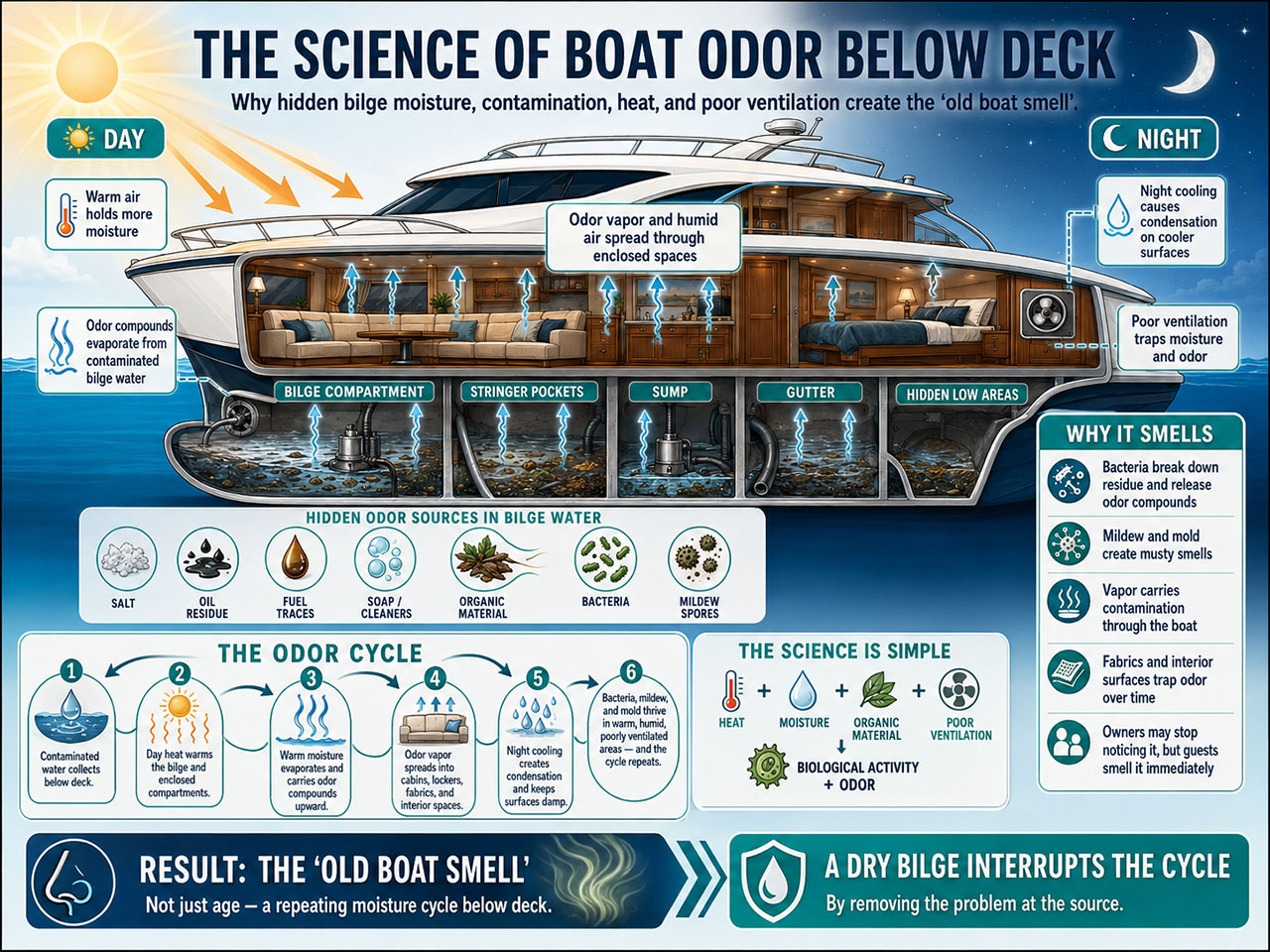
In a warm, enclosed box, that mixture can become a source of odor. Owners may chase a smell around the head for weeks before realizing the source may be the shower sump itself.
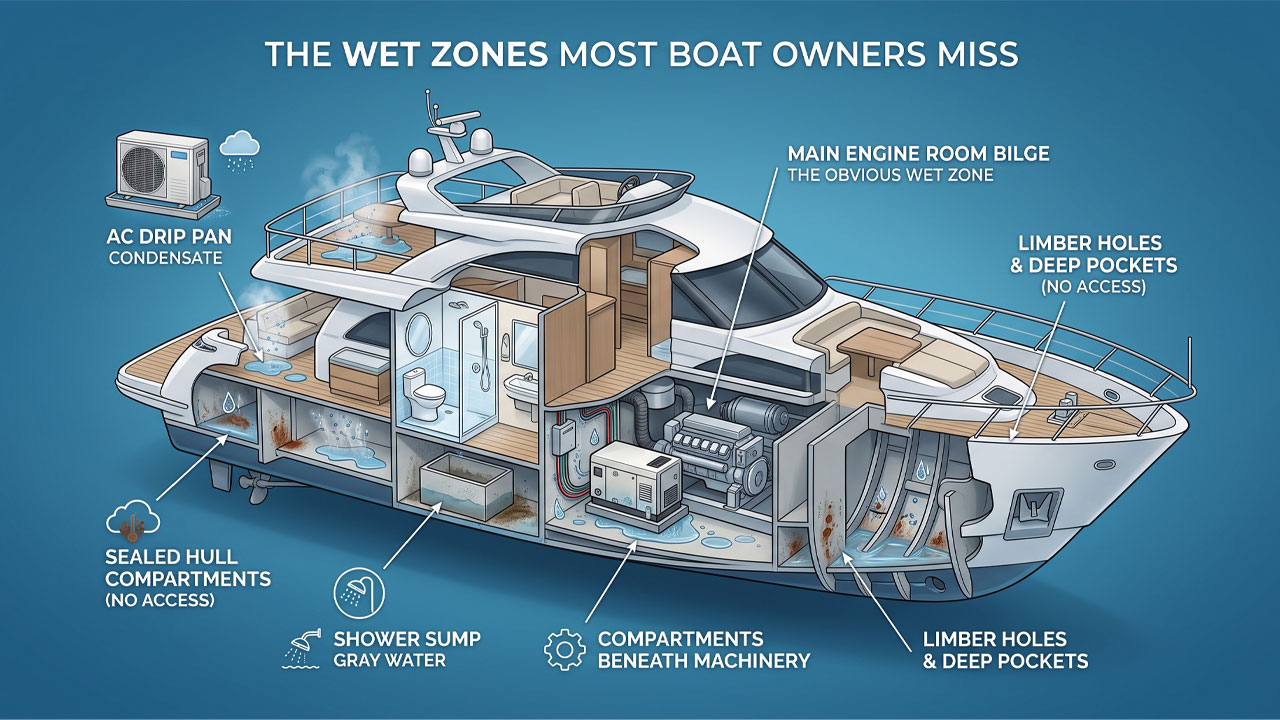
Limber Holes And Deep Pockets
Limber holes allow water to migrate between compartments toward a low point. They work, but they often work slowly. Water travels through them at its own pace, which means a compartment can hold moisture for a long time even though it is technically draining.
Deep pockets can be even more difficult. A narrow, deep space that a hand cannot reach and a wet-vac hose cannot sit in properly may simply hold whatever water finds its way there.
Compartments Beneath Machinery
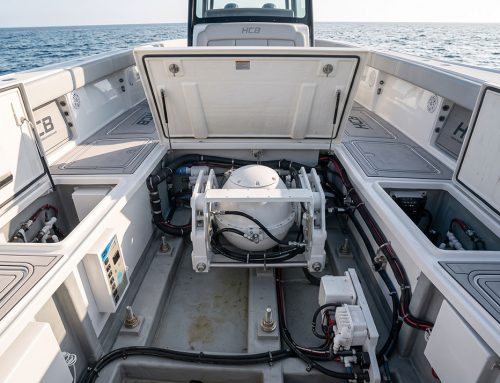
Generators, thrusters, pumps, gyros, and other equipment are often mounted where they fit, and the space beneath them is rarely designed for easy inspection. Water can settle there and sit directly beneath expensive equipment in a warm space with poor airflow.
In some cases, bilge water can physically travel or splash toward equipment, such as generators or machinery in aft compartments. More often, the exposure is environmental rather than direct. Damp, salty air surrounds the component day after day, accelerating wear and aging the area before its time.
Sealed Compartments With No Hatch
This is one of the most important wet-zone problems because nobody can inspect what they cannot access. Some compartments are closed up during the build with no access hatch. Water can enter, remain trapped, and go unnoticed for years.
On metal hulls, trapped moisture can contribute to serious internal corrosion. On any hull, the first sign of trouble is often the expensive one.
Why Do The Small Wet Zones Still Matter
None of these areas may hold much water. That is exactly why they get ignored.
The problem is that the amount of water does not drive the damage. The cycle does.
Heat builds in a closed compartment. Standing water evaporates. The vapor spreads and reaches a cooler surface. Then it condenses there. Wiring, engine blocks, brackets, fasteners, and the underside of hatches can all become collection points.
The next warm day, the cycle starts again. A small amount of water in a drip pan, sump, pocket, or closed compartment can keep that moisture cycle going over and over.
Finding Your Boat’s Wet Zone
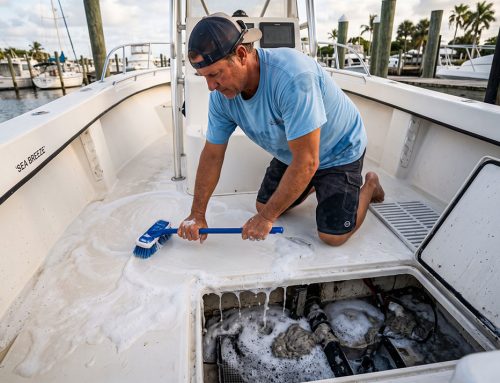
The practical move is to walk the boat while it is floating normally. Do not only inspect it in dry dock or while major equipment is removed, because water may collect differently when the boat is sitting in its normal position.
Look for standing water, damp areas, staining, residue, or waterline marks that show where water regularly sits. Each spot you find is a wet zone.
The number of wet zones, not just the length of the boat, helps determine what type of dry bilge system the boat actually needs. Each wet zone may also require a pickup style that matches the shape of the compartment.
Next Step
Once you know where your wet zones are, the next question is what goes in each one.
Our pickup guide walks through how to match the correct pickup style to the shape of the compartment, the available space, and the way water naturally collects in that area.