Lift a hatch after a bilge pump finishes and you may still find water sitting in a low corner. That small pool is where this story begins.
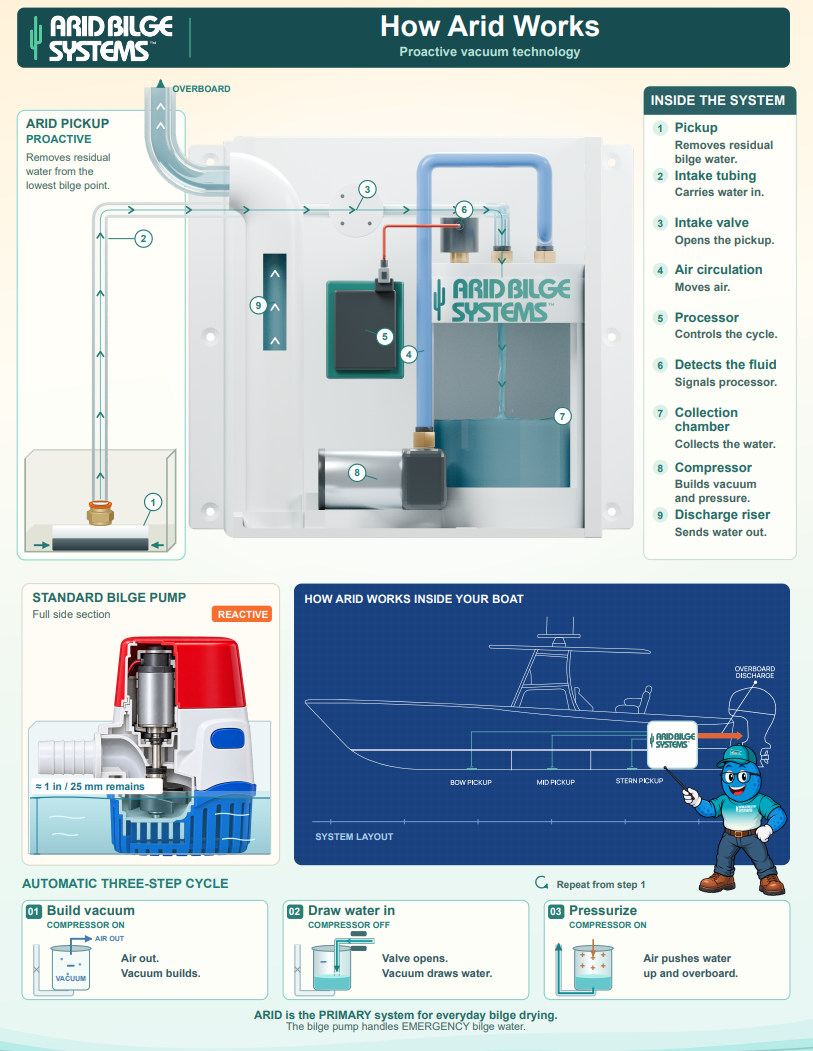
Our DRYVER animation follows residual water from the pickup to the central Arid system. Paired with the How Arid Works illustration, it answers a practical question: what happens between the wet spot and the discharge line?
Start where the water collects
A boat can have several separate low points. Water near the bow may collect somewhere different from water in the stern or machinery space. A pickup has to serve the area where that residual fluid gathers.
That is why the first step is understanding the boat’s wet areas. The aim is to collect the water left behind after ordinary bilge pumping, including water in places that are awkward to reach with a sponge or wet vacuum.
Vacuum brings the fluid in
Arid creates a vacuum inside its collection chamber. That vacuum draws residual fluid through the installed pickups and tubing to the central unit. The animation makes the route easy to follow: a low point, a pickup and a path back to the system.
The compressor handles air, while the collection chamber receives the bilge fluid. Fluid does not pass through the air compressor. This separation is part of the operating approach shown in our illustration.
Air pressure moves the collected fluid out
After collection, the system uses air pressure to move the fluid through the discharge line. Vacuum brings fluid into the chamber; pressure moves it onward. Automatic control manages that process.
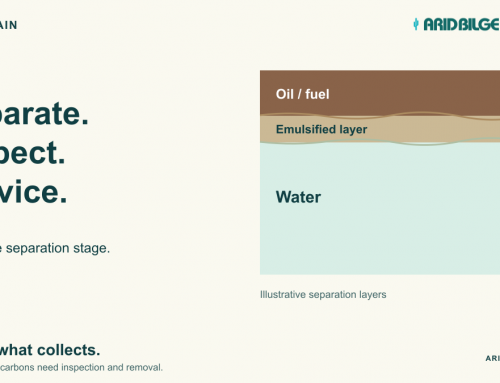
There is an important distinction at the outlet: moving bilge fluid does not clean it. Fluid can contain oil, salt, dirt or other residues. Contaminated fluid still needs appropriate collection or treatment; the drying process should never be mistaken for oil separation.
A clearer picture of everyday bilge care
Removing standing water addresses one source of persistent moisture below deck. It can also leave a low point easier to inspect when water appears again. Finding that water still calls for attention to its source, along with normal cleaning, pickup checks and maintenance.
Arid handles everyday residual-fluid removal. Keep the boat’s standard bilge pumps for emergency water removal. Follow the operating and maintenance instructions for the installed system.
The illustration and animation are conceptual views of the fluid route. They are not an installation drawing for every vessel.
Watch DRYVER follow the water through the system, then take a look at how Arid works. If water keeps collecting on your boat, find an Arid dealer and start with the location of those wet areas.
For the vertical cut, watch DRYVER’s residual-water animation on YouTube Shorts.