

Managing moisture during winter boat storage starts with finding returning water, cleaning accessible residue and recording wet locations before lay-up. Follow the installed equipment’s winterization instructions, especially where freezing is possible. Bilge drying addresses residual liquid at connected pickups; it does not repair leaks, dehumidify cabin air or replace conventional bilge pumps.
What should you check before winter storage?
Inspect the boat before access panels are closed and belongings cover service points. Keep observations separate from assumptions: “water appeared after the washdown” is useful; it does not identify the leaking drain or fitting.
- Map the wet locations. Photograph accessible low points, pickup positions and any isolated pocket that stays wet. Include how to reach each location.
- Record what returns. Note whether water appears after rain, washing or normal boat use. Have unexpected incoming water investigated before storage.
- Check the installed equipment. Record the Arid model, unusual cycling or alarms and, where fitted, zone-hour-meter readings with the date.
- Flag contamination. Note oily residue, debris or an unfamiliar deposit. Do not treat a clear-looking surface as proof that the compartment is clean.
- Agree on responsibility. Identify who will carry out seasonal service, who will check the stored boat and how unresolved faults will be handed over.
Can a dry-looking bilge still need winterization?
Yes. A dry compartment does not establish that every line or internal space is free of retained water. The discharge route and its orientation matter as well as the visible bilge.
Arid’s Series 1 manual includes a winterizing section describing conditions in which the internal discharge riser can retain water. That is a model-specific example, not a procedure for every system. Find the instructions for the unit aboard through Owners Central’s system manuals and confirm the applicable procedure with the installer or yard.
Include accessible collection and discharge plumbing in that discussion. Agree on the storage arrangement before anyone changes power or closes access panels; this checklist does not prescribe an operating state or a freezing-protection recipe.
What should you clean before closing the boat?
Remove accessible loose debris and inspect the pickups and their surroundings. Paint chips, dirt and residue can hide the next wet trail or obstruct an intake. Follow the installed model’s cleaning instructions, and inspect again after work or unusual contamination. The Arid maintenance guide explains the distinction between routine inspection and model-specific service.
Do not leave an unknown cleaner mixture for the system to ingest. The Series 1 manual warns that foam can interfere with operation; use the relevant model’s instructions rather than assuming more cleaner is better.
If you see an oil sheen, investigate its source and arrange appropriate collection and disposal. Do not add detergent to disperse it. Read how Eco-Drain separates oil from bilge water for its installation and service limits. Moving or separating fluid does not by itself make it suitable for discharge.
What belongs in the storage handover?
Leave the model, manual location, pickup map, dated photographs, completed work and unresolved faults together. Have the person doing seasonal service record any settings they changed, including electrical isolation or valves where applicable. The person returning the boat to use needs to compare that record with the actual installation.
Agree with the yard or installer how conventional pumping, alarms and inspections will be managed for that storage location. Do not assume every boat should be left in the same operating arrangement.
What actually removes moisture during storage?
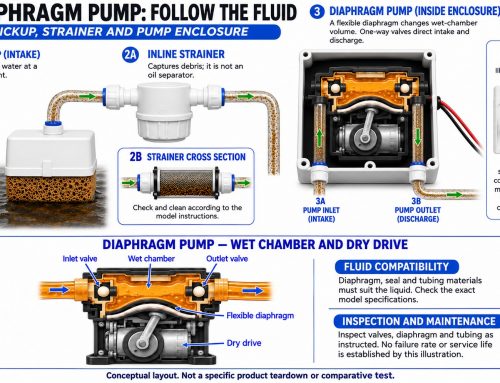
Different tasks address different sources. Cleaning removes accumulated residue; repairing a leak addresses incoming water. Arid removes residual liquid at connected pickups, as explained in how the system works. It is supplemental to conventional bilge pumps, not an emergency flooding pump or an air dehumidifier.
Include damp lockers, fabrics, condensation and ventilation in the wider storage plan. At the next inspection, compare the same locations and photographs. Returning water or changed residue is something to investigate, not evidence that another cleaning product will solve it.
Photo: “Boats in winter storage” by W.carter, CC BY-SA 4.0. Resized for display.