

COMPANY HISTORY
Before there was Arid,
there was a family boat.
An unfinished hull. Six years of work. A problem below deck that would not go away. This is where Arid Bilge Systems began.
01 / THE FAMILY BOAT
Thirsty Lady V.
A family-built boat, kept in the family.
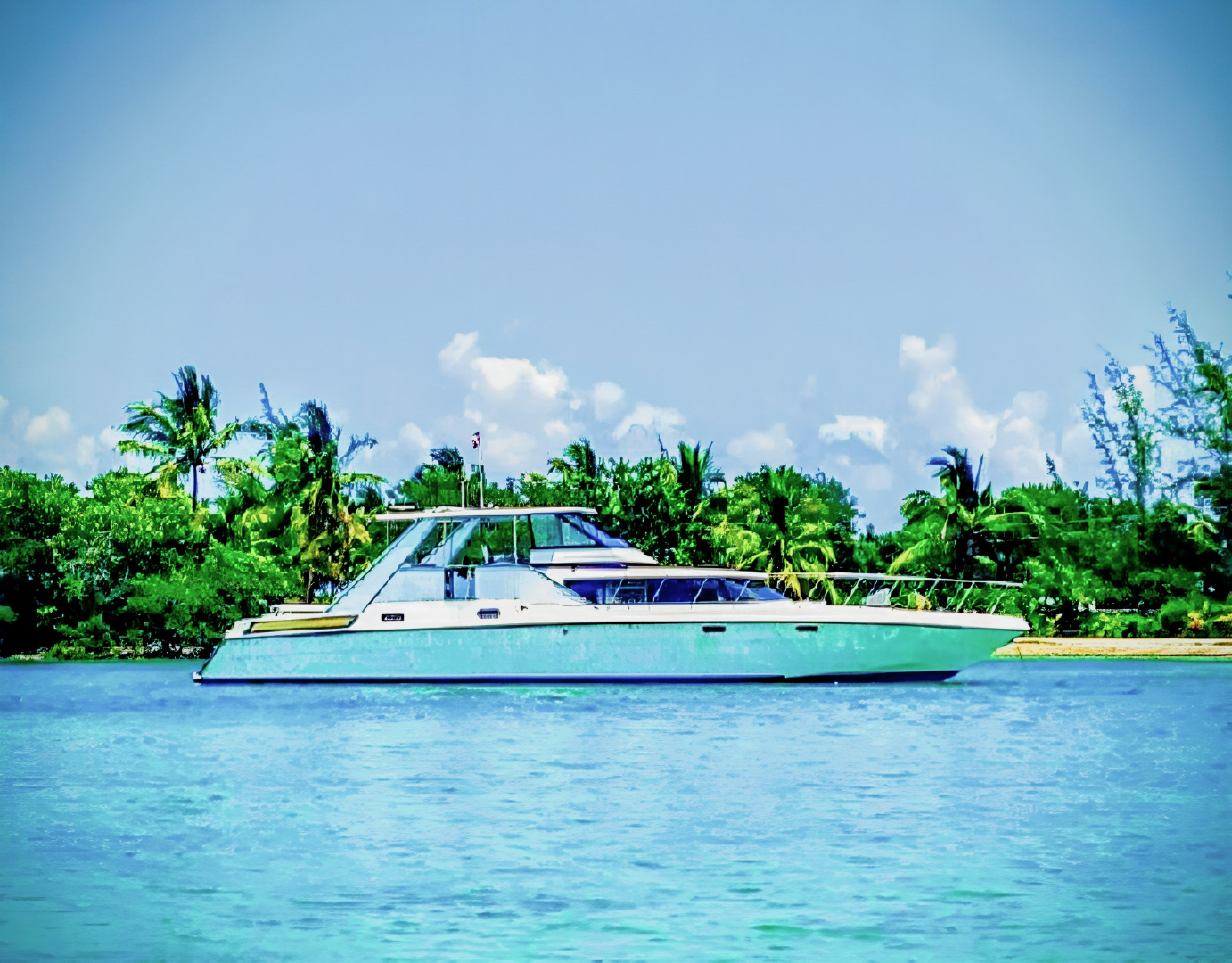
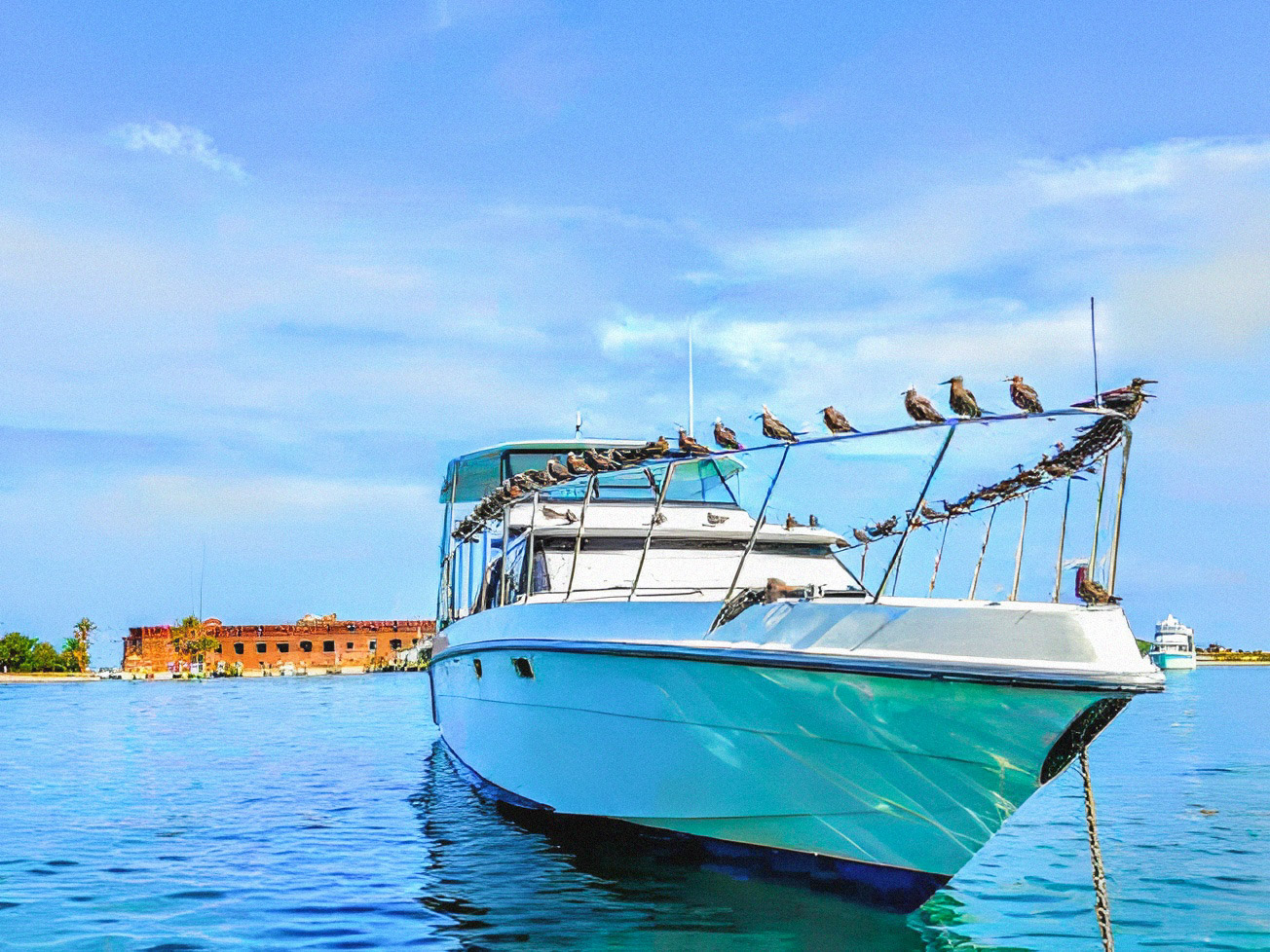
Arid grew out of a boat-building family. Long before the first dry-bilge system, Al Baurley Sr. and his son Al Baurley were turning an unfinished hull into a 62-foot vessel.
Al Baurley Sr. owned a chain of warehouses. In the 1980s, he found an unfinished hull in Hollywood, Florida. As the family remembers it, the hull was visible from I-95. Its long, narrow, racing-style lines caught his attention. He bought it, knowing that years of work lay ahead.
The family remembers Allen Pinnell of Merritt advising him against taking on the project because the hull was narrow for its length. He wanted to build it anyway. What followed was not simply fitting out a boat: it was turning an unfinished hull into a complete, working vessel.
Six years of systems, wiring and plumbing
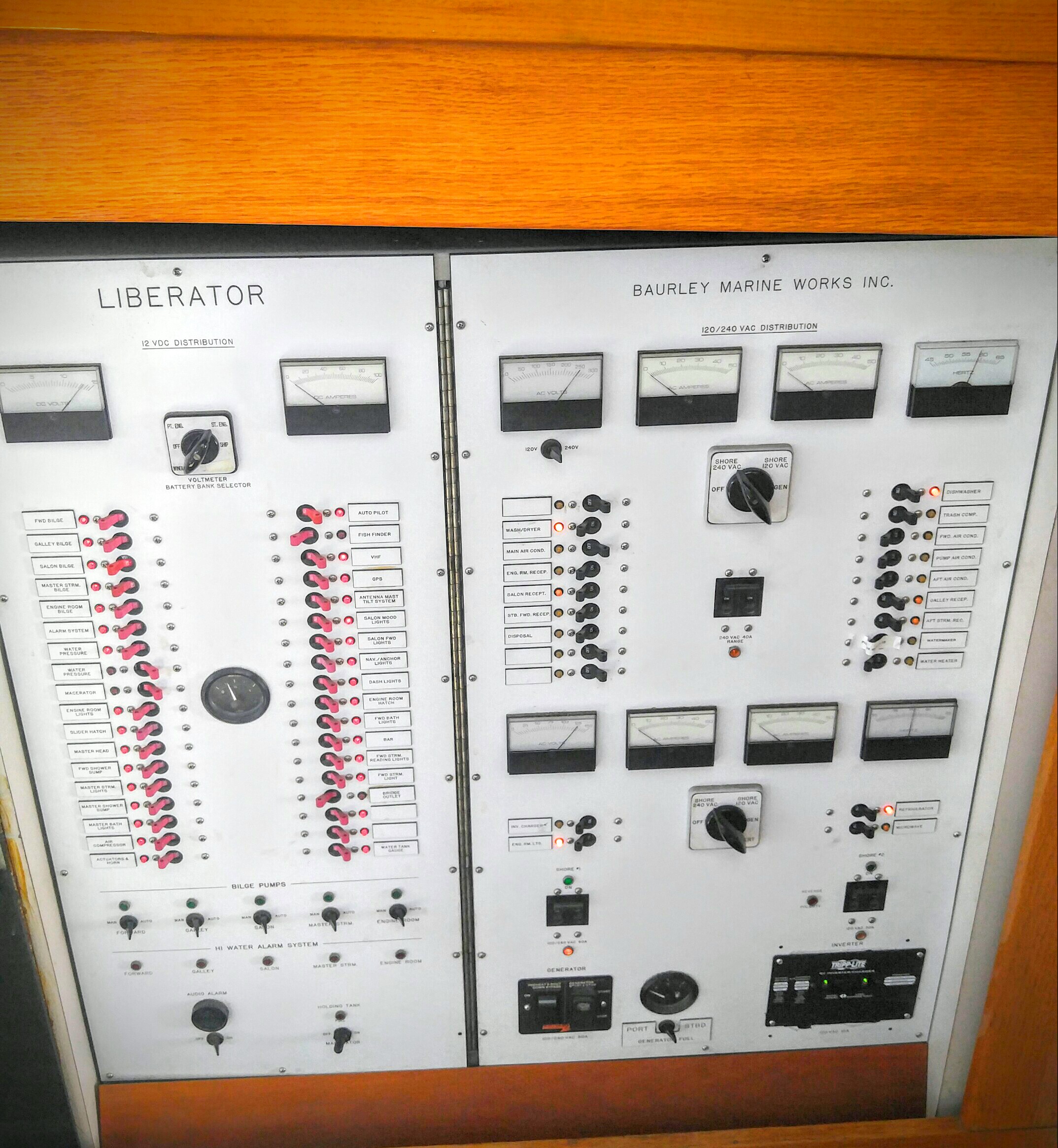
Arid’s company history records construction beginning in 1986 and the launch in 1992. His son Al Baurley did the plumbing and electrical wiring. He had worked in the marine industry throughout his life and brought his technical education to the project. At Florida State University, he learned multiple programming languages and was at the top of his class.
The work demanded an understanding of the entire boat: where machinery would fit, how equipment would be connected, which compartments needed access and how those systems would be serviced years later. The breaker panel is a lasting record of that work.
Mack power. Hamilton jets.
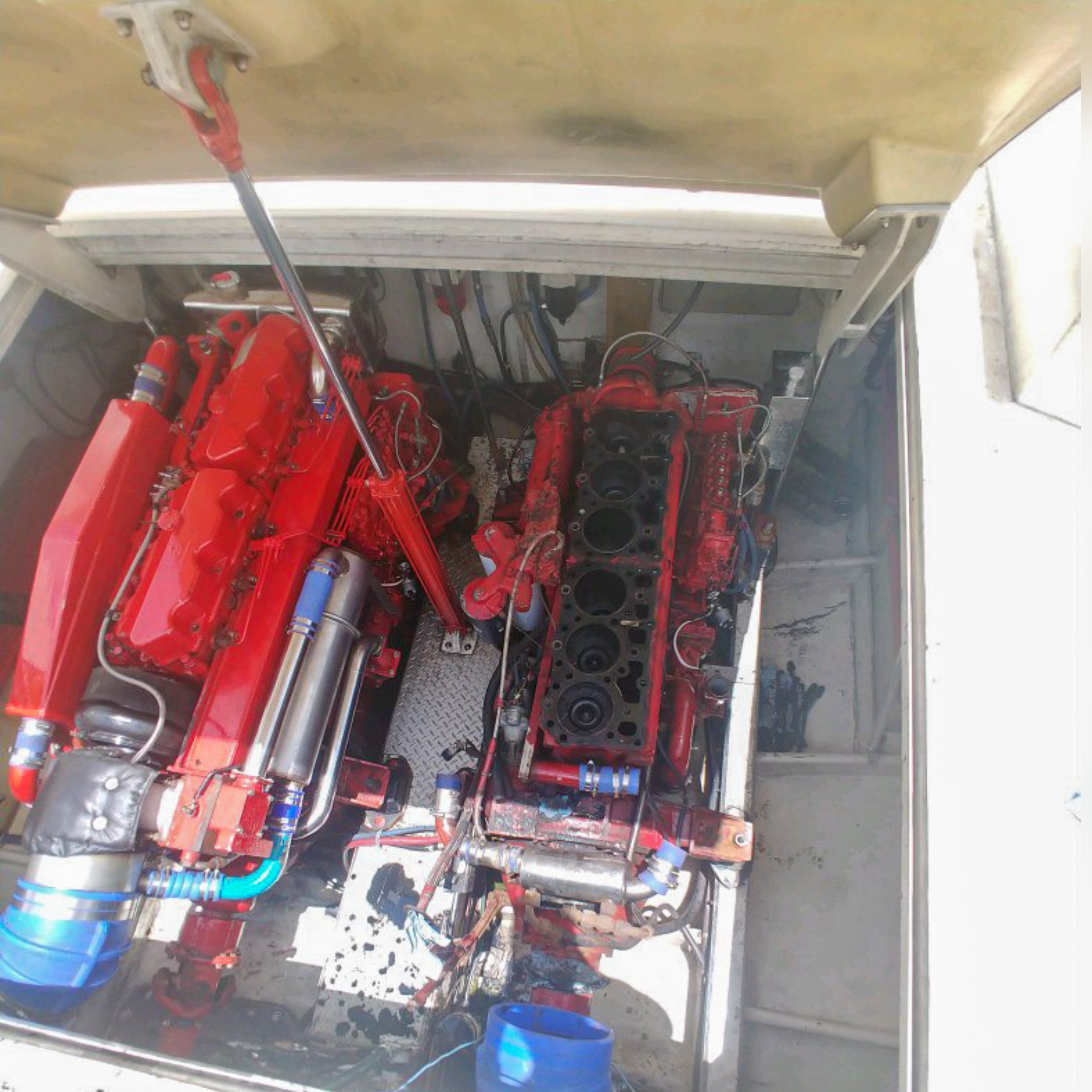
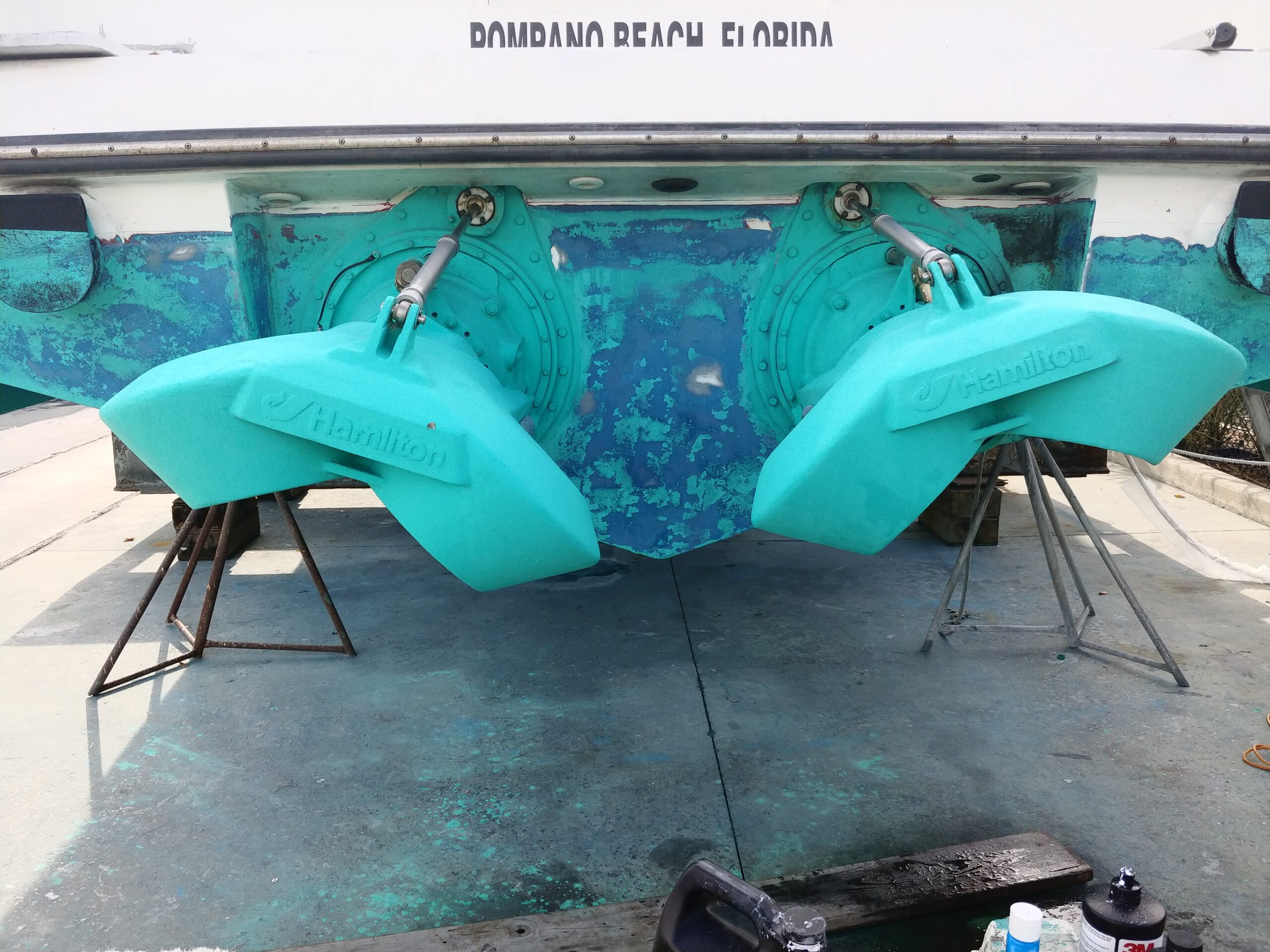
Al Baurley Sr. wanted jet drives. Mack truck-engine marine conversions were paired with Hamilton jets, with shallow draft and fuel efficiency among the project’s goals.
The family reports an operating draft of approximately two feet three inches for the 62-foot Thirsty Lady V. That shallow draft was a distinctive part of the boat’s design and use.
These photographs show the work behind those choices: access to the engines, the plumbing around them and the equipment at the stern. The family returned to Merritt’s for hands-on maintenance in the years that followed. Building the boat was the beginning of that relationship.

Launched in Pompano Beach
Thirsty Lady V went into the water in 1992 at Merritt’s Shipyard in Pompano Beach, Florida. The original intention was to sell the finished boat. The family remembers Al Sr.’s wife wanting to keep her after the years they had put into the project and their life together. They decided to keep the boat and enjoy her as a family.
The boat became a place where the family could see, year after year, how the systems they had built behaved in everyday use. That experience would eventually lead to Arid.
02 / THE PROBLEM IN THE BILGE
The water a pump leaves behind.
For all the work that went into the boat, water still collected in places that were difficult to reach.
The smell was persistent. Damp areas were deteriorating, and the problem kept returning. Al Baurley Sr. would bundle newspapers and put them into low bilge compartments to absorb the water. It was a temporary response to a recurring problem.
Conventional bilge pumps serve an essential purpose, but water can remain below a pump’s pickup or in separate low compartments. Al Baurley wanted a way to collect that residual water automatically, including the wet areas that were awkward to reach by hand.
That distinction still matters. Arid addresses residual water alongside the boat’s conventional bilge pumps. Finding and repairing the source of a leak—and retaining emergency pumping equipment—remain essential parts of boat care.
03 / THE FIRST BUILD
A small tube.
A different way to think.
An incident aboard a 100-foot Broward yacht gave Al Baurley a new way to think about the problem. Fuel had traveled through a small polyethylene tube into the boat’s interior. The cleanup was substantial, but one detail stayed with him: a surprisingly small tube had moved a significant amount of fluid.
On the drive home, he connected that observation to the water trapped aboard Thirsty Lady V. Could a controlled vacuum use small tubing to collect water from scattered low points? That question led to experiments in the garage and a working pilot aboard Thirsty Lady V.
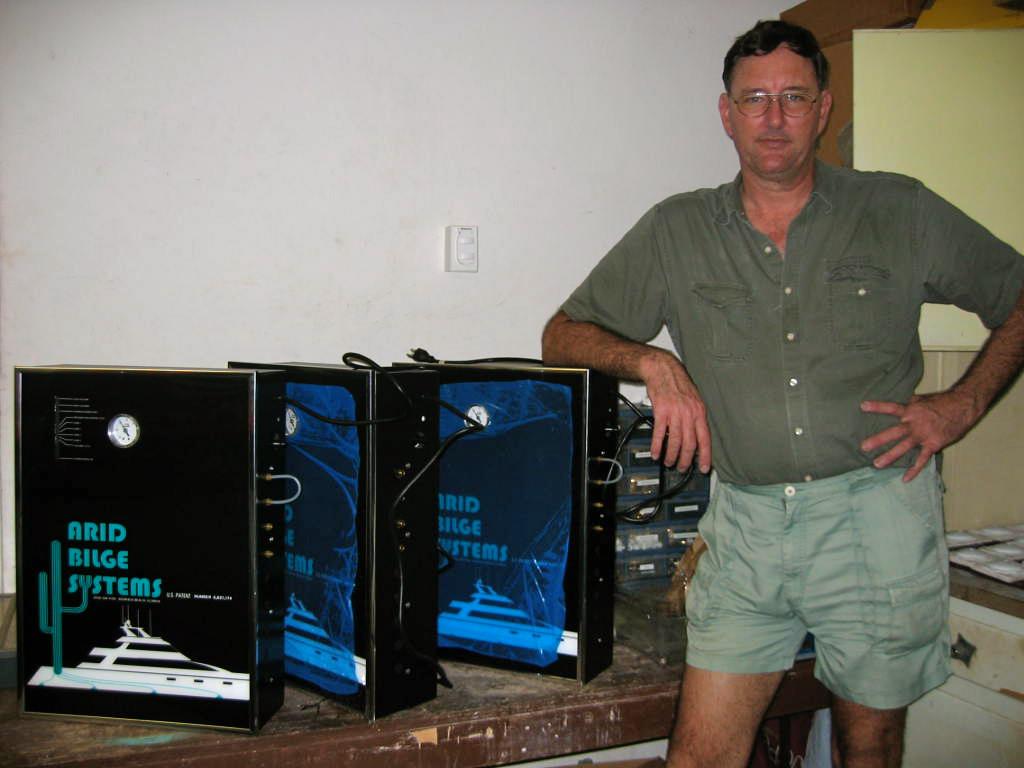
The first experiment lasted about ten days.
Its first result was memorable. The engine room became dry, and the odor initially became worse as previously submerged residue and growth dried out. Removing the water revealed another part of the cleanup that the boat needed.
That first unit was an experiment, not a finished product. Al spent roughly two years refining and testing the design. The family boat’s installation grew from two pickup zones to six, reaching from the anchor-windlass compartment to the engine room.
The original Series 9 prototype in Arid’s archive represents a later stage of that development. It is distinct from the earliest short-lived machine. The purpose remained the same: reach the low points and remove the fluid that kept collecting there.
04 / FROM THE ARCHIVE
The people, the boat,
and the work below deck.
Original family photographs and footage help tell this story more clearly than a polished recreation could. Some dates were not recorded; the captions distinguish what is known from what the archive does not establish.
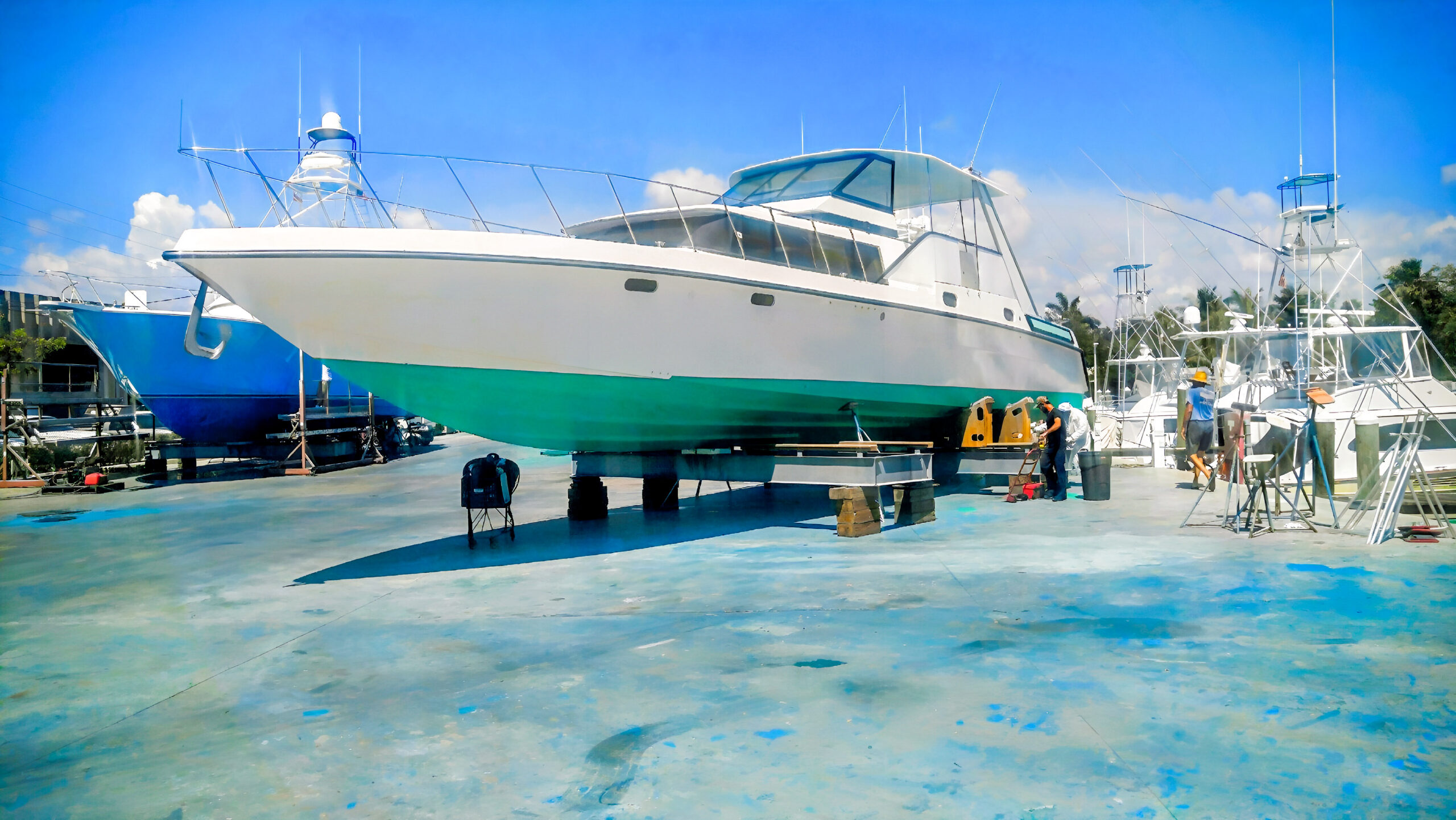
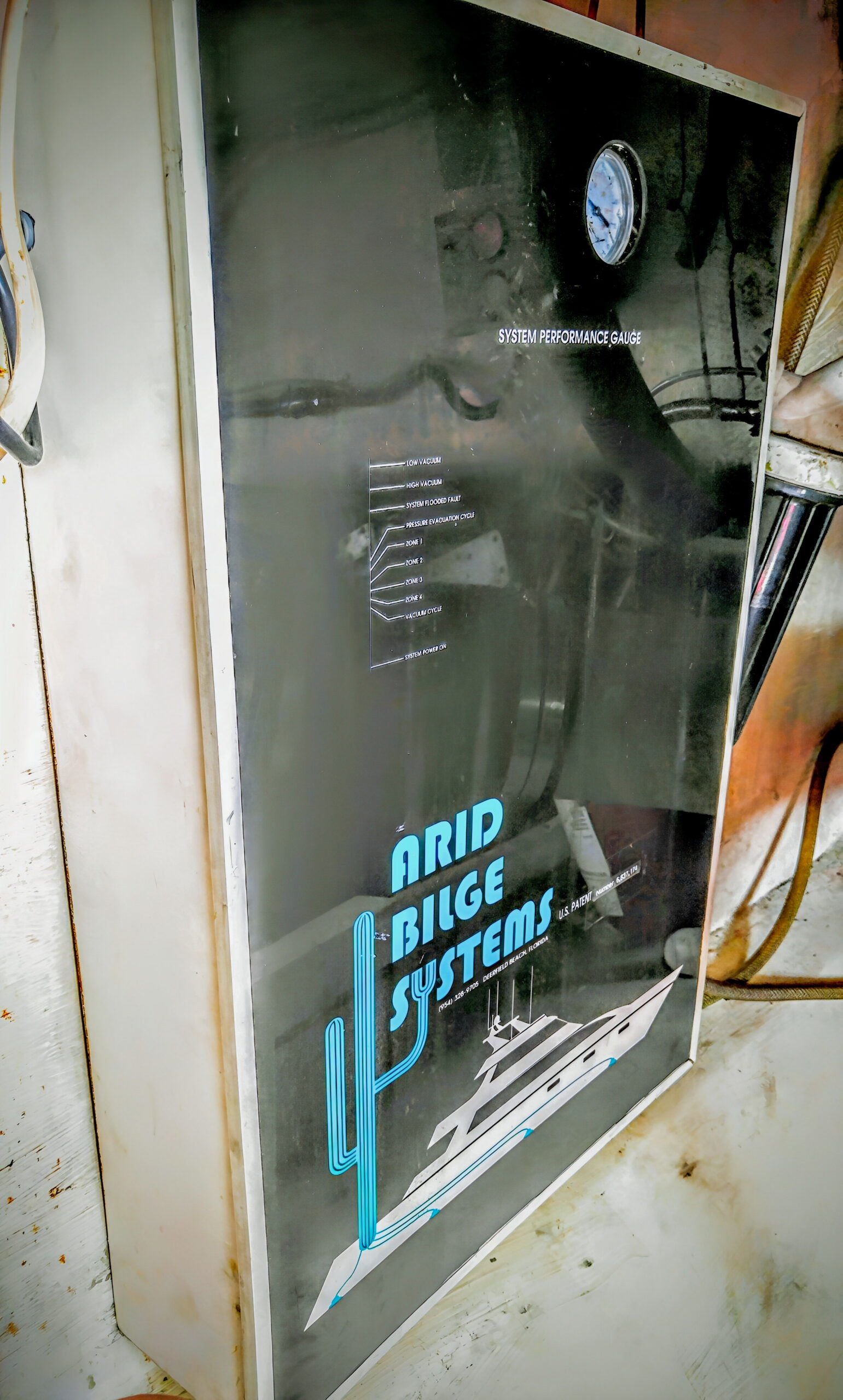
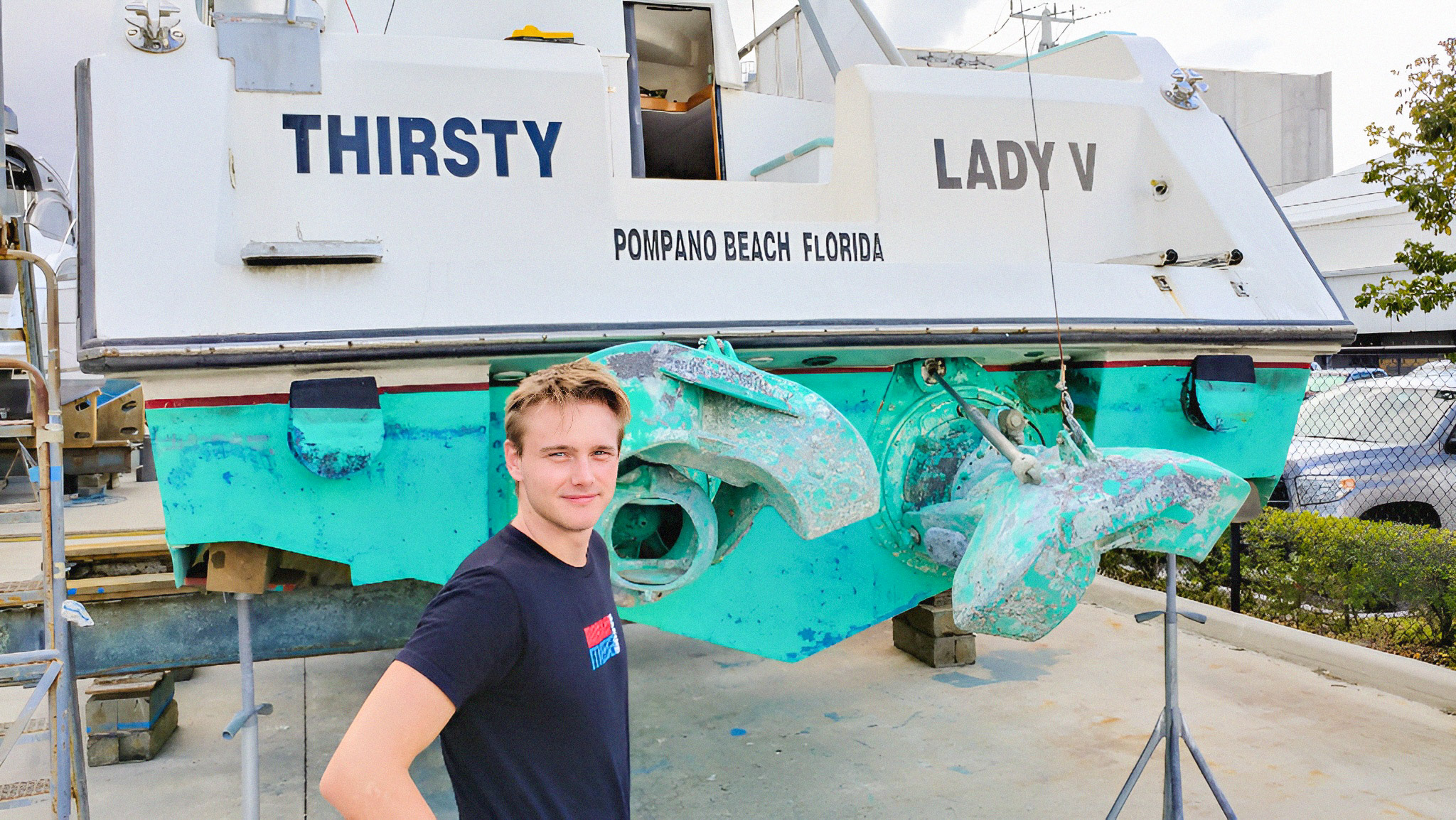

A family tradition of hands-on maintenance
Building Thirsty Lady V was only the beginning. The family continued to work on the boat themselves, including its jet drives and machinery. The time-lapse below records that practical commitment.
Music: “Ultralounge” by Kevin MacLeod, licensed under CC BY 4.0. Edited to length; fades and level adjustments applied.
Small boats, big boats, and the systems between them
The University of Florida’s newspaper archive preserves advertisements carrying the Baurley Marine name. A September 1993 advertisement describes marine electrical services, including custom panels and dockside troubleshooting. Three issues in 1994 carry advertisements for 15-foot Mirage jet boats. Together, they preserve a glimpse of Baurley Marine’s work in Pompano Beach. The records show the span of the family business: building a 62-foot vessel, offering compact 15-foot jet boats, and working on the systems that made boats usable. The advertisements establish that Baurley Marine offered the Mirage boats; they do not identify Baurley Marine as their manufacturer.
05 / THE TIMELINE
From one boat to a product line.
-
The family build begins
Work begins on the unfinished hull that becomes Thirsty Lady V.
-
Into the water at Merritt’s
The 62-foot boat launches in Pompano Beach and stays in the family.
-
The first dry-bilge experiments
The small-tube insight leads to a garage-built pilot, followed by roughly two years of development.
-
Early systems for other owners
Al builds systems for friends with large yachts.
-
Series 9
Sales begin at the Fort Lauderdale International Boat Show.
-
Series 4
A smaller system is introduced at the Palm Beach Boat Show.
-
Series 2
A more compact system joins the range.
-
Series 1
The product line expands again to serve smaller installations.
-
Still built around the boat
Systems serve different mounting spaces and numbers of wet areas. The same practical attention to installation and service remains part of Arid’s work.
06 / ARID TODAY
Built by boat builders.
Designed for all boats.
The range now extends from Series 1 through Series 9. The right choice starts with the vessel: the wet areas that need attention, the number of pickup zones, the installation space and the power available.
Arid’s work with builders brings that same practical question into the factory: where will water collect on this particular boat? Read how the conversations developed with Regulator Marine and Bahama Boat Works, or explore what a dry-bilge system can offer boat builders.
07 / WHAT HAS NOT CHANGED
The same hands-on commitment.
Arid remains made in the USA. The team remains involved with fitting, inspecting and maintaining systems aboard real boats. Arid’s product specifications address marine installation requirements, including ignition protection; the current specifications and manuals remain the source for each model.
More than 30 years after Thirsty Lady V’s 1992 launch, that boat-building experience remains central to Arid. The family learned the problem by living with it, then developed a system around the places where water actually collected.
Built in the USA.
 ABYC standards
Meets and exceeds ABYC standards.
 NMMA member
Part of the wider marine industry.
 Ignition protection
In accordance with USCG 33 CFR 183.410. Consult the current specifications for your system.