
Watch the full interview
Bilge drying aboard Divine Intervention started with a source of water that was easy to overlook: condensation from the boat’s chiller pipes. Captain Chris Zasky describes why that mattered during the refit of the 77-foot Sculley sportfishing vessel.
His account covers difficult-to-reach bilges, a custom drip pan above the salon and the pickups used to collect water from those areas. He also describes an oil-alarm notification after a hydraulic hose failure. These are his experiences with the equipment and layout aboard this boat.
For a shorter look, watch Arid around the air-conditioning equipment and Captain Chris’s Arid setup. The complete walkthrough is above, with edited highlights below.
Edited highlights of Captain Chris’s walkthrough
This is an edited summary of the video, focused on the installation and the problems Zasky describes aboard Divine Intervention.
Bilge drying begins with the chiller pipes
The boat’s air-conditioning system is central to this story. Zasky explains that condensation from its chiller pipes reached compartments that were difficult to access during daily maintenance. He wanted automatic collection in those areas, alongside the cleaning, refinishing and other work undertaken during the refit.
He describes the lazarette as one example of that broader effort. Work there included new equipment, refinished surfaces and air conditioning. Arid was part of the plan for keeping residual water out of the refurbished space.
A collection point above the salon
The most distinctive pickup was fitted above the living space. According to Zasky, condensation from overhead chiller pipes had been reaching the salon lights. The team made a drip pan to catch that water and added an Arid pickup in the pan.
He reports that the area was dry when opened after the work. The useful detail is where collection began: the installation addressed water near its source instead of waiting for it to reach a lower compartment.
The central unit and companion oil equipment
In the machine room, Zasky shows the central Arid unit and the separate Eco equipment fitted to this boat. He recounts receiving an alarm after a bow-thruster hydraulic hose failed, allowing him to investigate the leak.
These functions depend on the equipment installed. The central Arid unit collects residual fluid; oil separation, contamination alerts and related shutdown functions require the appropriate companion equipment. Removing fluid alone does not make contaminated water clean.
Zasky’s walkthrough is an account of this particular refit. For another vessel, identify the wet areas, inspection access and required companion equipment before planning an installation.
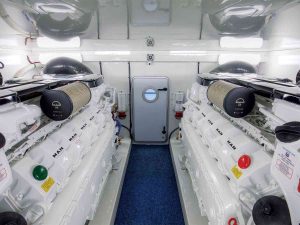
Illustrative engine-room photograph from the Arid archive.
Bilge drying starts with the source of the water
The overhead drip pan is a distinctive part of this refit. Zasky describes collecting condensation where it formed, then adding a pickup to remove it. The wider installation served wet areas that were difficult to reach during routine maintenance.
His story shows why the boat’s plumbing, access and water sources need to be considered together. For related care, read our discussion of bilge paint and standing water, or see how Arid collects residual fluid.