Boat Builders

13 10, 2026
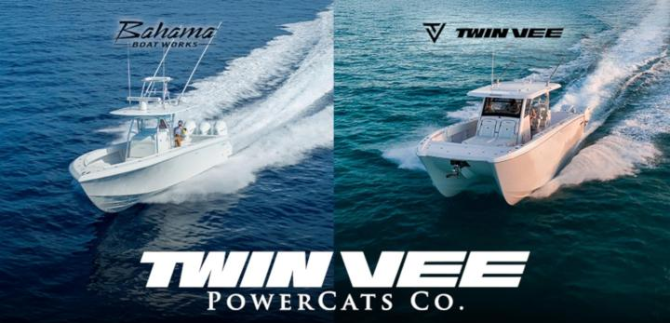
  • Bahama Boat Works center console and Twin Vee power catamaran underway, with their company wordmarks.

Twin Vee, Bahama Boats and Arid: From Boat Show to Factory Floor
By |2026-10-13T23:05:22+00:00October 13, 2026|Blog, Boat Builders|

Bahama Boat Works center console and Twin Vee power catamaran underway, with their company wordmarks.

By Alfred Baurley, Arid Bilge Systems

A boat show is a place to see a finished boat. A factory visit lets you see the people, decisions and care that bring it together. For Arid, the road to Twin Vee’s factory began years earlier with Bahama Boats—and a relationship that grew one conversation and one installation at a time.

Our Bahama beginnings

I remember that relationship starting around 2018 at the Miami Boat Show, with Scott Henley, Jeff Kennet and Bob Sparks from Bahama Boats. Long before our conversations with Twin Vee, we were getting to know the Bahama team and introducing what Arid could do below deck.

I personally carried out our first installation in that relationship in Jupiter, aboard a customer’s boat. The Bahama team was impressed by the technology and what they saw from that installation. That first opportunity developed into years of supplying Arid systems for their boats.

That history matters to us. Our introduction to Twin Vee grew out of an established working relationship, with people who had already seen Arid in use and could speak from that experience.
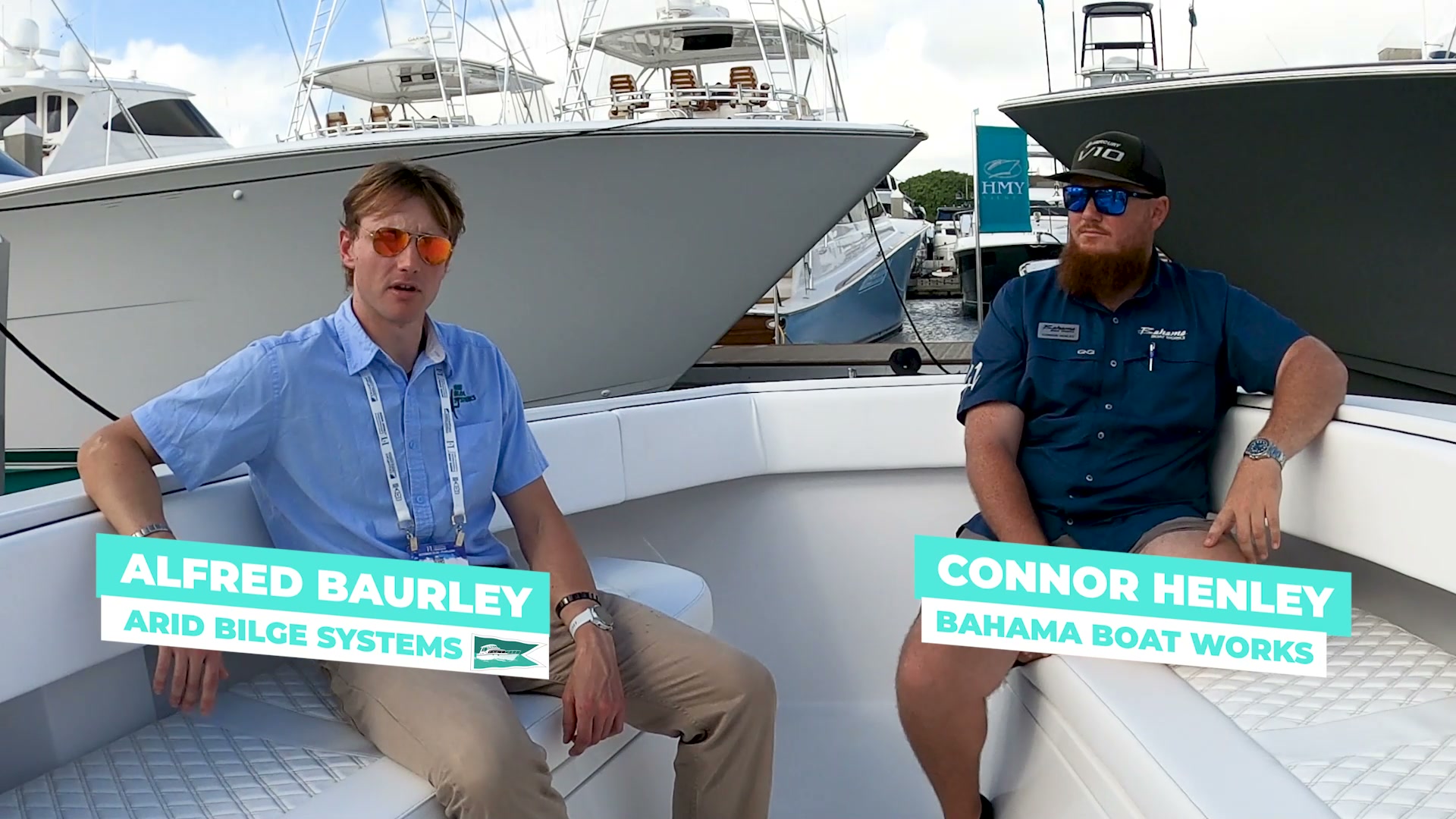
Alfred Baurley and Connor Henley aboard a Bahama boat during an earlier Arid interview.
Alfred Baurley with Connor Henley in Arid’s earlier Bahama Boat Works interview. Archive video frame; not the Twin Vee factory visit.

Neighboring booths, a renewed conversation

Twin Vee announced its acquisition of the Bahama Boat Works brand on June 6, 2025. The Bahama team’s experience with Arid became the basis for a recommendation to Twin Vee.

At the Palm Beach International Boat Show in West Palm Beach, we were in the Tuppen’s Marine booth with our friends and dealers—and happened to be right next to Twin Vee. That proximity brought us together with Samer Hijjawi, Twin Vee’s general manager, and the Twin Vee team. After the acquisition, being neighbors at the show helped spark the conversation again.

We talked about the technology, our history with Bahama and the possibilities for Twin Vee’s boats. That conversation led to an invitation to their factory in Fort Pierce—an opportunity we were honored to receive.

Our earlier Bahama Boat Works interview captures the attention to fit and finish that helped bring these conversations together.

Two boatbuilding traditions, one conversation

Twin Vee is a Fort Pierce boatbuilder whose roots in power catamarans span decades. Its company profile describes boats built for recreational and commercial use, from fishing and diving to family days on the water. The twin-hull layout is central to that identity. Bahama brings a different tradition: offshore monohull center consoles, with a strong emphasis on finishing details and the way a boat is put together.

When Twin Vee announced the Bahama acquisition in June 2025, it emphasized preserving Bahama’s craftsmanship and boatbuilding heritage. In its November 2025 production update, the company described integrating the Bahama line into its Florida manufacturing operation. That gives the background to our own story: Arid’s experience with Bahama became an introduction to another boatbuilding team.

For us, the recommendation mattered because it came from people already familiar with Arid aboard their boats. It gave the next conversation a practical starting point. We could introduce the product line, explain how the systems move residual water, and discuss how installation planning fits into a new build.

Meet Samer Hijjawi

Samer Hijjawi, pictured in Twin Vee’s official general manager spotlight.
Samer Hijjawi. Photograph from Twin Vee’s employee spotlight.

Twin Vee introduced Samer as its general manager in its July 24, 2025 newsletter. The profile described more than 20 years in manufacturing, including over 14 years in the marine industry, with experience across production, engineering, quality and supply chains.

That background helps explain why a conversation with a general manager matters when introducing equipment to a builder. Selecting a system is one step; fitting it into the build, giving the installation team clear information and preserving access for future service are part of making it work aboard a finished boat.

During our visit, Samer and the engineering team gave us a factory tour and walked the boats with us. We appreciated being able to discuss the proposed Arid installations with the people responsible for bringing those boats together.

Walking the factory—and the boats—with the team

Our Arid team met with the Twin Vee team at their factory, where I presented our product line and how the systems operate. After the presentation, Samer and the engineering team took us through the factory and aboard the boats to look closely at where the systems would be installed.

We reviewed the proposed installation locations together, discussed the fit within each boat and talked through Arid’s installation and operating requirements alongside applicable marine installation standards. Walking those spaces with the team gave us a much clearer conversation than a product description alone could provide.

We were honored to be welcomed into that process. Seeing the boats in build, meeting the people doing the work and discussing the details together made this a meaningful next step in a relationship that began with Bahama years earlier.
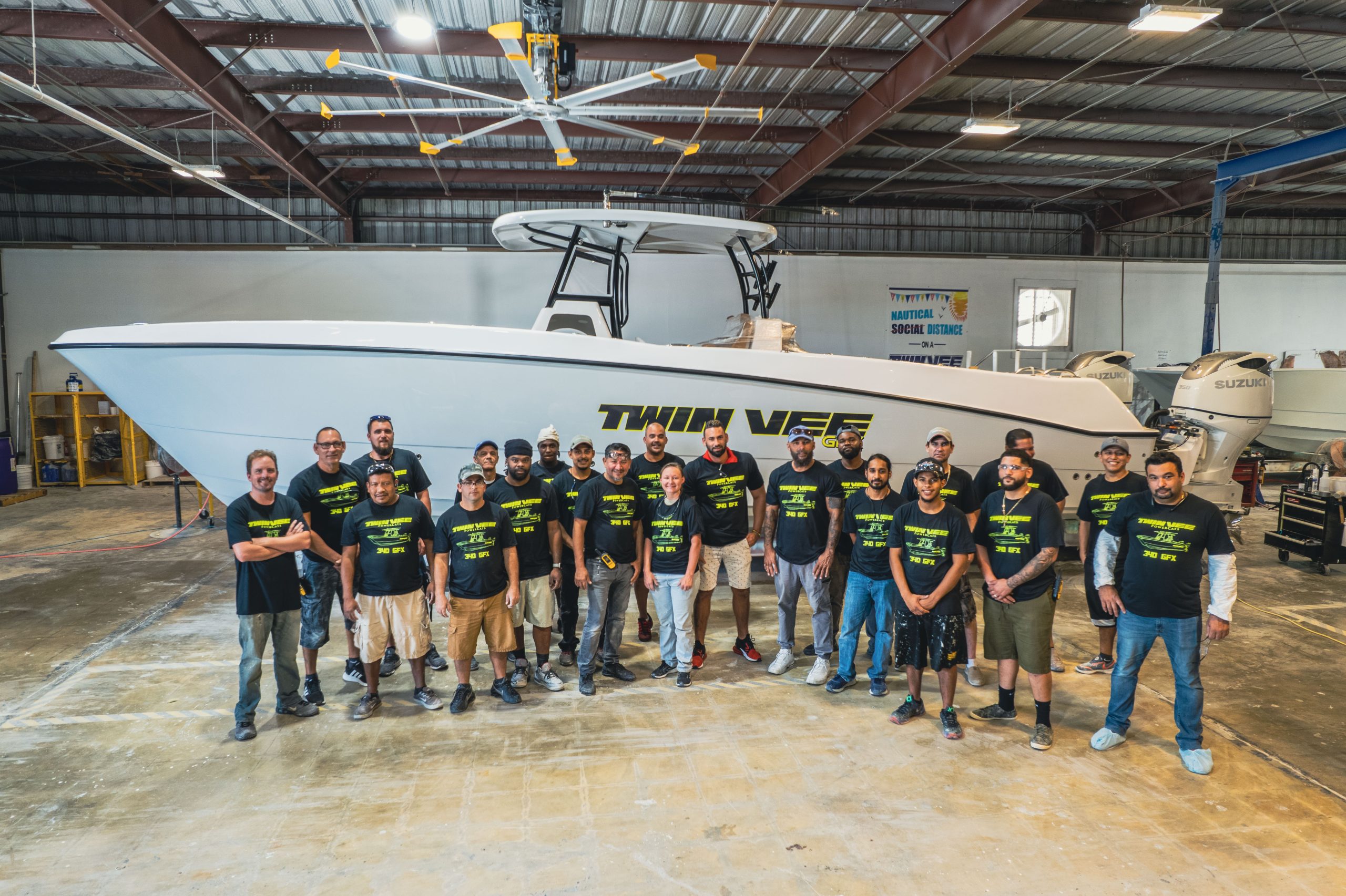
Twin Vee team gathered beside a power catamaran inside the factory.
The Twin Vee team at the factory. Company archive photograph, supplied through Twin Vee’s official website.

The people behind the finished boat

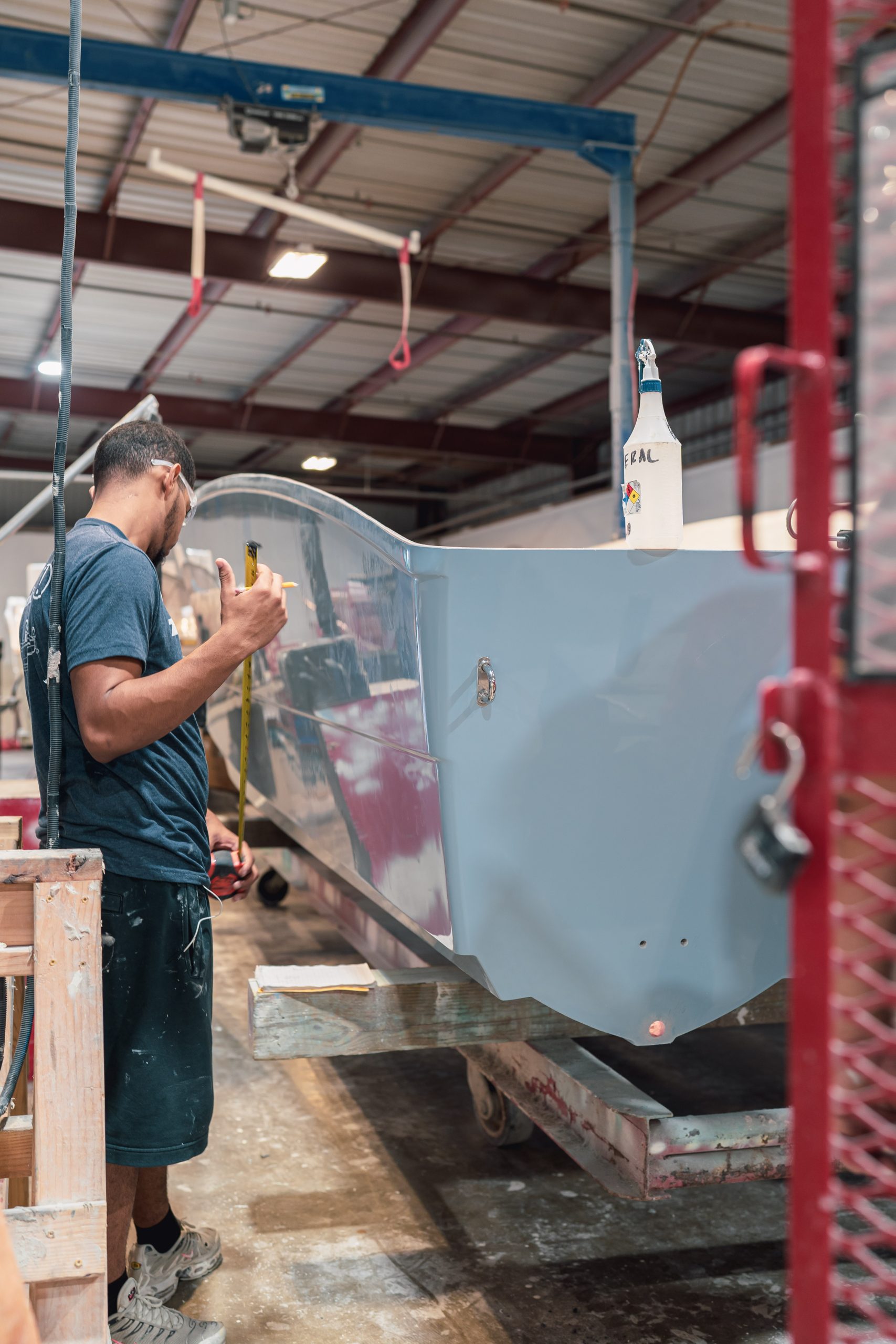
Twin Vee’s company story puts its craftspeople at the center of the finished boat. These company photographs show that work in progress. They give a closer look at the manufacturing setting; our account of the Arid visit comes from our own experience with Samer and the team.
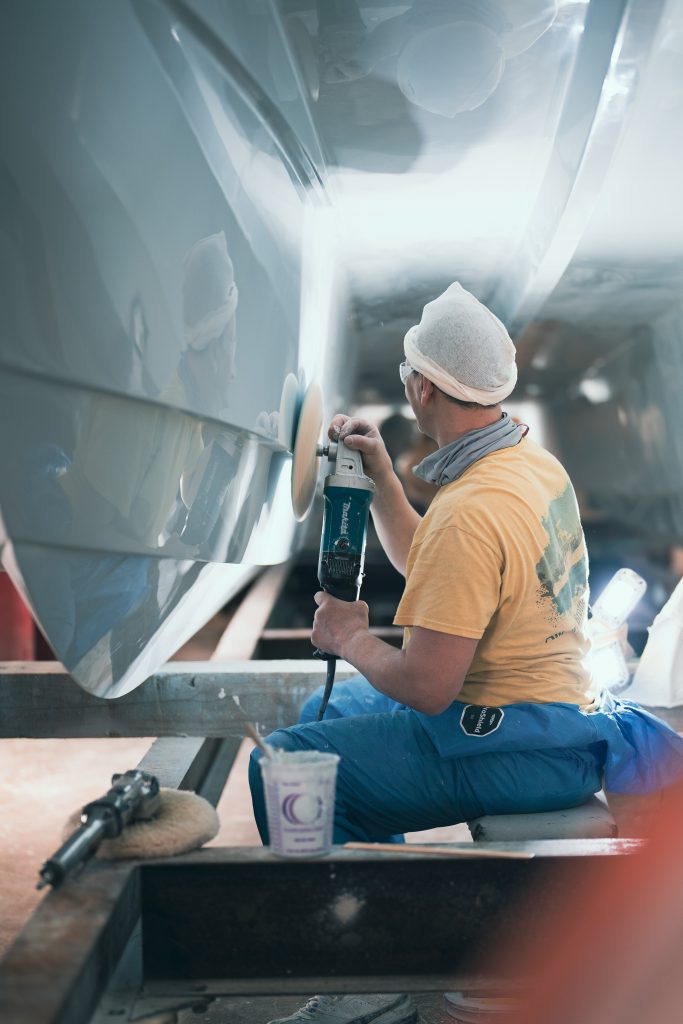
A Twin Vee craftsman polishing a boat hull in the factory.
Twin Vee craftsmanship. Company photograph from Our Story.
Twin Vee craftsperson measuring alongside a hull during construction at the factory.
Attention to the build. Official Twin Vee factory photograph.

Start with the spaces that collect water

The practical starting point is the boat’s layout. Where does residual water collect after normal pumping? Are those areas connected, or separated by the structure? Can each collection point be inspected once the boat is finished?

Arid removes residual liquid at connected pickups. Vacuum draws that liquid into a collection chamber, then air pressure pushes it through the discharge line. Pickup locations, tubing routes, the central unit and service access need to make sense together. Those details are easier to discuss when the builder’s team can walk through the actual compartments.

The conventional and emergency bilge pumps still have their own jobs. Arid complements them by addressing residual water at connected low points. It does not repair a leak, dehumidify the air or make contaminated water safe to discharge. See how Arid works.

What our Arid installation check mark means

When I talk about giving an installation the Arid Bilge Systems check mark, I mean taking the time to review how our equipment fits the boat and how it will be used. That was the focus of walking the boats with Samer and the engineering team.

Our installation review brings these details together:

  • Pickup locations. Identify the low points to be served and the compartments that need their own connection.
  • System placement and routing. Review the unit location, tubing, discharge route and access for inspection.
  • Installation requirements. Work through the model’s installation instructions and applicable marine installation standards with the builder’s team.
  • Operation and ongoing care. Make the system’s operation, routine checks and service access clear for the people who will use and maintain it.

The goal is an installation planned with care from the start, followed by the appropriate checks on the completed boat. We value the opportunity to work through those details directly with the builder.

When you step aboard a Twin Vee or Bahama

Enjoy the boat, look at the craftsmanship—and ask to see the details below deck. A useful question for the salesperson, dealer or builder’s engineering team is: “Where is the Arid system, and which areas are connected?”

If Arid is fitted or being specified for that boat, ask the team to show you:

  • The system itself. Where is it installed, and which Arid model serves this boat?
  • The connected areas. Where are the pickups, and which compartments do they serve?
  • The access points. How do you reach the unit and pickups for routine inspection?
  • The operating information. How does Arid work alongside the boat’s conventional bilge pumps and alarms, and where are the instructions kept?

That short walkthrough connects the equipment list to the boat in front of you. It also lets the people who built it show the thought that went into the installation.

A relationship built over years

From those early conversations with Scott Henley, Jeff Kennet and Bob Sparks, to the first installation aboard a customer’s boat in Jupiter, to the Tuppen’s Marine booth and a factory tour with Samer and the Twin Vee team, this has been a relationship built over years.

Twin Vee is now implementing Arid systems on its boats. We are grateful for the trust, the welcome and the opportunity to work with a team that takes pride in what it builds. For a particular Twin Vee or Bahama, the builder or dealer can confirm the Arid model and connected areas included in that boat’s specification.

Explore Twin Vee boats on their official website and learn about visiting the factory. For the thinking behind care below deck, read Why builders choose Arid.


13 10, 2026
  • Rozema Boat Works logo

Rozema Boat Works: Dry Bilges for Aluminum Boats

By |2026-10-13T16:59:43+00:00October 13, 2026|Blog, Boat Builders|

Rozema Boat Works logo

For a builder known for custom aluminum vessels, bilge drying addresses a practical part of caring for a metal boat: removing the shallow water that can remain between regular inspections.

A well-kept bilge should make the boat easier to look after. Less standing water means a clearer view of the structure, fittings and places where fresh water appears. On a working boat or cruising trawler, that is useful every time someone opens a hatch.

Rozema Boat Works: a family boatbuilding history

Founded in 1955 by Alle Rozema in Bay View, Washington, Rozema Boat Works traces its history through three generations of the family. Its company history describes a business built around durable, purpose-built vessels.

Today, Rozema’s aluminum boatbuilding work serves commercial fishing, research, spill response and passenger transport, among other applications. Its vessel range also includes yachts and sport boats. The common thread is building around a particular job and the conditions the boat will encounter.

Why a dry bilge matters on a metal boat

Metal hulls deserve attention below the floorboards as well as above the waterline. Persistent wetness, salt deposits and debris can make maintenance harder. Water covering a low point can also hide the start of a new leak or changes in a coating.

Steel can rust; aluminum can suffer corrosion and pitting, but it does not form iron rust. The material, water chemistry, electrical condition and contact with other metals all matter. Keeping accessible bilge areas drier supports inspection and reduces prolonged contact with standing water. It is one part of caring for the hull, alongside appropriate coatings, cleaning and corrosion protection.

Our metal-hull bilge guide explains why identifying the affected metal and investigating the cause are essential.

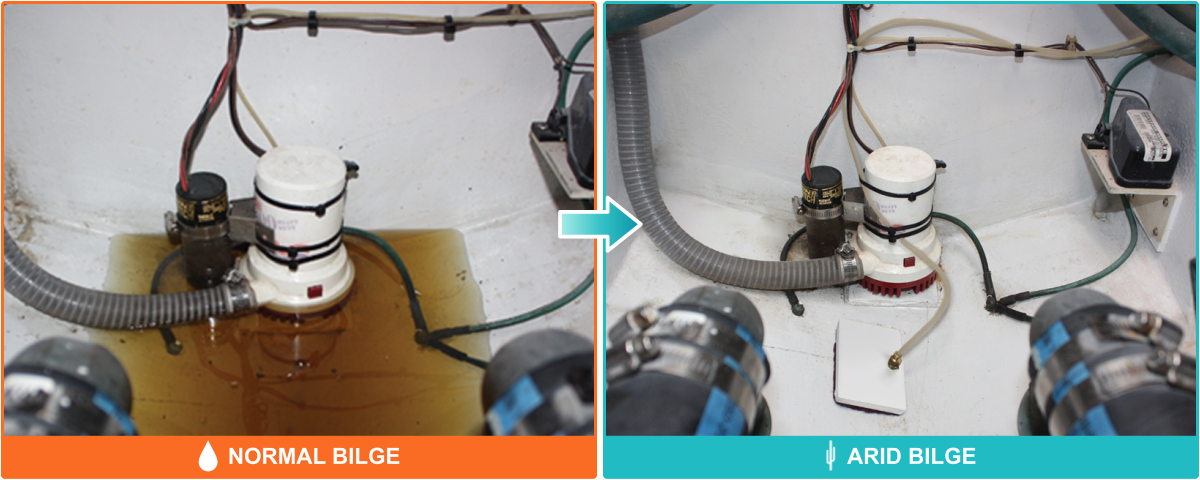
Bilge comparison showing standing water before and an exposed bilge floor with a rectangular pickup after.
Before and after, from the Arid photo archive: standing water at left; exposed bilge floor and pickup at right. This is a general installation example, not a Rozema vessel or a metal-hull corrosion repair.

What Arid adds to the maintenance routine

Arid uses pickups at selected low points to collect residual bilge water. Vacuum draws the liquid into a central collection chamber; air pressure then discharges it. The installed configuration determines which wet areas the system can serve.

  • Less recurring standing water: connected pickups address shallow wet areas that remain after normal pumping.
  • Easier inspection: exposed surfaces make fresh water trails, deposits and coating changes easier to notice.
  • Support for a cleaner bilge: automatic water removal helps maintain the result of cleaning; it does not scrub surfaces or remove existing corrosion.
  • Less persistent wetness: reducing residual water addresses one moisture source below deck. Ventilation, condensation and leaks still need attention.
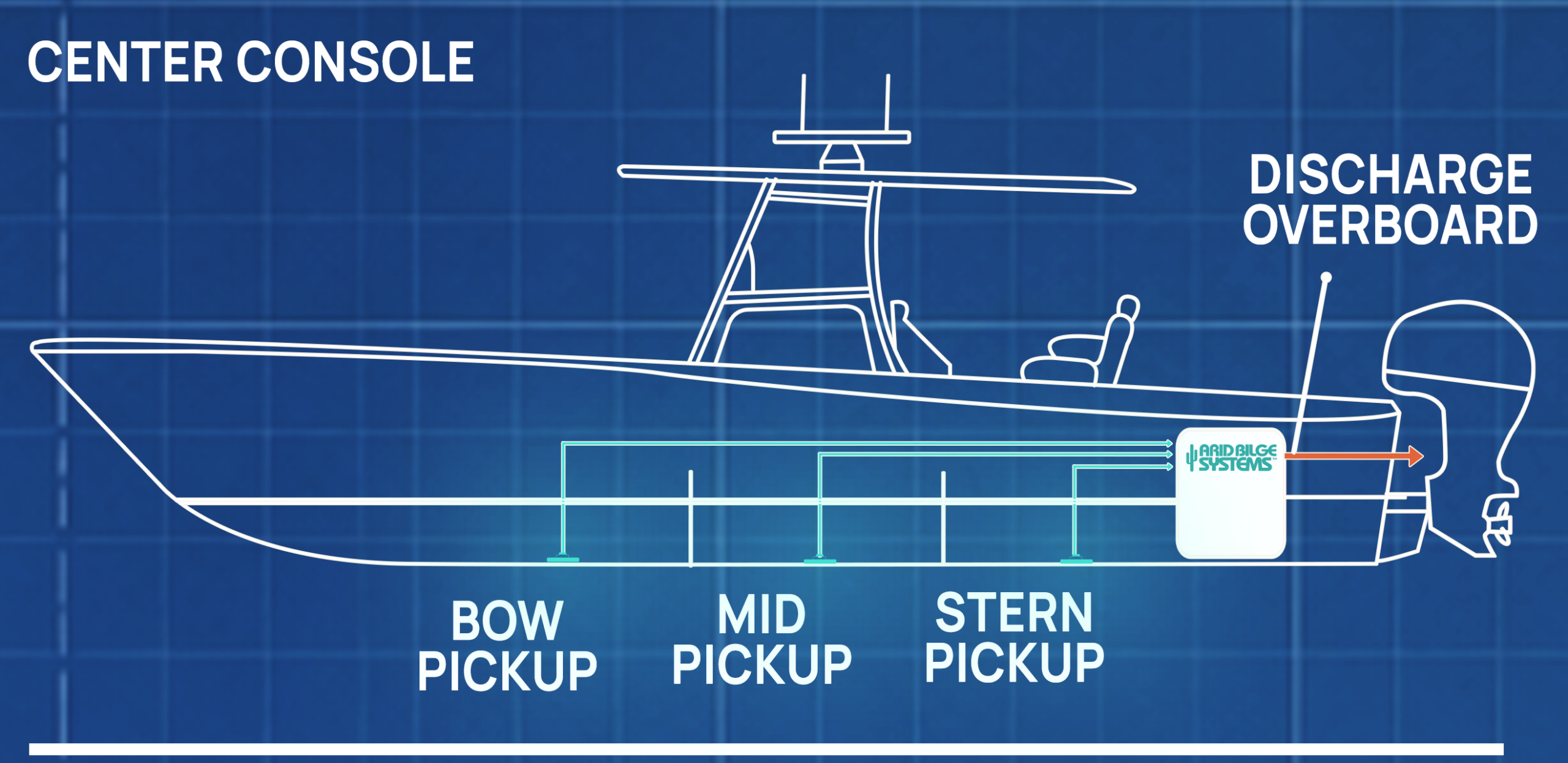
Boat cutaway showing bow, midship and stern pickups connected to a central Arid unit and discharge line.
Arid routing illustration: pickups connect separate low points to a central unit. This center-console example illustrates the route; each metal boat needs its own layout.
  1. Collect: vacuum draws residual water through the pickup and intake tubing into the collection chamber.
  2. Discharge: air pressure moves collected liquid from the chamber through the discharge line.
  3. Check connected zones: the system follows its model-specific operating sequence. The compressor moves air; bilge liquid follows the collection and discharge path.

See how Arid’s bilge vacuum system works.

Planning dry bilges on a trawler or workboat

Start with the actual low points, rather than choosing a system from boat length alone. Machinery spaces and separated compartments may need their own pickup locations. Check where water collects, whether it can reach a pickup, and how an installer will route tubing and reach the equipment for service.

For a new build, that discussion can happen while access is straightforward. For a refit, photographs of the wet areas and surrounding equipment help turn a general request for a drier boat into a workable installation plan.

Arid complements the boat’s conventional bilge pumps and alarms. Drying does not repair leaks, restore lost metal or correct galvanic or stray-current corrosion. A clean, drier bilge makes ongoing care easier; it is not a promise that an older hull becomes new again.

Discuss your metal boat with Arid

Rozema uses Series 4s to make practical maintenance easier. Each boat still needs its own pickup plan and commissioning checks.

Talk with Arid about your boat’s wet areas, or compare the Arid system range.

Why builders choose Arid: explore the benefits for builders and owners, and read our boat-building story.

12 10, 2026
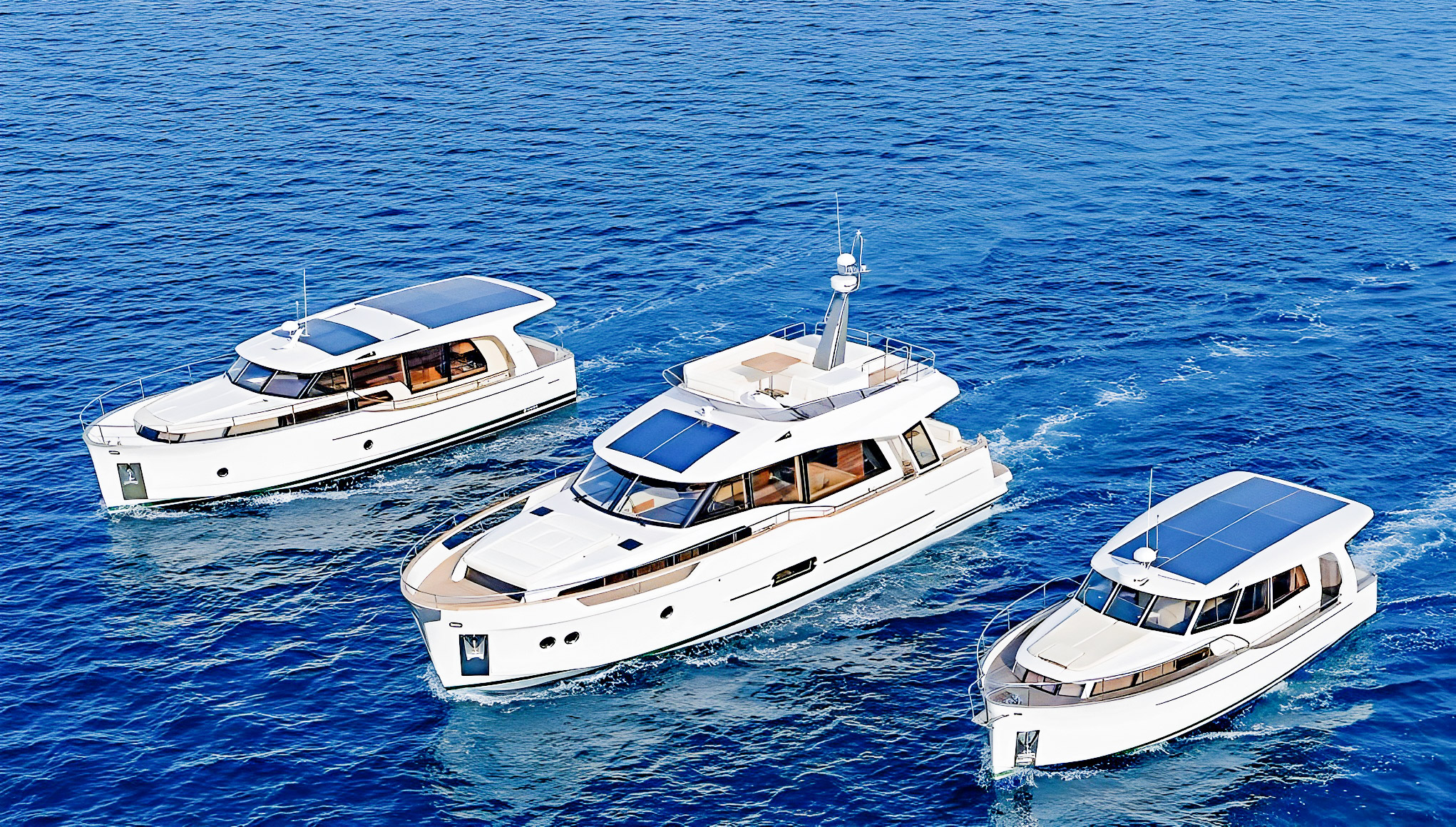
  • Three Greenline yachts underway together on blue water.

Greenline Yachts: A Look at Arid Below Deck

By |2026-10-13T16:59:43+00:00October 12, 2026|Blog, Boat Builders|

Arid supplies Greenline Yachts with dry-bilge equipment. Our company feature, dated January 10, 2024, shows installations below deck. Its current caption describes Series 2 or Series 4 systems aboard Greenline yachts.

Three Greenline yachts underway together on blue water.
The Greenline fleet photograph from Arid’s original company feature.

The pickup locations tell the practical part of the story. Our caption places most in the engine rooms, with some extending forward. Residual water can collect in more than one part of a yacht, so the installation has to follow those separate collection points.

Greenline’s approach to onboard energy

Greenline’s current Responsible Yachting information describes integrated solar systems available across its range, with capacity depending on the model and configuration. Solar generation contributes to battery charging and onboard electrical loads. Its hybrid systems use lithium batteries to store energy from solar, shore power and the propulsion system, depending on configuration.

That is the builder’s current approach. The photographs in our earlier installation feature show a separate, straightforward job: placing dry-bilge equipment among the other systems already below deck.

A closer look at an Arid installation

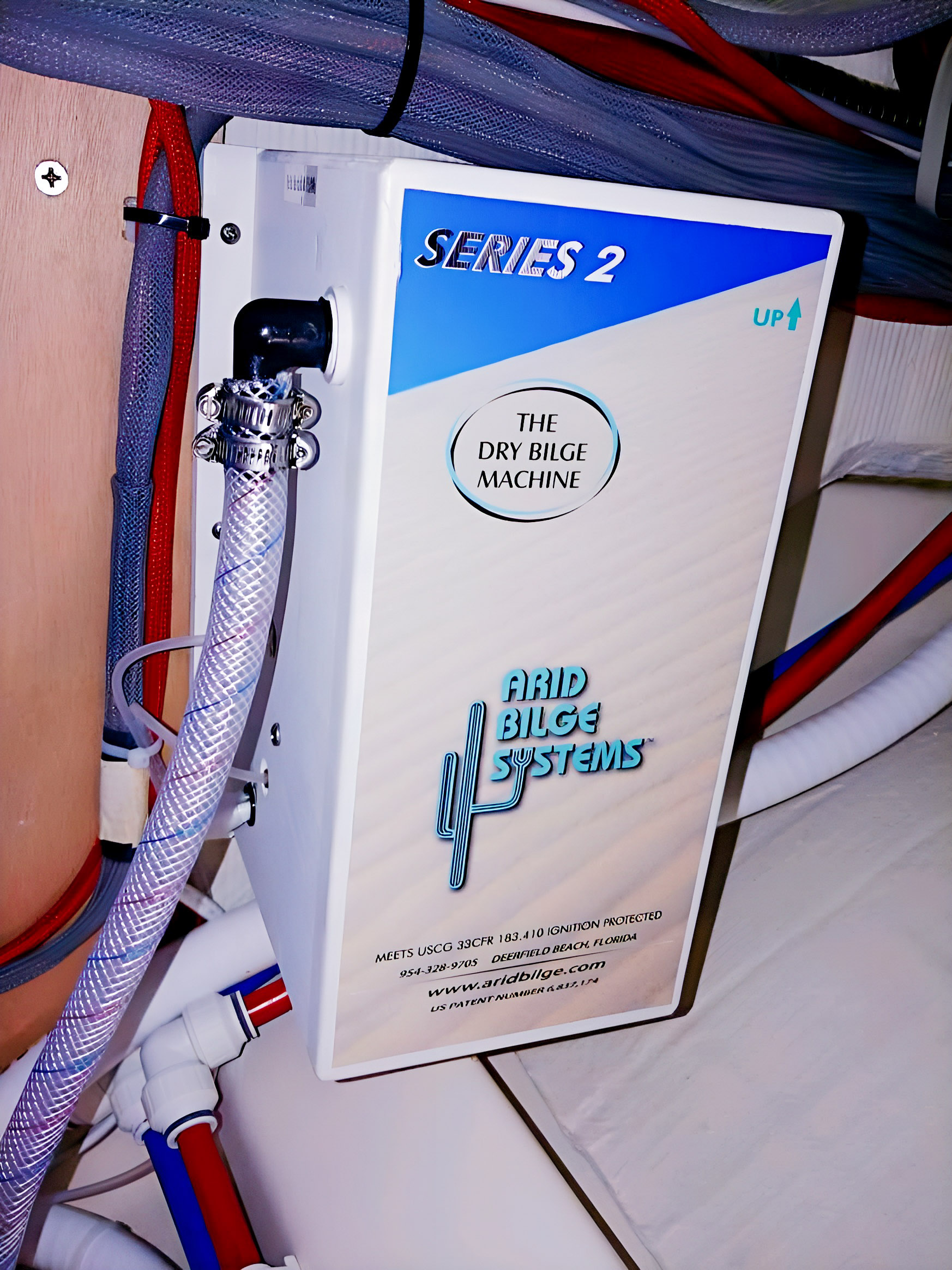
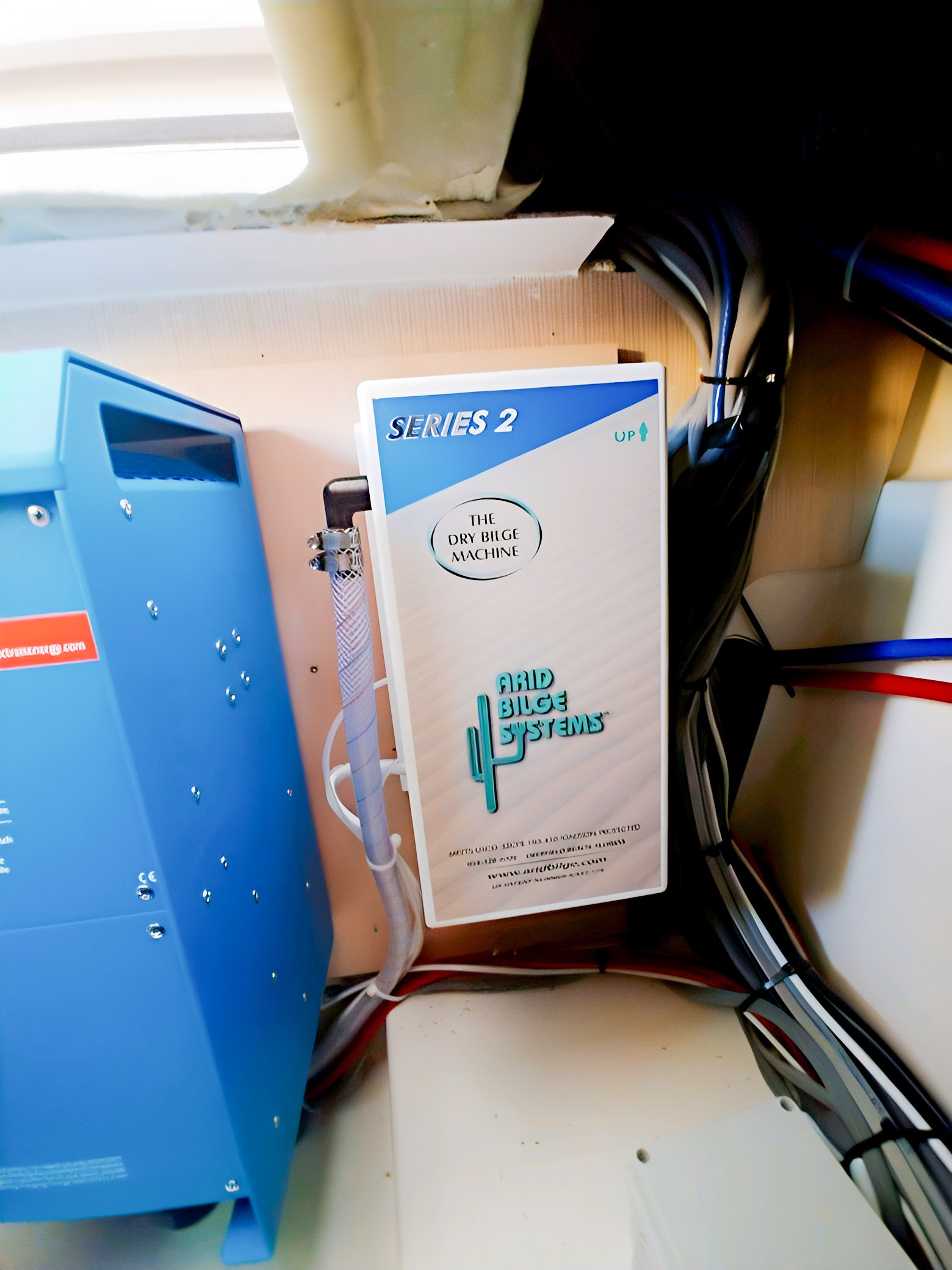
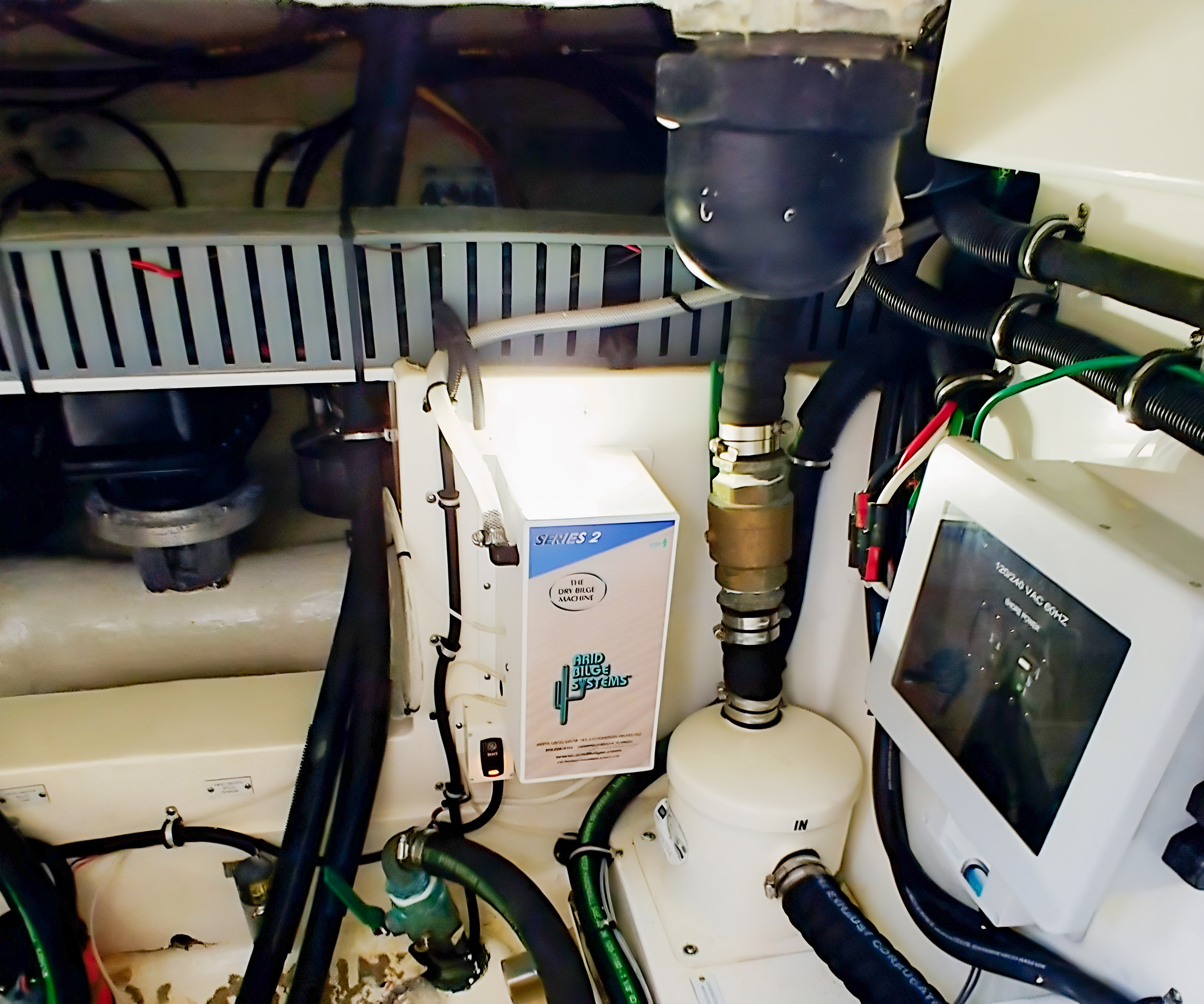
The photograph shows a cabinet clearly labeled Series 2, mounted beside a blue enclosure. Its front panel, hose connection and nearby cable runs are visible. It is one of the installation views in our Greenline feature; the post does not identify its individual hull or model.

Arid Series 2 cabinet mounted beside a blue enclosure and cable runs in the Greenline installation feature.
A Series 2 installation from Arid’s Greenline company feature.

Arid Series 4 cabinet mounted above equipment in a foil-lined Greenline compartment.
A Series 4 installation shown in the original Greenline feature.
Close view of an Arid Series 2 cabinet and its hose connection in the Greenline feature.
A closer view of a Series 2 cabinet and hose connection.
Arid Series 2 cabinet beside a blue enclosure, with cable runs visible to the right.
Another original view of the cabinet beside the blue enclosure.
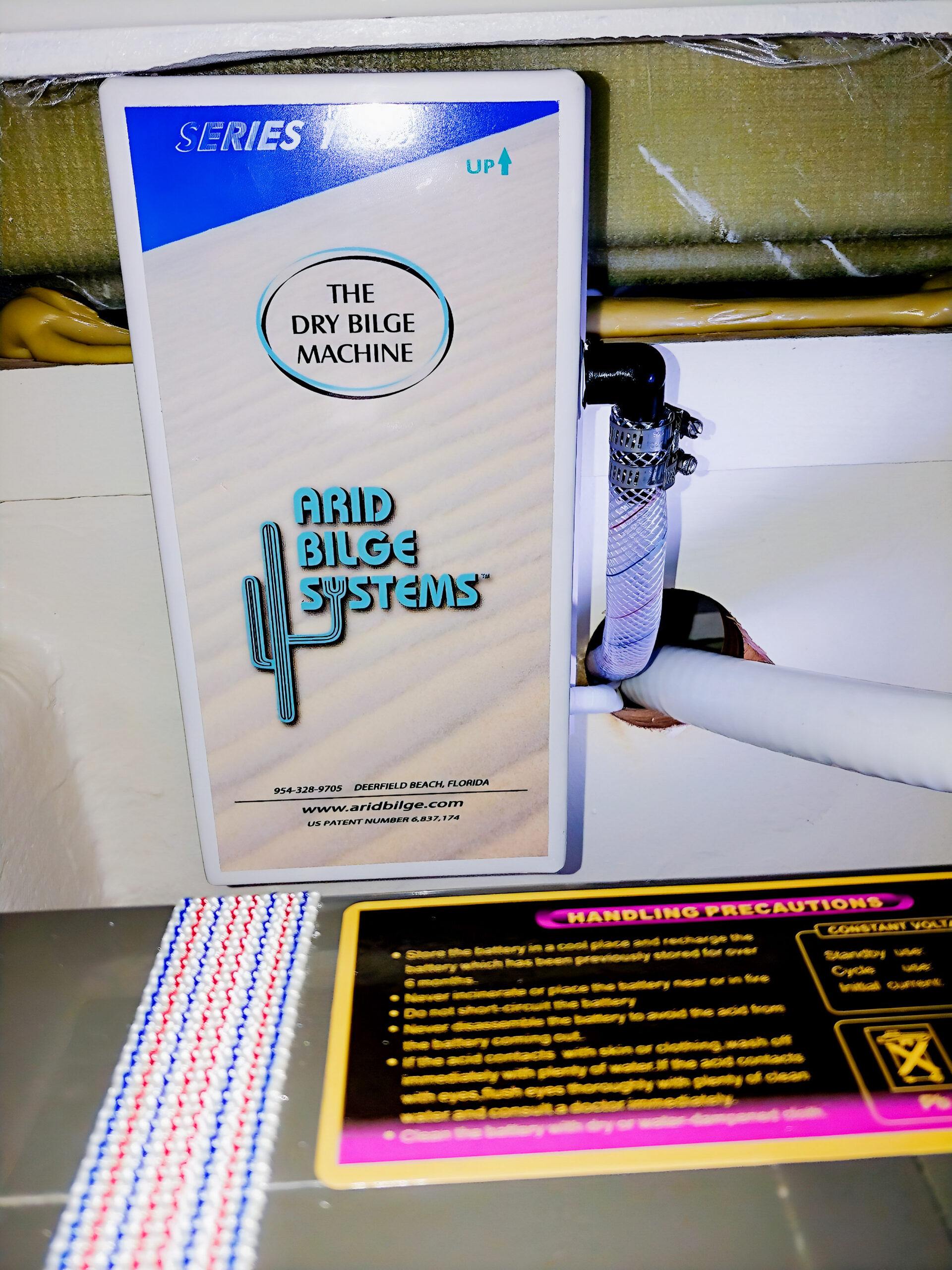
Arid cabinet and hose connection above a battery label in the Greenline archive feature.
A cabinet detail from the same Greenline archive feature.

For a builder planning a similar installation, the photograph raises useful questions. Can the panel be read once neighboring equipment is in place? Can connections be reached for service? And can the pickups themselves be reached for inspection and cleaning? The cabinet location and the water-collection points both belong in the plan.

Arid collects shallow residual water through pickups connected to a central unit. The yacht’s conventional bilge pumps remain essential and must stay operational. Our How Arid Works guide explains that supporting role.

Plan around the yacht being built

The archive includes Series 2 installations, while our caption also reports Series 4 equipment. These photographs are not a specification for every Greenline. For a new project, compare the current Series 2 and Series 4 options against the actual collection points, tubing routes and service access.

See the original Greenline feature, or talk with Arid about an installation.

Why builders choose Arid: explore the benefits for builders and owners, and read our boat-building story.

25 11, 2025
  • Why Phenom Yachts Trusts Arid Bilge Systems for a Cleaner, Longer-Lasting Boat

Meet the Phenom 34: Speed, Style, and Smart Design

By |2026-10-13T16:59:44+00:00November 25, 2025|Blog, Boat Builders|

The Phenom 34 walkthrough begins below deck, beside the machinery, before moving to the helm. That is a useful order for a boat tour. Arid supplies Phenom Yachts, and this visit connects the finished boat with a customer’s request for the equipment beneath it.

Alfred Baurley joins Shaun Reale, introduced in the walkthrough as Phenom’s National Sales Manager. Reale describes a semi-custom center console intended for fishing and family use. The builder’s current Phenom 34 specifications list a length overall of 33 feet 6 inches and a beam of 10 feet 5 inches. Those dimensions provide context for a boat whose below-deck layout deserves its own inspection.

A customer request, then a specific installation

In the interview, Reale explains that the Arid relationship began when a customer requested the system by name for this build. He identifies three separate bilge areas and discusses keeping the compartments clean for boat-show visits. Alfred’s opening view shows an Arid installation beside the machinery.

That account gives an owner something more useful than a general promise of a dry boat: a reason to ask which spaces the installation actually serves. Three bilge areas are not automatically three identical spaces, and the number alone does not describe the pickup locations or tubing routes.

Look beyond the helm display

The walkthrough also covers the EmpirBus controls integrated with Garmin multifunction displays. Reale explains how lights, pumps and switches appear at the helm. When touring a boat, follow that polished presentation with a look at the equipment and access beneath it.

Ask the installer to identify the Arid unit and each collection point on the actual boat. Record which hatch reaches each area and where the relevant service information is kept. Photographs taken during that walkthrough can help an owner or technician recognize the layout later without relying on memory.

Eric Glaser’s Midnight Express discussion considers rear, middle and optional forward pickup locations. It complements the Phenom visit by bringing separate compartments into the installation plan. The Everglades 395 interview continues that conversation into regular use, with Captain Sean Hickey’s account of bilge condition after an extended trip.

Match the equipment to the work

Arid removes residual water through a central collection and discharge system while conventional bilge pumps remain in place. The operation guide explains that distinction. Leaks and blocked drains still need attention.

For a Phenom buyer, the next step is a specific equipment conversation: review the build being considered, confirm the selected wet areas and walk through access with the people who will service it. The video supplies a starting point, not a fitment list for every Phenom 34.

For the shorter overview, watch Phenom Yachts on Arid Bilge: Below-Deck Fit & Finish.

Why builders choose Arid: explore the benefits for builders and owners, and read our boat-building story.

23 10, 2025
  • Midnight Express and Arid Bilge Systems interview thumbnail with Eric Glaser and Alfred Baurley.

Midnight Express: Eric Glaser on Arid Pickup Locations

By |2026-10-13T16:59:44+00:00October 23, 2025|Articles, Blog, Boat Builders, Boat Stories, Center Consoles, Performance Boats|

Where does the water remain after the bilge pump stops? On a boat with several separate compartments, that question needs more than one answer. Arid supplies Midnight Express, and Eric Glaser’s conversation with Alfred Baurley explains how the builder approaches collection points below deck.

Midnight Express builds performance center consoles in Miami and emphasizes customization. The interview brings that idea into an area an owner may see only through an access hatch: the placement of a central drying unit and the lines serving it.

Start with the compartments

Glaser describes mounting the central unit in the rear bilge, with pickups in the rear and mid-bilge. Depending on the customer’s needs, he says, a collection point may also be fitted near the bow thruster where water can remain.

At the time of the interview, Glaser described Arid as an option offered across the builder’s models. The conversation does not identify one particular Midnight Express model, and a buyer should confirm the equipment and pickup plan for the boat being ordered. The useful detail is the approach: choose collection points for the spaces that need them.

Make the pickup plan easy to follow

When reviewing a build or an existing installation, ask for a simple compartment map. Mark the central unit, each pickup and the access point used to inspect it. If the bow-thruster compartment is included, identify its line rather than assuming it is covered because a system is fitted elsewhere.

Then consider service access. Can someone reach the pickup to inspect it? Can the tubing route be followed without moving unrelated equipment? A short walkthrough with the installer can turn an equipment list into something the owner and service team can use.

The Phenom 34 walkthrough offers another example of why separate bilge areas deserve individual attention. The Hylas H57 conversation adds another consideration: where operating equipment sits in relation to the living space. Both are useful comparisons, rather than specifications for a Midnight Express.

See the water-routing animation

Illustrative Arid water-routing animation. Actual equipment placement and pickup locations vary by vessel and installation.

This silent animation shows pickups in separate low areas connected by tubing to a central Arid unit, with collected water moving through a discharge line.

Keep the jobs of the two systems clear

Arid addresses residual water through pickups connected to a central unit. Conventional bilge pumps retain their own job, and a new source of water still needs investigation. Our guide to how Arid works shows the collection and discharge process.

For the owner, the takeaway from Glaser’s account is concrete: understand which compartments are served, how to reach the equipment and what was specified for this boat. Those details belong in the handover as much as the controls at the helm.

For a brief introduction, watch the Midnight Express interview Short.

The Midnight Express interview

Alfred: Eric, can you tell me a little about your experience—how the Arid Bilge System has worked across your Midnight Express boats?

Eric: Yeah, absolutely. We offer Arid Bilge Systems across all of our models. It helps keep the bilges dry and clean, so you’re not worried about all the corrosion and the mess you’d normally find down there. It’s a great option. You guys have a bunch of different versions—some different power supply options—and it works for us depending on which way we’re powering the boat.

Alfred: Where is the system mounted on the boat?

Eric: We mount them in the rear bilge of the boat on every model.

Alfred: What locations does it vacuum from?

Eric: So we do one in the rear bilge, one in the mid-bilge, and then depending on what the customer asks for, sometimes we do one up by a bow thruster, where it might catch a little bit of water—just to help keep everything dry in those areas too.

Alfred: And this has improved your boats by keeping everything nice and dry versus having a wet, moldy environment—especially when you think about protecting your Seakeeper, your generator, and all the sensitive components that are down in those compartments.

Eric: Of course. It’s all good things. Water messes everything up, and we’re in a wet environment on a boat—so it just makes sense to dry it out.

Alfred: Eric, I really appreciate your time.

Eric: No problem. Thanks for making a great product. Keep it up.

Why builders choose Arid: explore the benefits for builders and owners, and read our boat-building story.

22 10, 2025
  • Everglades Boats and Arid Bilge Systems interview thumbnail with before-and-after bilge photographs.

Everglades Boats and Arid: Aboard the 395

By |2026-10-13T16:59:44+00:00October 22, 2025|Articles, Blog, Boat Builders, Boat Stories, Center Consoles|

Arid supplies Everglades Boats. A conversation aboard the 395 puts that relationship in practical terms: what happens in the bilge while a boat is being used, and how does that affect the spaces around its equipment?

In the interview published with our 2025 story, David Brown speaks as Everglades’ Vice President of Product Development and Engineering. He describes Arid as standard equipment on the 395 at that time. Captain Sean Hickey, speaking as a regional manager and company captain, brings an extended-trip perspective to the discussion.

A captain’s account from an extended trip

Hickey recalls roughly 2,500 miles over three months and reports finding the bilge dry when the boat came out of the water. He connects the condition of that space with the generators, stabilization equipment and other systems carried below deck.

That is his account of a particular trip. For another owner, it suggests a useful habit: make the condition of accessible bilge spaces part of regular checks, including after a trip. Record where water returns, and have its source investigated instead of assuming the same result on every boat.

The 395 combines fishing equipment with cabin systems

Everglades’ current 395CC description shows why access matters. The builder lists a finished hull liner, oversized rigging troughs and a cabin-floor bilge hatch. Its equipment list also includes conventional bilge pumps and a high-water alarm.

Arid’s contribution is residual-water collection at connected pickup locations. The conventional pumps and alarm retain their jobs. Brown’s interview explains the fitment described then; confirm the equipment specification for a new build or a different model year with Everglades.

A separate Everglades installation in our archive

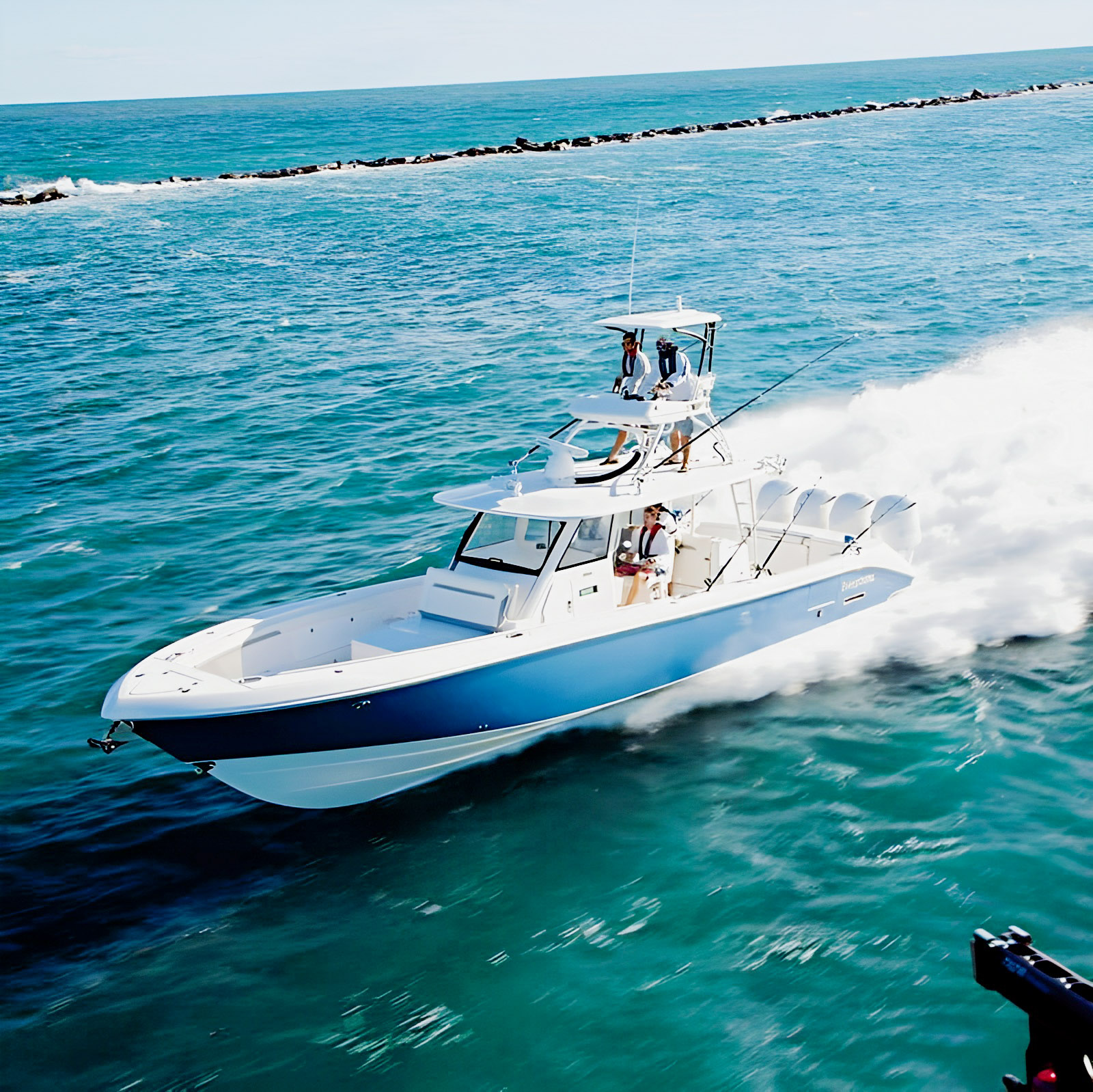
Our original archive photographs show another Everglades: a blue-hulled center console with four outboards, paired with its installed Series 2 cabinet. They are not presented as photographs of the 395 interview boat. Our original installation feature keeps those two views together.

Blue-hulled Everglades center console with four outboards underway near a breakwater.
An Everglades center console featured in Arid’s installation archive.
Arid Series 2 cabinet installed among hoses and wiring aboard an Everglades center console.
Arid Series 2 installed aboard an Everglades center console.

Plan for coverage and future access

The cabinet photograph shows one part of the installation. Planning also needs to identify the separate areas where residual water collects and the route between those pickups and the unit. Bring photographs of the low points and access hatches to that discussion.

See how Arid collects residual water, then compare the service-access discussion in HCB’s Estrella interview and the attention to finished equipment spaces in our Bahama Boat Works story. The layouts differ; planning around the actual boat is the common starting point.

A shorter cut of the Everglades interview is also available.

See the water-routing animation

Illustrative Arid water-routing animation. Actual equipment placement and pickup locations vary by vessel and installation.

This silent animation shows pickups in separate low areas connected by tubing to a central Arid unit, with collected water moving through a discharge line.

The Everglades Boats interview

Alfred: Here to go and talk about the Arid Bilge System on the 395, and how the Arid Bilge System makes the Everglades a better boating dry experience. Here to talk about it with David.

David: Yeah, thanks for being here. You’re on the 395. I’m David Brown, the Vice President of Product Development and Engineering. We partnered with Arid Bilge Systems, and it is now a standard feature on this boat. It really helps keep all of the below deck bilges nice and bone dry.

David: It’s been a huge customer satisfaction item—especially for people who keep their boats in the water. Everglades has been building center consoles for years. We offer a full range of boats from our 245 up to our 455, packed full of technology and patented features. So, we’re really proud to be a partner here with Arid Bilge Systems.

Sean: Hi, I’m Captain Sean Hickey with Everglades Boats. I’m one of their regional managers as well as the captain of the company. At Everglades, our philosophy is using nothing but the best parts we can find on the marketplace.

Sean: The last trip I did was a long trip—over about 2,500 miles over the course of three months. We pulled the boat out of the water at the end of that, and there wasn’t a drop of water in the bilge. And that’s imperative these days with Helm Master systems down there—Seakeepers, generators, you name it.

Sean: The Arid Bilge System delivers as promised. It keeps your bilge dry and keeps your electronics safe.

Why builders choose Arid: explore the benefits for builders and owners, and read our boat-building story.

22 10, 2025
  • Arid Bilge Systems Interview with Scout Boats

Scout Boats and Arid: Josh Slayton on Dry Bilges

By |2026-10-13T16:59:44+00:00October 22, 2025|Articles, Blog, Boat Builders, Boat Stories|

The deck is clean, the bilge has been attended to, and a shallow puddle remains. Josh Slayton of Scout Boats describes that small unfinished part of the job in our interview: a conventional bilge pump can leave water at the bottom after cleaning.

Arid supplies Scout Boats. Slayton’s account, published in October 2025, makes the relationship tangible. He talks about crews responsible for cleaning below-deck areas on boats used as yacht tenders, and about an Arid installation serving two wet areas. Those details explain a use for residual-water removal without making every Scout installation identical.

Fit and finish includes the spaces you open

Scout’s own history traces the company’s beginnings through Steve Potts and his family. In the interview, Slayton connects that background with the builder’s attention to fit and finish. His example moves the conversation from how a boat looks at delivery to the work involved in keeping its compartments presentable.

That distinction matters to an owner or crew. Cleaning deals with the surfaces; a pickup serves the residual liquid that reaches it. A drying system does not remove the need to inspect the space, investigate returning water or follow the boat’s cleaning instructions.

Understand the two-area example

Slayton describes wet bilge areas containing seacocks and sea strainers. In the conversation, the collection arrangement serves the lazarette and cabin area. The useful point is that separate spaces need to be considered separately when planning the pickups.

For your boat, ask the builder or installer to identify which low points are served, where the central unit sits, and how the pickups can be reached. Confirm the arrangement for the particular model and hull. The interview’s two-area description should not be treated as a current equipment list for the entire Scout range.

Watch the original conversation with Josh Slayton, or see the short washdown explanation.

Finish the job with a clear routine

Arid removes residual fluid from connected pickup locations while the boat’s conventional bilge pumps remain operational. Our guide to how Arid works explains that division of work. Keep the installed system’s maintenance instructions with the rest of the boat’s equipment information so the person cleaning or checking the bilge knows what to inspect.

The Midnight Express interview offers another builder’s view of choosing pickup locations. Albemarle’s Keith Privott discusses finished bilges and owner care. Together, these conversations give an owner useful questions about the spaces below deck and the attention they will need over time.

Transcript: Onboard With Scout Boats

Alfred:
Josh Slayton is going to go ahead and tell us a little about his personal experience, a little bit of the company history, how they’ve been in business for so long—and you get, obviously, the high quality and keen detail on all these boats. They are sharp, they are beautiful, and they last for a long time.

We’re an American-made system, keeping that boating experience nice, fresh, and clean. Josh?

Josh:
Yeah, thanks Alfred. Appreciate the opportunity.

Scout is a family-run business. It was founded in 1989 by Steve Potts, and from then until now, it is still owned and operated by the Potts family. Whether you’re talking about Steve Potts, his son, his two daughters, his son-in-law, his other son-in-law—they’re all part of the family-run company.

Originally founded with high fit and finish, high performance, and high styling. And with the fit and finish, we really appreciate the opportunity to have partnered with Arid Bilge to help enhance that feature of the Scout boats—the fit and finish.

Alfred:
It’s not easy producing a boat, and with the Arid Bilge System, we go ahead and keep that boating experience fresh and clean, just like it came out from the box.

That’s what the Arid Bilge System does. It gets rid of your odor, it gets rid of your mold, it gets rid of your corrosion—the rust, potentially, as well. All that stuff gets sucked out at the source, as opposed to just sitting down there.

We suck it out. A bilge pump doesn’t have to run anymore—only for the emergency. That’s what the Arid Bilge System does, and that’s what the Arid Bilge System experience is. We just vacuum it up and throw it overboard.

Josh:
Right now, our largest boat in the fleet—soon to be 67′ in the fleet—both of those are wet bilges because they have seacocks and sea strainers in them.

And in both of those sections, we utilize the two-ported Arid Bilge System.

Alfred:
So the Arid Bilge System sits in the lazarette of that boat right over there, and it goes and vacuums the fluid from that zone and the cabin zone—is that correct?

Josh:
Yeah, both zones get vacuumed together into the collection box, and then discharged overboard once the collection box is full.

Alfred:
So the Arid Bilge System sits on the aft of your boat. You’ve got some expensive equipment down there. You’ve got your generator, you’ve got your gyro, and just everything in the local environment.

Josh:
Yeah, your ice machines.

Alfred:
So you like to go and see the boat having a nice, dry, clean experience—because as opposed to that water sitting down there, it’s just causing a little bit of mold.

Josh:
Oh, it’s fantastic. And particularly on our quality of boats, we get a lot of boats as tenders to yachts. The crew are responsible for cleaning the top deck, but are actually responsible for also washing and cleaning the bilge areas.

So when they do wash and clean the bilge areas, the bilge pump itself leaves a little bit of water at the bottom that it can’t suck out—but the Arid Bilge is utilized perfectly in that situation to completely dry it out.

Alfred:
Yeah. Thank you so much for your testimonial. Appreciate having business with you.

Josh:
Yeah. Thanks, Alfred.

Alfred:
Thank you.


See the water-routing animation

Illustrative Arid water-routing animation. Actual equipment placement and pickup locations vary by vessel and installation.

This silent animation shows pickups in separate low areas connected by tubing to a central Arid unit, with collected water moving through a discharge line.

Why builders choose Arid: explore the benefits for builders and owners, and read our boat-building story.

22 10, 2025
  • Arid Bilge Systems Regulator Boat Interview

Regulator Bilge Drying: Planning an Arid Installation

By |2026-10-13T16:59:44+00:00October 22, 2025|Articles, Blog, Boat Builders, Boat Stories|

A useful bilge-drying conversation starts with an open hatch. Where does water remain? Can you reach that spot? What else shares the compartment? Those questions give a Regulator owner a clearer installation brief than boat length alone.

Arid supplies Regulator Marine. The builder’s own history begins in Edenton, North Carolina, where Joan and Owen Maxwell developed the first Regulator in a former grocery store. Its account of the company’s beginnings emphasizes the testing and attention to detail behind the boat. Planning equipment below deck deserves that same close look.

Map the water before choosing the system

A conventional bilge pump can leave shallow water below its intake. Water can also settle in a separate low area that does not drain toward that pump. Arid collects residual fluid through connected pickups, so the first job is to identify the areas an installation needs to serve.

Make a simple record of what you find during normal use: the compartment, where water sits, and when you notice it. A photograph taken from the access hatch can help explain both the low point and the space available around it. Unexpected or recurring water also needs investigation; drying the compartment does not repair its source.

Make access part of the plan

Ask the installer to walk through the proposed pickup locations, central-unit position, tubing route and discharge arrangement. Then ask how each part will be reached for inspection and maintenance. The practical question is whether someone can service the installation after the surrounding equipment is in place.

Confirm the current equipment specification for your particular Regulator with the builder, dealer or installer. The existing Regulator and Arid video introduces the subject; it is not a specification for every model or hull. A short version is also available.

Keep the rest of the bilge routine

Arid supplements the boat’s bilge pumps. Keep those pumps operational, follow the instructions for the installed drying system, and leave time for routine inspection. Our explanation of how Arid works follows the collection and discharge process and explains its limits.

Two other builder conversations help sharpen the questions. Scout’s Josh Slayton discusses water left after bilge cleaning, while Albemarle’s Keith Privott considers the care of finished bilges. Each describes its own boats and practices. Use those perspectives to prepare a better conversation about your Regulator’s actual layout.

Why builders choose Arid: explore the benefits for builders and owners, and read our boat-building story.

25 06, 2025
  • HCB Yachts and Arid Bilge Systems interview thumbnail with before-and-after bilge photographs.

HCB Yachts and Arid Bilge: Dalton Teeter Interview

By |2026-10-13T16:59:44+00:00June 25, 2025|Articles, Blog, Boat Builders, Boat Stories, Center Consoles|

Arid supplies HCB Yachts. Aboard the 65-foot Estrella, Dalton Teeter explains the relationship through the work people do below deck: inspecting equipment, keeping compartments in good condition and reaching the drying system for maintenance.

The boat provides a distinctive setting for that discussion. HCB’s official Estrella description lists a 65-foot length, a 16-foot beam and a walk-in machine room. The space devoted to onboard systems makes their accessibility a meaningful part of the ownership experience.

Three areas aboard the interview boat

In the interview published with our 2025 story, Teeter describes bilge-drying coverage in the aft bilge, at midship and beneath the master stateroom. He connects those separate areas to the layout of the boat, rather than describing the bilge as one uninterrupted space.

Those are the areas he identifies aboard that Estrella. They are not a universal pickup count or an installation plan for every HCB. When discussing another boat, establish which compartments drain together and which have their own low points before choosing coverage.

Service access belongs in the installation plan

Teeter repeatedly returns to serviceability. He discusses reaching the system and cleaning it after debris enters the pickup arrangement. His account describes the installation he knows; the maintenance procedure for another system should come from its own instructions.

For a buyer or captain, the useful questions are specific. Can someone reach the cabinet connections? Are the pickups accessible for inspection? Will another piece of equipment block those routes later? A walkthrough of the actual spaces is more informative than selecting equipment from the yacht’s length alone.

A separate installation from the HydraSports archive

A separate HydraSports installation feature pairs the four-outboard boat underway with a photograph of its Arid Series 2 cabinet among the equipment. They show another arrangement, not the Estrella discussed in the interview. See the original photographs together in our HydraSports post.

HydraSports center console with four outboards underway, viewed from above.
HydraSports center console from Arid’s installation photo feature.
Arid Series 2 cabinet fitted beside hoses, wiring and other equipment in a HydraSports center console.
Arid Series 2 installed aboard a HydraSports center console.

Put bilge drying in the wider care routine

Arid removes residual water from connected pickup locations. It complements conventional bilge pumps; recurring water still needs investigation. The system overview explains the collection process behind those locations.

For a captain’s longer-trip perspective, continue with Everglades’ 395 interview. Bahama Boat Works’ discussion of fit and finish approaches the same equipment spaces from an owner’s first inspection. Together, the stories show different reasons to include bilge condition and maintenance access in the conversation with a builder.

See the water-routing animation

Illustrative Arid water-routing animation. Actual equipment placement and pickup locations vary by vessel and installation.

This silent animation shows pickups in separate low areas connected by tubing to a central Arid unit, with collected water moving through a discharge line.

HCB Yachts: the Estrella interview

Alfred: Hello, I’m Alfred Baurley here with Arid Bilge Systems, with Dalton at the HCB booth, and he’s going to tell us a little about the Arid Bilge System, his personal experience, and how the Arid Bilge System coexists with his line of boats.

When you take a look at these boats—these HCB boats—they build exquisite boats. They’re massive in size, and they are superbly fast. They have on this boat, Estrella, so much customization. Here at HCB, the customer will have the best boating experience possible.

At Arid Bilge Systems, we keep that boating experience dry, fresh, and clean—just like when it came out of the factory. That’s the point of the Arid Bilge System. That gyro, that generator, all these expensive marine technologies down in your bilges—all that stuff is being kept fresh and clean, as opposed to getting rust and corrosion buildup. No more mold, no more odor.

Dalton, tell me a little about your experience and what you all do here at HCB.

Dalton: First off, welcome aboard the 65′ Estrella, a center console yacht, which is truly amazing. You’re talking about the cockpit area, how wide she is. This is a 16-foot beam, which is massive. I’ve had customers put 14-foot jet boats in here as tenders.

Alfred: I mean, you’ve got a lot of poles too, I can see.

Dalton: Yeah, so funny enough, this one is a 65-foot vessel, top speed of 65, has 65 rod holders, and of course—six 600s. The ‘65 Estrella launched in 2018, and it really launched HCB into the yachting industry. We rebranded into HCB Center Console Yachts in 2018 because of this Estrella, and it put us in a new league. And to be honest, we have rocked that league, I believe.

Alfred: So would you say that the Arid Bilge System really improved your overall quality of boats?

Dalton: Yes. So the dry bilge system—we will not build a vessel without it. It’s too important for the bilge to be dry to not have it in the boat. Having a dry bilge is very important to make sure you’re not only keeping things maintained well, serviced well, and overall cleanliness.

So honestly, on the HCB, which is a high-end center console—it’s a luxury center console, right? We have to have the best of the best, our nature of the beast. We always think, we try to over-engineer things. So the Arid Bilge, for us, is a dry bilge.

A dry bilge is a happy bilge.

We have three sea chests actually in this 65, meaning fewer thru-hulls in the bottom of the boat. Everything’s going into the centralized tank system and feeding it throughout the whole vessel. So, very minimal areas to leak, but if something does get water into the bilge, that dry bilge that you all offer us keeps it a nice, dry bilge.

And it is, like you stated, in three areas: it is in the aft bilge, midship, and right underneath the master stateroom as well—just to keep everyone happy and clean. Honestly, most of the work’s always in the aft bilge pads, and it’s worked really well for us.

Alfred: Would you say that what the Arid Bilge System does—it stops the rust buildup on things like your generator and your gyro?

Dalton: It helps overall maintenance of the vessel—serviceability, things of that nature. You’re keeping the condensation out of the bilge, which is immensely important here in the marine industry. You’ve got a captain, you’ve got someone servicing your vessel—they’re really going to appreciate a dry bilge area.

If I can keep that moisture out of there, I’m going to have less service problems, as well as an overall nicer bilge area.

Alfred: Would you say that it’s a really durable system?

Dalton: I love the serviceability of the system, honestly. It’s easy to work on. It’s easy to clean. You just literally undo the hose, do some air—clean out your hoses if you’ve sucked in some dirt or debris. Because it is more of a pad on the bottom—it is sucking to the bottom of the bilge area, and you do get dirt and dust. The dry bilge system gets all that into a centralizing area, and it might get clogged.

Five minutes, quick air-clean—it’s done. That’s amazing, right? That’ll also help save our bilge pumps in the future, without getting all that dirt in our bilge pumps and having to replace bilge pumps. That Arid Bilge—you’ve pulled it in there to a central location, you’re cleaning it out—your service guys are very happy about that.

Alfred: Dalton, thank you so much for your time. This has been an amazing experience on this boat. I love all your boats, to tell you the truth. 

Dalton: I hope that we’ve educated all boaters that it is important to have a dry bilge. A dry bilge is a happy bilge.


Why builders choose Arid: explore the benefits for builders and owners, and read our boat-building story.

23 08, 2024
  • Hylas Yachts and Arid Bilge Systems interview thumbnail with Kevin Wensley and Alfred Baurley.

Hylas Yachts: Kevin Wensley on Dry Bilges

By |2026-10-13T16:59:44+00:00August 23, 2024|Articles, Blog, Boat Builders, Boat Stories|

A cruising yacht is also a place to live. The cabins and salon get most of the attention, but the compartments beneath them deserve a place in the conversation. Arid supplies Hylas Yachts, and Kevin Wensley’s interview with Alfred Baurley aboard an H57 explains that relationship through the practical details of life below deck.

The Bill Dixon-designed Hylas H57 is a bluewater sailing yacht with interior customization among the builder’s priorities. For an owner planning extended time aboard, the equipment behind that interior matters alongside the layout itself: where it operates, which spaces it serves and how it can be maintained.

Small amounts of water still need a plan

Wensley gives a specific example from commissioning: rain entered while the mast was being stepped. He says the compartment was dry when he checked it before the interview. He also discusses water returning through bilge-pump plumbing after a pump stops. These are observations about the yacht and installation being discussed, rather than a promise that water can never enter a Hylas.

Arid’s role is to remove residual water alongside the yacht’s conventional bilge pumps. The collection and discharge cycle explains how low-point pickups serve a central unit. Investigating a new leak and caring for existing pumps remain part of owning the boat.

Fit the equipment around the living space

On the installation Wensley describes, the central unit sits in the insulated engine compartment. He explains that this keeps operating noise away from the living area. Collection points serve the main bilge below the salon and an aft area near the steering equipment.

That is useful information to carry into a handover. Ask to see each pickup, follow its tubing route and identify the access needed for cleaning and service. Keep that map with the installed model’s manual. It gives the next person caring for the yacht something more useful than a general instruction to check the bilge.

See the water-routing animation

Illustrative Arid water-routing animation. Actual equipment placement and pickup locations vary by vessel and installation.

This silent animation shows pickups in separate low areas connected by tubing to a central Arid unit, with collected water moving through a discharge line.

Carry the layout into the ownership conversation

Before agreeing an installation, walk through the boat with the people who will maintain it. Can the unit be reached without dismantling unrelated fittings? Which floor panels reveal the collection points? Where will electrical specifications and service instructions be kept?

The boats differ, but the placement question also appears in our Midnight Express conversation with Eric Glaser. Our Albemarle conversation with Keith Privott considers the care given to finished bilge spaces. On the H57, Wensley makes the placement question personal: the machinery has to work within a yacht that people sail, clean and live aboard.

Edited interview highlights from Hylas Yachts

This summary draws on the conversation aboard the H57. Watch the video above for the complete interview.

The small amount a bilge pump leaves behind

Wensley describes a yacht designed to stay dry, while acknowledging that some water still reaches the bilge. His example is rain entering while the mast was being stepped during commissioning. When he checked the compartment before the interview, he found it dry.

The discussion also covers water that can return from bilge-pump plumbing after a pump stops. For Wensley, removing that residual water is part of keeping the spaces below deck pleasant to use. He connects the condition of those compartments with the smell and overall feel of the yacht.

Place equipment around the way people live aboard

On this installation, the central Arid unit sits in the insulated engine compartment. Wensley explains that the placement keeps operating noise away from the living space. He describes pickups serving the main bilge beneath the salon and an aft area near the steering equipment.

Those details make the installation concrete: a central unit needs a suitable location, and the collection points need to reach the areas where water remains. Access for inspection and service belongs in that planning, too.

Installation support and electrical planning

Wensley speaks positively about communication between Arid, the Hylas factory and the service team. He describes support with installation details and questions from owners, alongside the wider service relationship Hylas maintains with its customers.

The conversation also touches on electrical demand and the resources available aboard a sailing yacht. Those comments concern the equipment discussed in this interview. Use the manual for the installed model when checking current electrical specifications and maintenance requirements.

The recurring point is comfort backed by practical details: where water collects, where equipment is fitted and how the people caring for the yacht can reach it.

Why builders choose Arid: explore the benefits for builders and owners, and read our boat-building story.