

For a builder known for custom aluminum vessels, bilge drying addresses a practical part of caring for a metal boat: removing the shallow water that can remain between regular inspections.
A well-kept bilge should make the boat easier to look after. Less standing water means a clearer view of the structure, fittings and places where fresh water appears. On a working boat or cruising trawler, that is useful every time someone opens a hatch.
Rozema Boat Works: a family boatbuilding history
Founded in 1955 by Alle Rozema in Bay View, Washington, Rozema Boat Works traces its history through three generations of the family. Its company history describes a business built around durable, purpose-built vessels.
Today, Rozema’s aluminum boatbuilding work serves commercial fishing, research, spill response and passenger transport, among other applications. Its vessel range also includes yachts and sport boats. The common thread is building around a particular job and the conditions the boat will encounter.
Why a dry bilge matters on a metal boat
Metal hulls deserve attention below the floorboards as well as above the waterline. Persistent wetness, salt deposits and debris can make maintenance harder. Water covering a low point can also hide the start of a new leak or changes in a coating.
Steel can rust; aluminum can suffer corrosion and pitting, but it does not form iron rust. The material, water chemistry, electrical condition and contact with other metals all matter. Keeping accessible bilge areas drier supports inspection and reduces prolonged contact with standing water. It is one part of caring for the hull, alongside appropriate coatings, cleaning and corrosion protection.
Our metal-hull bilge guide explains why identifying the affected metal and investigating the cause are essential.
What Arid adds to the maintenance routine
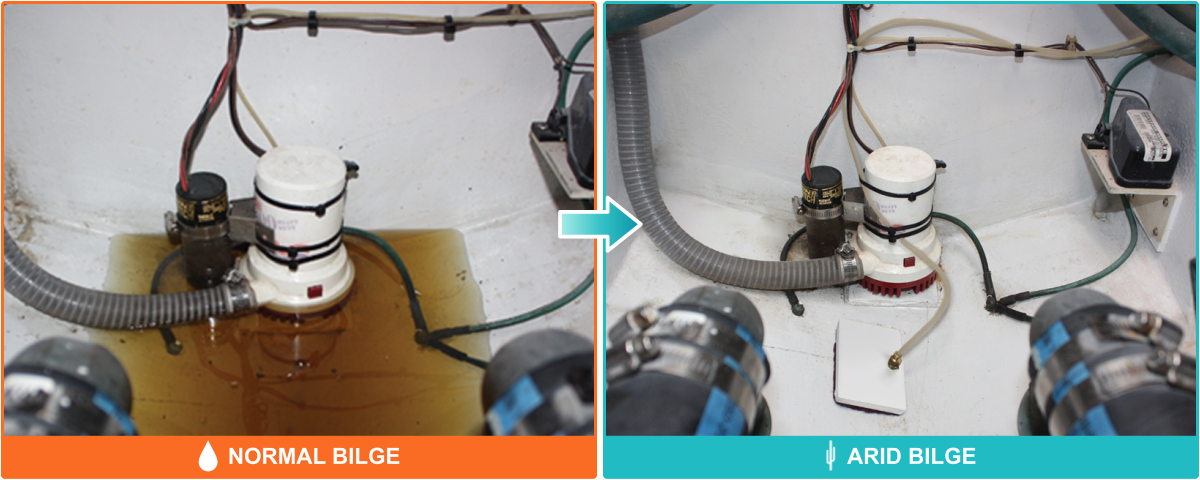
Arid uses pickups at selected low points to collect residual bilge water. Vacuum draws the liquid into a central collection chamber; air pressure then discharges it. The installed configuration determines which wet areas the system can serve.
- Less recurring standing water: connected pickups address shallow wet areas that remain after normal pumping.
- Easier inspection: exposed surfaces make fresh water trails, deposits and coating changes easier to notice.
- Support for a cleaner bilge: automatic water removal helps maintain the result of cleaning; it does not scrub surfaces or remove existing corrosion.
- Less persistent wetness: reducing residual water addresses one moisture source below deck. Ventilation, condensation and leaks still need attention.
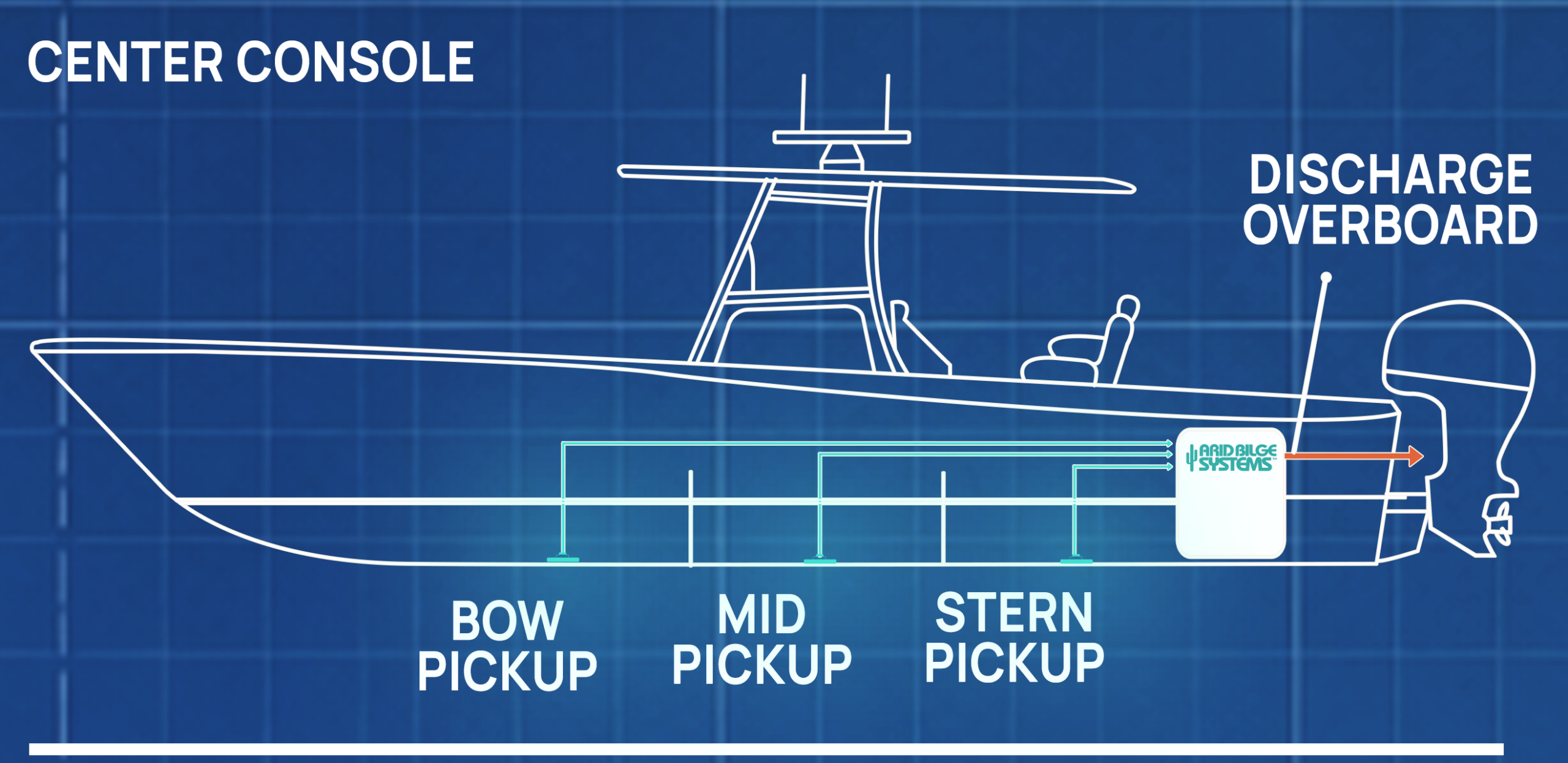
- Collect: vacuum draws residual water through the pickup and intake tubing into the collection chamber.
- Discharge: air pressure moves collected liquid from the chamber through the discharge line.
- Check connected zones: the system follows its model-specific operating sequence. The compressor moves air; bilge liquid follows the collection and discharge path.
See how Arid’s bilge vacuum system works.
Planning dry bilges on a trawler or workboat
Start with the actual low points, rather than choosing a system from boat length alone. Machinery spaces and separated compartments may need their own pickup locations. Check where water collects, whether it can reach a pickup, and how an installer will route tubing and reach the equipment for service.
For a new build, that discussion can happen while access is straightforward. For a refit, photographs of the wet areas and surrounding equipment help turn a general request for a drier boat into a workable installation plan.
Arid complements the boat’s conventional bilge pumps and alarms. Drying does not repair leaks, restore lost metal or correct galvanic or stray-current corrosion. A clean, drier bilge makes ongoing care easier; it is not a promise that an older hull becomes new again.
Discuss your metal boat with Arid
Rozema uses Series 4s to make practical maintenance easier. Each boat still needs its own pickup plan and commissioning checks.
Talk with Arid about your boat’s wet areas, or compare the Arid system range.
Why builders choose Arid: explore the benefits for builders and owners, and read our boat-building story.