Before Arid Bilge Systems, there was a boat Al Baurley Sr. and his son Al Baurley spent years building: Thirsty Lady V. Her story begins with an unfinished hull in Hollywood, Florida, and continues through years of family commitment, a launch at Merritt’s Shipyard in Pompano Beach and a stubborn problem below deck. The boat brought the Baurley family’s boatbuilding experience and the idea for Arid together.
Al Baurley developed Arid’s first Dry Bilge Machine to remove water that remained aboard Thirsty Lady V. The earliest experiment lasted only about ten days. Making it dependable took roughly two more years of work. The story begins with the family boat and the practical problem that prompted the first prototype.
Watch the Company History film for the story of Thirsty Lady V and the origins of Arid Bilge Systems.
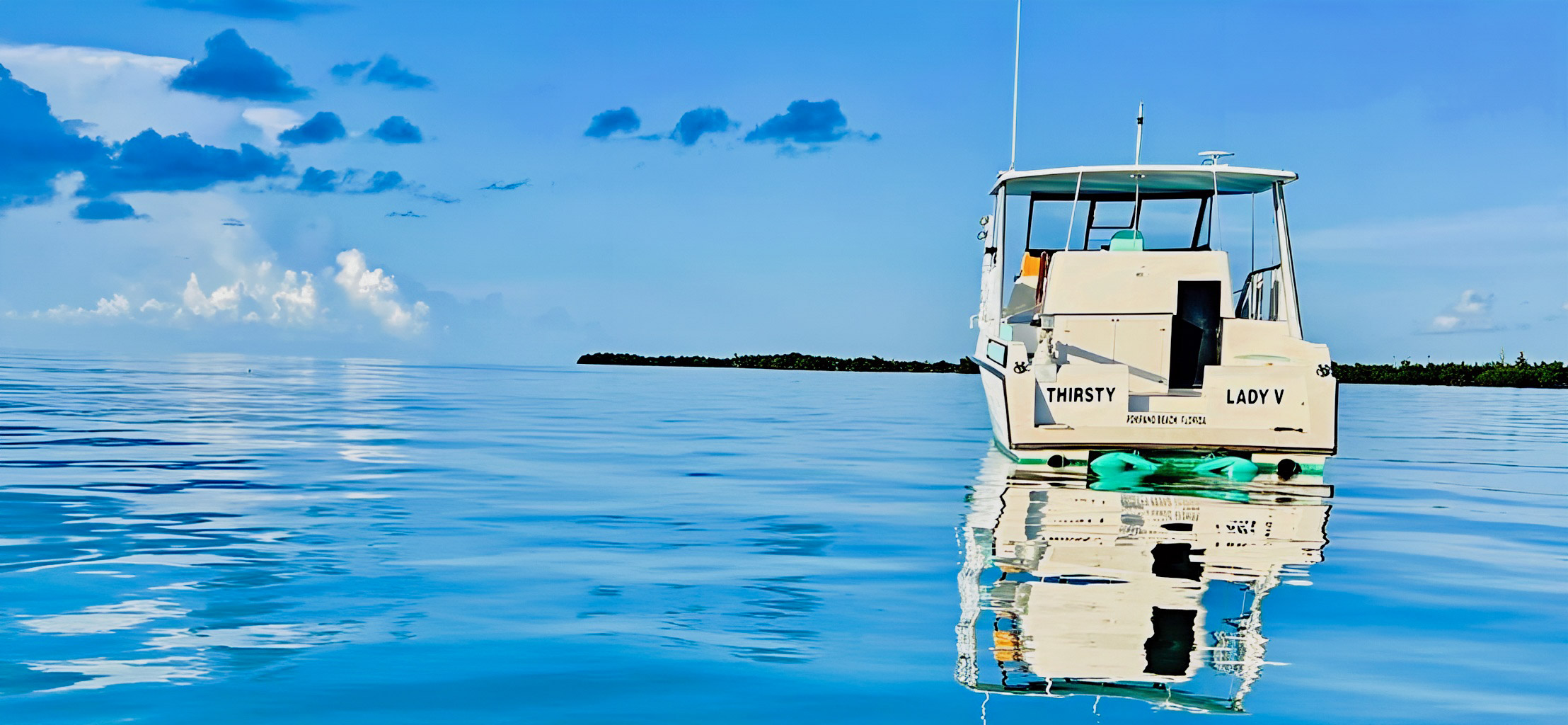
Explore our complete company history for the Baurley family story, Thirsty Lady V photographs and the product timeline, including the Don Aronow connection and the boat’s lifting strakes.
An unfinished hull beside I-95
Al Baurley Sr. owned a chain of warehouses and had the determination to take on a substantial boatbuilding project. In the 1980s, he found an unfinished hull in Hollywood, Florida. As the family remembers it, the hull was visible from I-95. Its long, narrow, racing-style lines caught his attention, and he bought it.
Not everyone encouraged the idea. The family remembers Allan Merritt advising Alfred Baurley II against taking it on because the hull was narrow for its length. Al Sr. wanted to build it anyway. The unfinished hull became the starting point for a custom boat, with years of work still ahead.
Al Baurley Sr. and his son Al took that unfinished hull and turned it into the 62-foot boat that became Thirsty Lady V.
A family project, completed together
The project began in 1986. Alfred Baurley II and his son Alfred Baurley III worked with boatbuilder Glen Page to complete Thirsty Lady V, combining their practical experience and commitment to a boat the family would keep for decades.
Launched at Merritt’s—and kept in the family
Thirsty Lady V splashed in 1992 at Merritt’s Shipyard in Pompano Beach, Florida. After years of building, the boat was ready for life on the water.
The original intention was to sell the finished boat. The family remembers Al Sr.’s wife wanting to keep her after the years they had put into the project and their life together. They decided to keep the boat and enjoy her as a family.
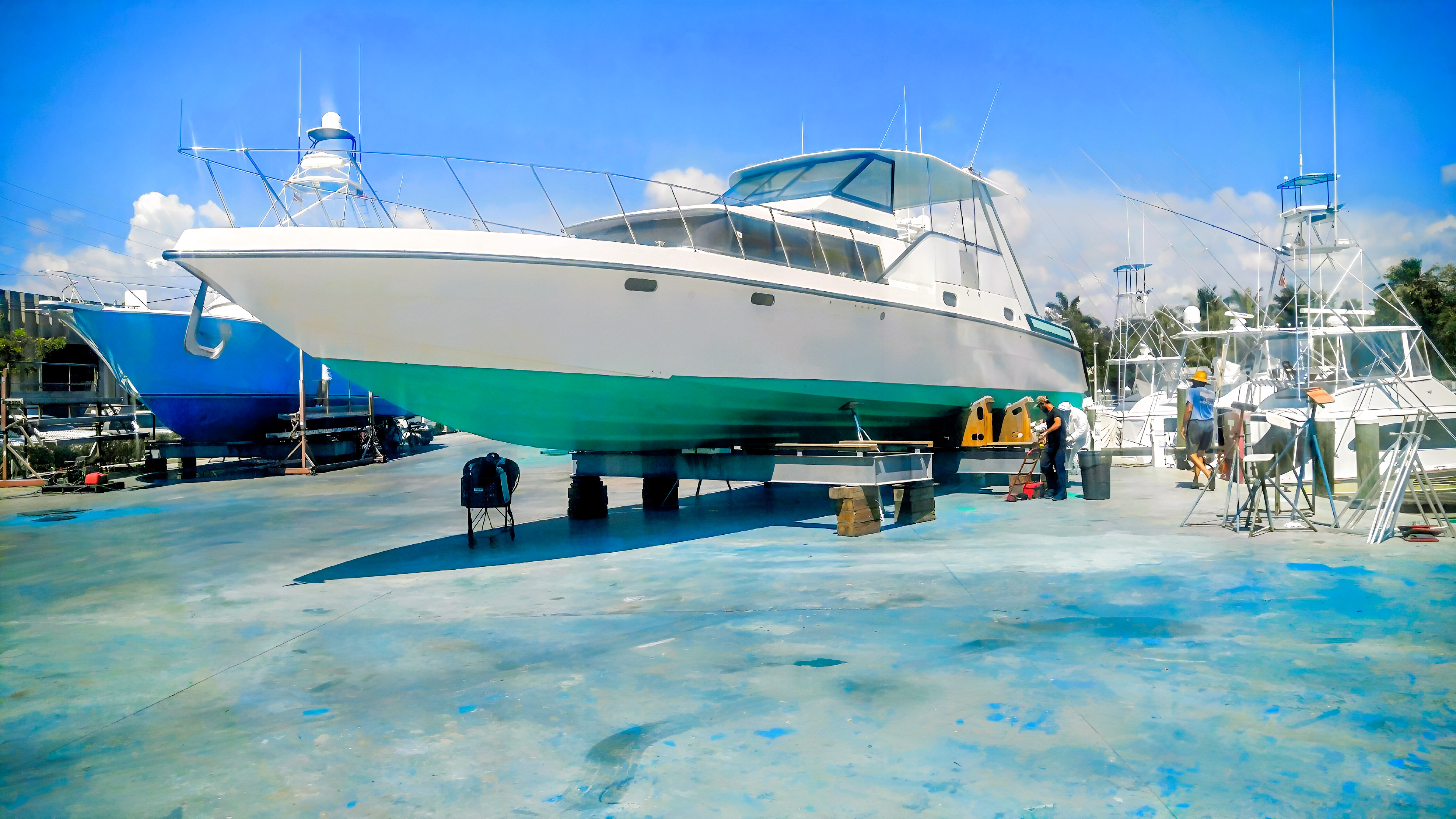
The family returned to Merritt’s for hands-on maintenance in the years that followed. The photograph of Thirsty Lady V ashore later in this story was taken there—the same shipyard where she first went into the water.
The water left behind
For all the work that went into Thirsty Lady V, water still sat in the bilge. The smell was persistent, and damp areas were deteriorating from the inside. Al Baurley Sr. would bundle newspapers and put them into low compartments to soak up the water. That was a temporary response to a problem that kept coming back.
Al Baurley wanted a way to remove that last accumulation automatically, including the water in compartments that were awkward to reach by hand.
That distinction shaped the idea. Conventional bilge pumps have an essential job moving larger amounts of water, but residual fluid can remain after they stop. The first Arid experiment addressed that remaining water aboard a boat the family knew well.
The technical background behind the idea
Al Baurley brought a background in computer engineering to his work on boats. At FSU, he learned multiple programming languages and was at the top of his class. Alongside that technical education, years spent working with boats gave him firsthand experience of the problems owners faced below deck.
From an everyday problem to a working idea
Alfred Baurley III drew on his marine experience to develop a way to remove residual water automatically. Thirsty Lady V became the first working trial, giving the family a direct view of the results aboard their own boat.
An unexpected first result
The smell had initially become worse.
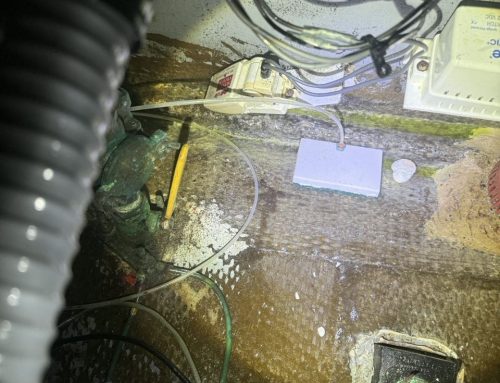
The engine-room water had been removed, and the growth it had covered was drying out. For the first time in eight years, the engine room was dry. Removing the water had exposed what had been underneath it.
The trial showed that the machine could remove the residual water, but the first unit was short-lived. It held together for around ten days. Turning that early result into a system that could continue working aboard a boat required further development.
Two years of refining the design
Al spent roughly the next two years making changes and testing the system. As the machine was refined and reengineered, its operating life increased. That work became the foundation of the modern Arid Bilge System.
Learning from life aboard
Experience aboard Thirsty Lady V helped shape the product as development continued. The goal remained practical: a drier bilge, less standing water and a clearer view of new leaks.
A family tradition of hands-on maintenance
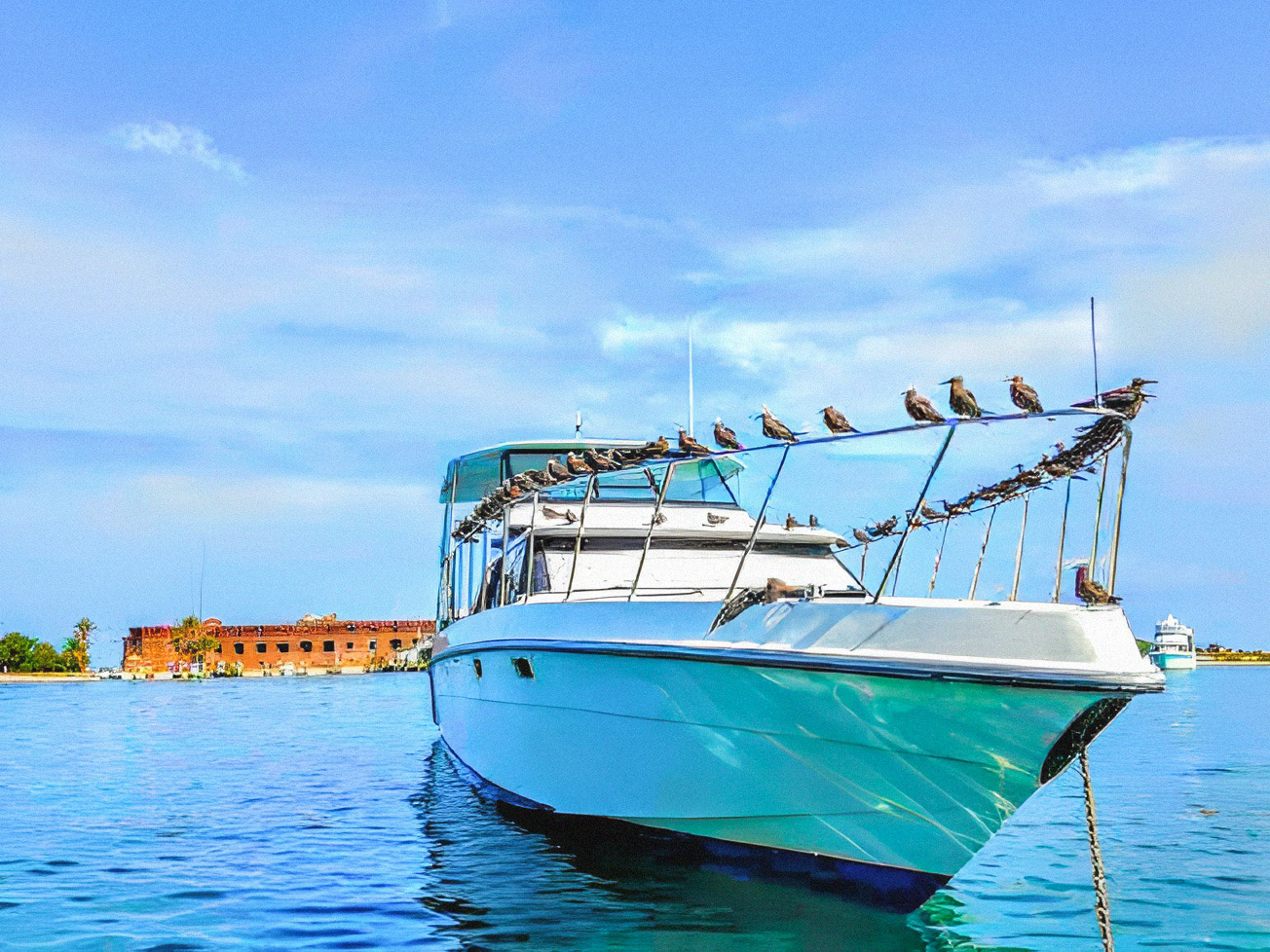
The family’s involvement with Thirsty Lady V extended beyond construction and the development of Arid. Working on the boat became a family tradition, connecting generations through inspection, maintenance and the work below deck that visitors rarely see.
That continuing connection to the boat keeps the company focused on real ownership: comfort aboard, dependable equipment and the care a vessel needs over time.
Music: “Ultralounge” by Kevin MacLeod, licensed under CC BY 4.0. Edited to length; fades and level adjustments applied.
Bringing the system to other boats
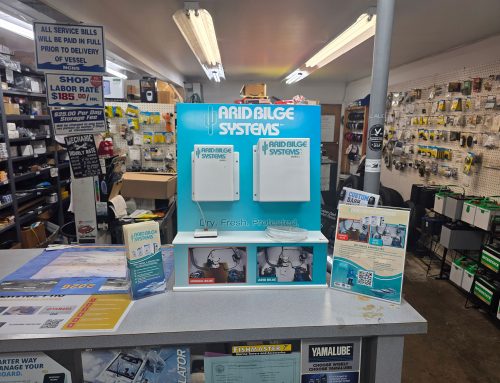
By 2004–2005, Al was producing a small number of large early systems for friends with large yachts. The next stage was to make the equipment smaller and more affordable, opening the approach to a wider range of boats.
The product milestones followed that development:
- 2006: Series 9 sales began at the Fort Lauderdale International Boat Show.
- March 2007: Series 4 was introduced at the Palm Beach Boat Show.
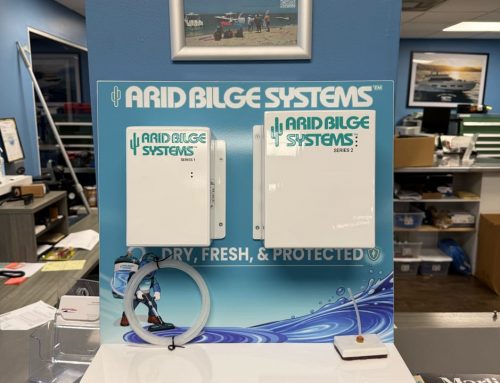
- February 2009: Series 2 joined the line.
- 2015: Series 1 followed.
The sequence moved from large early installations toward more compact systems. A wider choice of sizes made it possible to consider different mounting spaces and numbers of wet areas while keeping the same basic purpose: removing residual fluid from the locations where it collects.
See how the system works today
In the video below, Alfred Baurley introduces Arid’s product line and demonstrates the approach to removing residual fluid.
Arid works alongside the boat’s conventional bilge pumps; it does not replace emergency pumping equipment. Removing accumulated water also does not repair a leak, so identifying and correcting the source remains part of caring for the boat.
Explore Arid’s company background, or read how Arid works to learn about the current system. For an installation discussion, contact the Arid team with the locations where water collects aboard the boat.