
Installation Stories

Photo stories showing Arid equipment aboard individual boats, with original installation details.

26 10, 2026
  • Guinevere V, a white sailing catamaran with twin bows and a blue sail cover, photographed at a dock.

Guinevere V: Arid Aboard a St. Francis 50 Catamaran

By |2026-10-11T21:10:06+00:00October 26, 2026|Blog, Boat Stories, Installation Stories|

With her twin white hulls, blue sail cover and name across the bow, Guinevere V is easy to recognize in Arid’s November 2023 photo feature. The company caption identifies her as a 2015 St. Francis 50, a South African-built cruising catamaran. Below deck, it describes a useful detail: three wet zones per hull, mirrored from one side to the other.
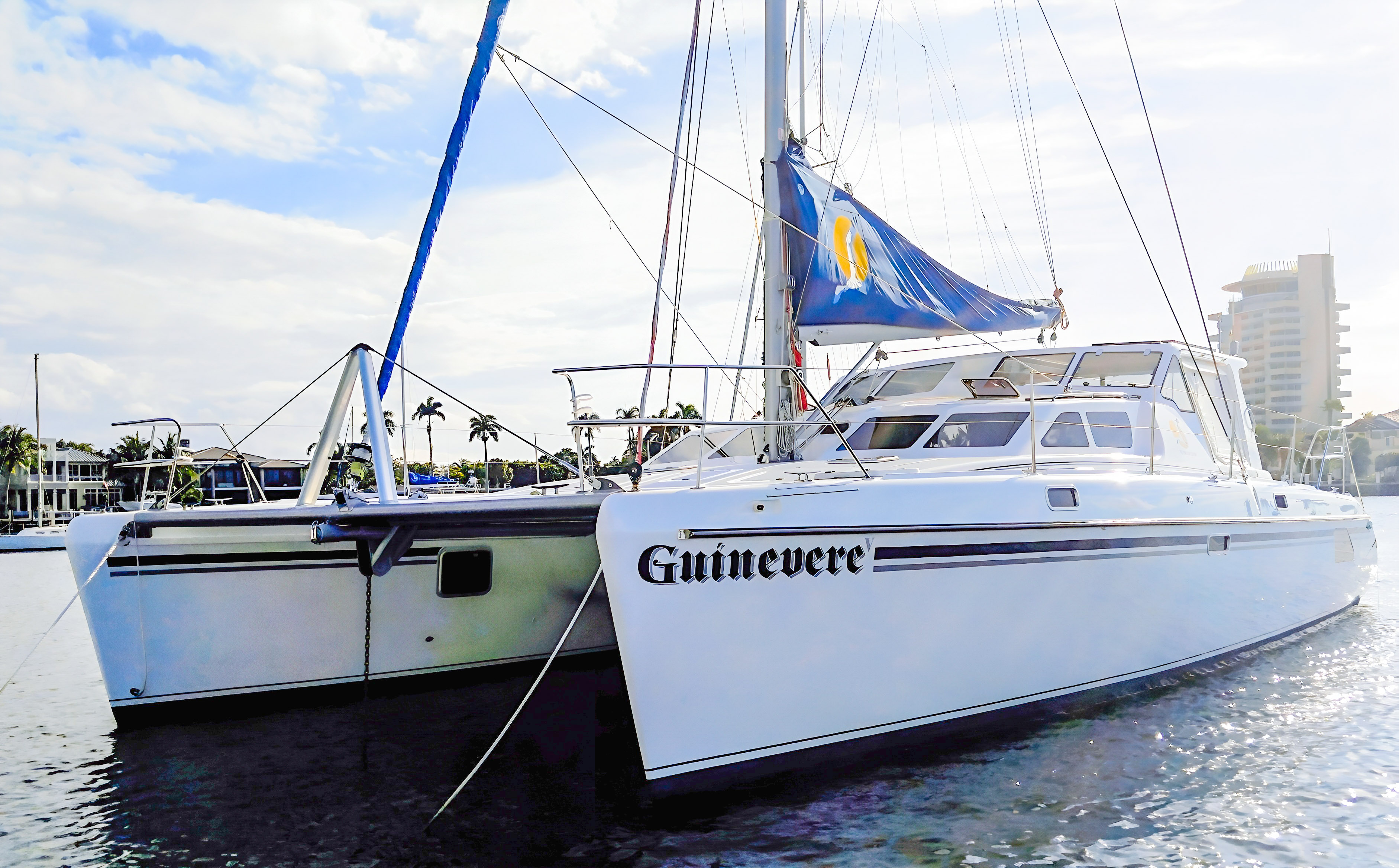
Guinevere V, a white sailing catamaran with twin bows and a blue sail cover, photographed at a dock.

Guinevere V, identified in Arid’s company feature as a 2015 St. Francis 50.

Three wet zones in each hull

For a catamaran owner, that hull-by-hull description is a helpful starting point. A boat’s overall length tells only part of the story; the places where residual water collects deserve a closer look. Guinevere V’s feature describes the wet zones on both sides rather than treating the boat as one undivided bilge.

When considering a similar installation, start with the spaces you can actually inspect. Where does water remain in the port hull? Where does it remain in the starboard hull? Which access panels let you check those places? A simple set of photographs from each side can make that conversation much more specific than a model name alone.

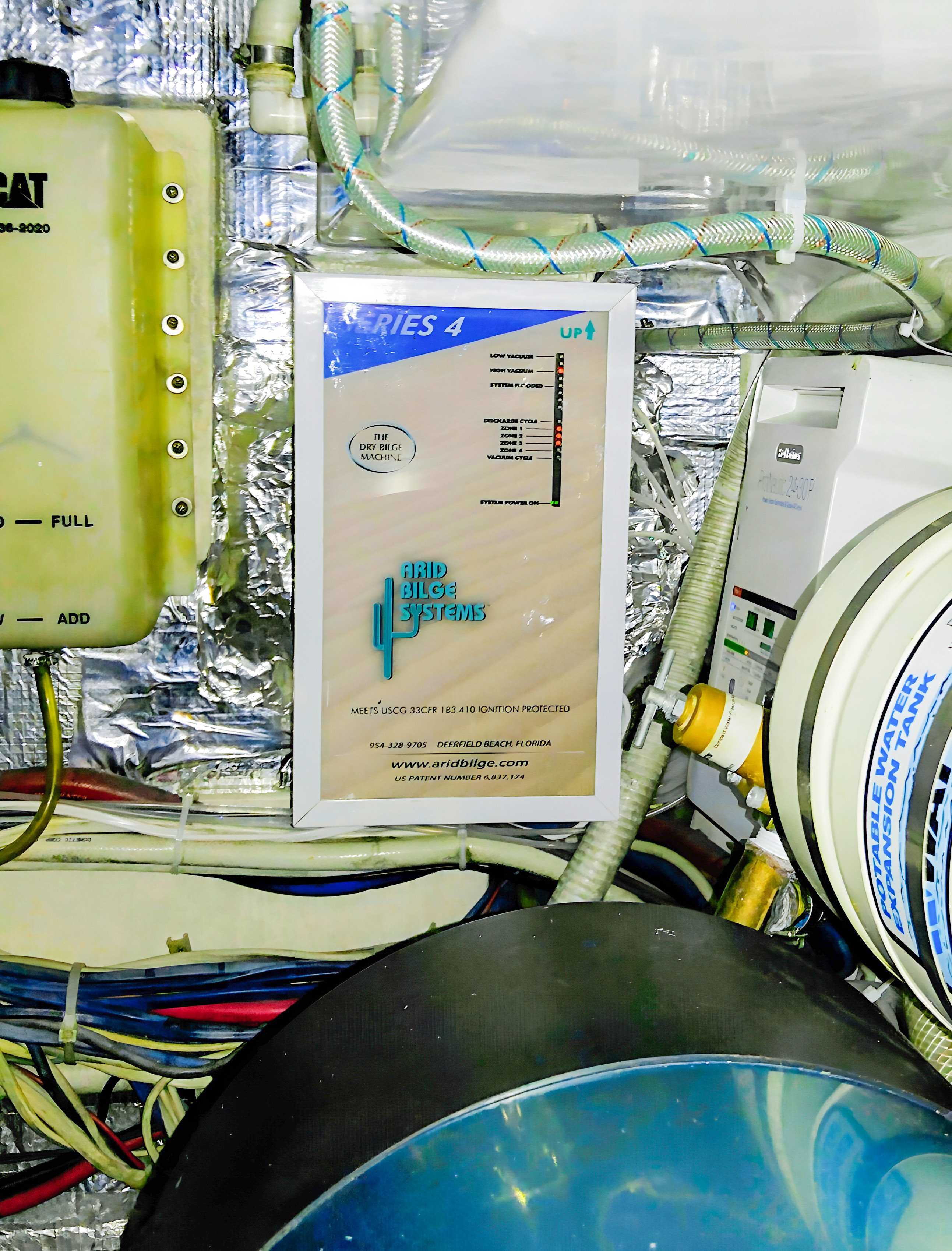
A Series 4 in the port engine room

The installation photograph shows a cabinet clearly labeled Series 4. Arid’s caption places the unit in the port engine room. Hoses pass above the cabinet, and service information for nearby machinery is visible below it, giving a close view of the equipment and its surroundings.
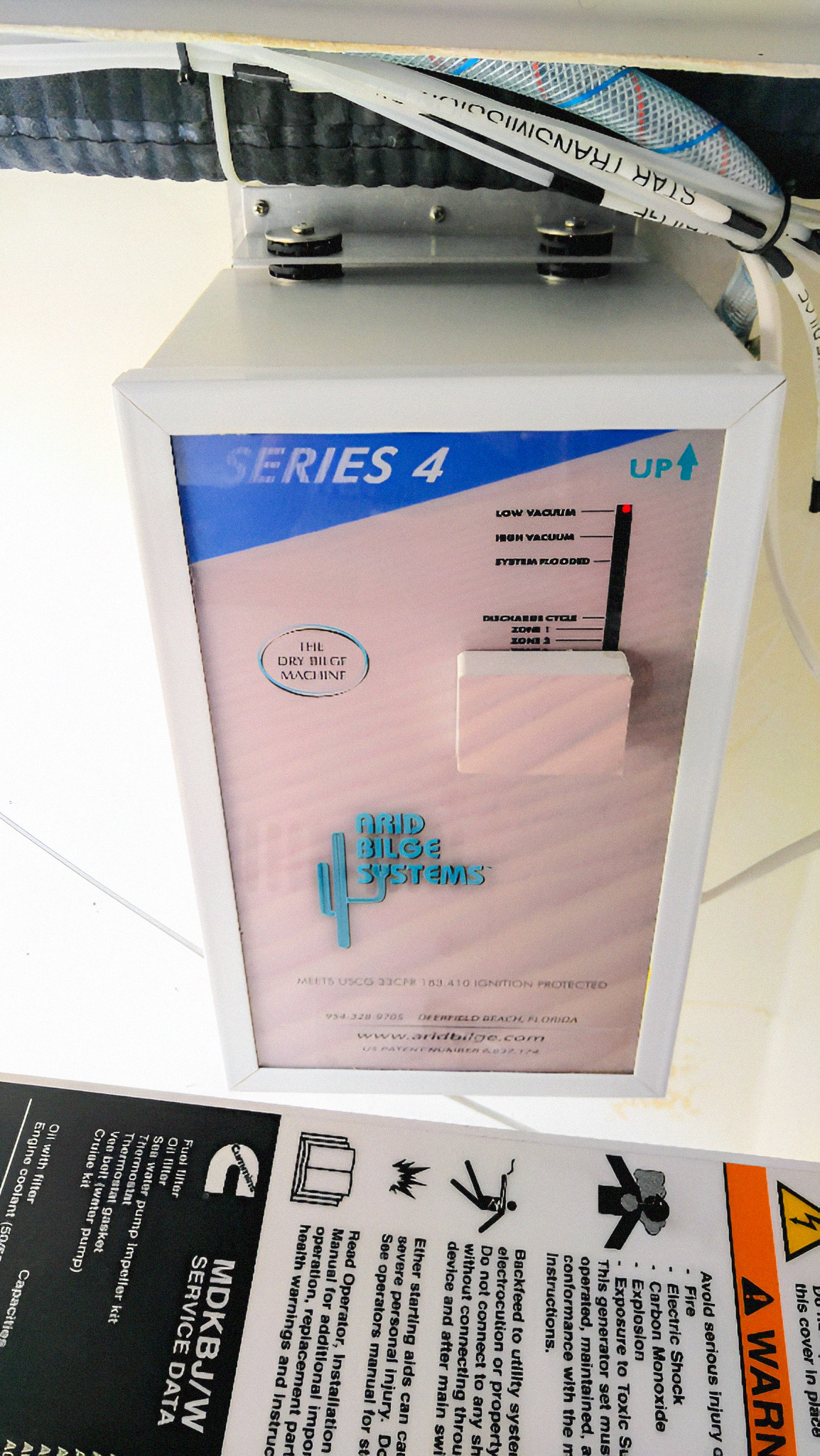
Arid Series 4 cabinet with its label visible, mounted below hoses beside machinery service information aboard Guinevere V.

The Series 4 cabinet shown in the original gallery; the company caption places the unit in the port engine room.

That view also raises a practical planning question: what will you need to reach after the equipment is installed? Space for inspecting the cabinet, following connections and servicing nearby machinery belongs in the conversation alongside the wet-zone locations. Bring photographs of those surrounding spaces as well as the wet areas themselves.

Look at both sides of the boat

The stern photograph brings the two-hull layout back into view. It is a useful reminder to walk through each side of a cruising catamaran when discussing bilge care, even when the intended arrangement is mirrored.
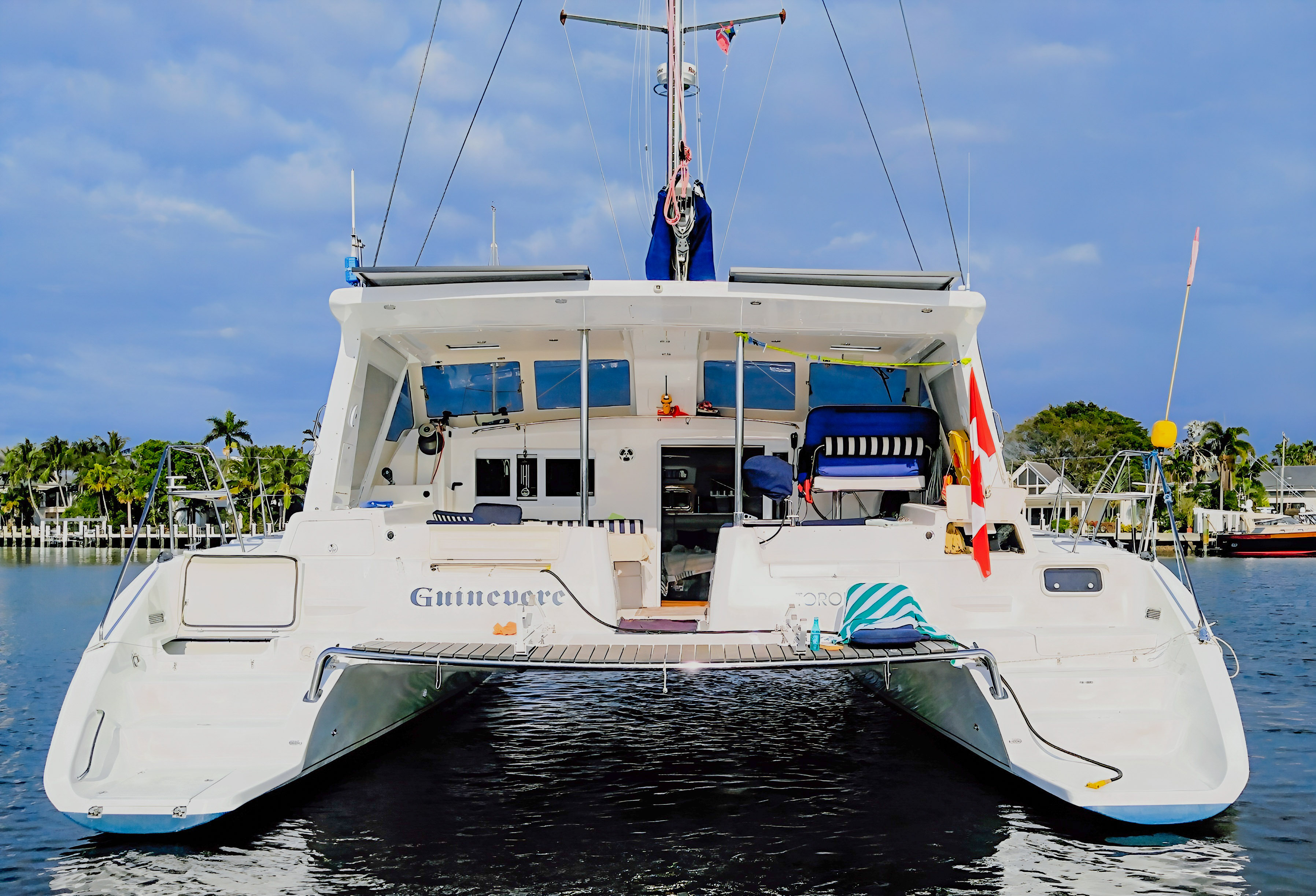
Stern view of Guinevere V showing its two hulls, aft platform and cockpit.

A stern view of Guinevere V from the same company photo feature.

For the operating principle behind residual-water removal, see how Arid works. Our Hylas H57 interview offers another cruising-sailboat perspective. You can also explore the current systems when planning your own installation.

View the original Guinevere V photo feature for the complete gallery.
25 10, 2026
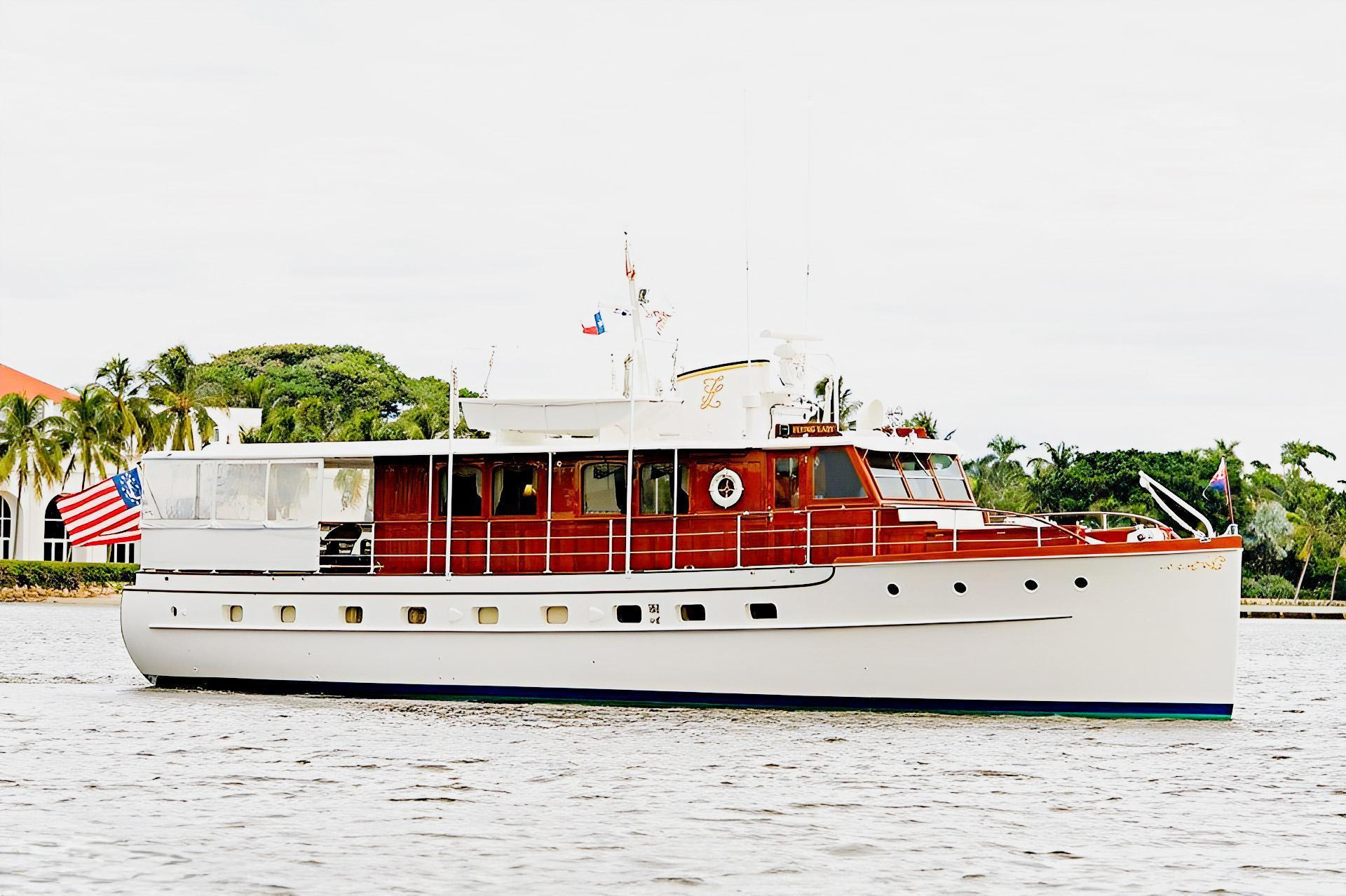
  • Flying Lady with white hull and varnished wooden cabin, photographed broadside on the water.

Flying Lady: Series 2 Nano Aboard a Classic Trumpy

By |2026-10-11T18:10:39+00:00October 25, 2026|Blog, Boat Stories, Installation Stories, Motor Yachts|

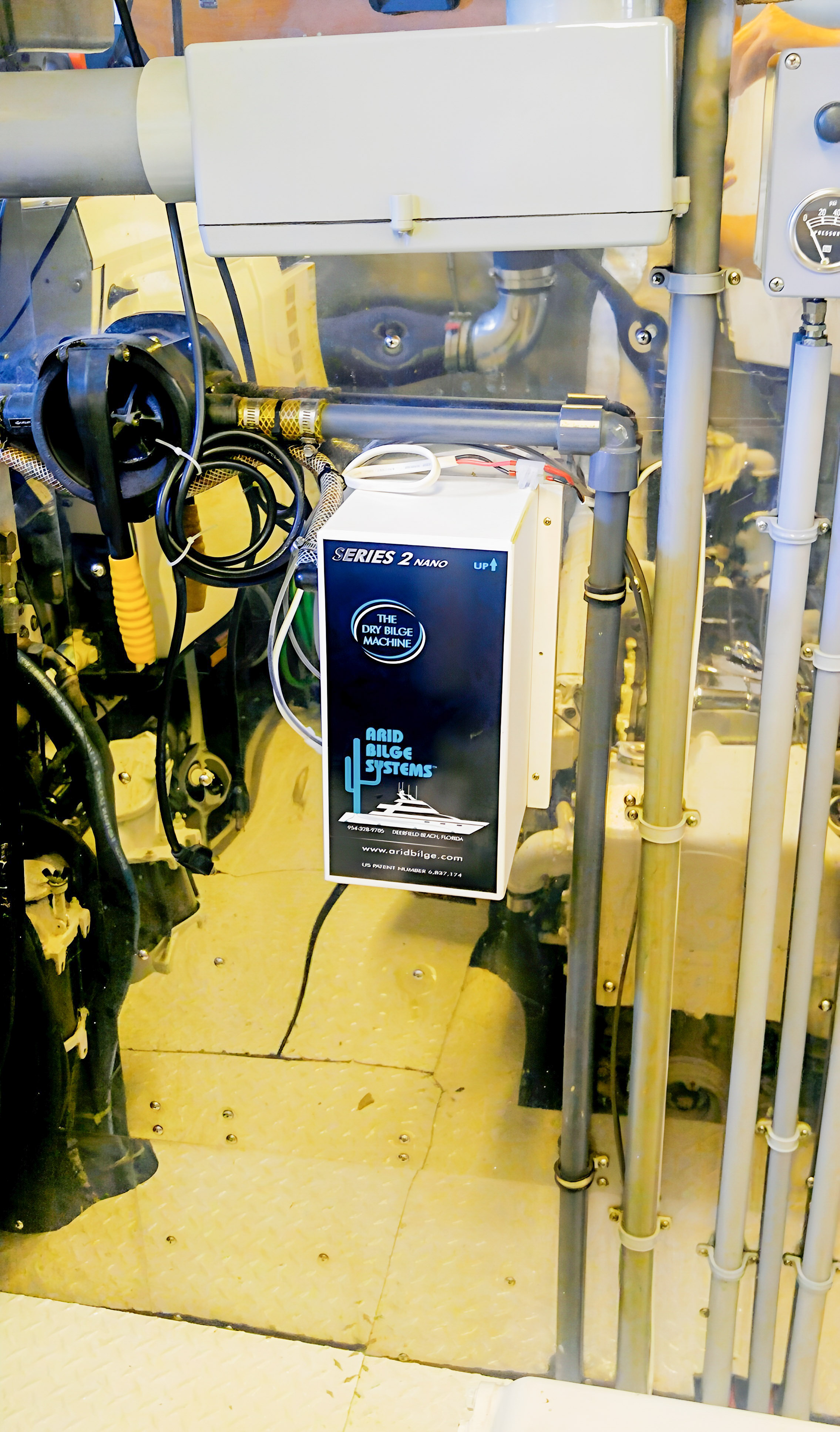
Our January 2024 feature introduces Flying Lady, a 1937 Trumpy with a white hull, wooden cabin and signature scrollwork. The equipment pictured below deck is an Arid Series 2 Nano, installed to collect residual water from connected bilge locations.

Flying Lady with white hull and varnished wooden cabin, photographed broadside on the water.
Flying Lady, the 1937 Trumpy featured in Arid’s installation archive.

The Series 2 Nano below the classic exterior

Our original Flying Lady installation post brings together exterior, engine-room and equipment photographs. The installed unit’s faceplate reads Series 2 Nano.

The Nano’s role is below deck, where residual water can remain after ordinary pumping. An Arid installation collects that water through connected pickups. It adds an automatic task to the yacht’s routine, while access to the unit, its tubing and the pickup locations remains important for ongoing attention.

Arid unit labeled Series 2 Nano installed aboard Flying Lady, beside pipes and service equipment.
The Series 2 Nano installed aboard Flying Lady.

Bilge care within a classic yacht’s routine

For Flying Lady, attention to the bilge belongs alongside care of the visible woodwork and machinery. The exterior finish may be the first thing a visitor notices, but the less accessible spaces also belong on the maintenance list. The Series 2 Nano addresses one recurring job in those spaces: collecting residual water where its pickups are connected.

Residual-water removal can reduce one source of moisture exposure. It does not establish that timber is sound, prevent all corrosion or replace inspection, cleaning, ventilation and repairs. Keep the vessel’s specified bilge pumps operational, and use instructions that match the installed unit. Our standing-water and moisture guide explains the system’s place within that wider care.

Choosing and maintaining an installation

On another classic yacht, start with the wet locations and the access available to them. Photograph the compartments, note the proposed unit location and discuss the tubing route with the installer. Those details help shape the configuration for the boat, including the pickup locations that will need to remain accessible.

For an installed system, record the model label and photograph the unit and tubing connections before planning service. Keep those details with the boat’s maintenance records, particularly when responsibility passes between an owner, captain and marine technician. Clear equipment records make the next inspection easier to prepare.

The current Series 2 product page introduces today’s range. For equipment already aboard, Owners’ Central provides manuals and maintenance resources; check the model label before selecting instructions. Flying Lady’s installed unit is the Series 2 Nano, and its particular configuration should guide its care.

24 10, 2026
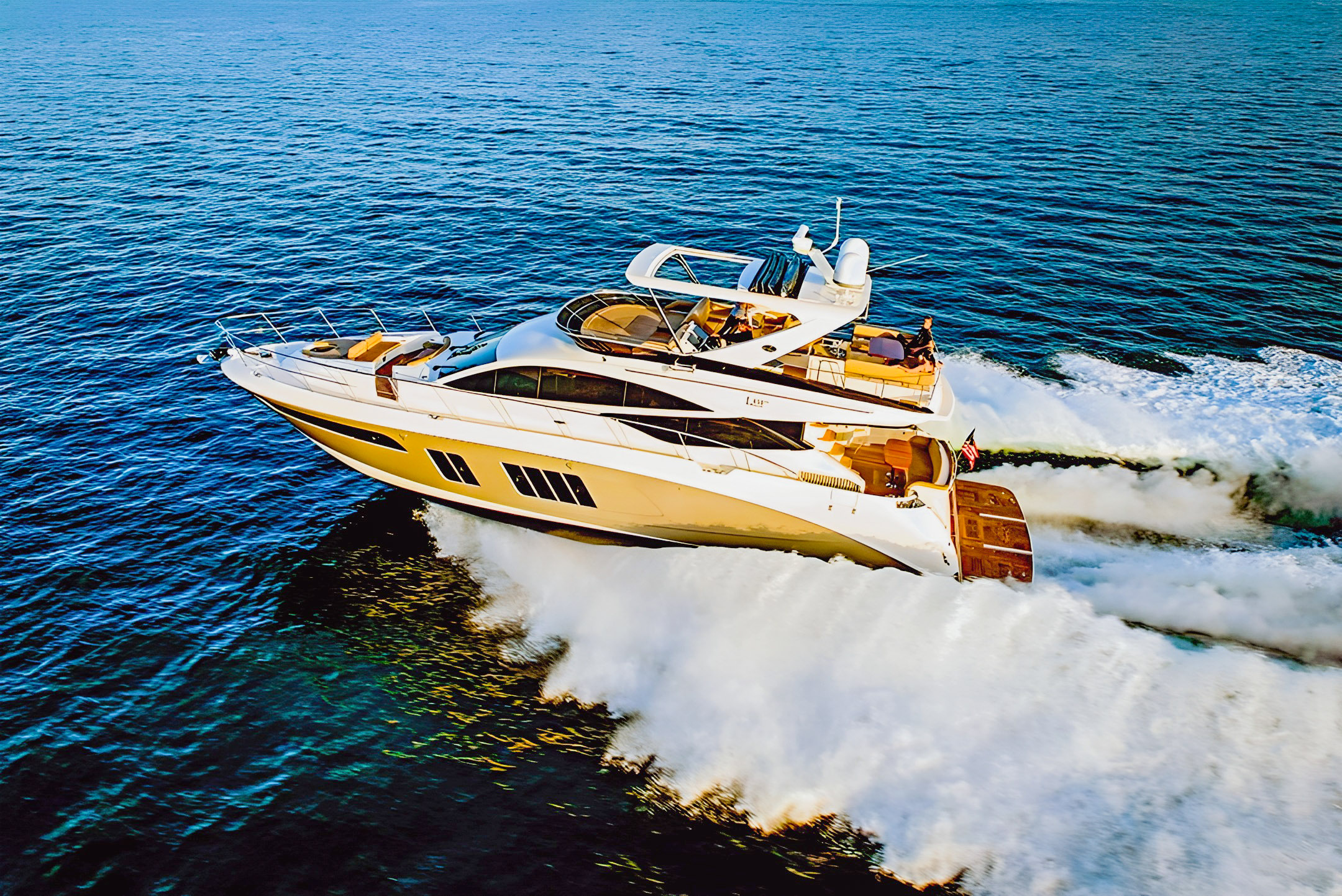
  • Flawless, a Sea Ray L650 Fly motor yacht, underway in an overhead view.

Flawless: Arid Bilge Aboard a Sea Ray L650 Fly

By |2026-10-11T18:00:58+00:00October 24, 2026|Blog, Boat Stories, Installation Stories, Motor Yachts|

Our January 2024 feature introduced Flawless, a 65-foot Sea Ray L650 Fly with four staterooms. The original installation photographs show a central Arid Series 2 cabinet and a pickup among the boat’s other equipment below deck.

The photographs below follow that arrangement from the cabinet to a pickup beside the larger hoses and bilge-pump equipment.

Flawless, a Sea Ray L650 Fly motor yacht, underway in an overhead view.
Flawless, a Sea Ray L650 Fly, underway.

The Series 2 cabinet aboard Flawless

The white cabinet is mounted beside an existing panel, with hoses and cable runs nearby. This is the central unit; the water-collection points are elsewhere, connected by small intake tubing.

Keeping the unit separate from the low points is part of the system’s layout. Pickups can reach water where it gathers, while the cabinet has its own mounting location. The positions and number of pickups need to suit the individual boat.

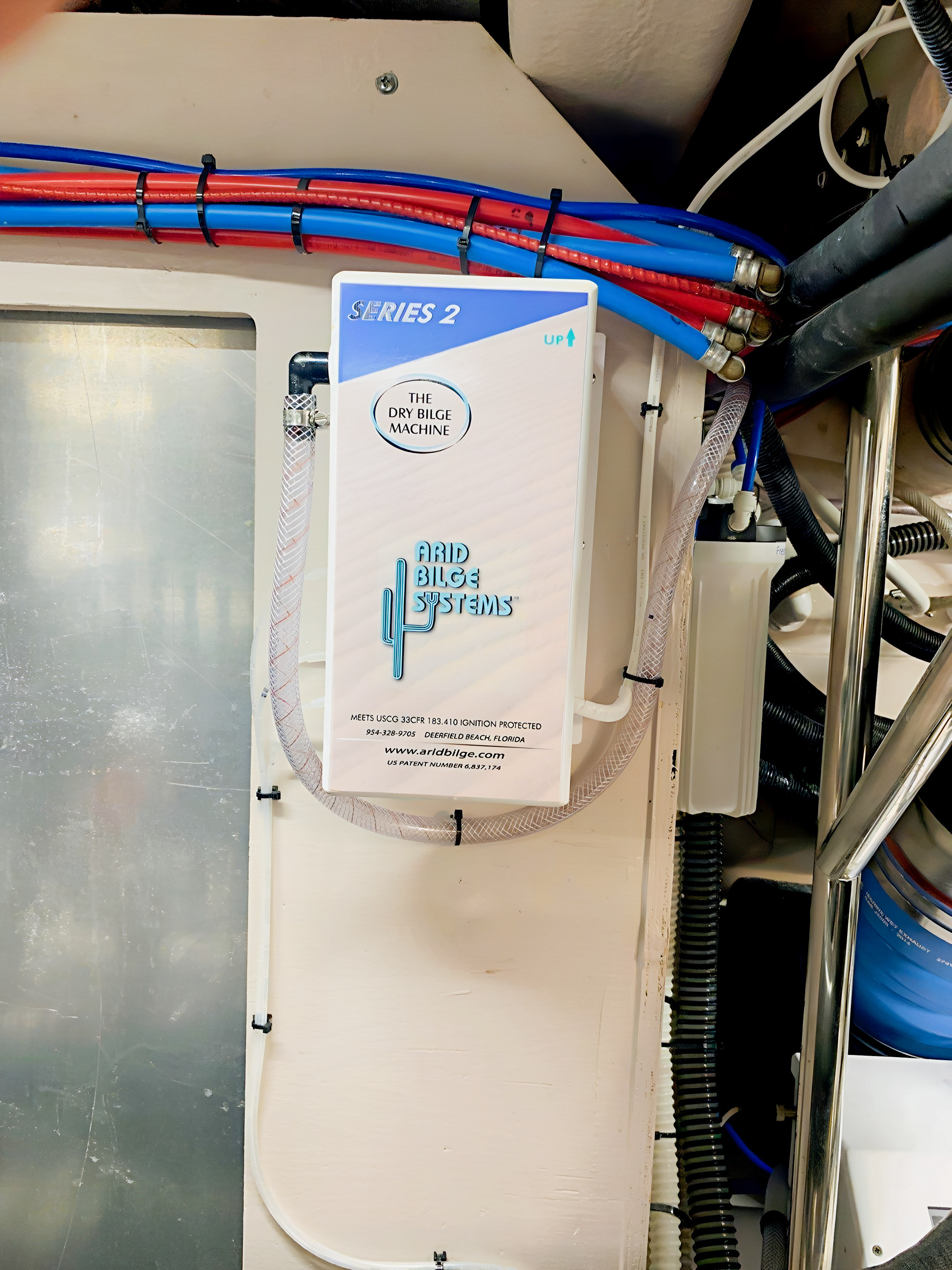
Arid Series 2 cabinet mounted beside hoses aboard Flawless.
The Series 2 cabinet installed aboard Flawless.

A close look at a pickup

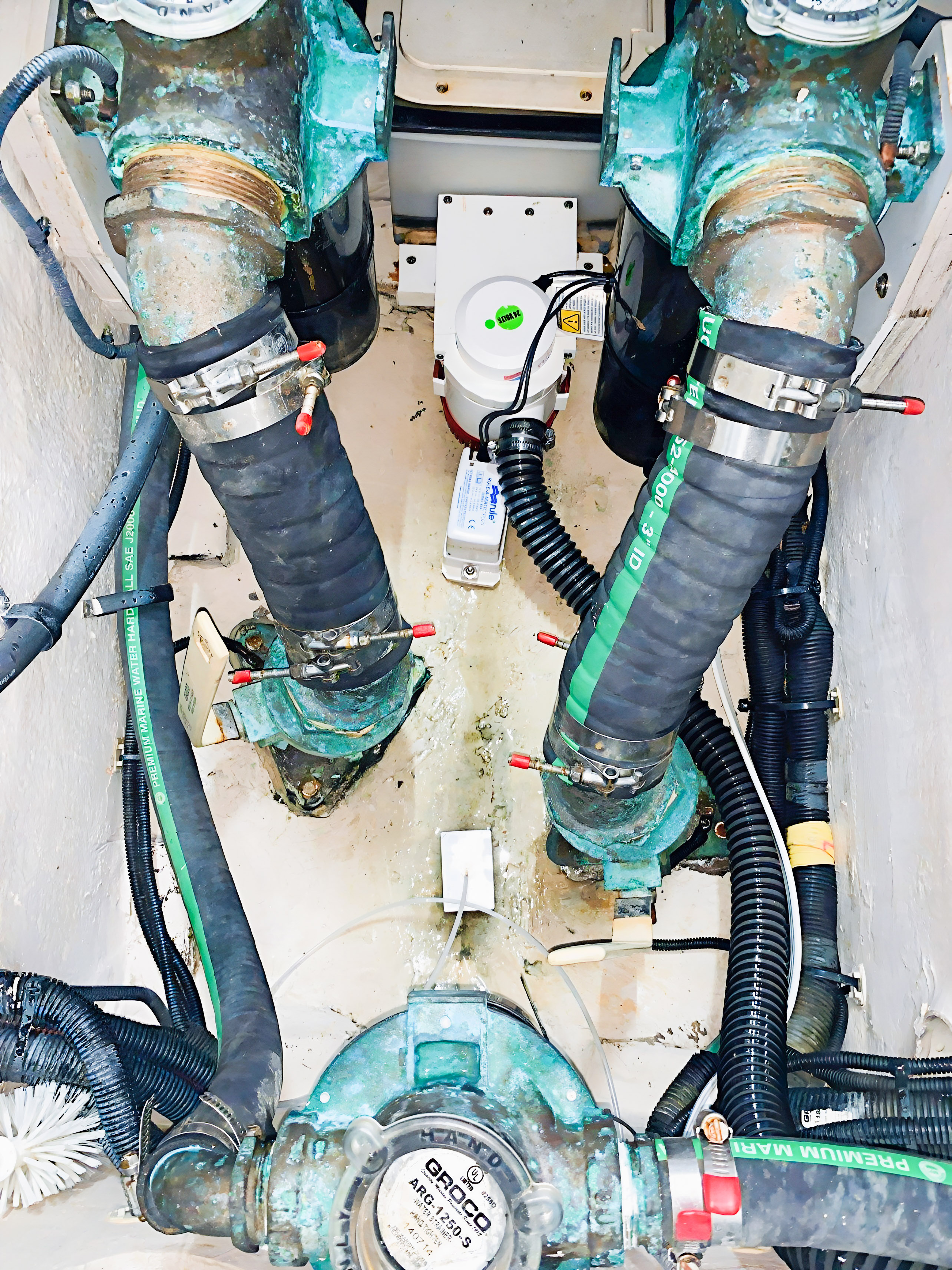
In the compartment photograph below, look for the small white pickup near the bottom of the image. Its thin tube is distinct from the much larger hoses around it. The conventional bilge-pump equipment remains in the same space.

White Arid pickup and small intake tube beside larger hoses and bilge-pump equipment aboard Flawless.
An Arid pickup and intake tube beside the boat’s larger hoses and bilge-pump equipment.

Those components have different jobs. Arid removes residual water at its connected pickup locations; the boat still needs its conventional bilge pumps. The photograph gives an owner a useful way to look at an installation: identify the pickup, trace its accessible tubing and understand how it relates to the surrounding equipment.

That inspection should also consider routine care. A pickup needs to stay accessible for checks, and changes in the amount of water returning deserve attention. Removing residual water does not clean old deposits, repair a leaking connection or replace maintenance of the other systems in the compartment.

Planning for your own boat

Start with the actual wet areas and available access aboard your boat. Review the current Series 2 options and the installation and owner manuals with those spaces in mind.

For the operating process, read how Arid collects residual bilge water. To see a different motor-yacht installation, visit Cortina’s installation story.

The boat and equipment images come from our original Flawless feature.

22 10, 2026
  • Lit Up, a white Jarrett Bay sportfishing boat with a tall tower, underway.

Lit Up: Four Pickups Across a 43-Foot Jarrett Bay

By |2026-10-11T17:56:22+00:00October 22, 2026|Blog, Boat Stories, Fishing Boats, Installation Stories|

Our January 2024 installation feature followed Lit Up, a 43-foot Jarrett Bay, below deck. Four Arid pickups served two working areas: two in the center engine bilge and two in the aft lazarette.

The Series 4 installation reaches these water-collection points around the boat’s machinery, including the aft area where its gyro stabilizers are located.

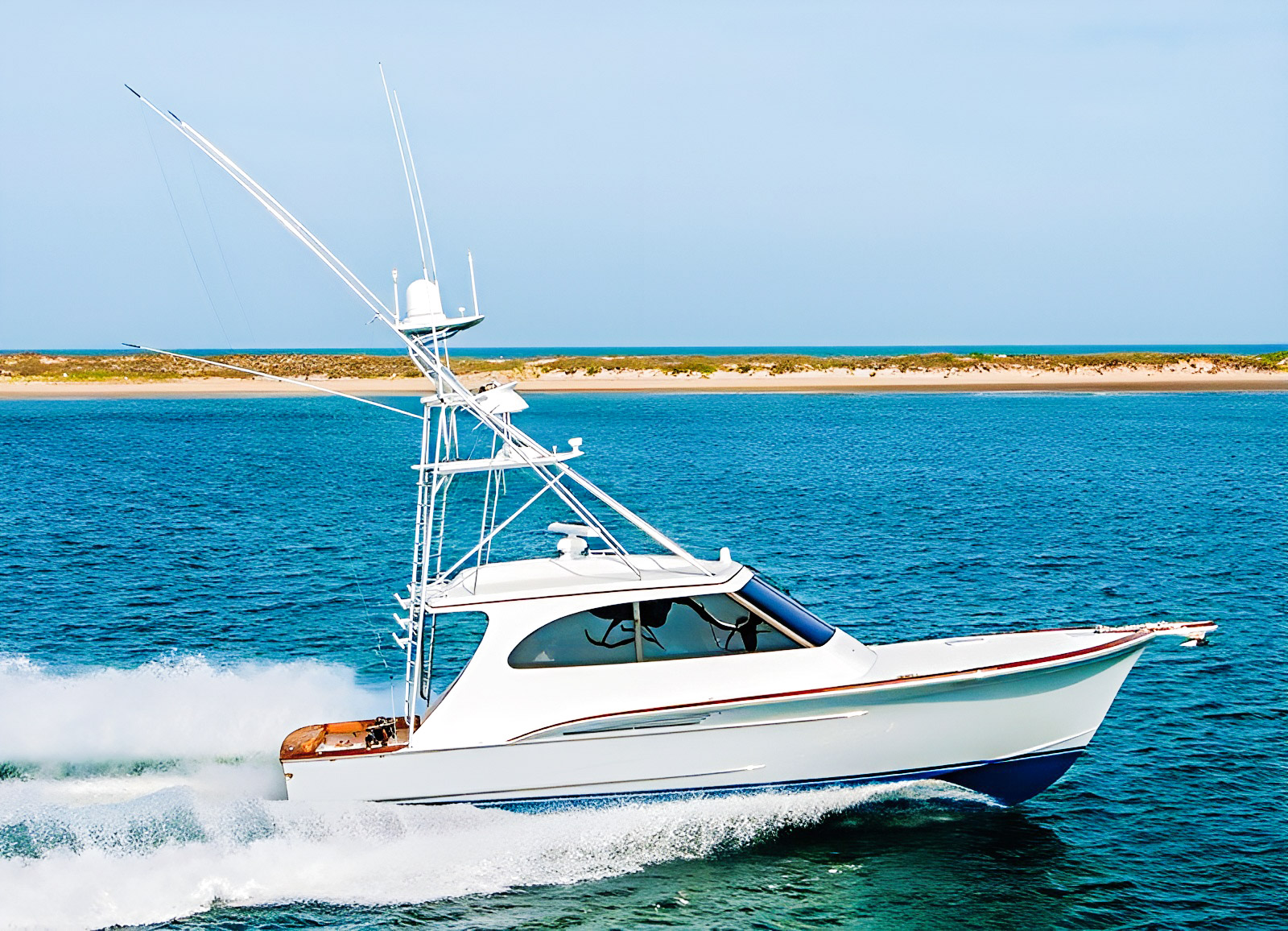
Lit Up, a white Jarrett Bay sportfishing boat with a tall tower, underway.
Lit Up, the 43-foot Jarrett Bay, underway.

Lit Up’s four-pickup layout

A Series 4×4 serves the four pickup locations:

  • The center engine bilge: two pickups.
  • The aft lazarette bilge: two pickups.

The central cabinet is mounted among hoses and neighboring equipment. From there, intake tubing connects the unit to the pickups in the two bilge areas.

Arid Series 4 cabinet installed among hoses and other equipment aboard Lit Up.
The Series 4 cabinet aboard Lit Up.

Two bilge areas, four places to collect water

Two pickups in each area give Lit Up four water-collection locations across its two named bilge areas. On your boat, start by checking where water remains, including places separated by the shape of the hull or surrounding structure. That inspection helps establish how many pickup locations the layout needs.

Arid collects residual water through pickups connected to a central unit. Reducing standing water addresses one source of below-deck moisture; it does not replace conventional bilge pumps or the need to investigate leaks. Our guide to how Arid works explains that role.

Planning also includes access. The cabinet, tubing connections and pickups need to remain reachable for inspection and model-specific maintenance. Photographs of the wet areas, access openings and nearby equipment give an installer a more useful starting point than boat length alone.

More about this installation

See the original Lit Up installation feature for the boat and equipment photographs. Jarrett Bay also records Lit Up in the name history of its 43-foot Hull 29.

Explore the current Series 4 options, or see another sportfishing installation aboard Gratitude, a 66-foot Spencer.

20 10, 2026
  • Ocean Alexander 112 yacht at a dock, with the 112 mark visible on its superstructure.

Ocean Alexander 112: A Series 9×7 Installation Below Deck

By |2026-10-11T18:08:47+00:00October 20, 2026|Blog, Boat Stories, Installation Stories, Motor Yachts|

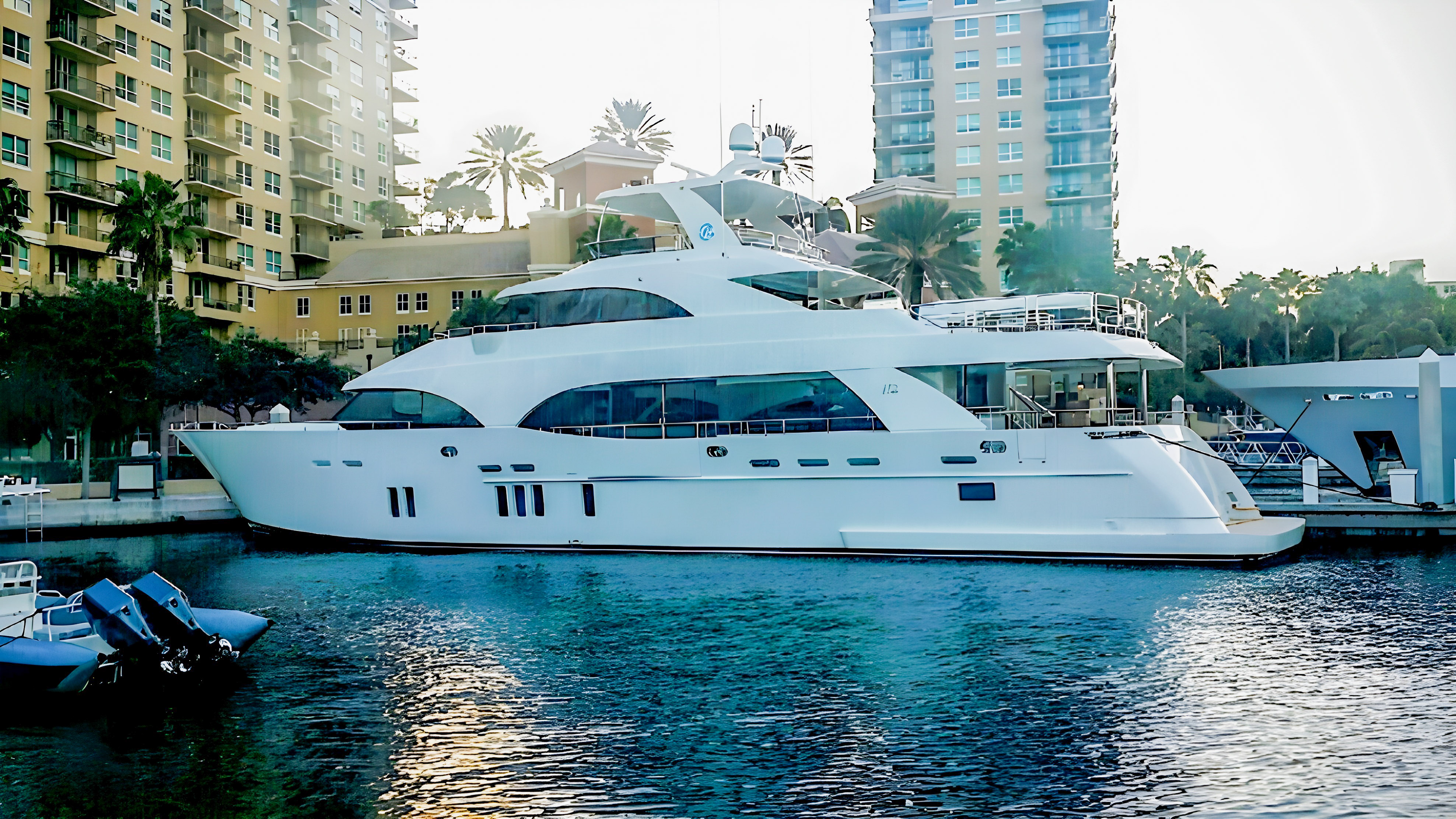
Our January 2024 Ocean Alexander 112 feature identifies an Arid Series 9×7 installation with a practical task: bringing residual bilge fluid to a central collection point.

Ocean Alexander 112 yacht at a dock, with the 112 mark visible on its superstructure.
Ocean Alexander 112 at the dock.

Care beneath the polished exterior

At the dock, the yacht’s profile stretches from the high bow to the open aft decks. The 112 mark sits just behind the long window line. Below those exterior spaces is another working arrangement: hoses, pipework, cabinets and the equipment that needs attention between trips.

Arid belongs in that less visible part of the yacht. Its pickups collect residual fluid at connected locations, and vacuum draws the fluid through tubing into a central chamber. The installation brings those connections together around one unit, giving residual-water removal a defined place within the machinery space.

The arrangement starts with the boat’s wet locations. Pickup positions and tubing routes connect those areas to the central unit; their layout is as much a part of the installation as the enclosure itself.

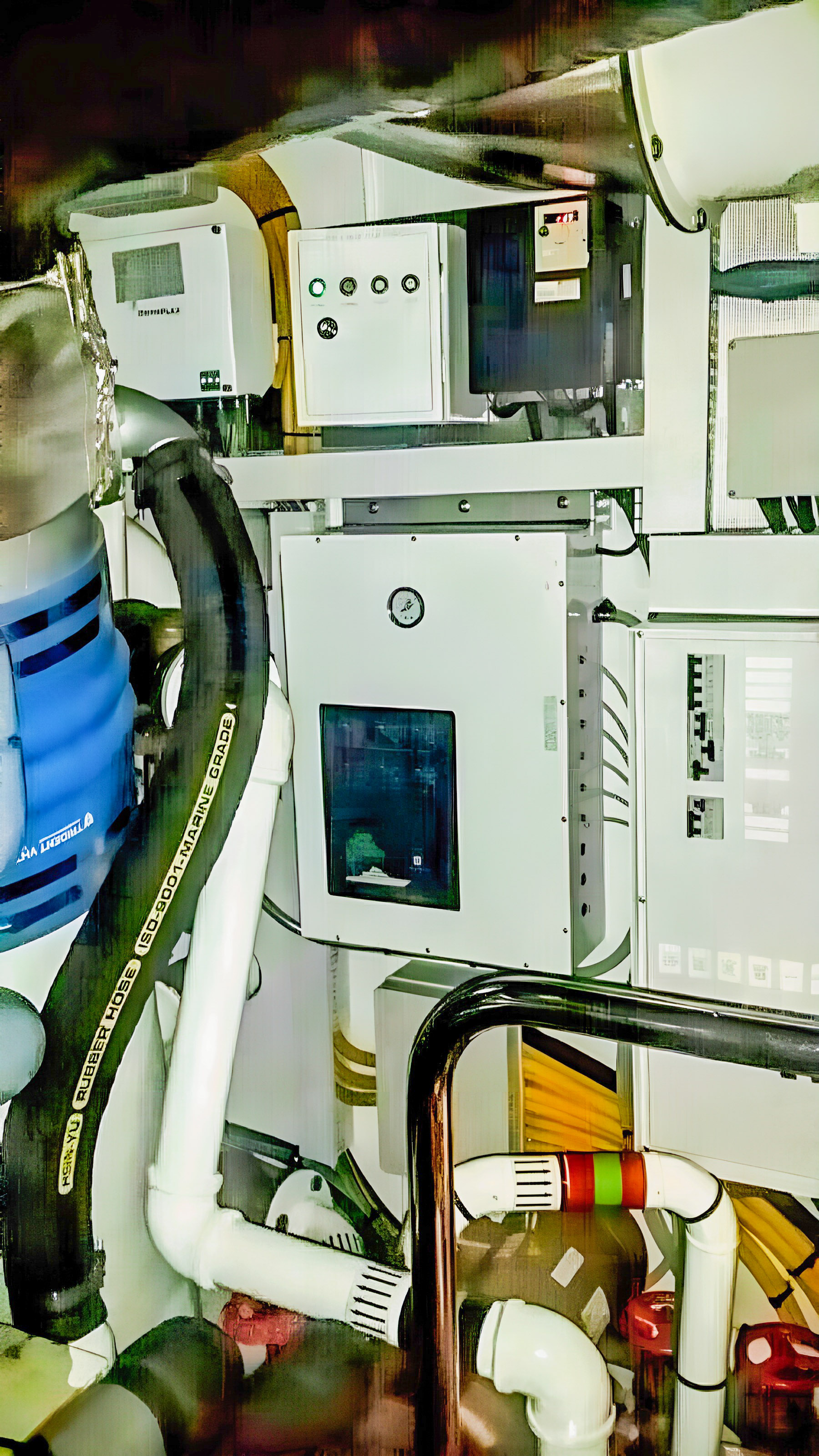
The Series 9×7 in its working surroundings

A dark inspection window and round gauge punctuate the white enclosure. Large marine hoses run beside it, cabinets occupy the spaces above and to the side, and pipework passes below. This is the practical setting for the Arid installation, with equipment arranged closely within the available space.

That surrounding space matters throughout the life of an installation. Access to the unit, tubing and pickups allows inspection and service to remain part of the boat’s routine.

Arid installation with a white enclosure, inspection window and gauge, beside marine hoses and cabinets.
The Series 9×7 installation surrounded by the yacht’s hoses, pipework and cabinets.

One part of looking after the yacht

Residual-water removal can reduce one source of moisture exposure. It complements the vessel’s specified bilge pumps and regular cleaning, ventilation and leak repairs. Contaminated fluid still requires appropriate handling; central collection does not make it suitable for overboard discharge. Our standing-water and moisture guide explains the wider care routine.

Explore the current Series 9 HD 120VAC offering when considering a new installation. For the system already aboard, Owners’ Central provides manuals and care resources to match to the installed model and configuration.

For another large-yacht installation, see Reef Chief’s story.

18 10, 2026
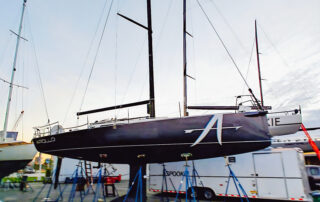
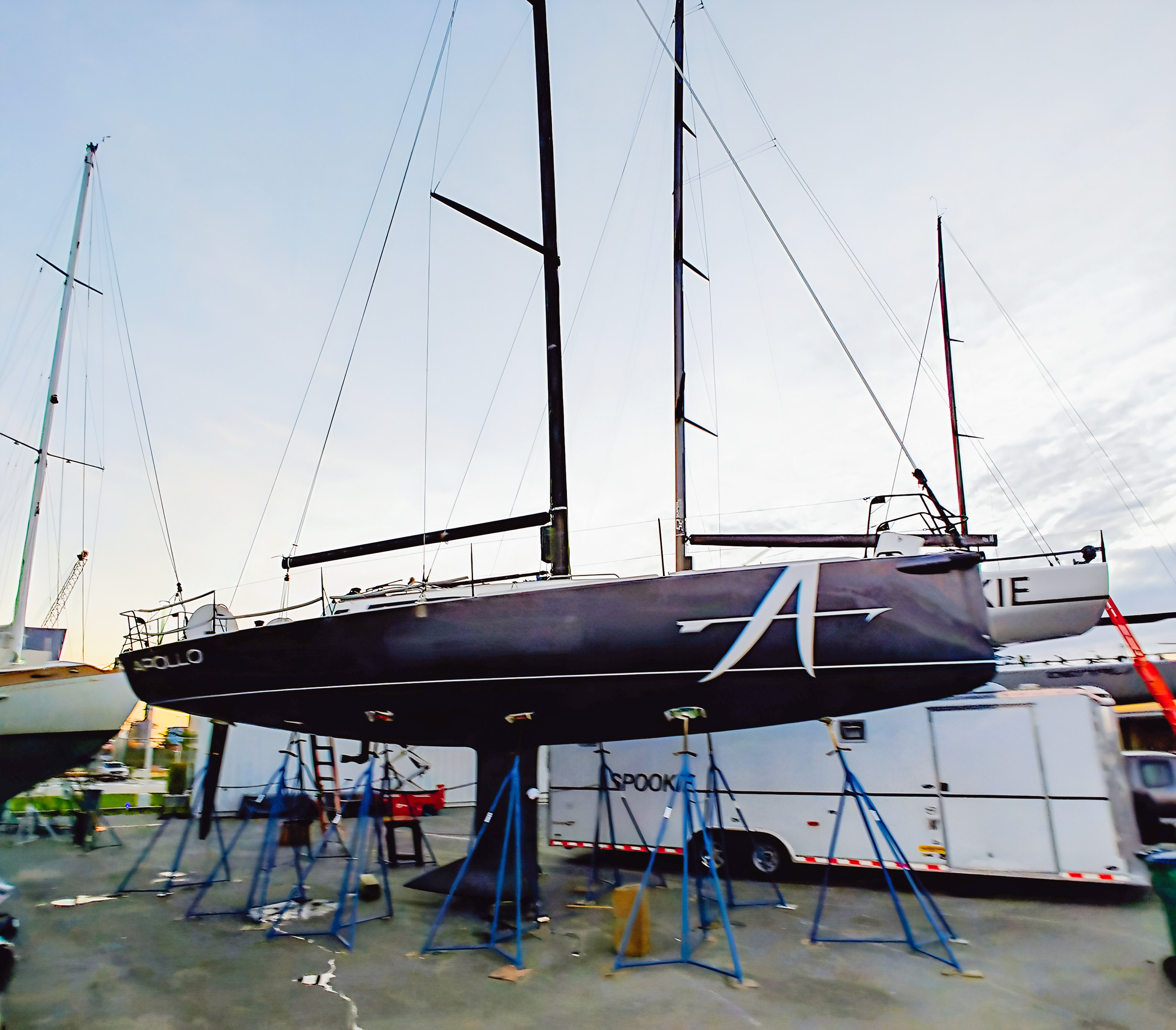
  • Apollo sailboat on boatyard supports with its name and large A hull graphic visible.

Apollo: Caring for the Water Left Below a J/121

By |2026-10-11T18:05:00+00:00October 18, 2026|Blog, Boat Stories, Installation Stories|

Our January 2024 feature on Apollo, a J/121, shows an Arid Series 2×2 installation serving areas forward and aft of the keel. The equipment brings automatic residual-water removal to those two parts of the bilge.

Apollo sailboat on boatyard supports with its name and large A hull graphic visible.
Apollo, the J/121 featured in Arid’s installation account.

A boat designed around a smaller crew

J/Boats describes the J/121 as an offshore design for racing and sailing with a smaller crew. Its arrangements bring sail handling within reach of fewer hands, while the model’s white interior and varnished trim provide a living space below.

The manufacturer’s design account brings together a carbon rig, an L-shaped keel and water-ballast assistance. Aboard Apollo, Arid serves a quieter task beneath the cabin sole: collecting residual bilge water in the areas around that keel.

Series 2×2, forward and aft of the keel

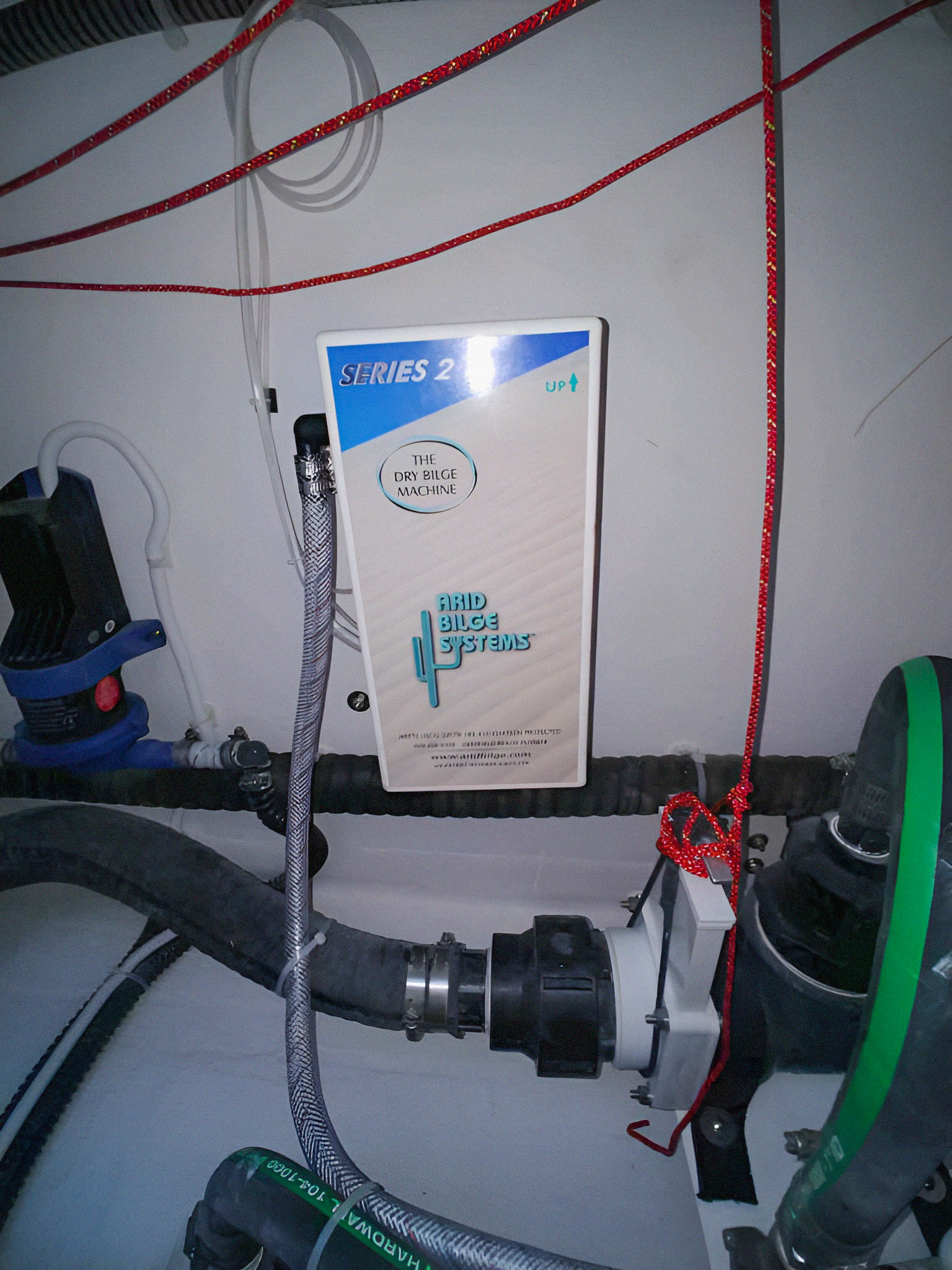
Our original Apollo installation post identifies a Series 2×2 with coverage forward and aft of the keel. The two-zone configuration gives each of those areas a connection to the system. The installed Series 2 unit is shown in the accompanying original photograph.

The Series 2 range uses separately controlled intake zones. This allows an installation to address distinct wet locations through a central unit.

Arid Series 2 unit installed aboard Apollo, with hoses and red rigging lines nearby.
The Series 2 unit aboard Apollo. Arid’s original caption identifies coverage forward and aft of the keel.

Two different reasons for water aboard

The J/121’s water-ballast design deserves a clear distinction. Ballast water is deliberately carried and controlled for the sailing design’s purpose. The Arid installation on Apollo concerns unwanted residual bilge water around the keel, a separate task from managing intentional ballast.

Arid draws residual fluid from connected pickups into a central chamber. Removing recurring standing water addresses one source of moisture exposure; leaks, ventilation and contaminated surfaces need separate attention. Keep the vessel’s specified bilge pumps operational and follow the instructions for the installed unit. Our guide to standing bilge water and moisture explains how residual-water removal fits into that care.

Planning around the boat’s wet areas

For another sailboat, begin with its own compartments: where water remains, how the spaces can be accessed and where tubing could run. Photographs of those locations help an installer assess the layout. Apollo’s forward-and-aft arrangement is one application of two zones, rather than a template for every J/121.

For an existing installation, Owners’ Central provides the Series 2 manual and maintenance resources. Keep that information with the boat’s system details so the person carrying out the next inspection has instructions for the equipment aboard.

17 10, 2026
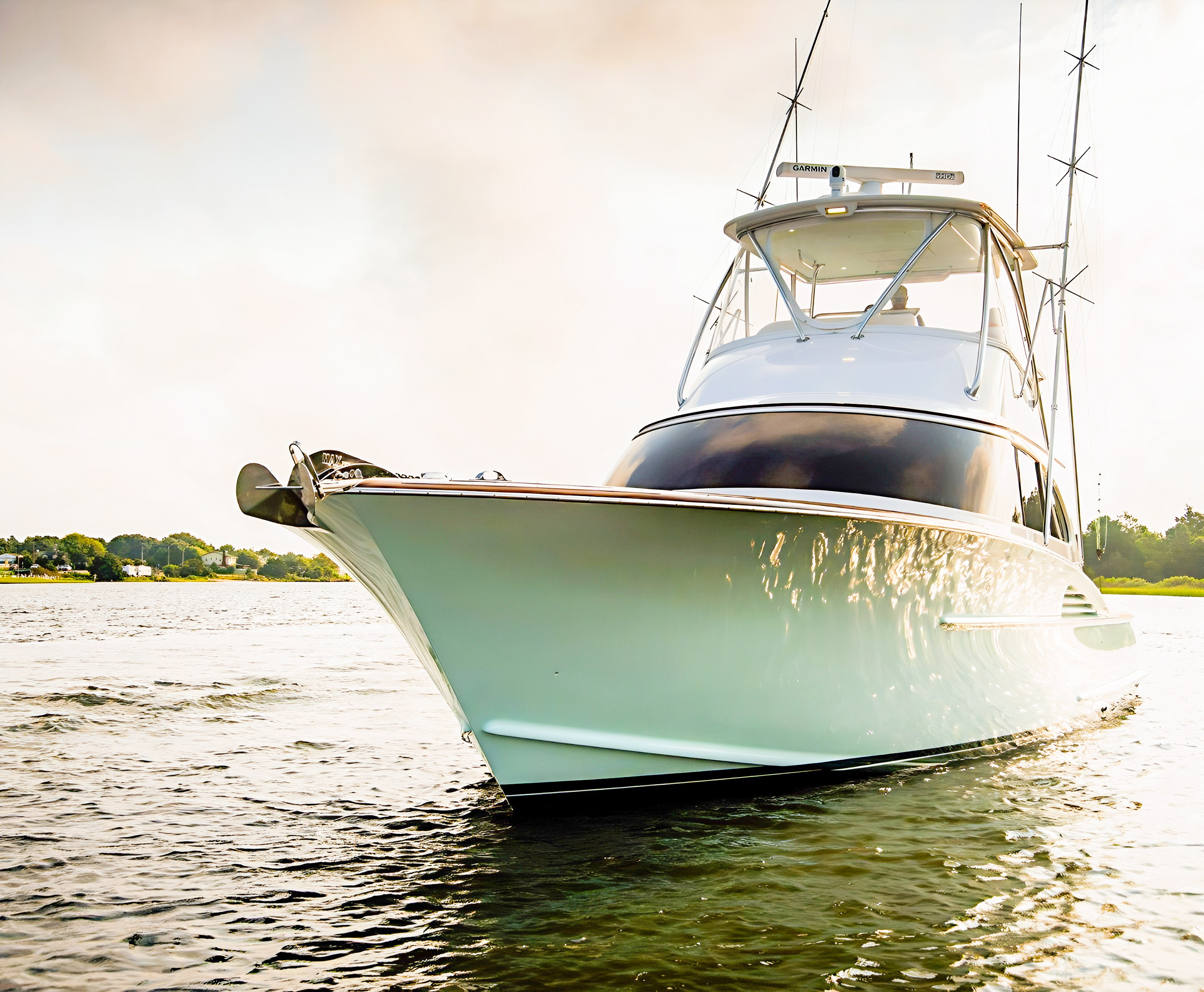
  • Bow view of Freq-n-out, with a pale hull, dark cabin windows, tower and outriggers.

Freq-n-out: Arid Series 4×4 Aboard a Winter Yacht

By |2026-10-11T21:20:22+00:00October 17, 2026|Blog, Boat Stories, Fishing Boats, Installation Stories|

A blue marlin beside her name gives Freq-n-out a distinctive signature. Above the cockpit, a tower and outriggers complete the fishing-boat profile. Arid’s company feature, first posted in November 2023, identifies her as a custom Winter yacht and describes her bilge-drying installation as a Series 4×4.

Bow view of Freq-n-out, with a pale hull, dark cabin windows, tower and outriggers.

Freq-n-out, the custom Winter yacht featured in Arid’s original company post.

A closer look below deck

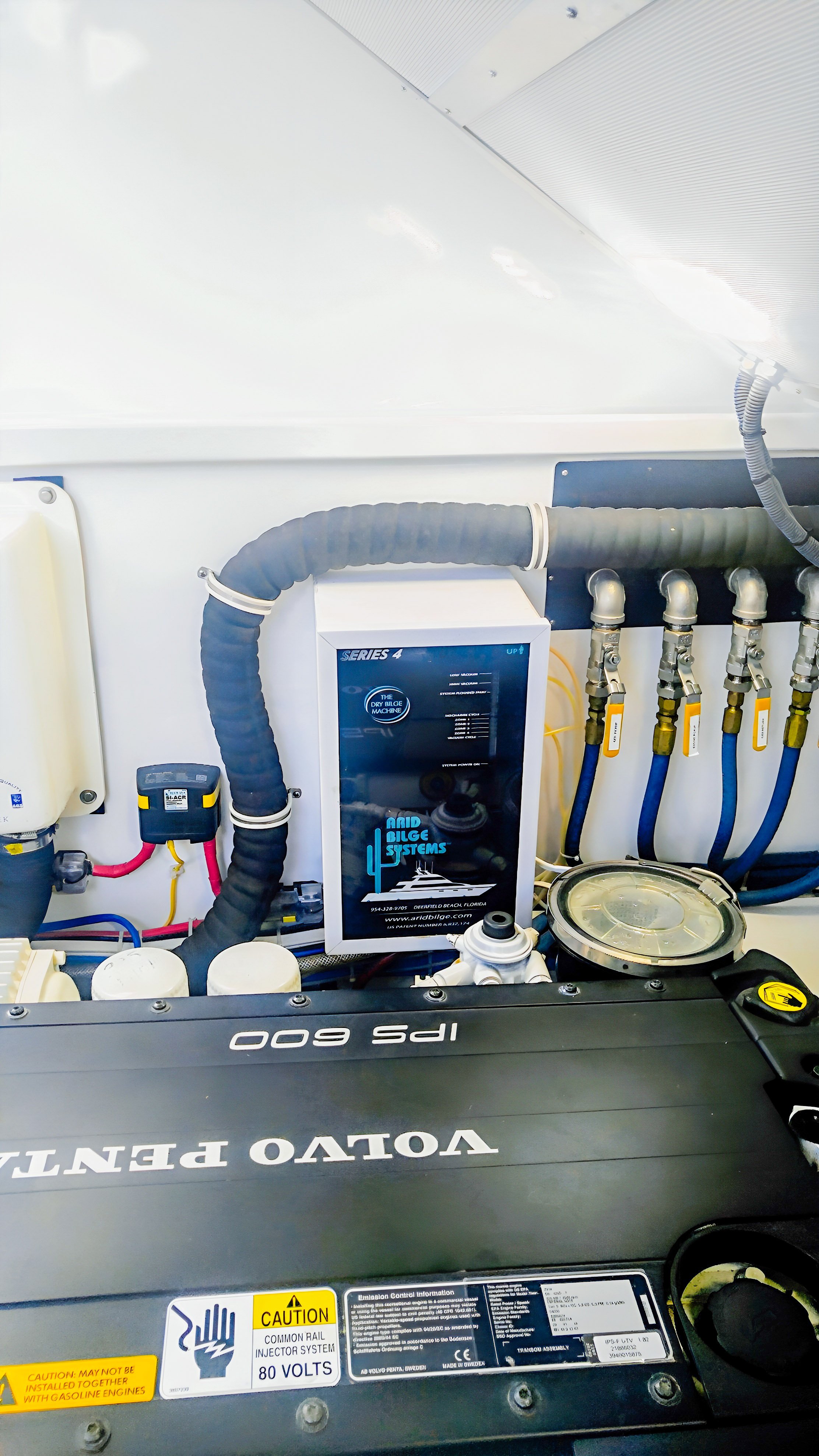
The installation photograph takes us from the finished exterior into the machinery space. A cabinet marked Series 4 sits against a pale bulkhead, with a large hose curving above it and down its left side. Blue hoses and yellow-handled valves run alongside; Volvo Penta machinery fills the foreground.

That wider setting matters. The cabinet is one part of an engine room where several systems share the available space. For an owner considering bilge drying, a view like this makes the discussion concrete: where the cabinet can be mounted, how connections will be routed, and what nearby equipment will still need to be reached.

Arid Series 4 cabinet beside blue hoses and yellow-handled valves, with Volvo Penta machinery in the foreground.

The cabinet is labeled Series 4; Arid’s company caption describes the installation as Series 4×4.

A separate role for residual water

Arid collects residual liquid through connected pickups. It works alongside conventional and emergency bilge pumps, which retain their own role. The photographed cabinet is part of that drying system. For a new installation, the pickup arrangement and cabinet position should follow the boat’s own low points and available access.

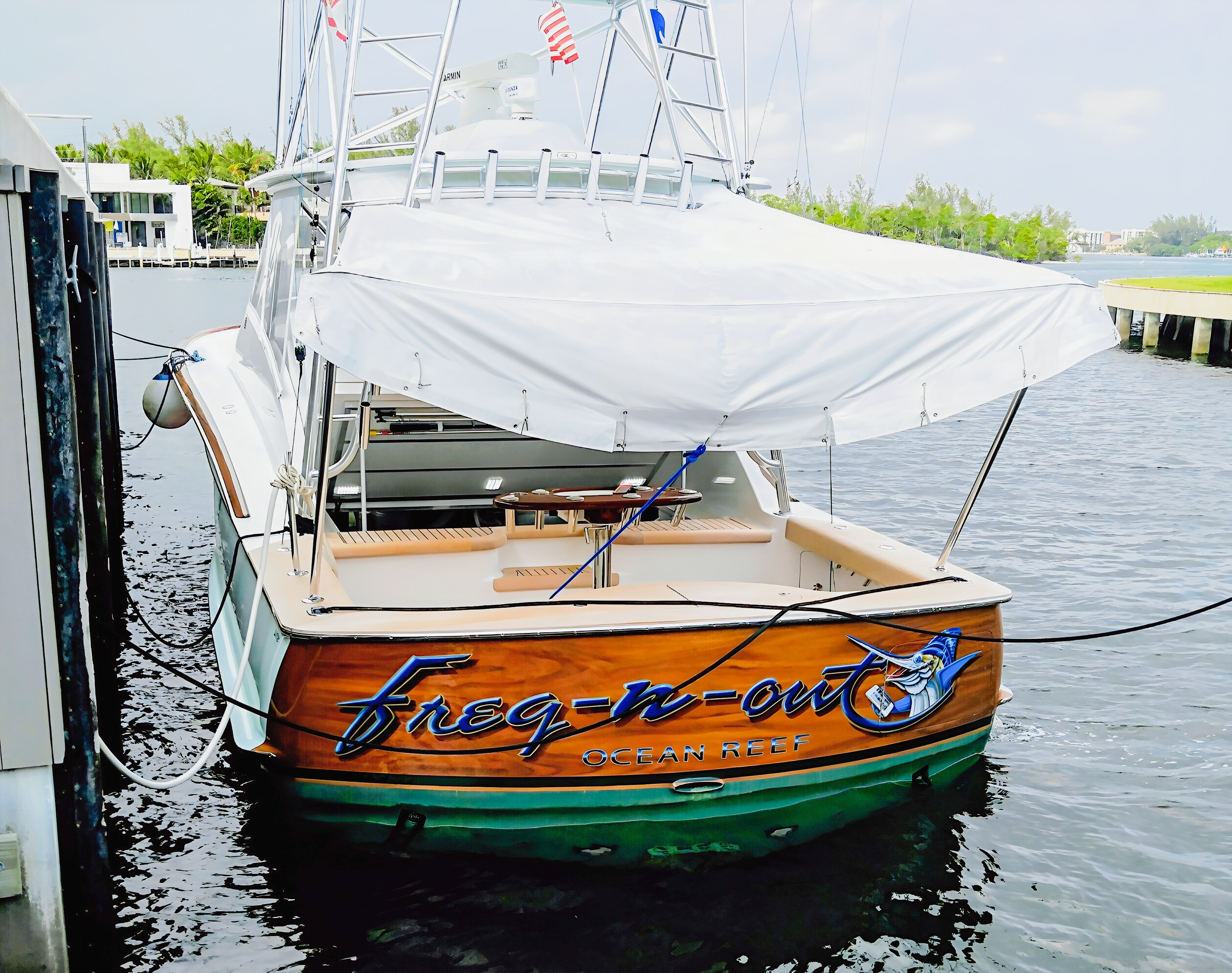
Freq-n-out’s transom brings the story back above deck. The name and marlin artwork are clearly visible beneath the cockpit shade, connecting the equipment feature with a recognizable boat.

Freq-n-out’s wood-toned transom with blue marlin artwork, its name and Ocean Reef lettering beneath the cockpit shade.

Freq-n-out’s named transom and blue marlin artwork, shown in the same company feature.

Keep both kinds of image in your boat’s records: a clear vessel view and an installation view showing the cabinet label, connections and surrounding machinery. Together, they give a service conversation more context than a close-up of equipment alone.

See how Arid removes residual bilge water, or explore the current systems for a new installation. The equipment described here belongs to the historical company feature.

View the original Freq-n-out post for its caption and gallery.
17 10, 2026
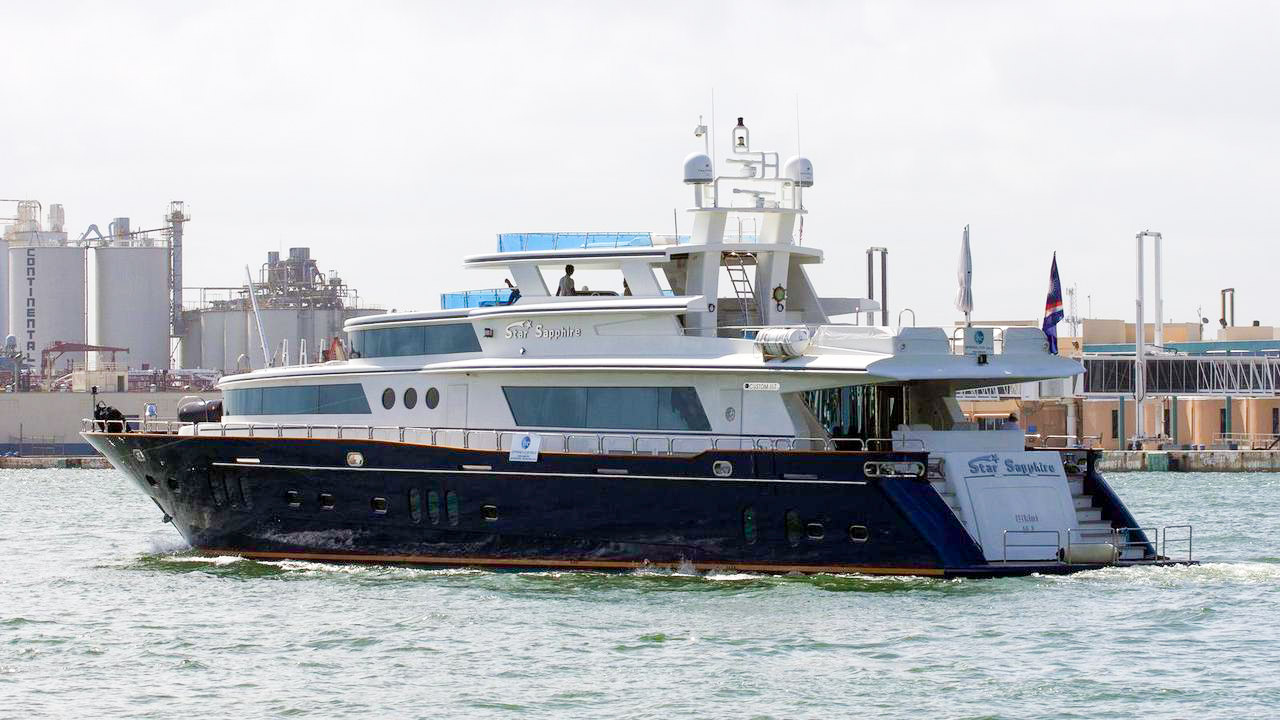
  • Star Sapphire, a blue-hulled yacht with a white superstructure, photographed from the side and stern in a harbor.

Star Sapphire: Arid Installation on a 117-Foot Yacht

By |2026-10-11T19:41:33+00:00October 17, 2026|Blog, Boat Stories, Installation Stories, Motor Yachts|

Star Sapphire’s dark blue hull and white superstructure are easy to pick out in a harbor. Her name appears high on the yacht’s side, above the long band of windows. Arid’s company feature identifies her as a 117-foot custom yacht.

Star Sapphire, a blue-hulled yacht with a white superstructure, photographed from the side and stern in a harbor.
Star Sapphire, identified in Arid’s company feature as a 117-foot custom yacht.

From the exterior to the installed equipment

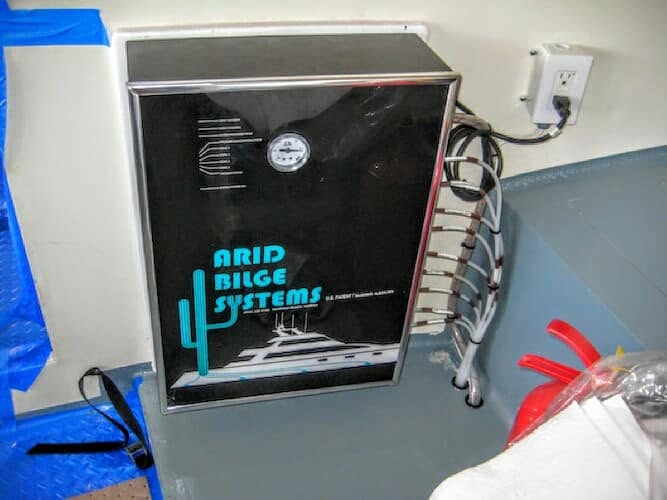
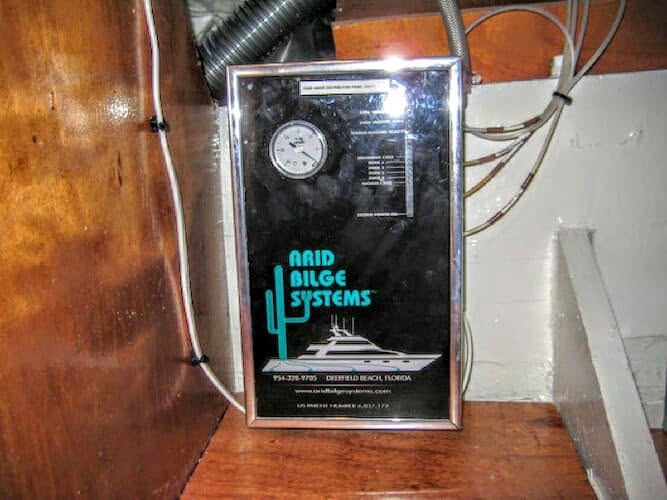
Inside, the Arid equipment shares space with tubing, cabling and finished surfaces. These close details show the practical setting behind the yacht’s exterior: panels to read, connections to recognize and routes to document.

Against the pale bulkhead, the gauge faces outward from a black front panel. Tubing runs from connections along the right-hand side, with nearby lines visible below. The open view of the surrounding floor helps place the cabinet within that setting.

Black-front Arid cabinet with a gauge and right-side tubing against a pale bulkhead aboard Star Sapphire.
Arid’s Star Sapphire feature includes this pale-bulkhead equipment detail.

Timber paneling frames the other equipment scene. The gauge sits near the top of the black panel, above the turquoise wordmark, while tubing runs toward the upper right and a corrugated hose crosses overhead.

Black-front Arid cabinet with a gauge beside timber paneling and nearby tubing aboard Star Sapphire.
The same feature also shows equipment beside timber paneling.

A useful record to keep aboard

For an owner, a clear record of the panel and nearby connections can make a service conversation easier. Include enough of the surroundings to show how the lines are routed. Check reach and clearance in person using the installed system’s instructions.

Our How Arid Works guide explains the basic residual-water collection process. The original Star Sapphire feature, published November 19, 2023, brings the yacht and these installation details together.

15 10, 2026
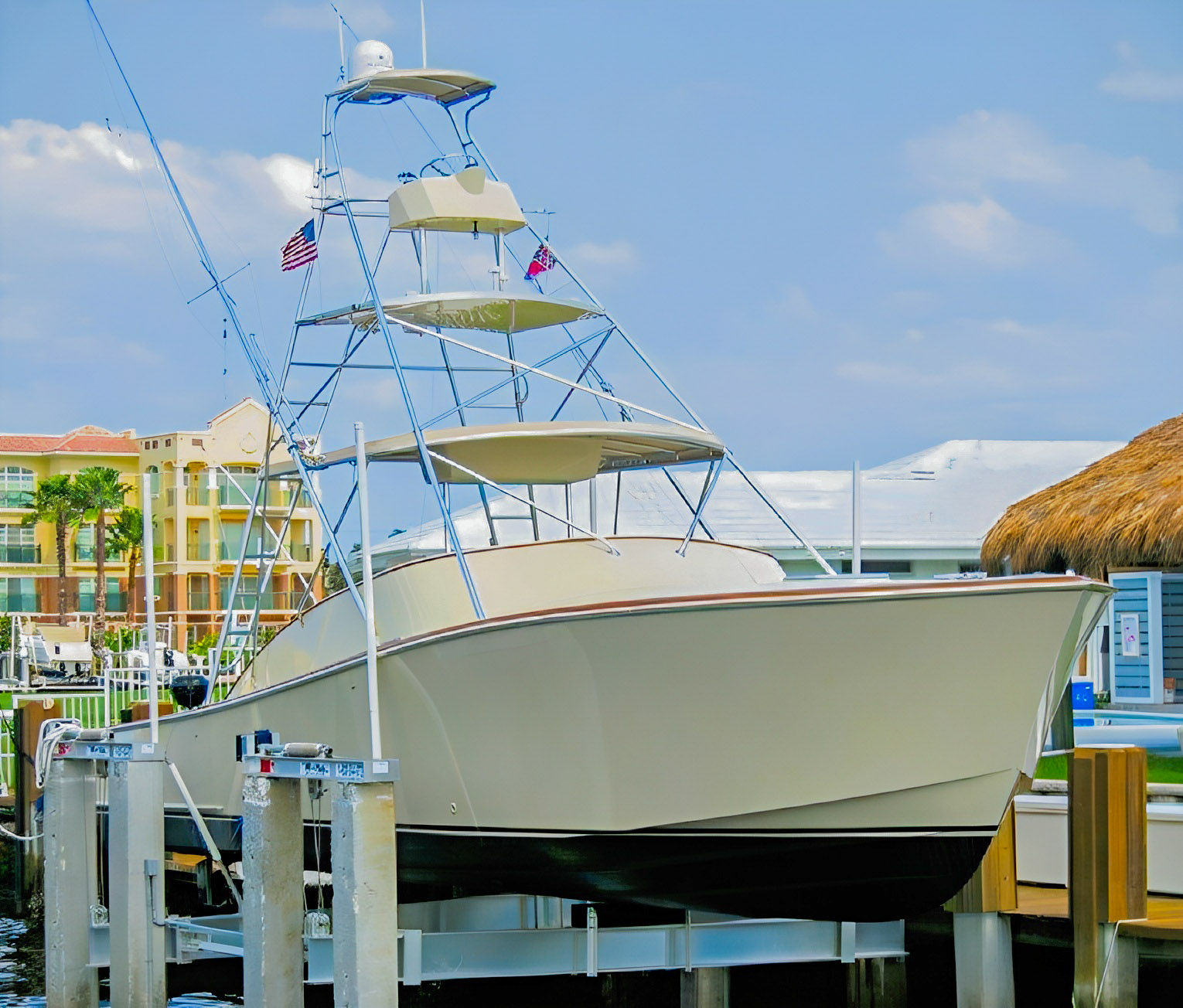
  • Longer Hours, a 36-foot Gillikin sportfish with a tall tower, on a boat lift.

Longer Hours: Two Decades of Arid Bilge Drying

By |2026-10-15T19:54:59+00:00October 15, 2026|Blog, Boat Stories, Fishing Boats, Installation Stories|

Arid Bilge Systems installed a Series 4×8 bilge-drying system aboard Longer Hours in 2008. Roughly two decades later, that system is still running. This 36-foot wooden Gillikin sportfisher collects a substantial amount of bilge water, and Arid continues to remove it from the boat’s low points.

Barry Delk, the boat’s owner, is a pepper farmer: hardworking, very polite and exceptionally kind. Our team carried out the installation personally. Years later, Barry told us he absolutely loved the Arid system. That long relationship is part of what makes Longer Hours special to us.

2008Series 4×8 installed by Arid Bilge Systems
8 pickupsLazarette, engine room and cabin collection points
Still operatingStill running in October 2026
Longer Hours, a 36-foot Gillikin sportfish with a tall tower, on a boat lift.

Longer Hours in Arid’s photograph archive: a wooden Carolina-style sportfish with a story that reaches back to our early installations.

A wooden boat worth looking after

Our original installation feature described Longer Hours as a hand-built wooden Carolina-style sportfish. A brokerage listing for Longer Hours, published by Denison on behalf of DH Yacht Sales, identifies her as a 1993, 36-foot Custom Carolina built by Ricky Gillikin in Harkers Island, North Carolina, and lists her hull material as wood.

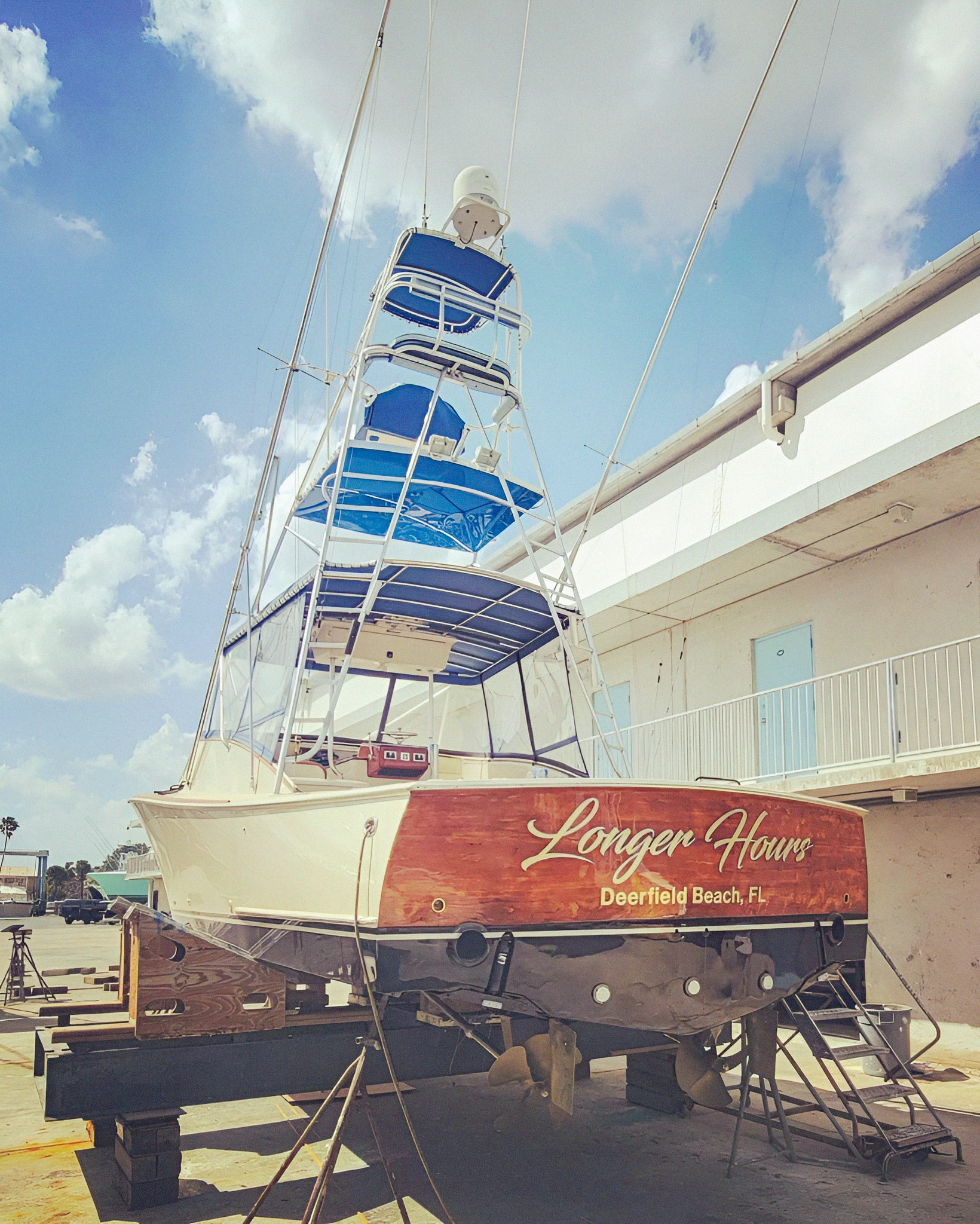
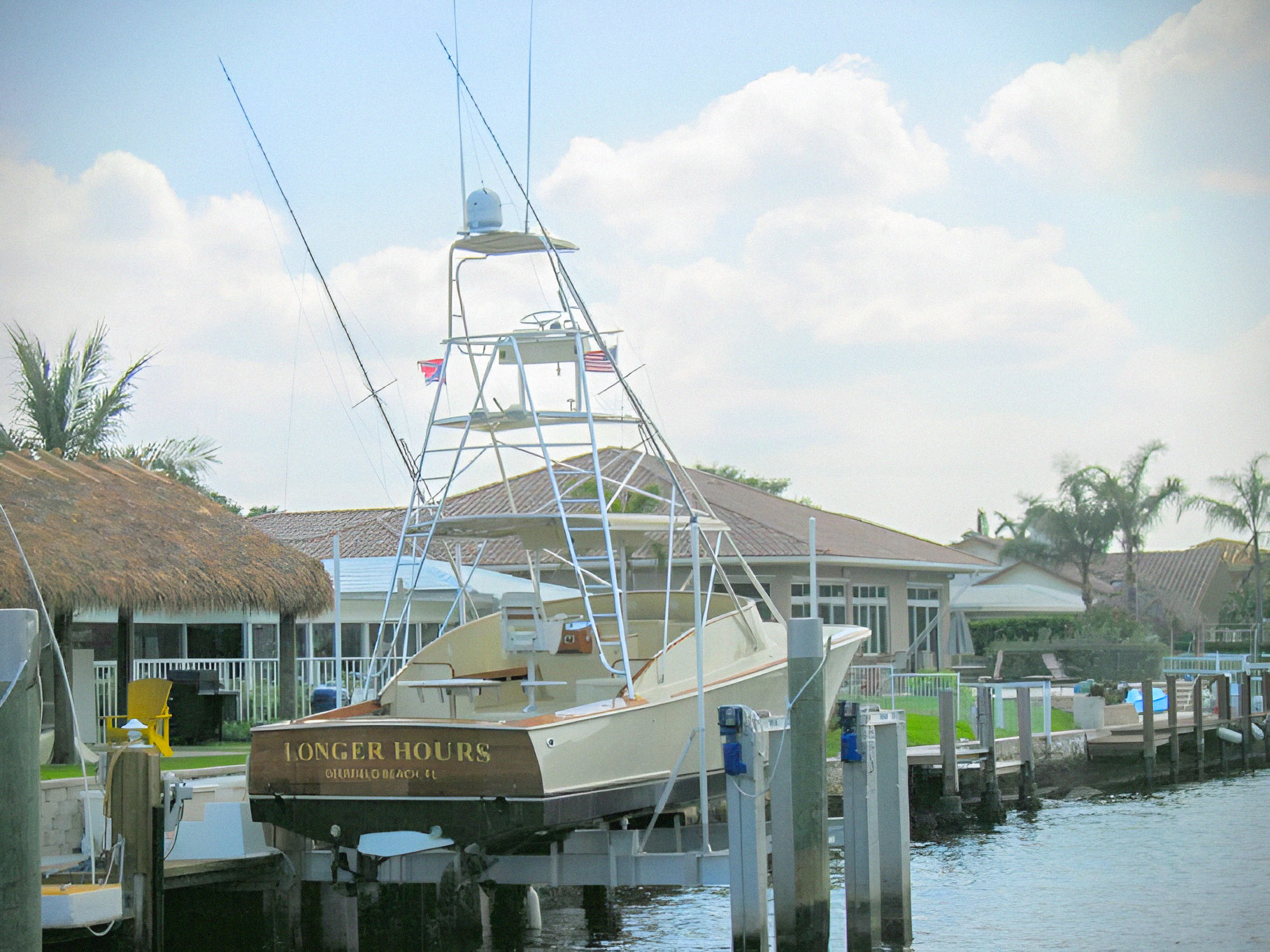
Her raised bow, tall tower and open cockpit reflect her purpose as a Carolina fishing boat. The photographs taken ashore show the hull from bow and stern, while the engine-room views reveal the spaces beneath the deck. Looking after a wooden sportfisher means paying attention to both: the finished boat above the waterline and the less visible structure inside.

Longer Hours viewed from the bow while supported ashore, showing her Carolina-style hull.

The bow and hull of Longer Hours while ashore. Arid archive; photograph date unrecorded.

Longer Hours ashore, with her name on the transom and running gear visible below the stern.

A view from the stern, with Longer Hours’ name visible on the transom. Arid archive.

The water left behind was the problem

Standing water below deck was the problem we came aboard to address. Water collected in separate low areas, including below the conventional bilge pumps’ pickup level. Our team fitted the Series 4×8 to reach those areas and remove the residual water instead of leaving it inside the wooden boat between visits.

The original engine-room comparison in our archive makes that problem visible. On the left, water and staining surround the central structure. On the right, the bilge surface is exposed, and the collection tubing and pickups can be seen.

NORMAL BILGEARID BILGE

Original Longer Hours engine-room comparison: standing water on the left; an exposed bilge surface with Arid pickups and tubing on the right.

The original Longer Hours engine-room before-and-after comparison, retained with its archival lettering. The photographs show the change in visible standing water; they do not establish the condition of hidden wood or document structural repairs. Tap the photograph for the larger image.

Why persistent wetness matters in a wooden hull

Wooden boats are built for life on the water. The concern inside a bilge is wood that stays wet where air is also present. The USDA Forest Products Laboratory’s Wood Handbook explains that decay fungi need moisture, oxygen and suitable temperatures. They consume structural components of the wood, so decay can reduce strength, sometimes before the damage looks severe.

Over time, affected wood may soften, crack or become fibrous. Surface staining alone does not tell you how much strength remains. Persistent liquid water and repeated wetting deserve attention; ordinary humidity by itself is not the same as wood remaining soaked.

Removing residual bilge water addresses one recurring moisture source. It belongs alongside finding leaks, keeping drainage paths clear, providing suitable ventilation and having suspect wood assessed by a qualified wooden-boat professional. Drying the bilge cannot restore wood that has already decayed.

Eight pickups, placed where water collected

Longer Hours’ layout is part of the story because the water was spread across several areas. Our original company feature records eight collection points:

  • 2 in the lazarette
  • 4 in the engine room
  • 2 in the cabin area

Those are pickup locations across three named areas. Half served the engine room, where one compartment could contain several separate places for water to settle.

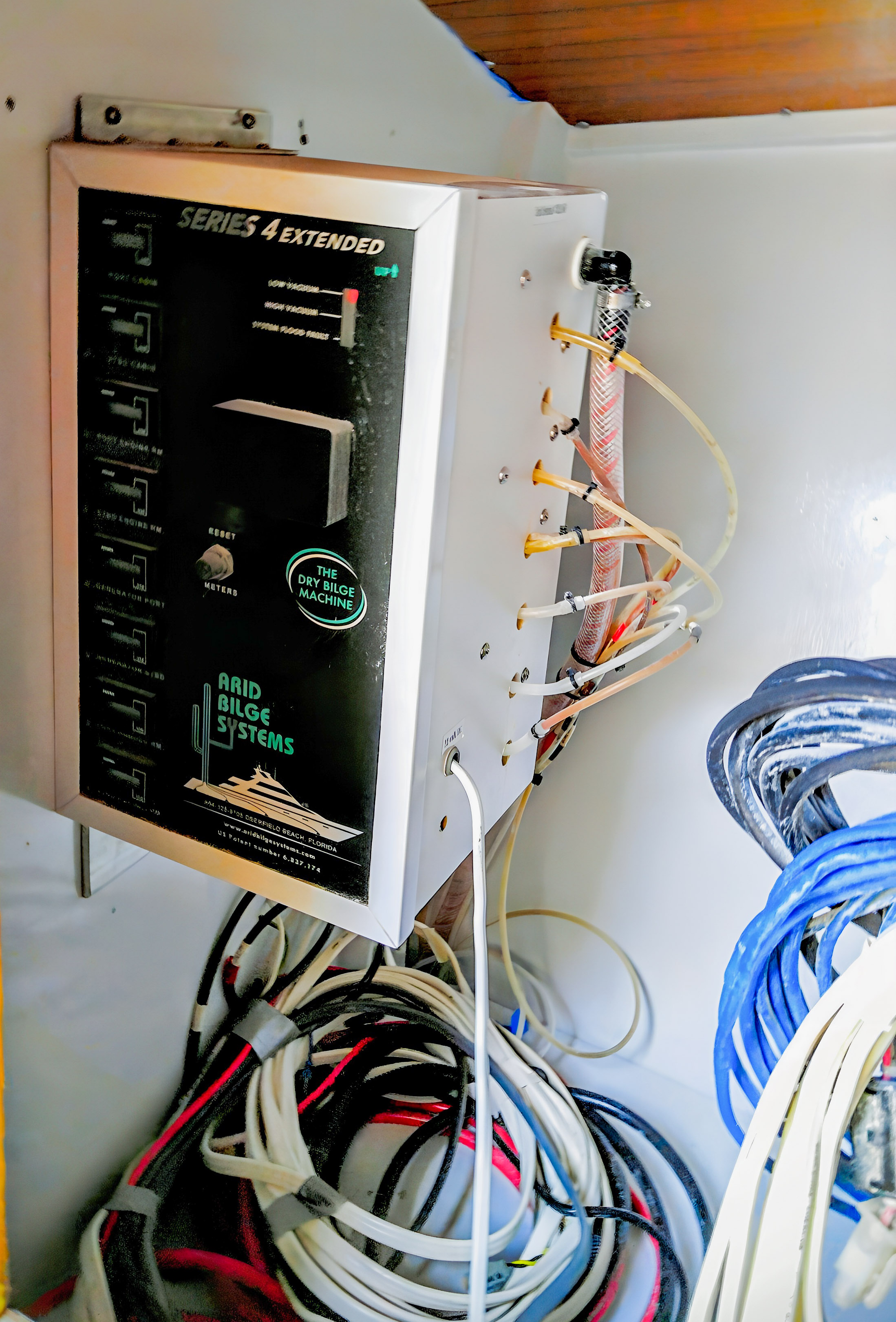
The Series 4×8 uses eight pickup locations. The original cabinet is marked Series 4 Extended, with tubing connections along its side. Placing those pickups in the boat’s actual low points is what allows the system to collect water from separate compartments.

Historical Arid Series 4 Extended cabinet aboard Longer Hours, with its control panel and side tubing connections visible.

The Series 4 Extended cabinet aboard Longer Hours. Access to the panel, tubing and pickups remains part of looking after an installation.

For a new installation, begin with the boat’s actual wet areas and the places that need inspection access. The current Series 4 options can then be considered against that layout. Another 36-foot boat may need a different arrangement.

Roughly two decades later, still doing its job

The system installed in 2008 is still operating in October 2026—about 18 years later. For Longer Hours, bilge drying has become a long-running part of caring for the boat.

Barry’s experience gives the story its continuity: the same boat, an owner who values the system, and years of collecting water that would otherwise remain below deck.

The stern of Longer Hours on a boat lift, with Longer Hours and Deerfield Beach, Florida lettered on the transom.

Longer Hours on her lift, with Deerfield Beach, Florida on the transom. Another view from the same boat’s Arid archive.

How long can a dry bilge system last?

Longer Hours is one real example of an Arid installation remaining in service for roughly two decades. Its history does not establish a fixed lifespan for every installation. Keep pickups clean, inspect tubing and connections, follow the system’s service guidance and keep the boat’s conventional bilge pumps operational.

For the operating principle, see How Arid Works. For another wooden-boat owner’s perspective, read Jim Moores’ experience aboard Aurora II.

Boat history. Arid Bilge Systems carried out the 2008 installation and confirmed the system’s continuing operation in October 2026. The complete parts-replacement and service history is not presented here.

The photographs and pickup distribution come from Arid’s archive and our January 2024 installation feature; that feature’s date is not the installation date. Builder and build-year details are attributed to the brokerage listing linked above. No verified plans or lines drawings of this particular boat were located for this article.

13 10, 2026
  • Spirit of Zopilote, a green-hulled trawler with a white wheelhouse and tall mast, alongside a mooring.

Spirit of Zopilote: Arid Series 2 Aboard a Northern Marine Trawler

By |2026-10-15T19:55:24+00:00October 13, 2026|Blog, Boat Stories, Installation Stories, Motor Yachts|

Spirit of Zopilote is a Northern Marine long-range cruising yacht, recognizable by her deep green hull, white wheelhouse and high mast. Below deck, an Arid Series 2 collects residual bilge water around the boat’s existing machinery and plumbing.

A passagemaker built for time aboard

Northern Marine’s account of its early yachts identifies Spirit of Zopilote as a 62-foot long-range cruiser completed in 1997 for Bruce Kessler. Her purposeful profile reflects the builder’s roots in commercial vessels and expedition yachts. A boat intended for extended cruising needs attention in the spaces that guests rarely see: machinery compartments, plumbing runs and the low areas beneath them.

Spirit of Zopilote, a green-hulled trawler with a white wheelhouse and tall mast, alongside a mooring.

Spirit of Zopilote, a Northern Marine long-range cruiser equipped with an Arid Series 2.

One cabinet among the existing equipment

The installation photograph shows a slim Arid cabinet mounted on a pale bulkhead. Small tubing loops above it, while larger hoses, wiring and valves occupy the surrounding space. The front panel faces into the compartment, with its connections visible in the same view.

That wider view is useful when planning service or discussing an installation. A close-up can identify the cabinet; a photograph that includes the surrounding plumbing helps explain where it sits. Reach, working room and the complete tubing route still need to be checked aboard the boat.

Arid Series 2 cabinet mounted on a pale bulkhead amid hoses, wiring and valves aboard Spirit of Zopilote.

The installed Arid cabinet and surrounding equipment aboard Spirit of Zopilote.

A closer look at the water below

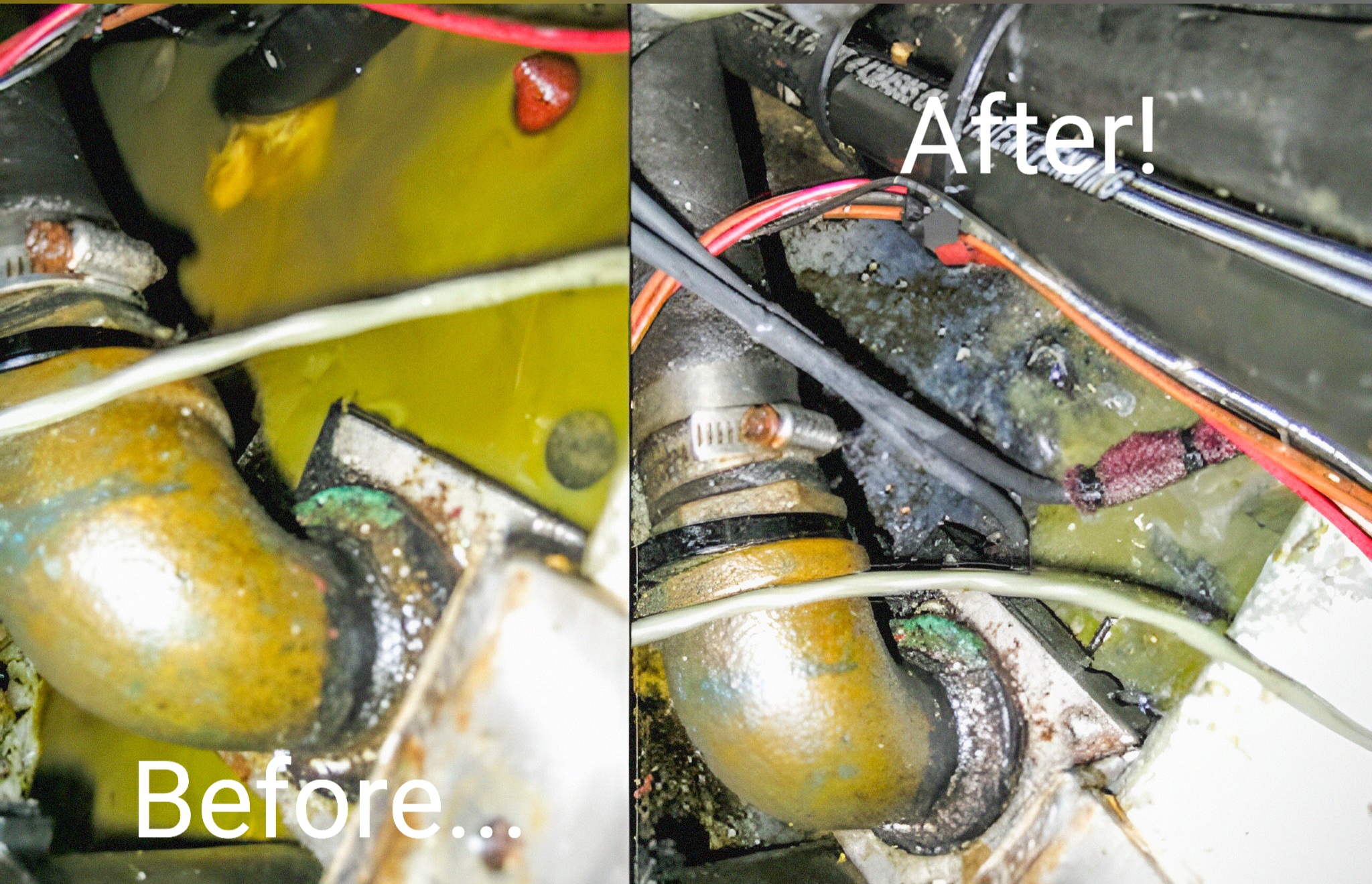
The same company post includes a pair of photographs labeled “Before” and “After.” Water covers much of the visible area around a large elbow fitting in the first view. More of the compartment floor is exposed in the second, where staining and deposits remain visible.

The useful distinction is between removing water and cleaning or repairing the surfaces beneath it. A lower water level makes those surfaces easier to see; it does not establish their condition or resolve the reason water entered.

Arid’s original before-and-after comparison shows water around an elbow fitting on the left and more exposed compartment surfaces on the right.

The original comparison from Arid’s Spirit of Zopilote feature.

Why leaving water below deck matters

A shallow puddle can stay behind after a conventional bilge pump stops. In a closed compartment, repeated wetting keeps nearby surfaces damp and makes inspection less pleasant. Water around fittings can also hide new seepage and make it harder to distinguish an old stain from an active leak.

The before-and-after photographs show the practical benefit of reaching that last water: more of the compartment becomes visible and accessible for cleaning and inspection. They do not diagnose rot or identify the condition of hidden structure. For wooden vessels, the related concern is sustained wetting of timber where oxygen is present; read wooden-yacht specialist Jim Moores’ experience with bilge moisture.

Arid removes residual water through its connected pickups. Finding the source of recurring water, maintaining drainage and ventilation, and keeping conventional bilge pumps operational remain part of caring for the boat.

Start with your own wet areas

For another trawler, begin with photographs of the places where water remains, along with the paths available for tubing and service access. This installation offers a real example to discuss, rather than a pickup plan to copy from the boat’s length alone.

See how Arid collects residual bilge water, or discuss your boat’s layout with Arid. The original company post, published November 19, 2023, brings these photographs together; it does not give an installation date.