With her twin white hulls, blue sail cover and name across the bow, Guinevere V is easy to recognize in Arid’s November 2023 photo feature. The company caption identifies her as a 2015 St. Francis 50, a South African-built cruising catamaran. Below deck, it describes a useful detail: three wet zones per hull, mirrored from one side to the other.
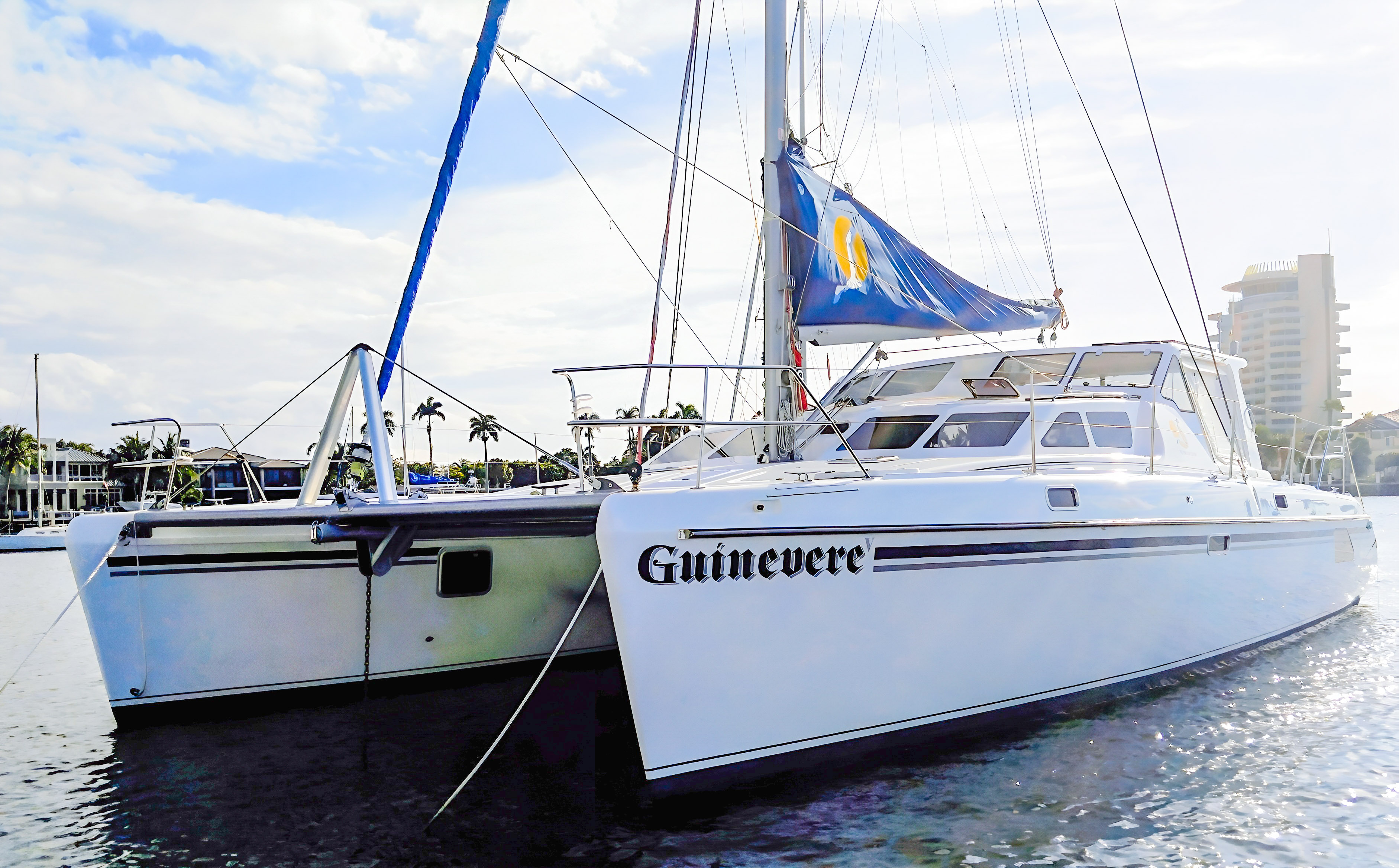
Guinevere V, identified in Arid’s company feature as a 2015 St. Francis 50.
Three wet zones in each hull
For a catamaran owner, that hull-by-hull description is a helpful starting point. A boat’s overall length tells only part of the story; the places where residual water collects deserve a closer look. Guinevere V’s feature describes the wet zones on both sides rather than treating the boat as one undivided bilge.
When considering a similar installation, start with the spaces you can actually inspect. Where does water remain in the port hull? Where does it remain in the starboard hull? Which access panels let you check those places? A simple set of photographs from each side can make that conversation much more specific than a model name alone.
A Series 4 in the port engine room
The installation photograph shows a cabinet clearly labeled Series 4. Arid’s caption places the unit in the port engine room. Hoses pass above the cabinet, and service information for nearby machinery is visible below it, giving a close view of the equipment and its surroundings.
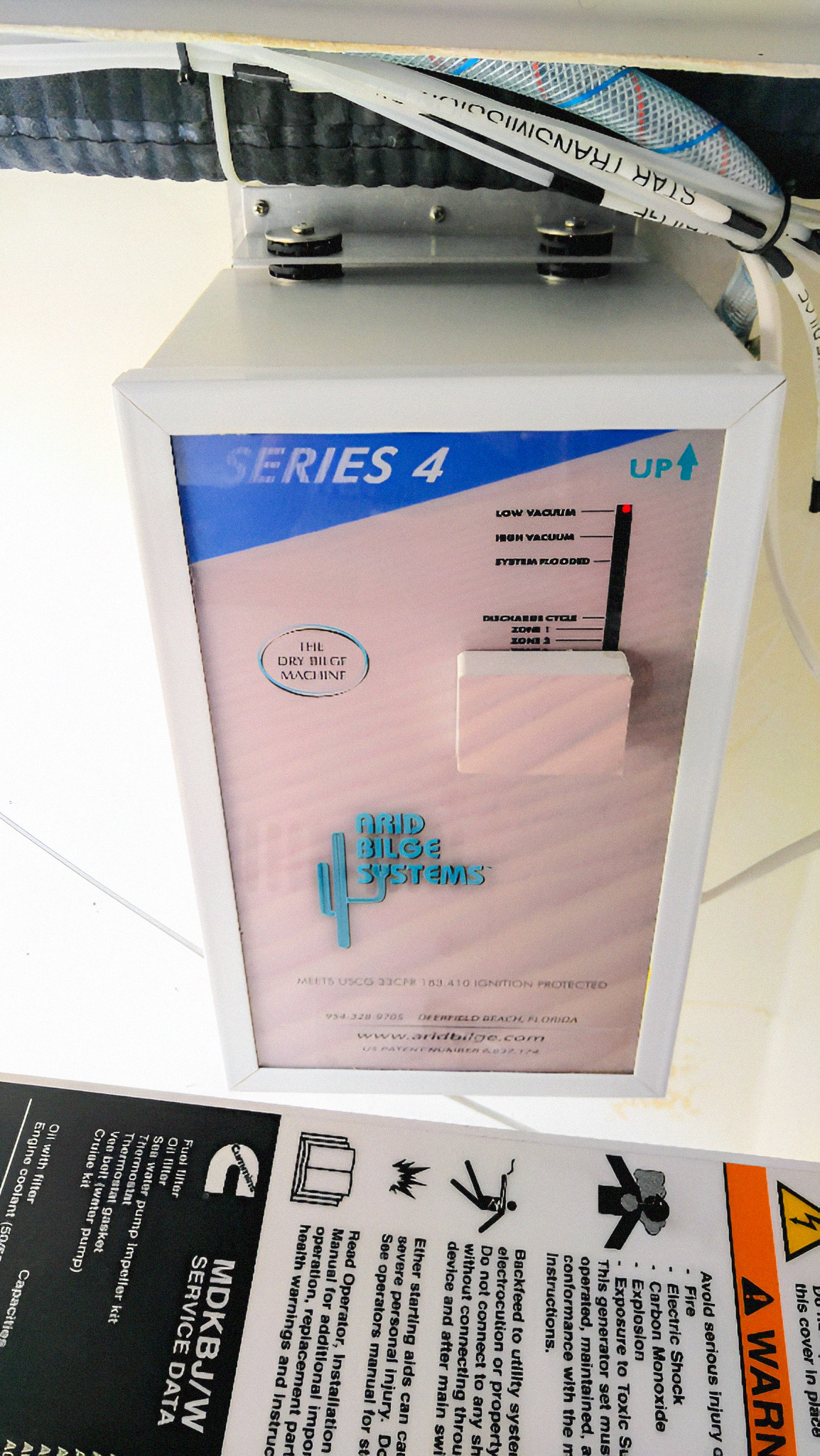
The Series 4 cabinet shown in the original gallery; the company caption places the unit in the port engine room.
That view also raises a practical planning question: what will you need to reach after the equipment is installed? Space for inspecting the cabinet, following connections and servicing nearby machinery belongs in the conversation alongside the wet-zone locations. Bring photographs of those surrounding spaces as well as the wet areas themselves.
Look at both sides of the boat
The stern photograph brings the two-hull layout back into view. It is a useful reminder to walk through each side of a cruising catamaran when discussing bilge care, even when the intended arrangement is mirrored.
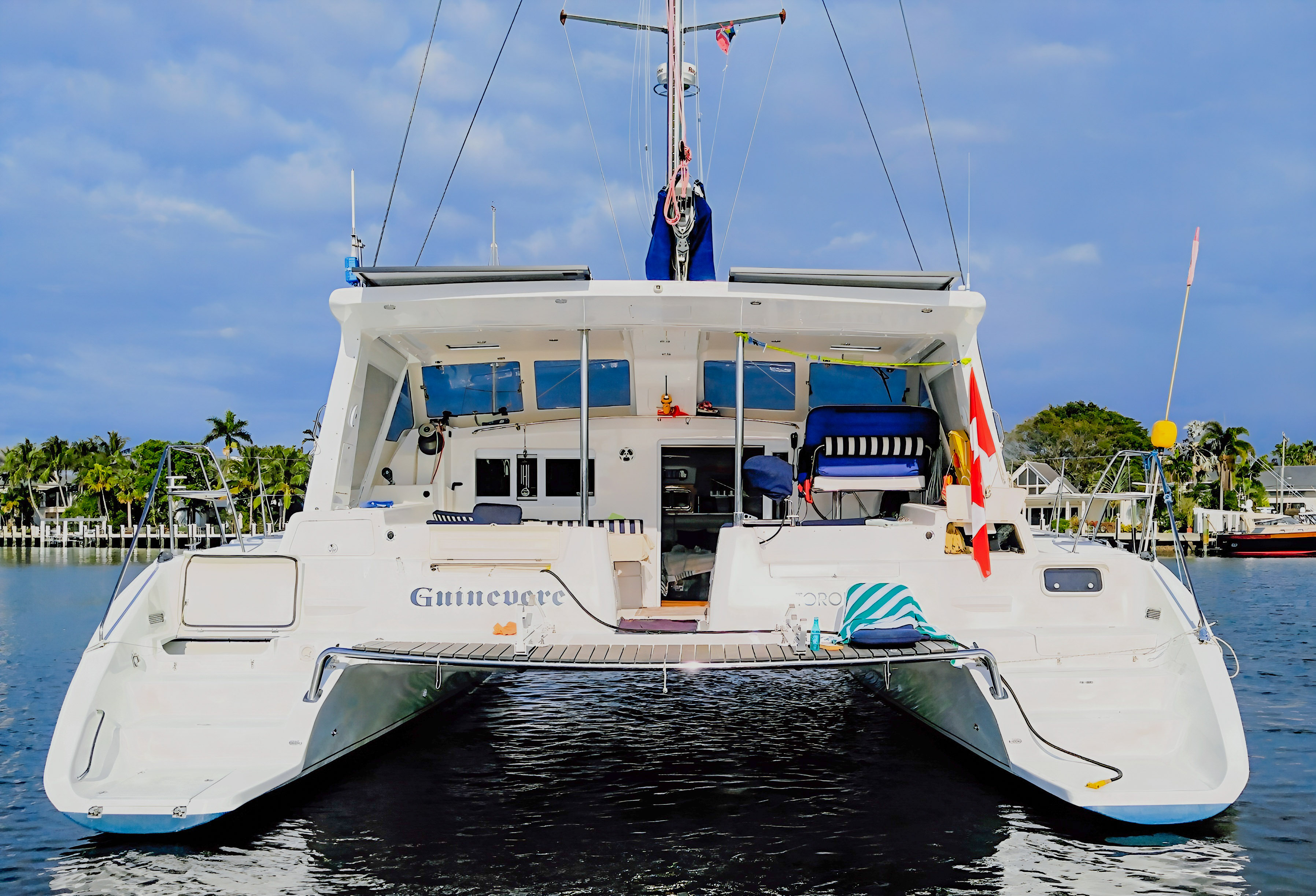
A stern view of Guinevere V from the same company photo feature.
For the operating principle behind residual-water removal, see how Arid works. Our Hylas H57 interview offers another cruising-sailboat perspective. You can also explore the current systems when planning your own installation.
View the original Guinevere V photo feature for the complete gallery.