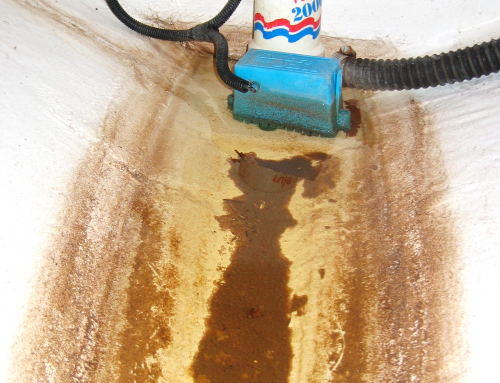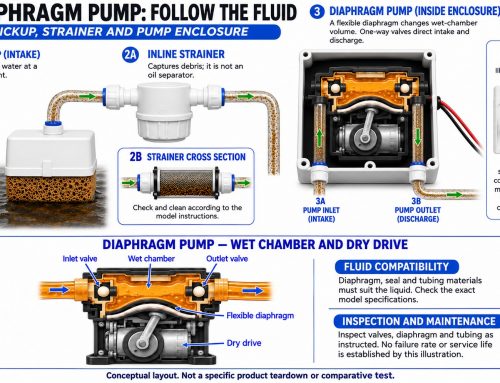

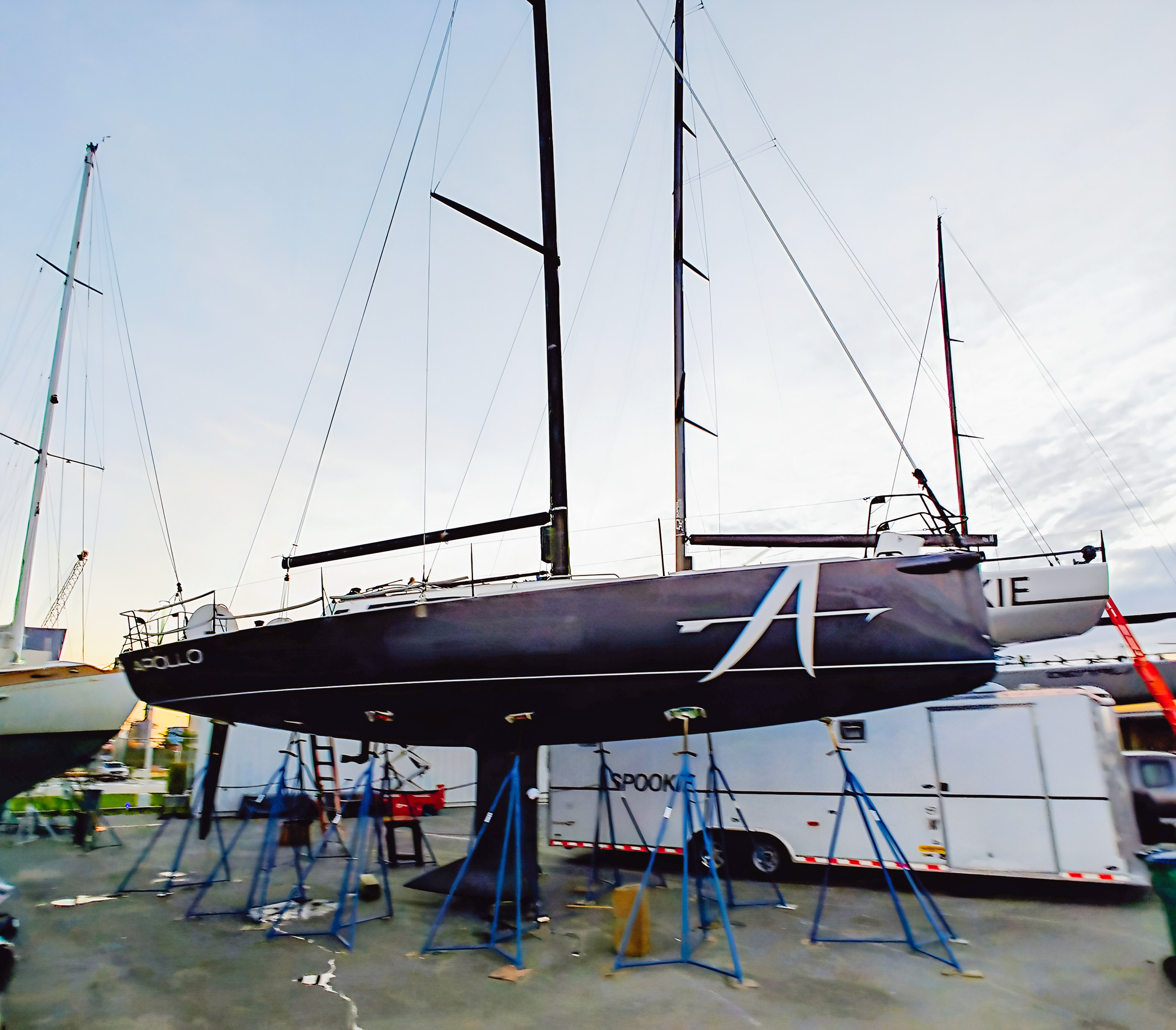
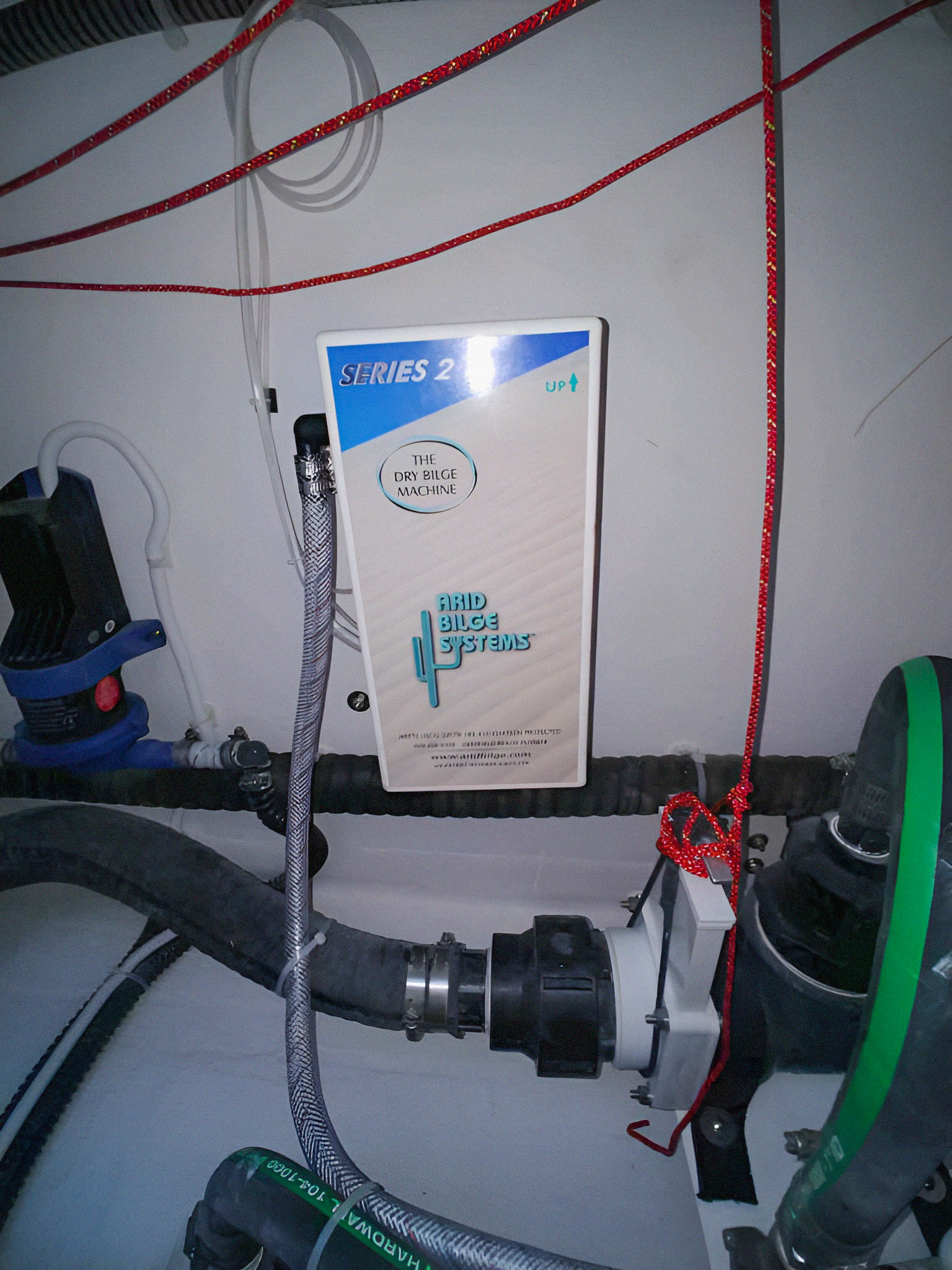
Our January 2024 feature on Apollo, a J/121, shows an Arid Series 2×2 installation serving areas forward and aft of the keel. The equipment brings automatic residual-water removal to those two parts of the bilge.
A boat designed around a smaller crew
J/Boats describes the J/121 as an offshore design for racing and sailing with a smaller crew. Its arrangements bring sail handling within reach of fewer hands, while the model’s white interior and varnished trim provide a living space below.
The manufacturer’s design account brings together a carbon rig, an L-shaped keel and water-ballast assistance. Aboard Apollo, Arid serves a quieter task beneath the cabin sole: collecting residual bilge water in the areas around that keel.
Series 2×2, forward and aft of the keel
Our original Apollo installation post identifies a Series 2×2 with coverage forward and aft of the keel. The two-zone configuration gives each of those areas a connection to the system. The installed Series 2 unit is shown in the accompanying original photograph.
The Series 2 range uses separately controlled intake zones. This allows an installation to address distinct wet locations through a central unit.
Two different reasons for water aboard
The J/121’s water-ballast design deserves a clear distinction. Ballast water is deliberately carried and controlled for the sailing design’s purpose. The Arid installation on Apollo concerns unwanted residual bilge water around the keel, a separate task from managing intentional ballast.
Arid draws residual fluid from connected pickups into a central chamber. Removing recurring standing water addresses one source of moisture exposure; leaks, ventilation and contaminated surfaces need separate attention. Keep the vessel’s specified bilge pumps operational and follow the instructions for the installed unit. Our guide to standing bilge water and moisture explains how residual-water removal fits into that care.
How should sailboat bilge-water pickups be planned?
For another sailboat, begin with its own compartments: where water remains, how the spaces can be accessed and where tubing could run. Photographs of those locations help an installer assess the layout. Apollo’s forward-and-aft arrangement is one application of two zones, rather than a template for every J/121.
For an existing installation, Owners’ Central provides the Series 2 manual and maintenance resources. Keep that information with the boat’s system details so the person carrying out the next inspection has instructions for the equipment aboard.