
Motor Yachts

Real motor yachts, their owners, and Arid Bilge Systems installations.

11 10, 2026
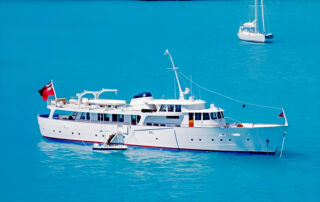
  • Blue Guitar, the classic white motor yacht, at anchor in turquoise water.

Blue Guitar: Arid Aboard a Classic Camper & Nicholsons

By |2026-10-12T22:57:26+00:00October 11, 2026|Blog, Boat Stories, Installation Stories, Motor Yachts|

Blue Guitar’s long white hull, round portholes and sheltered aft deck belong to a different era of yachting. The 103-foot Camper & Nicholsons motor yacht was built in 1967. Beneath that classic profile, an Arid installation serves wet areas from the anchor locker to the aft accommodation.
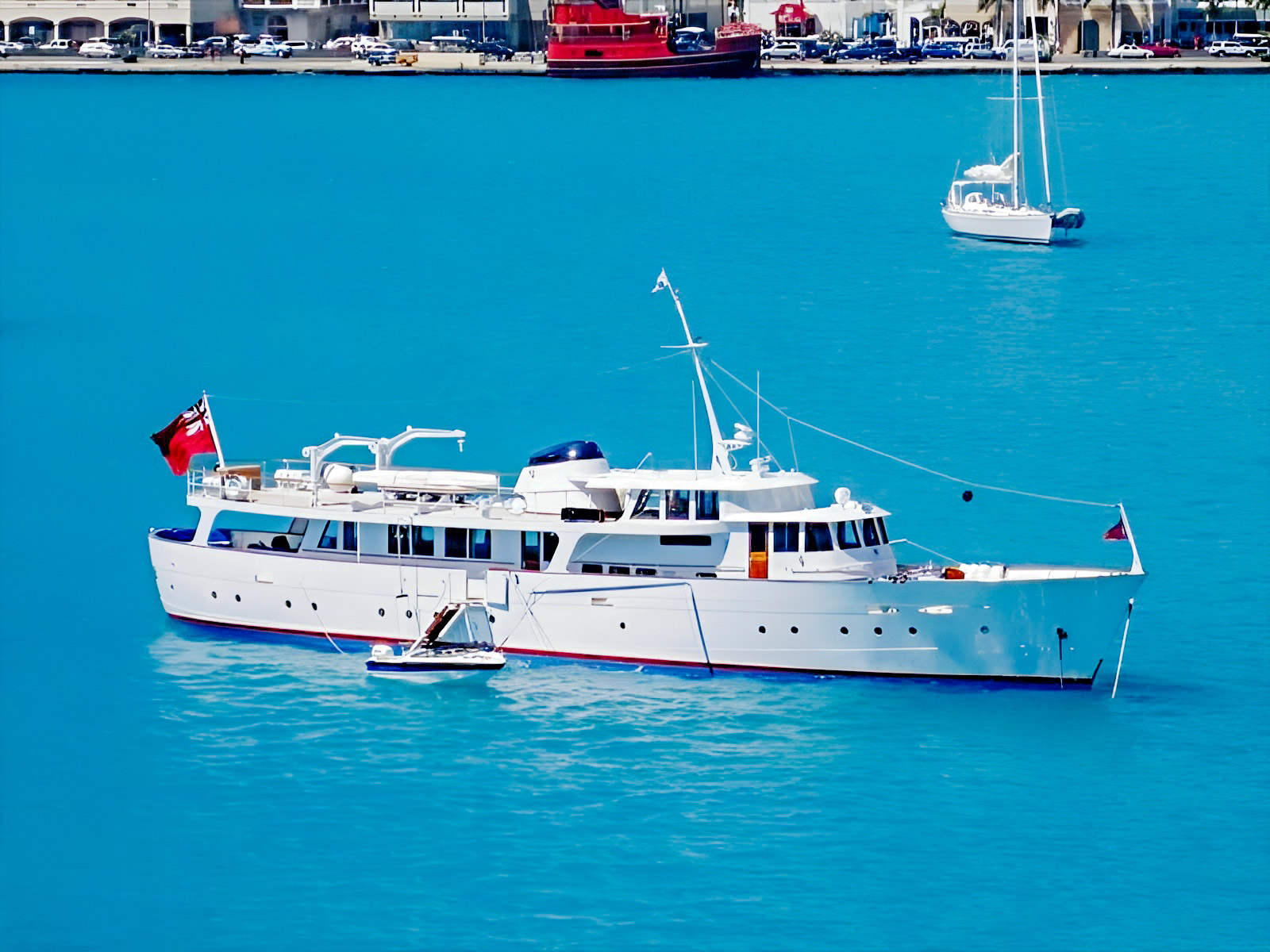
Blue Guitar, the classic white motor yacht, at anchor in turquoise water.
Blue Guitar in an original photograph from Arid’s boat archive.

Keeping the yacht’s original character

Blue Guitar’s machinery is part of her story. In its case study of work aboard the yacht, Hickman Engineering identifies twin Gardner 8L3B diesel engines and describes owners committed to retaining original fittings and classic machinery. Its work included gearbox repairs and engine alignment: the kind of specialist attention that keeps an older vessel in service.

Our original Blue Guitar installation post records an Arid Series 9X6 alongside an oil separator and alarm system. The photographs show that equipment among the yacht’s existing pipes, wiring and structural supports.

Pickup locations from bow to stern

The installation account names these pickup locations:

  • One in the anchor locker.
  • Two in the engine room.
  • Two in the aft master cabin.

That spread matters more than the yacht’s overall length alone. It includes machinery spaces and areas well away from them. Each location gives the crew a specific place to inspect when water returns, rather than treating the bilge as one connected space.

Arid installation aboard Blue Guitar, with intake tubing, a vertical chamber and pressure gauge behind a clear cover.
The installed Arid unit photographed in the same Blue Guitar source post.

Drying and oil management have separate jobs

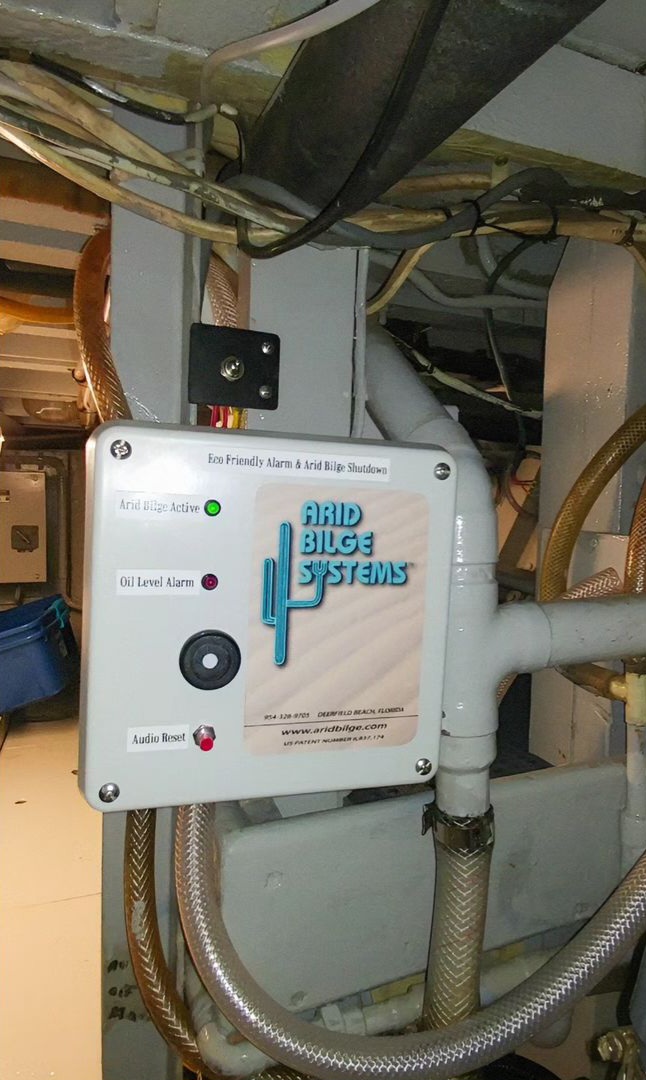
Arid draws residual fluid through connected pickups into a collection chamber. Oil separation is a separate task, which is why the separator and alarm deserve attention alongside the drying unit. The alarm panel in the original photos carries oil-level and shutdown labels; it is a distinct part of this installation.
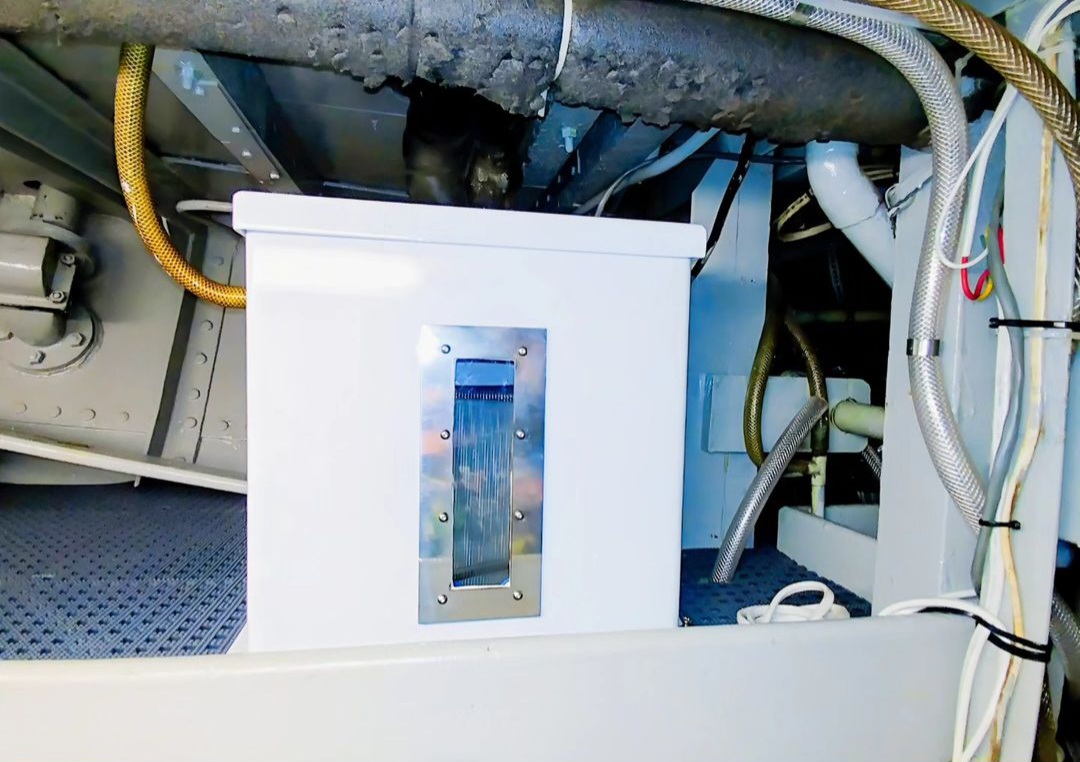
Oil-separator enclosure and connected hoses photographed aboard Blue Guitar.
Blue Guitar’s oil-separator enclosure in the original installation feature.
Blue Guitar alarm panel labeled for Arid bilge activity, oil level and shutdown.
The separate alarm and shutdown panel shown with Blue Guitar’s installation.

Our published account describes more than 17 years of use and replacement of the original solenoid intakes. That is Blue Guitar’s reported service experience. Regular inspection and maintenance still belong in the routine, and conventional bilge pumps remain operational alongside Arid.

Related reading

Follow the route from pickup to discharge or find manuals in Owners’ Central. Planning a new installation? Explore current Arid systems and discuss your boat’s wet areas with Arid.

11 10, 2026
  • Reef Chief motor yacht underway on blue water.

Reef Chief: Two Arid Systems Aboard a 120-Foot Motor Yacht

By |2026-10-11T04:01:58+00:00October 11, 2026|Blog, Boat Stories, Installation Stories, Motor Yachts|

Seen underway, Reef Chief presents the long profile of a 120-foot motor yacht. Below those decks, our original boat feature records an Arid Series 9 and a Series 4, together with a Deckma Hamburg oil monitoring system. The exterior and installation photographs show two sides of the same yacht: the boat at sea and the installation below deck.

Reef Chief motor yacht underway on blue water.
Reef Chief underway, from the original Arid boat feature.

A Lloyds Ships yacht across three decks

Built by Lloyds Ships, Reef Chief arranges living and working spaces across three decks. The pilothouse and sky lounge occupy the upper level; the owner’s stateroom and main living areas sit below. Guest accommodation, crew quarters and the engine room are among the lower-deck spaces described in Denison’s historical profile of Reef Chief.

The layout puts bilge care in context. Alongside the rooms people use are machinery spaces, plumbing and low points that need their own attention. A yacht’s overall length tells only part of that story.

Series 9 and Series 4 aboard Reef Chief

The two Arid units address residual water through connected pickup locations. Instead of carrying a portable vacuum to each wet area, the installation brings tubing back to central collection equipment.

In the installation photograph, the clear-front enclosure reveals a black control panel, a gauge and tubing running along the right-hand side. It is a close view of the installed hardware among the yacht’s other equipment. Controls, hoses and connections are all part of the space that must remain accessible for inspection and service.

Arid equipment in a clear-front enclosure aboard Reef Chief, with gauges and tubing visible.
Arid equipment aboard Reef Chief, shown in the original installation photograph.

Water collection and oil monitoring have different jobs

The Deckma Hamburg monitoring system named in the original feature adds a separate function to the installation. Collecting bilge fluid does not separate oil from water or establish that the fluid is suitable for discharge. The discharge and monitoring arrangements therefore belong in the same planning conversation as the drying equipment.

Conventional bilge pumps remain essential for higher-volume pumping. Arid supplements them by collecting the shallow water that can remain at the connected low points.

What to take from this installation

Reef Chief shows that an installation can include more than one Arid cabinet. The useful question for another owner is which wet areas need collection, where the equipment can fit and how it can be serviced. Two cabinets aboard this yacht do not make two cabinets the right choice for every 120-footer.

See the original Reef Chief feature and photographs, or talk with our team about your boat’s layout.

Related reading

Explore current Arid systems.

11 10, 2026
  • Cortina underway, viewed from above and astern in an original Arid Bilge Systems photograph.

Cortina: Bilge Drying Aboard a 114-Foot Motor Yacht

By |2026-10-11T04:01:28+00:00October 11, 2026|Blog, Boat Stories, Installation Stories, Motor Yachts|

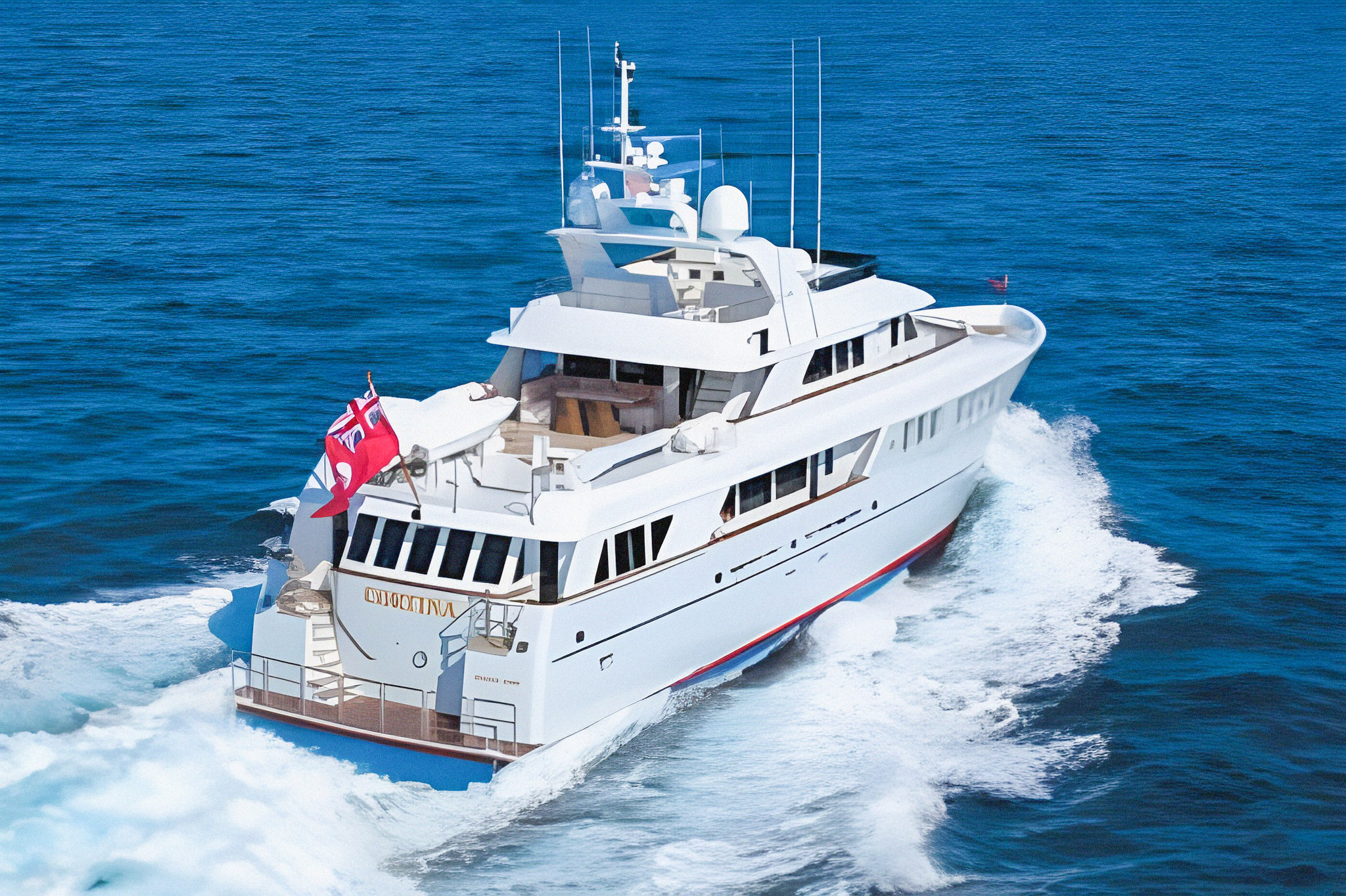
Cortina makes an impression underway: a white hull, three decks and a broad wake behind her. Below deck, another part of the yacht’s story is easier to overlook. Our original photographs document an Arid Series 9 installation arranged alongside discharge and monitoring equipment in the machinery space.

Cortina motor yacht underway, viewed from above and astern.
Cortina underway, from the original Arid boat feature.

The yacht behind the installation

Built by Newcastle in 2010, Cortina is a 114-foot custom motor yacht. In its 2013 listing announcement, Worth Avenue Yachts described her tri-deck layout, four guest cabins and custom Hodgdon Yachts interior. Those details give a sense of the spaces and craftsmanship aboard this particular vessel.

The Arid photographs take us into a different part of that setting. They pair the yacht’s exterior with a close view of the installed equipment, offering a look at the machinery behind everyday bilge care.

A closer look at Cortina’s Arid installation

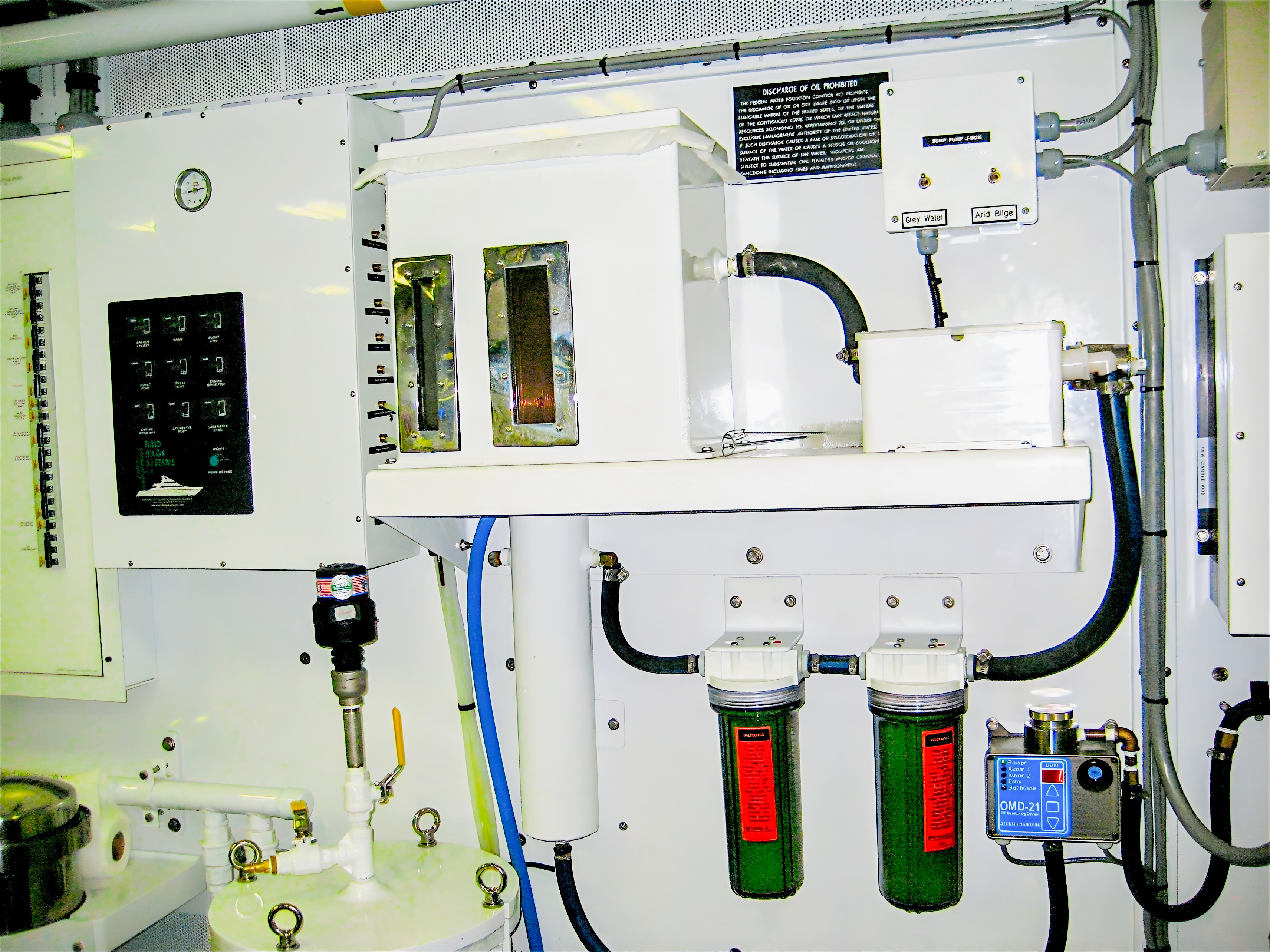
The Series 9 cabinet appears on the left of the installation photograph. Companion equipment occupies the same bulkhead, with controls, hoses and fittings facing into the machinery space. The photograph is useful because it shows the equipment in context: its mounting position, the surrounding pipework and the room available around it.

Arid bilge-drying equipment and connected discharge equipment installed aboard Cortina.
The Arid cabinet and connected discharge equipment aboard Cortina. Open the photograph for a closer view.

Our original Cortina feature also identifies a PP-Monitor for fuel and oil leak detection. Residual-water collection and contamination monitoring serve different purposes. Drawing fluid out of a low point does not itself separate oil, establish that discharge is suitable, or repair the source of a leak.

Why residual water deserves its own system

A conventional bilge pump can finish a cycle while leaving a shallow layer of water below its effective pickup level. In separate compartments, that water may gather in more than one low point. Reaching each area with a sponge or wet vacuum becomes a recurring maintenance job.

Arid addresses that remaining water through pickups connected to a central unit. Vacuum draws fluid into a collection chamber; air pressure then moves the collected fluid along the discharge line. The yacht’s conventional bilge pumps remain responsible for higher-volume pumping. See the pickup-to-discharge process for a closer explanation.

Cortina illustrates why the equipment arrangement matters as much as the yacht’s length. A useful installation plan starts with the separate wet areas, then follows the tubing route back to the unit and through the discharge arrangement. Controls and service points need to remain accessible. The photographed layout is one vessel’s solution, rather than a size-based prescription for every 114-foot yacht.

Explore the systems and the next boat story

Planning an installation aboard your own yacht? Browse the current Arid product range or talk with our team about the layout. Current specifications should be checked for your vessel; the equipment in an earlier installation may differ from today’s options.

View the original Cortina feature and photographs.

17 11, 2025
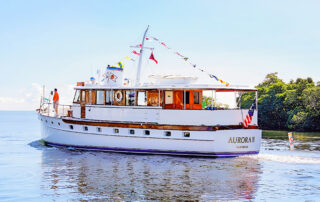
  • Aurora II cruising with signal flags above the wooden cabin.

Protecting Wooden Boats – The Power of a Dry Bilge

By |2026-10-11T20:43:17+00:00November 17, 2025|Articles, Blog, Boat Stories, Motor Yachts|

Wooden Boat Care Starts Below Deck

For wooden boats, lingering bilge water is a maintenance concern as well as a source of musty smells. In this testimonial, restoration specialist Jim Moores describes the mildew he found aboard his 1947 Trumpy, Aurora II, and the changes he noticed after installing an Arid Bilge System.

For a short overview, watch Why Dry Bilges Matter on Wooden Boats | Jim Moores.

Jim Moores’ Account of Aurora II

The following is an edited overview of Jim’s testimony, not a verbatim transcript.

Jim recalls buying the boat in Florida and finding mildew throughout the interior. He discarded mattresses, cleaned the affected spaces and later repainted the ceiling. He also installed an Arid Bilge System to remove the small amounts of water that continued to collect below deck.

He reports a fresher-smelling interior after that work. During a later electrical interruption, he noticed the smell returning and checked the system. In the video, he shows an enclosed area where visible growth had appeared and explains how little ventilation the compartment had.

His experience connects three separate jobs: cleaning existing contamination, restoring affected finishes and managing recurring water. The water-removal system was one part of that work. His account is specific to Aurora II; it does not establish that removing bilge water alone eliminates mildew or produces a health benefit.

A Practical Starting Point for Wooden Boats

Begin with an inspection of the spaces you can reach. Record standing water, staining and changes in odor. Then work through the causes and the access needed to maintain those areas:

  • Identify where water enters and where air-conditioning condensate collects.
  • Have timber, coatings and ventilation assessed as part of the maintenance plan.
  • Clean existing contamination using guidance appropriate to the materials and condition.
  • Discuss pickup placement and service access with an installer familiar with the vessel.

A drier baseline can make a new wet patch easier to notice. It does not repair damaged timber or remove the need to investigate a leak. Follow up on changes rather than relying on a fresh smell as proof that every compartment is sound.

Keep the Roles Clear

Arid removes residual water from connected pickup locations. Conventional bilge pumps remain in place for higher-volume pumping. Our wet-zone guide can help organize the inspection before discussing a system.

Watch Jim’s full video for his firsthand account aboard Aurora II.