
Look inside the enclosure. A diaphragm-based bilge-drying unit uses a liquid-handling pump to pull water through a pickup and move it through the pump head. Arid takes a different route: a collection chamber receives the bilge water, while an air compressor creates the vacuum and pressure that move it. The distinction is the working system inside the box.
Arid grew out of the Baurley family’s hands-on boatbuilding experience and a persistent problem aboard Thirsty Lady V: water left in the bilge after conventional pumping. The aim was practical, automatic removal from the low points owners otherwise had to keep drying by hand.
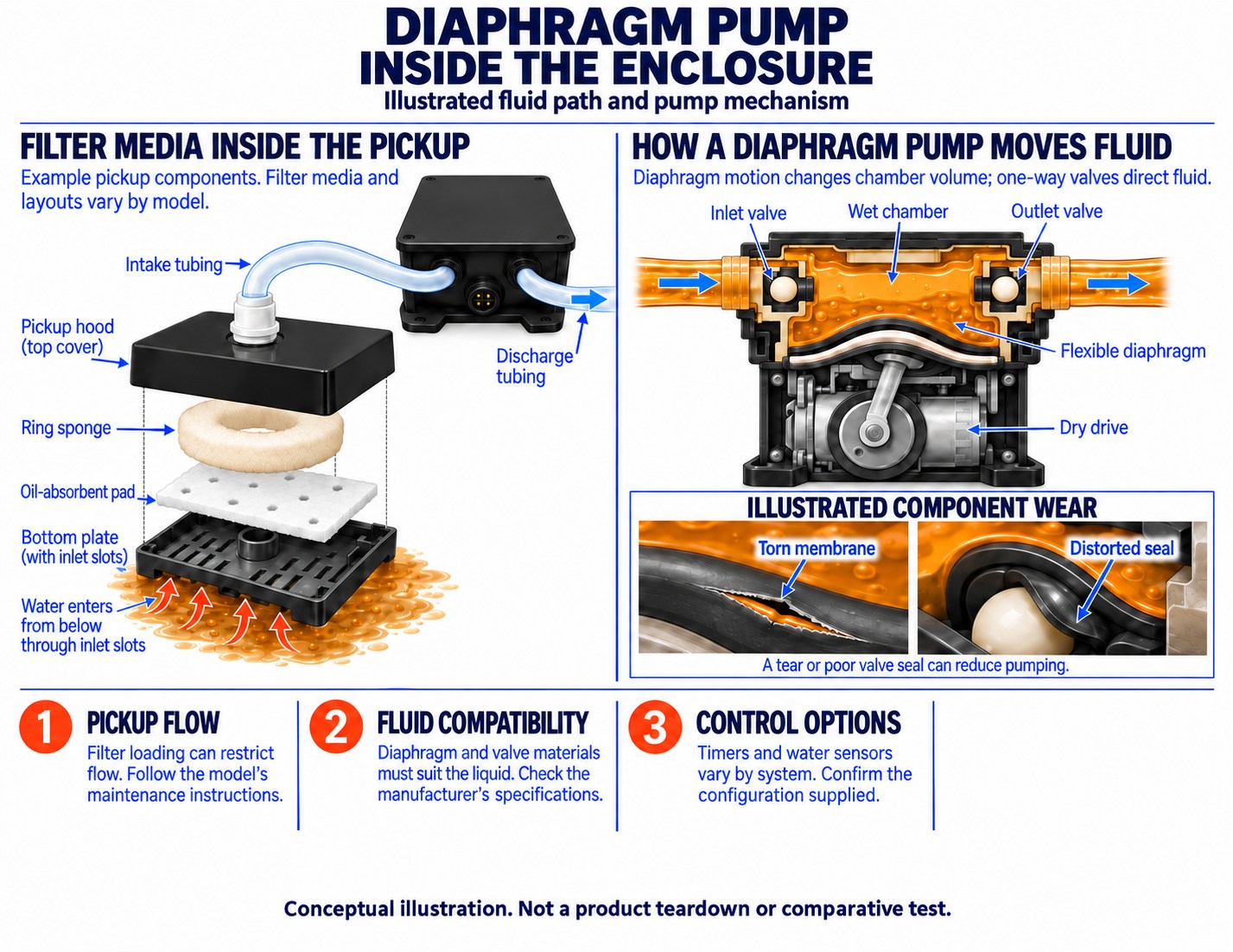
Diaphragm pump: liquid moves through a pump head as a flexible diaphragm operates inlet and outlet valves.
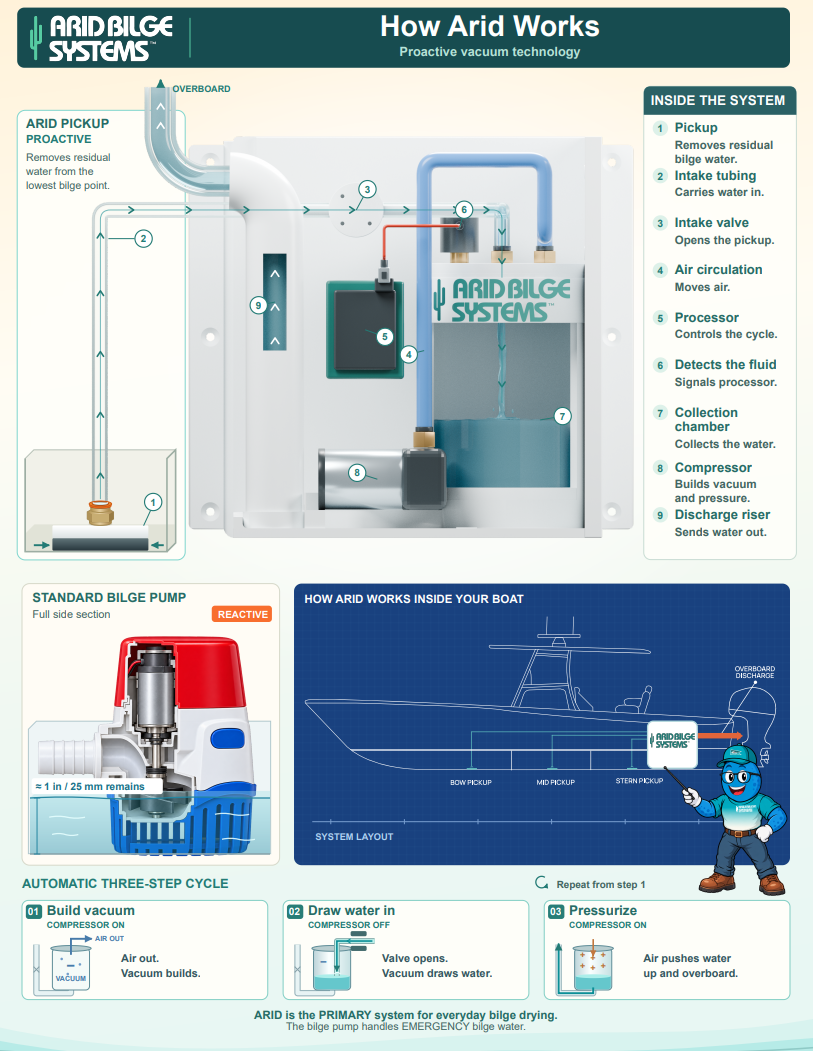
Arid: pickups, tubing, a collection chamber, air compressor, valves and controls work together to collect and discharge residual water. The compressor handles air; the collection chamber receives the bilge fluid.
Both approaches use suction. A diaphragm pump can create a vacuum too. What matters is the fluid path, control of each wet area and the installation’s suitability for your boat.
Inside the box: follow the fluid path
A diaphragm-pump system puts a liquid-handling pump, fittings and controls inside an enclosure. The enclosure is only part of the story: compare the pump mechanism, pickup arrangement, permitted fluids and maintenance access.
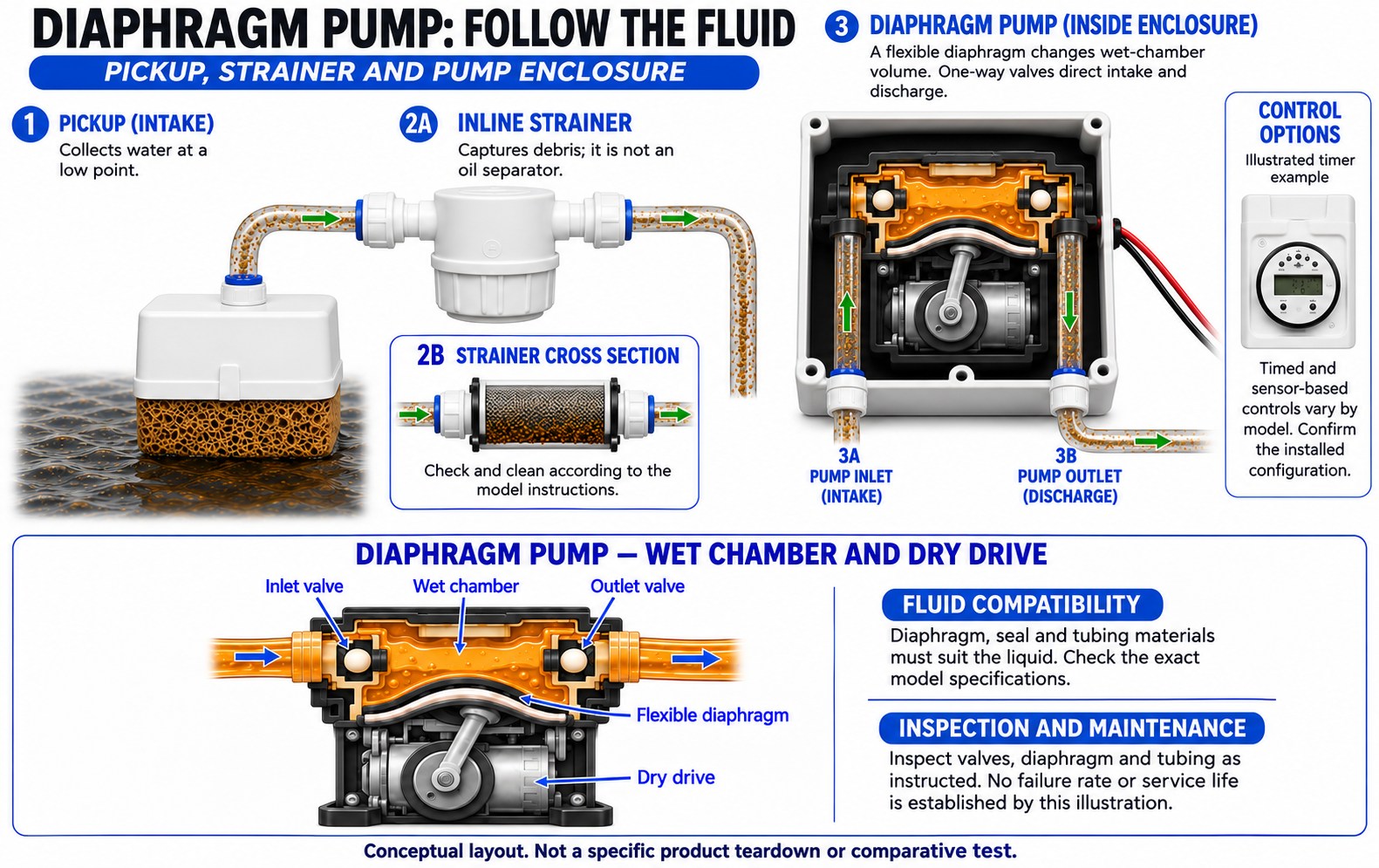
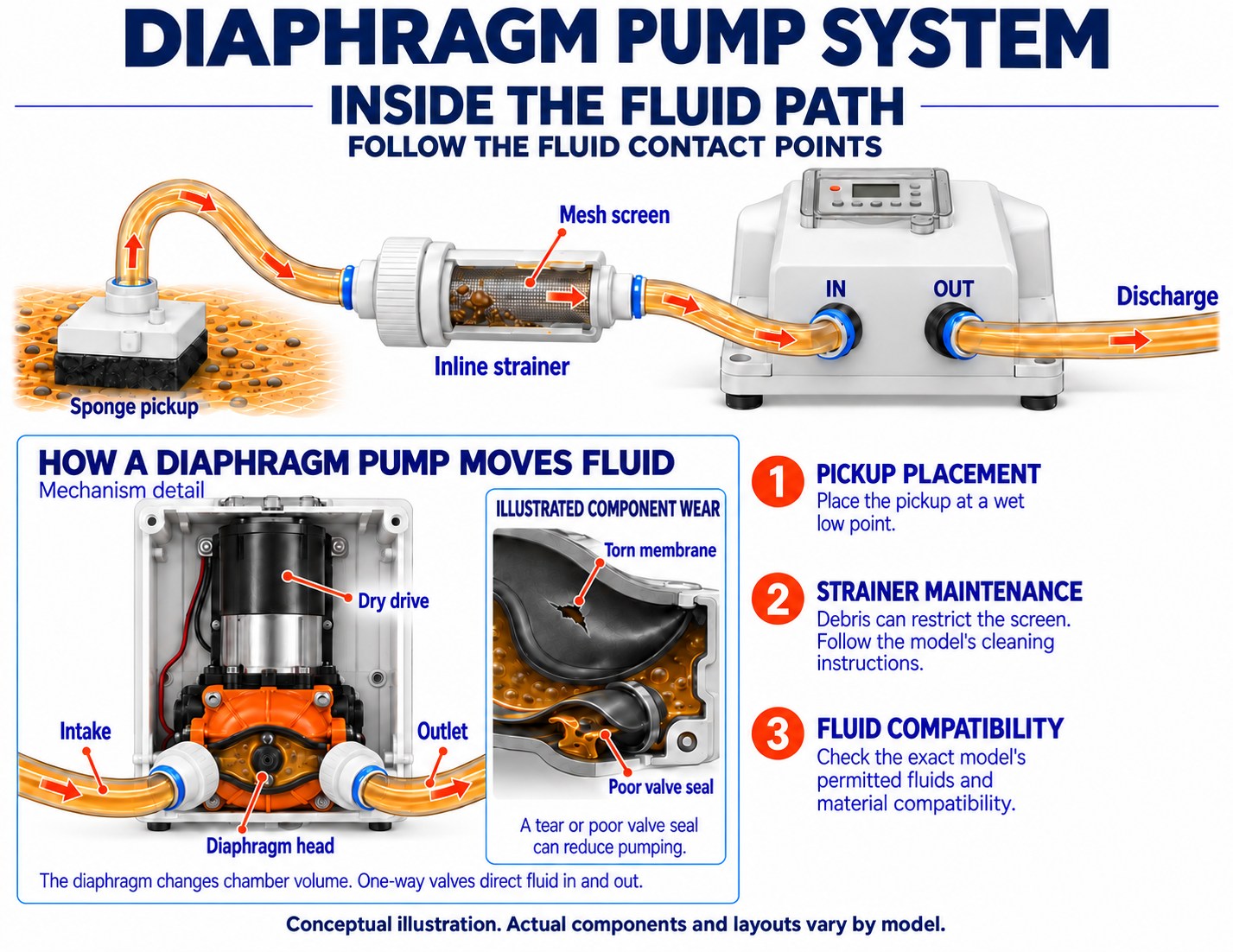
Another enclosure and pickup example
Arid: air moves the water
Arid separates the compressor’s air path from the collected bilge liquid. Vacuum draws residual water into a collection chamber. Air pressure then moves that water through the discharge line. The compressor handles air while the chamber receives the liquid.
See the route through a boat
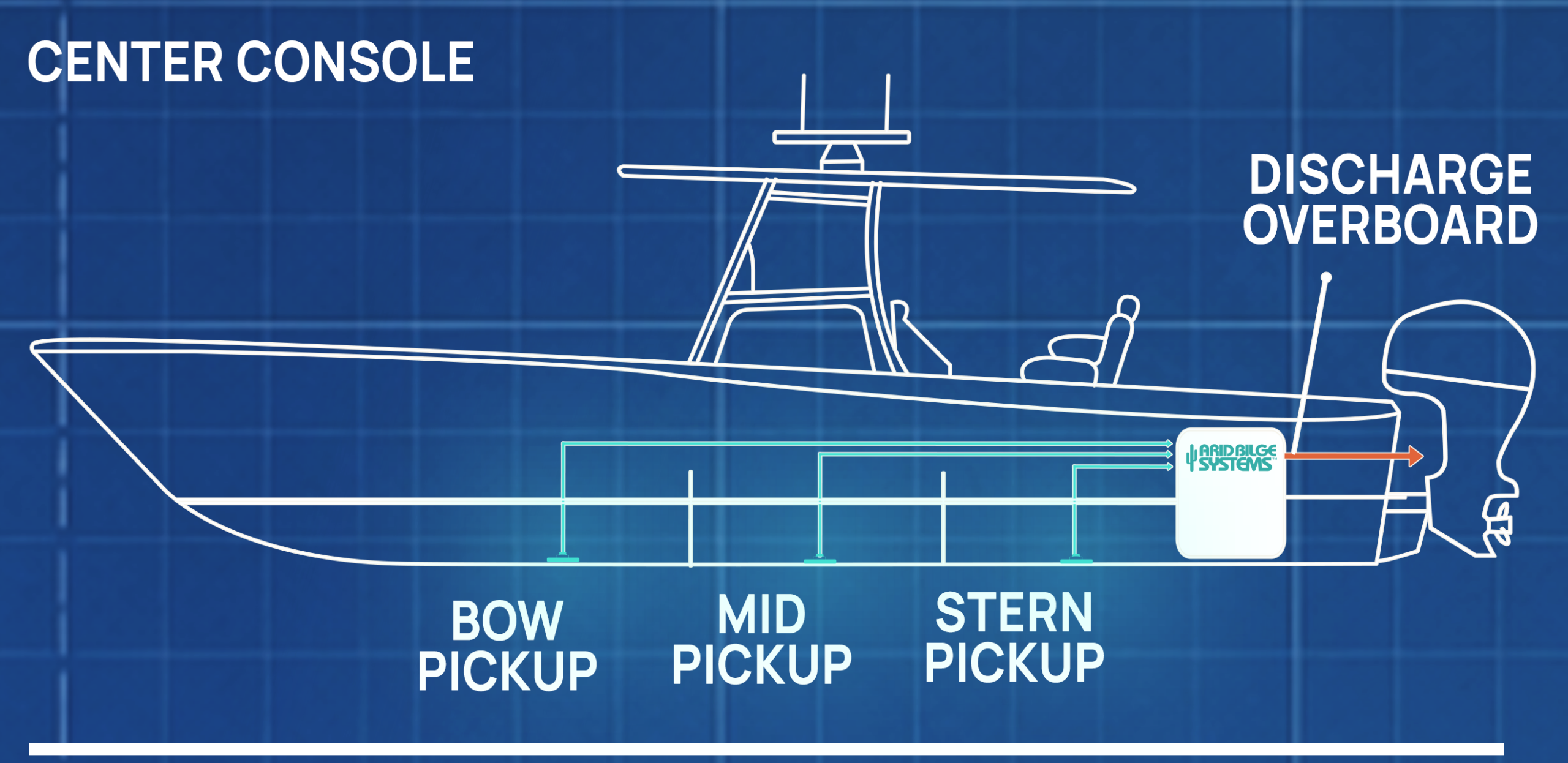
Watch the Arid animation on YouTube, or follow our pickup-to-discharge visual guide. These views explain everyday bilge drying; retain the boat’s conventional bilge pumps and alarms.
Built around the places water collects
A boat can have wet areas under an engine, forward of a bulkhead or in a compartment that never drains to the main pump. Arid connects planned low-point pickups to a central unit, making those separate areas part of one drying installation.
- Match the system to the wet areas. Series 1 starts with one intake. Series 2 offers two or three independently controlled intake zones; larger configurations serve additional locations. Count the places water collects before choosing.
- Plan for access. Leave room to inspect the central unit, tubing and pickups. An installation should be practical to maintain after the boat is back in service.
- Make new water easier to spot. Removing standing water provides a clearer starting point for noticing returning water and investigating its source.
A boatbuilding problem, refined aboard a real boat
The first Arid experiment aboard Thirsty Lady V removed residual water, but the early unit lasted only about ten days. Al Baurley spent roughly the next two years refining the design. That development history matters: the product grew through changes and experience aboard a boat the family built and maintained.
Read the Thirsty Lady V development story and explore Arid’s company history.
Thirsty Lady V: 23 years with the original Series 9
On November 7, 2026, Alfred Baurley reported that the original Arid Series 9 aboard Thirsty Lady V was still operating after 23 years. That is a long-running installation from the company’s own boatbuilding history. Explore Arid’s company history.
This is Alfred’s first-party report about one installation. It is not a controlled stress test, a comparison of other products’ lifespans or a guarantee of service life. A complete maintenance and parts-replacement record is not included here.
Compare the equipment you will own for years
A neat enclosure tells you little about how a system will fit your boat. Ask for the operating manual, the planned pickup layout, access for cleaning and service, and support for the installed model. These details make a more useful buying decision than the appearance of the box.
With any liquid-handling diaphragm pump, check the exact model’s permitted fluids, suction limits, strainer requirements and dry-running rating. Do not assume all diaphragm pumps are designed only for clean water or share the same service life. With Arid, follow the selected model’s installation and maintenance instructions, including pickup care and discharge routing. Find Arid manuals and owner guidance.
Oil, sludge and existing contamination need their own assessment. Moving bilge fluid does not clean it or separate oil. Discuss the condition of your bilge and any collection or treatment requirements with your installer.
Keep the boat’s pumping and drying jobs covered
Conventional bilge pumps remain essential. Arid supplements them by removing shallow residual water at connected pickups; it does not replace emergency pumping, alarms, leak repairs or inspection. Removing standing water helps reduce a source of below-deck moisture. Odor, mold, mildew and corrosion can also have other causes that need attention.
For the wider choice of equipment, see our guide to boat bilge pumps. For product prices and installation budgeting, use the separate dry bilge system cost guide.
Build a pickup plan for your boat
Send photographs of the wet areas and access openings. We can help you identify a configuration and the installation questions to resolve before ordering.
Discuss your boat with Arid or call 954-478-7066. Explore Arid dry bilge systems.