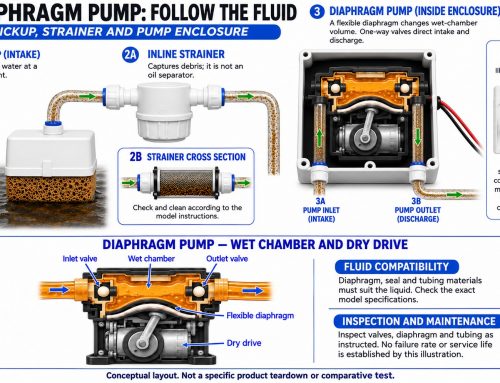

A bilge pump that runs constantly may be removing incoming water, staying on because of its controls, or running without moving water effectively. Brief, regular checks can be normal for some automatic models. First establish which behavior you are seeing and whether the water level is rising; the pump’s exact model matters.
Rising water or an active leak needs immediate attention. Follow the boat’s emergency procedures and obtain help. Do not assume an ordinary bilge pump or a residual-water system can control flooding from hull damage. The Rule Standard Bilge Pump manual distinguishes normal bilge-water removal from damage control.
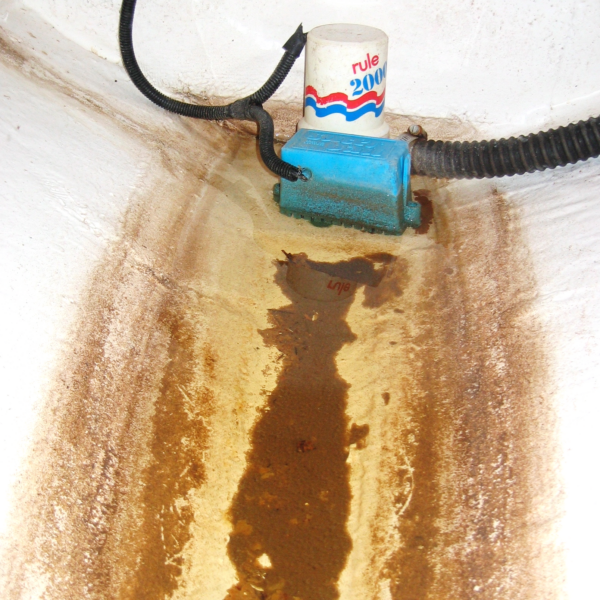
Is the pump actually moving water?
If it is safe to observe, note the bilge level, whether water reaches the outlet and whether the level falls while the pump runs. A motor sound alone does not confirm useful discharge. Record the model, approximate run time and recent conditions, such as rain, washdown or machinery use.
Restricted discharge plumbing can reduce output. Xylem lists hose length, bends and restrictions among the factors affecting installed flow. A technician needs the actual hose route and pump model, not only the capacity printed on the label. For tracking returning water, use our bilge-water inspection record.
Why might a pump run when the bilge looks dry?
The answer depends on its controls. Xylem explains that a fouled sensor can affect Rule-Mate operation. Its protective mode can change the behavior to short checks about every 2.5 minutes. That model-specific explanation is not a diagnosis for every automatic pump. Follow Rule-Mate sensor and safe-mode guidance and the instructions for the unit aboard.
Have unexplained continuous running investigated rather than leaving it unattended. Before hands-on service, follow the manufacturer’s power-isolation procedure and ensure the boat’s pumping and safety needs remain covered. Do not bypass controls or change wiring as an improvised fix.
What if the motor runs but little water comes out?
Some faults are specific to a design. For example, Xylem identifies a blocked vent opening as a possible cause of slow priming on its Rule LoPro. Its LoPro troubleshooting guide also explains why fitting and sensing-height choices matter. Use the procedure for the exact model; a fix intended for another pump can create a different problem.
Should I add a check valve to stop cycling?
Not as a universal remedy. Permitted fittings and valve arrangements vary by pump. Follow the manufacturer’s installation instructions and have the discharge route assessed. Our bilge-pump guide explains why hose drain-back and residual water need to be distinguished from a pump fault.
Will a dry bilge system fix constant running?
No. Diagnose the incoming water, controls or pumping fault first. Arid collects shallow residual water at connected pickups after conventional pumping; it does not repair a leak or replace the boat’s specified bilge pumps and alarms. Once those systems work correctly, compare pump and vacuum fluid paths and dry-bilge installation costs for the separate water left behind.