From the Viking VIP show · 2026
Viking’s pursuit of a better boat reaches beyond the finish you see. Arid helps carry that attention to detail into the spaces below deck.
In 1964, brothers Bill and Bob Healey bought a small New Jersey boatyard building wooden sportfishing boats. That was the beginning of Viking Yacht Company. More than six decades later, the family-owned builder still works to Bill’s guiding principle: “build a better boat every day.”
That history matters because a better boat is the result of thousands of decisions: how it runs, how it is built, how equipment can be serviced, and how well it holds up to use. Arid belongs in that last conversation. A beautifully finished boat deserves the same attention beneath its hatches as it receives above deck.
Viking VIP · January 30–31, 2026
Viking Service Center · Riviera Beach, Florida
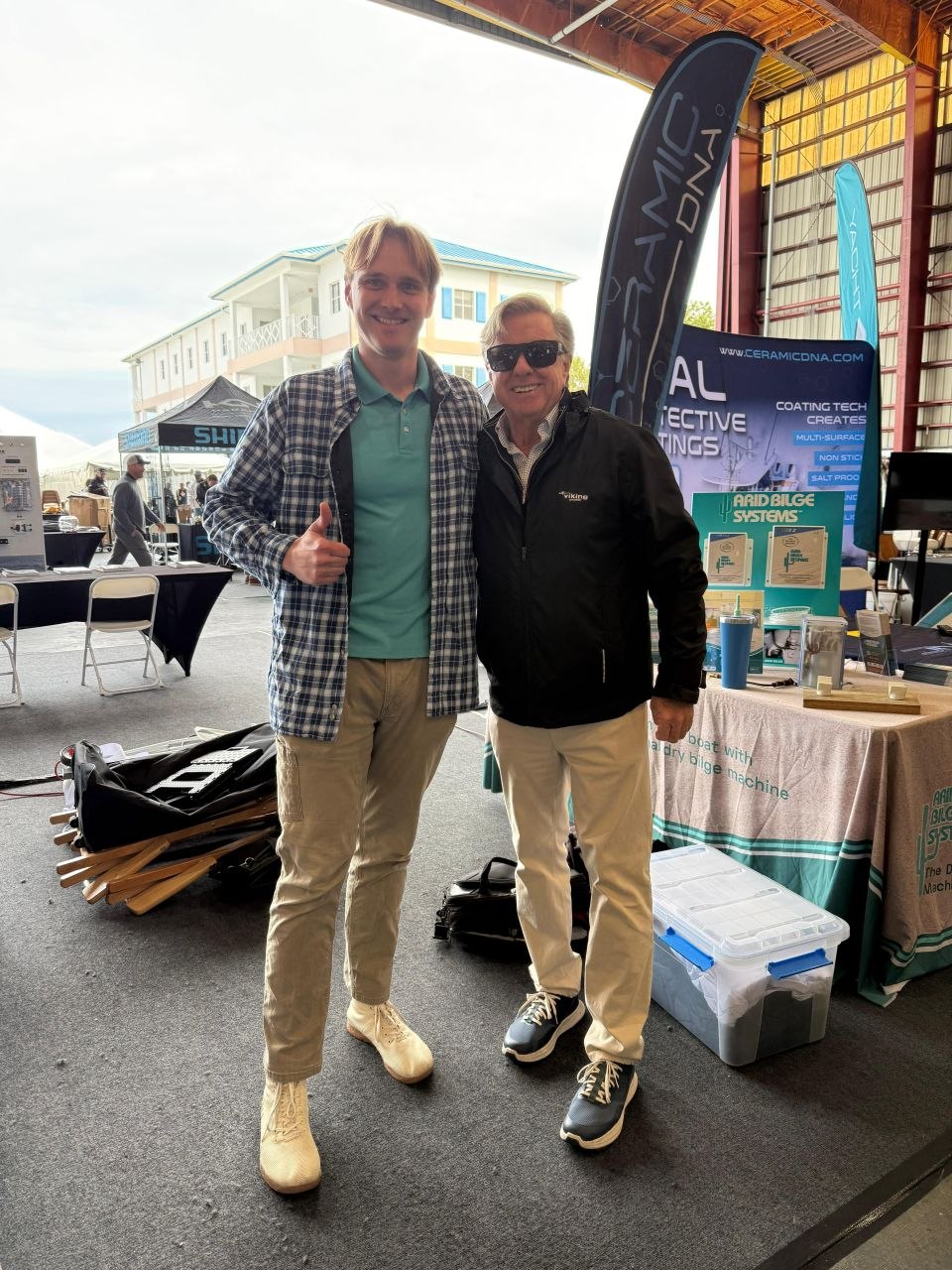
Pat Healey (right) and Alfred Baurley at the Arid Bilge Systems booth.
The small improvements that make a better Viking
Viking’s approach to refinement is practical. The company describes its extensive in-house design and manufacturing as a quality-control advantage, and its tournament demonstration program as a way to keep improving its boats. Those are opportunities to learn from boats being built, run and maintained, then put that experience into the next detail.
Not every useful improvement changes a boat’s silhouette or top speed. Some change the experience of opening an engine-room hatch, tracing a small leak or keeping a compartment ready for inspection. That is where residual-water removal earns its place. Viking’s own account of its approach explains the wider culture of craftsmanship and continual improvement.
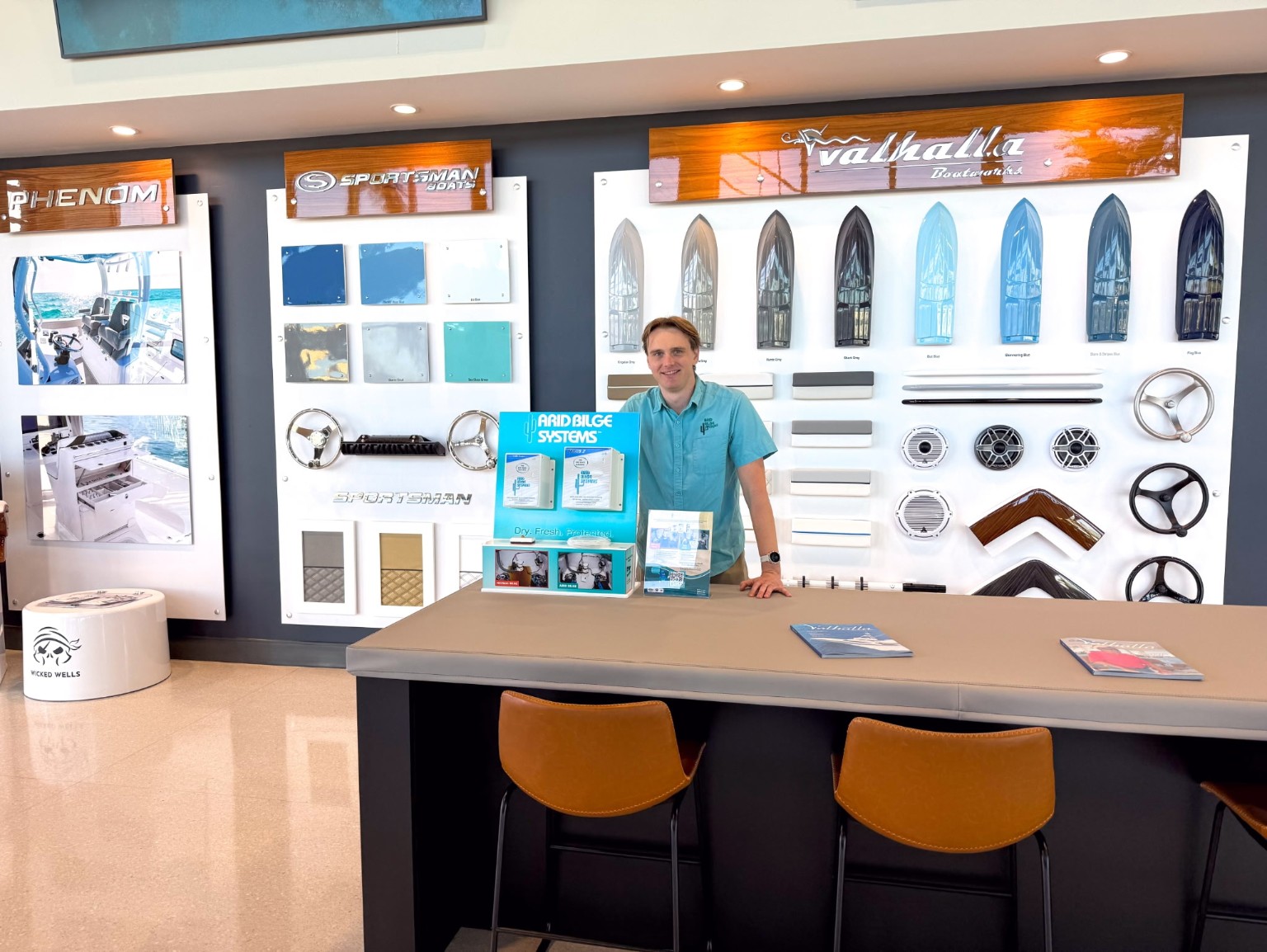
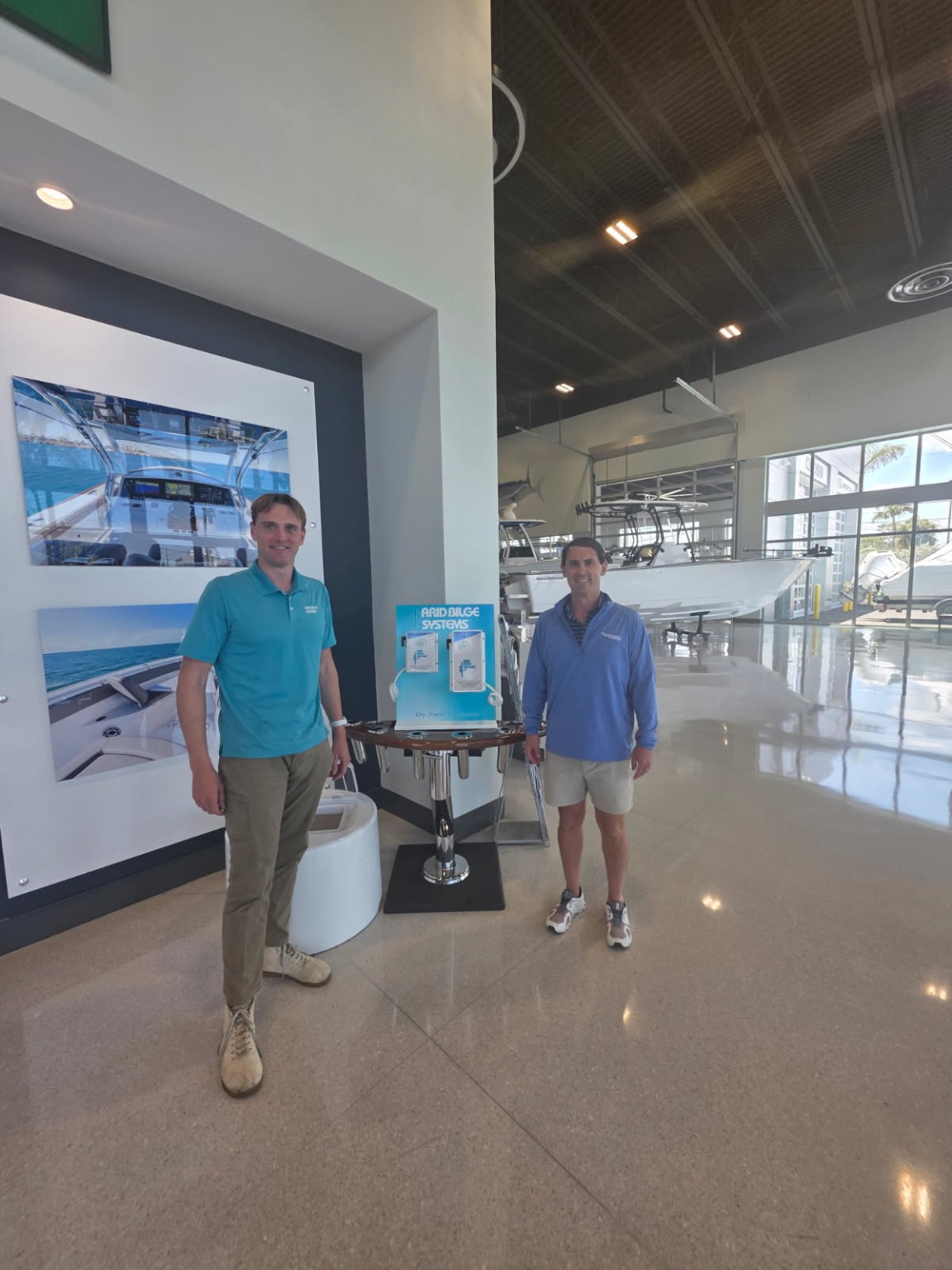
Arid supplies Viking and Valhalla with dry bilge systems. The connection is visible in the showroom, in installations aboard owners’ boats, and in Valhalla’s published equipment options. For us, the importance is what happens after delivery: helping owners care for the spaces that are easy to overlook.
Arid’s history began with the same question: what can work better?
Arid began with a recurring problem aboard the Baurley family’s Thirsty Lady V: water remained in the bilge after conventional pumping. Al Baurley developed a prototype to remove it, then spent roughly two years refining the design. The system grew from an answer for one boat into a product line serving different boat sizes and wet-area layouts.
That experience is the foundation of Arid’s company history. Start with a real problem aboard a boat, work through the engineering, and keep improving how the system serves the owner.
A meaningful improvement from the inside out
A bilge pump can finish its cycle while a shallow pool remains below its intake. Other water can collect in isolated low points. Left there, it is another source of moisture inside the boat, even when the visible decks and cabins look immaculate.
Arid reaches those low points with small pickups connected to a central collection chamber. Vacuum draws residual water into the chamber; air pressure then discharges the collected fluid through the installed discharge route. The compressor moves air rather than passing bilge water through itself. Pickup placement lets the system address separate wet areas according to the boat’s layout.
For an owner or captain, the difference is practical:
- A drier starting point for inspections.When an area is normally dry, fresh water or a new trace of fluid is easier to notice and investigate.
- Less water sitting between maintenance visits.Automatic residual-water removal reduces the need to return repeatedly to accessible puddles with a sponge or wet vacuum.
- One less source of moisture below deck.Removing standing water can help reduce bilge-related odors and damp conditions that support mold and mildew. Ventilation, cleaning and fixing leaks still matter.
- Care that reaches hidden spaces.Keeping low points drier supports the routine inspection and upkeep of the compartments surrounding the boat’s equipment. It does not repair existing corrosion or replace electrical and corrosion protection.
This is why we see dry-bilge care as a meaningful upgrade to ownership. It extends attention from the visible finish into the working spaces below it. Arid works alongside the boat’s specified bilge pumps; emergency pumping capacity remains essential.
Arid in the showroom
The Valhalla specification
Valhalla’s published 55 Sport Yacht brochure lists an Arid system among its optional equipment. In the “Enhancements and Convenience” section, the entry reads:
For someone specifying a 55 Sport Yacht, that is a useful starting point for a discussion with the builder or dealer. Ask what is available for the particular boat, which areas the system would serve, and what the installation includes. Equipment and pickup arrangements should be confirmed for the individual hull.
Start with the water that stays behind
A conventional bilge pump and a residual-water drying system address different parts of the job. Water can remain below a pump’s intake or in separate low points that do not drain toward it. Arid collects residual water through pickups connected to a central system. The boat’s specified bilge pumps remain part of its water-removal equipment.
Our guide to how Arid works explains that route. When considering a system for your Viking or Valhalla, bring the conversation back to the actual compartments:
- Where does water collect?Identify the low areas and the circumstances in which they get wet. Separate compartments may need separate pickup locations.
- What is included for this boat?Confirm the system, pickup arrangement and access for maintenance with the builder, dealer or installer.
- What needs attention at the source?A drying system does not repair a leak. Recurring water still calls for an inspection of where it enters and why it returns.
For a closer look at water that remains after pumping, see our guide to boat bilge pumps. Owners comparing installations can also read Dry Bilge Protection for Center Consoles.
Hear how other builders approach it
For a look aboard a Viking, our Out-A-Line story documents an Arid Series 2 installation on a Viking 61, with original photographs of the vessel and the equipment below deck.
The useful details differ from builder to builder. In our Midnight Express interview, Eric Glaser describes pickup locations and how the arrangement can respond to the customer’s requirements. In the Albemarle interview, Keith Privott discusses finished bilges, appearance and the care owners put into their boats.
Those conversations give owners concrete questions to ask about their own installation. Each remains the builder’s account of its own boats and practices.
Why builders choose Arid: explore the practical benefits for builders and owners, then read our boat-building story.
Better ownership is built into the details
Viking’s history is a reminder that refinement continues long after a successful design reaches the water. The finish, the machinery spaces and the service details all contribute to the boat an owner lives with.
Arid contributes in a specific, useful way: removing residual water from the places where it collects. For a Viking or Valhalla owner, that means making dry-bilge care part of the boat’s overall maintenance plan, with pickups positioned for the actual compartments. A boat cared for from the inside out starts with the spaces beneath your feet.