Spirit of Zopilote is a Northern Marine long-range cruising yacht, recognizable by her deep green hull, white wheelhouse and high mast. Below deck, an Arid Series 2 collects residual bilge water around the boat’s existing machinery and plumbing.
A passagemaker built for time aboard
Northern Marine’s account of its early yachts identifies Spirit of Zopilote as a 62-foot long-range cruiser completed in 1997 for Bruce Kessler. Her purposeful profile reflects the builder’s roots in commercial vessels and expedition yachts. A boat intended for extended cruising needs attention in the spaces that guests rarely see: machinery compartments, plumbing runs and the low areas beneath them.

Spirit of Zopilote, a Northern Marine long-range cruiser equipped with an Arid Series 2.
One cabinet among the existing equipment
The installation photograph shows a slim Arid cabinet mounted on a pale bulkhead. Small tubing loops above it, while larger hoses, wiring and valves occupy the surrounding space. The front panel faces into the compartment, with its connections visible in the same view.
That wider view is useful when planning service or discussing an installation. A close-up can identify the cabinet; a photograph that includes the surrounding plumbing helps explain where it sits. Reach, working room and the complete tubing route still need to be checked aboard the boat.

The installed Arid cabinet and surrounding equipment aboard Spirit of Zopilote.
A closer look at the water below
The same company post includes a pair of photographs labeled “Before” and “After.” Water covers much of the visible area around a large elbow fitting in the first view. More of the compartment floor is exposed in the second, where staining and deposits remain visible.
The useful distinction is between removing water and cleaning or repairing the surfaces beneath it. A lower water level makes those surfaces easier to see; it does not establish their condition or resolve the reason water entered.
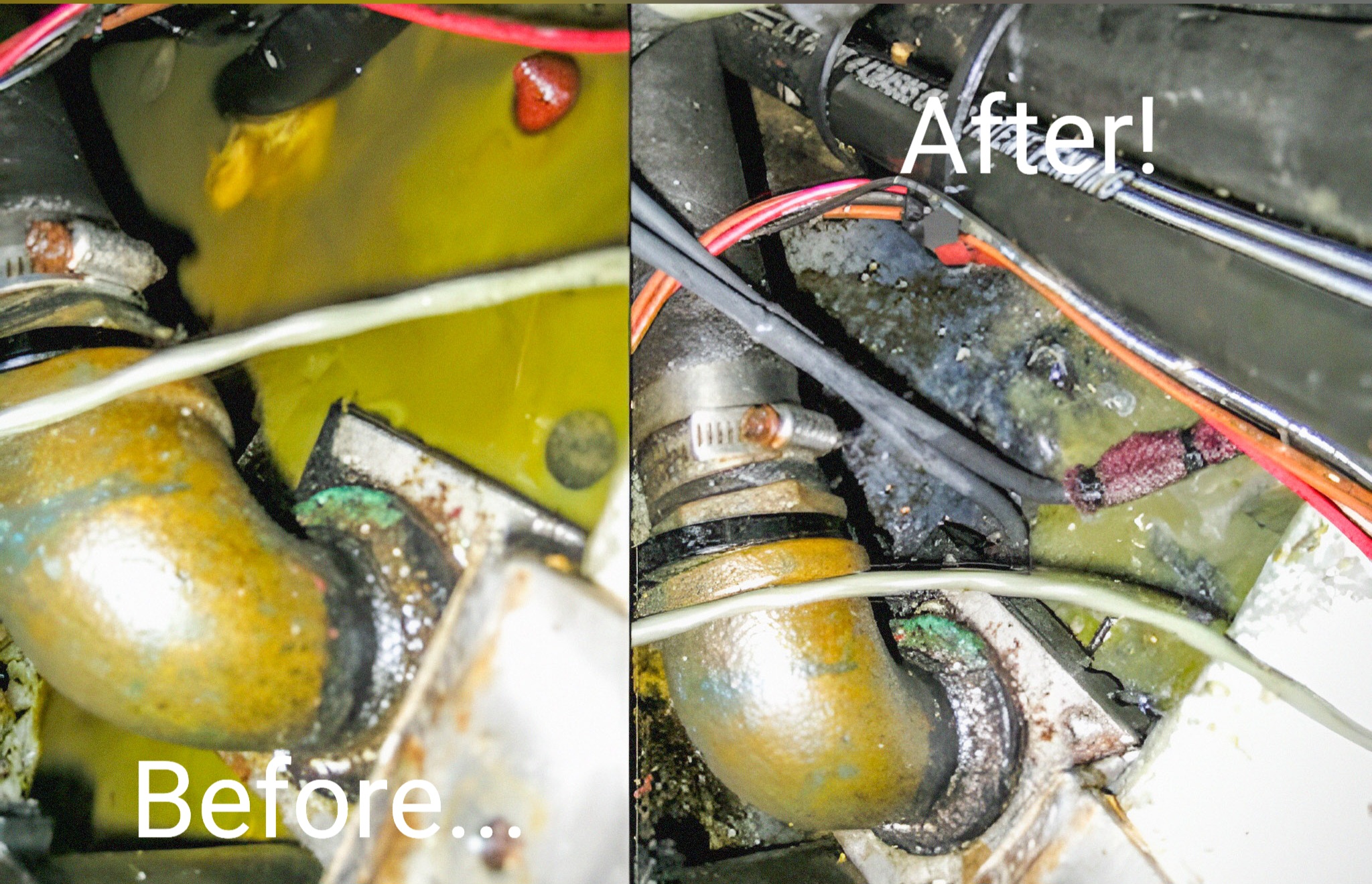
The original comparison from Arid’s Spirit of Zopilote feature.
Why leaving water below deck matters
A shallow puddle can stay behind after a conventional bilge pump stops. In a closed compartment, repeated wetting keeps nearby surfaces damp and makes inspection less pleasant. Water around fittings can also hide new seepage and make it harder to distinguish an old stain from an active leak.
The before-and-after photographs show the practical benefit of reaching that last water: more of the compartment becomes visible and accessible for cleaning and inspection. They do not diagnose rot or identify the condition of hidden structure. For wooden vessels, the related concern is sustained wetting of timber where oxygen is present; read wooden-yacht specialist Jim Moores’ experience with bilge moisture.
Arid removes residual water through its connected pickups. Finding the source of recurring water, maintaining drainage and ventilation, and keeping conventional bilge pumps operational remain part of caring for the boat.
Start with your own wet areas
For another trawler, begin with photographs of the places where water remains, along with the paths available for tubing and service access. This installation offers a real example to discuss, rather than a pickup plan to copy from the boat’s length alone.
See how Arid collects residual bilge water, or discuss your boat’s layout with Arid. The original company post, published November 19, 2023, brings these photographs together; it does not give an installation date.