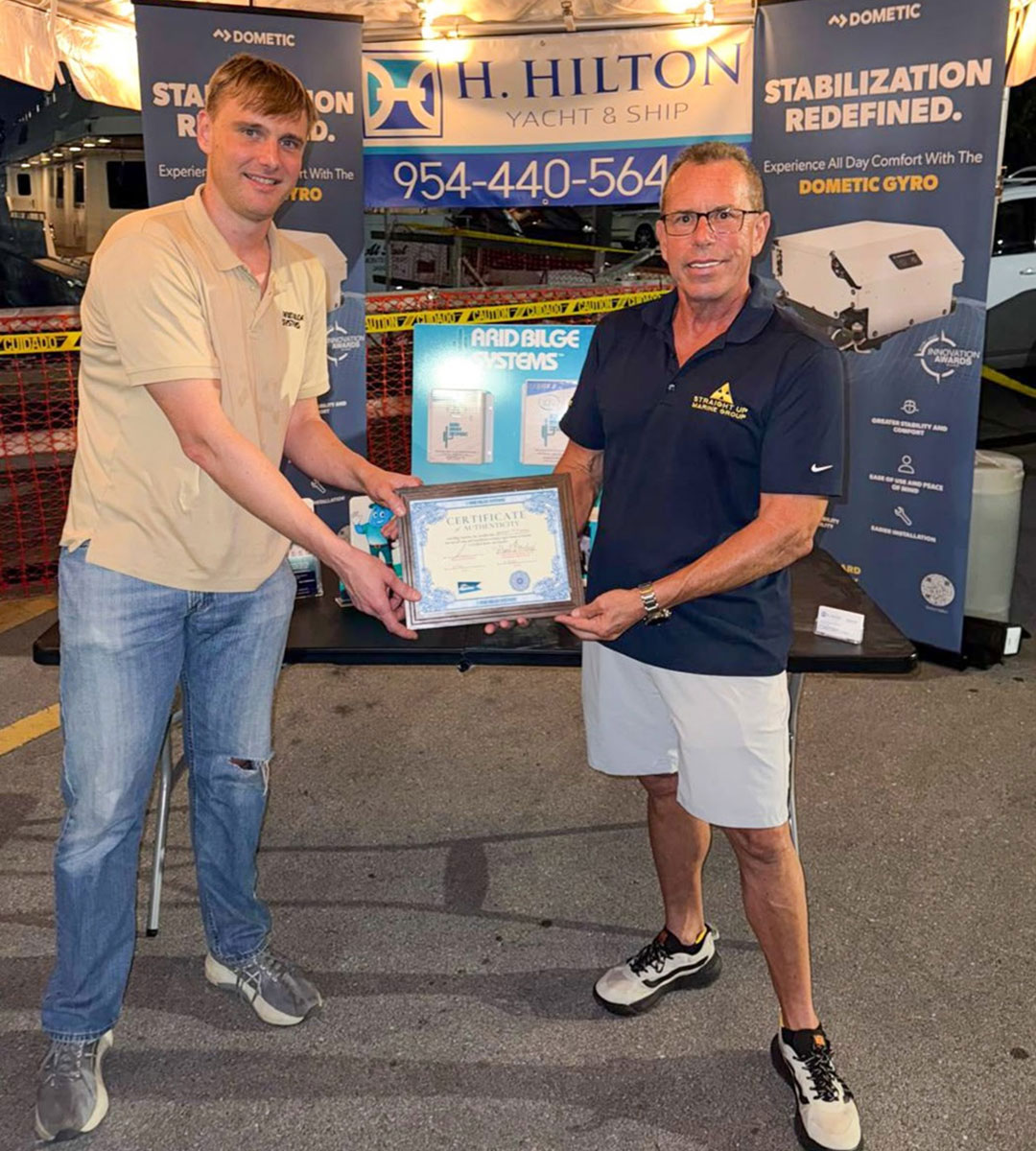
Steve Gilchrist, founder of Straight Up Marine, is a personal friend I have known for many years in the marine industry. We met through industry networking events, stayed in touch and have worked boat shows together. Steve has always been a courteous friend, and I appreciate the time and care he brings to his work.
He is also a certified Arid Bilge Systems dealer. In our interview, we bring that relationship back to the boat itself: the wet areas below deck, the equipment around them and the practical details of installation and inspection.
A friendship built around boats
Spending time together at shows gives us a chance to talk through what owners need and share the technology we work with. Steve works hard to find suitable installation and service solutions for each vessel. That attention to fit and service access is something I value in our conversations about Arid and onboard stabilization.
The experience behind Straight Up Marine
Straight Up Marine’s company history traces Steve’s career from commercial vessels in Texas to captain work in South Florida yachting. He founded the company after decades in the industry, with an emphasis on clear communication, straightforward billing and helping customers enjoy their boats.
Today, the company’s marine services include gyro stabilization, electronics, electrical systems and refit support. That experience across a vessel’s systems brings useful context to our discussion of low-point pickups and keeping equipment accessible for maintenance.
Steve’s company also shares its own perspective on the subject. Read Straight Up Marine’s article on clean, dry bilges, including its discussion of Arid.
Watch our conversation
In this interview, Steve and I look at wet areas in the bow, midship, stern and machinery spaces, and how each can present different installation and inspection challenges.
Watch the complete Straight Up Marine interview on YouTube.
Steve Gilchrist on low-point pickups
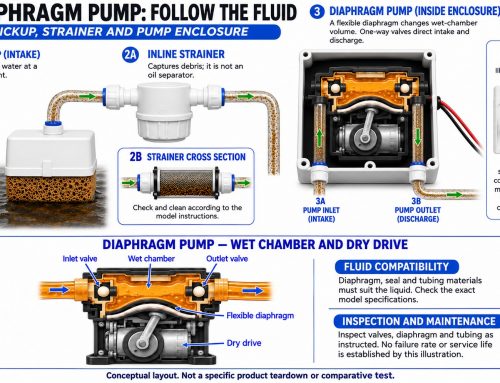
Steve and I follow the fluid’s route: pickups serve the low points around the vessel, vacuum draws fluid into one central system, and the collected fluid leaves through a controlled discharge route.
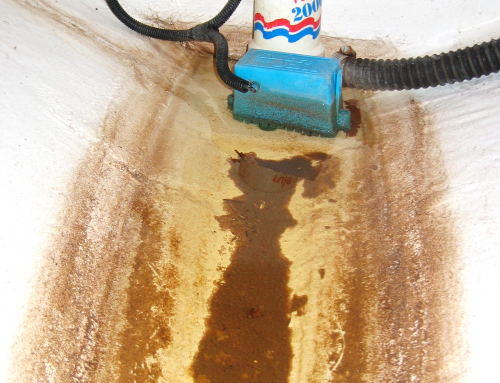
The useful starting point for an owner is the boat’s layout. Which compartments keep getting wet? Where does the remaining fluid sit? Can you see and reach those areas during routine checks? Those details help make a conversation about bilge drying specific to the boat.
In our conversation, we cover the bow, midship, stern and machinery spaces. We look at the wet areas throughout the vessel, because the puddle you can see in one compartment may be only part of the picture.
Pay attention to the equipment sharing that space
Standing fluid can mean prolonged dampness around pumps, fittings, wiring, engines, thrusters and gyros. Removing it addresses that source of exposure.
Steve and I also discuss inspection. Automatic residual-water removal does not eliminate the need to look below deck, check components or investigate water coming into a compartment. Drying and inspection work together: one removes collected fluid; the other helps establish why it is there.
Let changing runtime prompt a closer look
Different runtime between zones can point toward an area that needs attention. It gives an owner or technician somewhere to begin investigating, rather than a complete diagnosis.
Keep that distinction in mind when reviewing system activity. A zone’s behavior needs to be considered alongside what is happening in the actual compartment.
Arid handles residual bilge fluid alongside standard emergency bilge pumps. Those pumps must remain installed and operational. Collecting or moving fluid also does not clean it: contaminated bilge fluid still requires appropriate collection or treatment.
For a closer look at the process, visit how Arid works. To discuss pickup locations on your boat, contact Arid with its make, model and the areas where fluid collects.