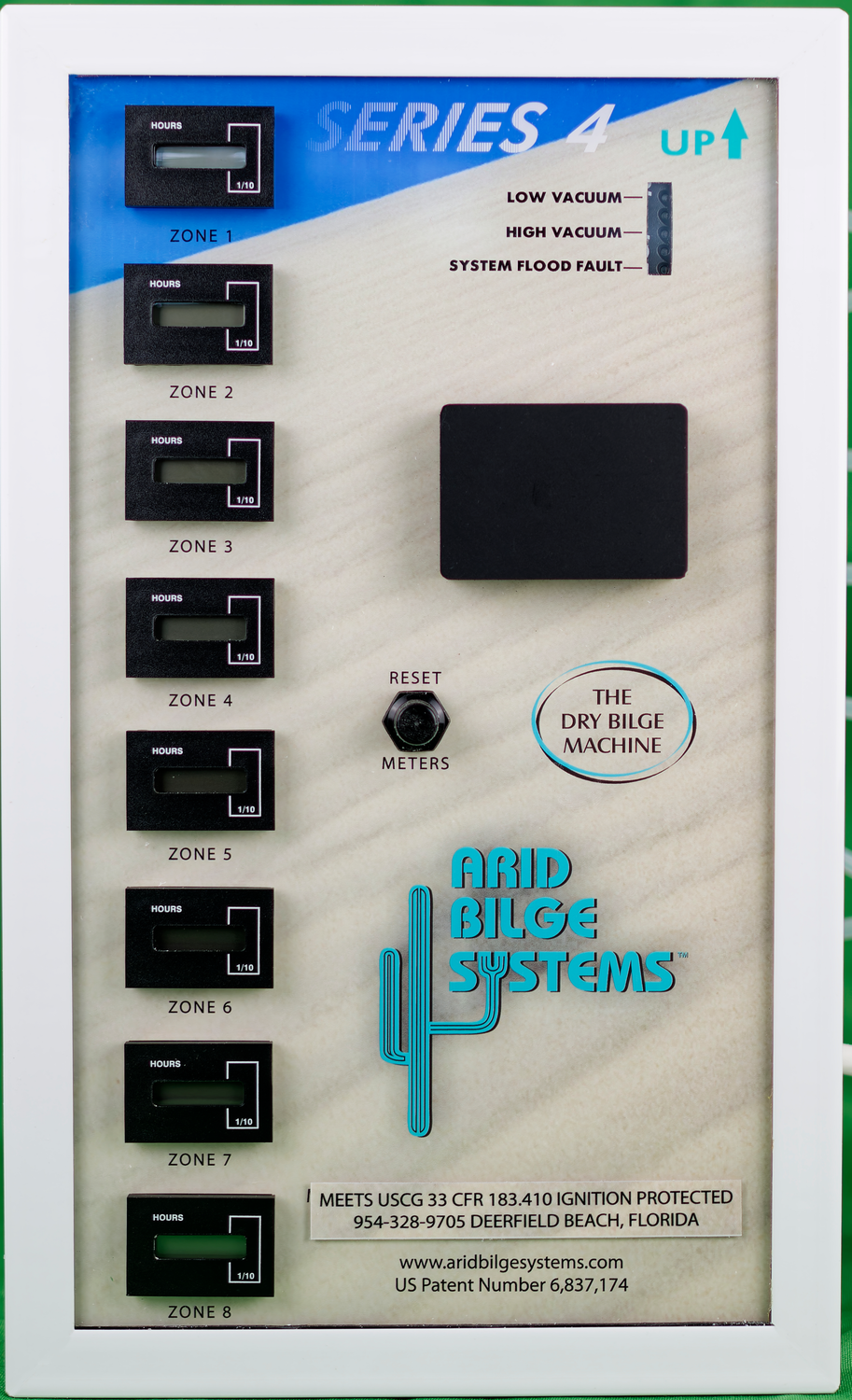
Zone runtime can help you decide where to start an inspection. On an Arid system equipped with zone hour meters, each reading relates to a connected pickup location. Matching the readings to a clear zone map makes the information useful.
A high reading does not identify a leak or measure how much water has been removed. Compare dated readings, inspect the corresponding pickup area and investigate what changed.
Connect each reading to a pickup
Give each zone a useful location name, such as aft bilge or forward compartment. Match that name on the unit, at the pickup where practical, and in the boat’s service notes.
The map should let someone find the area without tracing every tube. Include a photograph if the pickup is difficult to see through the access opening.
Compare the same period
Record the meter readings and date. Repeat the readings after a known interval, then compare the increase for each zone. Totals taken over different periods do not provide the same comparison.
For example, suppose three zones add 100, 100 and 500 hours over the same recorded period. The third zone merits a closer look. That difference alone does not establish the cause or prove the other two zones are operating correctly.
Also compare each zone with its own earlier pattern. A location that normally receives more water can run longer than another location without a new fault. A change in its usual behavior may be more useful than the largest number on the panel.
Inspect the area and the installation
Note recent rain, washdowns, trips and air-conditioning use. Then check the accessible wet area and the equipment serving it.
- Look for recurring water, drips or changes in nearby hoses, fittings and drains.
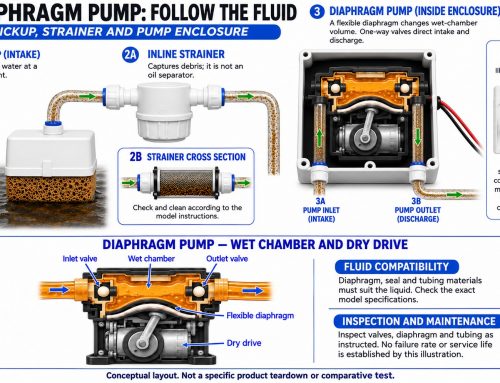
- Check the pickup for debris and confirm that it remains in the intended low point.
- Have restricted tubing or other installation problems assessed according to the model’s instructions.
- Record alarms, unusual operation and any work performed.
The pickup marks where fluid collects. Water may travel from somewhere else before reaching it. Follow the evidence back toward the source rather than assuming the pickup is beside the leak.
Keep a useful service record
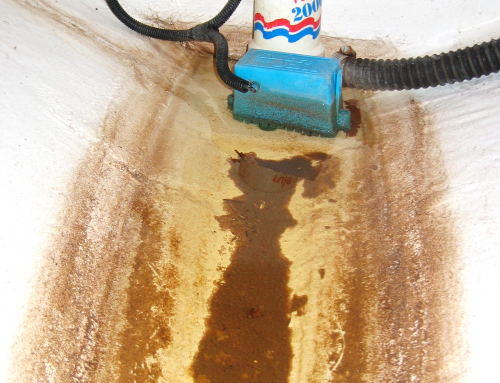
A short record is enough: date, zone name, meter reading, conditions and observations. Dated photographs of the same location can show whether water or residue has returned after cleaning or repairs.
Bring that record and the zone map to your technician. They provide a clearer starting point than a report that the system is “running more.”
Read the wet-zone guide when preparing the map, and keep the instructions for your model aboard.
What the meters cannot tell you
Runtime is an inspection clue. It does not diagnose the source, composition or volume of the collected fluid. Residual-water removal also does not repair a leak or replace the boat’s conventional bilge pumps and alarms.
If water enters unexpectedly or the boat’s normal operation changes, investigate promptly. Use the readings to organize that work, then confirm the cause through inspection.
Common questions
Do all Arid systems have zone hour meters?
No. This guidance applies to units equipped with them. Check the controls and instructions for your installed model.
Does the longest-running zone always have a leak?
No. Normal differences between compartments, returning water, pickup condition and installation issues can affect operation. Inspect before deciding what needs repair.
Should I compare meter totals or changes?
Record both totals and dates so you can compare changes over the same period. Keep the conditions and service history alongside those readings.