
Boat Stories

Real boats, original photographs, and the people and installations behind Arid Bilge Systems.

12 10, 2026
  • KATINSKY interview cover with Greg and Ariana, the catamaran and a bilge comparison.

Great Loop Bilge Drying: Greg’s KATINSKY Review

By |2026-10-15T02:01:47+00:00October 12, 2026|Articles, Blog, Boat Stories|

A small puddle can make a cramped compartment harder to inspect. Around a prop shaft, that matters: when water is already sitting there, it can be difficult to tell what has changed.

That is one of the practical details in our interview aboard KATINSKY, a catamaran traveling the Great Loop. Ariana talks with Greg about the boat and his experience with Arid. His eight-zone Arid Bilge installation includes a pickup wand in the tight space around the prop shaft. The conversation draws on the four years of experience described in the interview.

Watch the complete KATINSKY interview on YouTube.

Why Greg chose Arid again

KATINSKY was not Greg’s first experience with Arid. He had used a system aboard his previous Lagoon sailboat and chose Arid again for this boat.

In the interview, he discusses keeping difficult areas dry and reducing prolonged dampness around bilge pumps, engines, wiring, electrical connections and other equipment. Those are everyday ownership concerns: the spaces you inspect, the water that returns and the equipment sharing those compartments.

The eight-zone Arid installation is specific to KATINSKY. It offers a useful example of serving several wet areas, but the number of pickups another boat needs depends on where fluid collects and how those spaces are arranged. Our guide to hidden wet zones explains what to look for before planning pickup locations.

Hour meters gave him somewhere to look

Greg describes how runtime information helped identify a kinked hose and unexpected water entering a compartment. That makes the hour meters part of the inspection story, alongside the drying work itself. Read what zone runtime can tell you about your boat for ways to record and investigate changes.

A reading needs context. Different activity in one zone can flag an area worth checking; it does not establish the cause on its own. Greg’s examples show why looking at the compartment and its plumbing still matters.

A closer look around the prop shaft

The pickup wand near the prop shaft gives the interview a concrete installation detail. Removing standing water from that tight area makes it easier to inspect for a possible leak.

That is a useful way to think about a dry bilge: less standing water, with a clearer view of places where new water may appear. Arid does not repair a leak or replace regular checks. It removes residual fluid alongside the boat’s standard bilge pumps, which must remain installed and operational.

Want to understand the collection cycle? Read how Arid works. For help with your own layout, contact Arid with your boat’s make, model and the compartments where water collects.
11 10, 2026
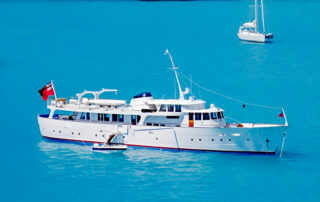
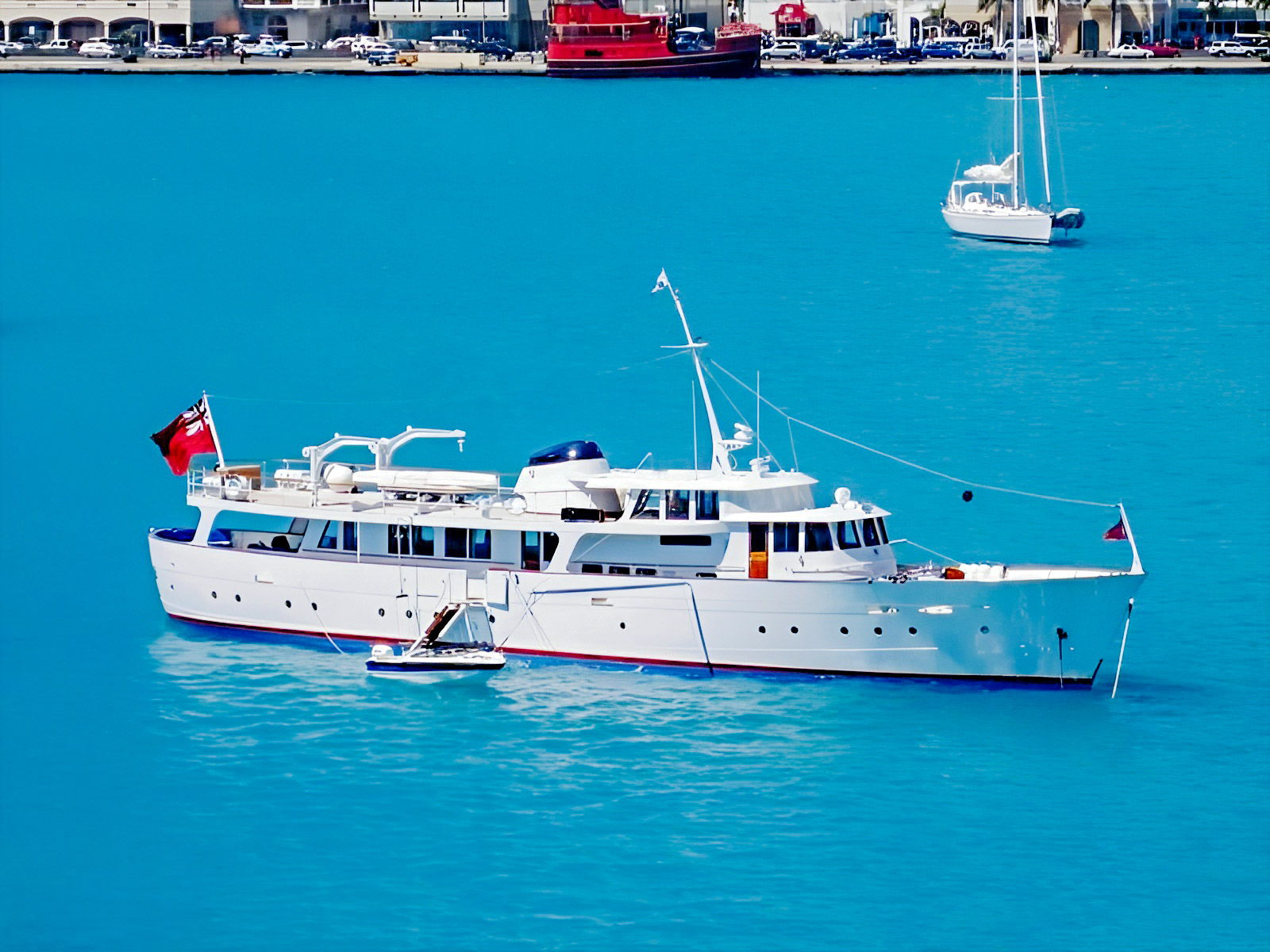
  • Blue Guitar, the classic white motor yacht, at anchor in turquoise water.

Blue Guitar: Arid Aboard a Classic Camper & Nicholsons

By |2026-10-12T22:57:26+00:00October 11, 2026|Blog, Boat Stories, Installation Stories, Motor Yachts|

Blue Guitar’s long white hull, round portholes and sheltered aft deck belong to a different era of yachting. The 103-foot Camper & Nicholsons motor yacht was built in 1967. Beneath that classic profile, an Arid installation serves wet areas from the anchor locker to the aft accommodation.

Blue Guitar, the classic white motor yacht, at anchor in turquoise water.
Blue Guitar in an original photograph from Arid’s boat archive.

Keeping the yacht’s original character

Blue Guitar’s machinery is part of her story. In its case study of work aboard the yacht, Hickman Engineering identifies twin Gardner 8L3B diesel engines and describes owners committed to retaining original fittings and classic machinery. Its work included gearbox repairs and engine alignment: the kind of specialist attention that keeps an older vessel in service.

Our original Blue Guitar installation post records an Arid Series 9X6 alongside an oil separator and alarm system. The photographs show that equipment among the yacht’s existing pipes, wiring and structural supports.

Pickup locations from bow to stern

The installation account names these pickup locations:

  • One in the anchor locker.
  • Two in the engine room.
  • Two in the aft master cabin.

That spread matters more than the yacht’s overall length alone. It includes machinery spaces and areas well away from them. Each location gives the crew a specific place to inspect when water returns, rather than treating the bilge as one connected space.

Arid installation aboard Blue Guitar, with intake tubing, a vertical chamber and pressure gauge behind a clear cover.
The installed Arid unit photographed in the same Blue Guitar source post.

Drying and oil management have separate jobs

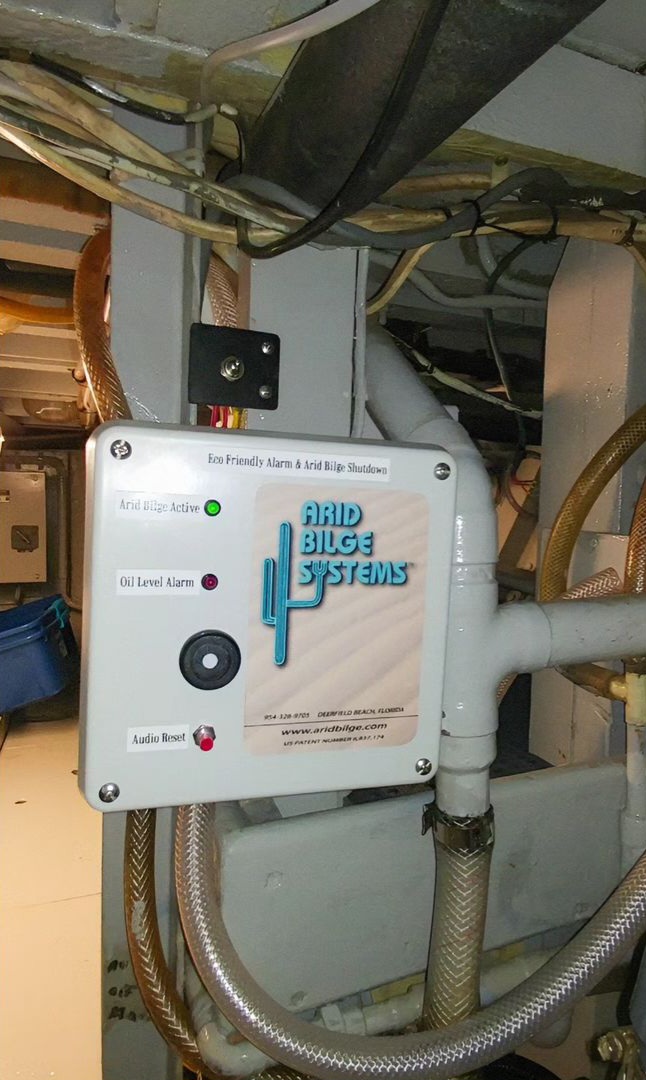
Arid draws residual fluid through connected pickups into a collection chamber. Oil separation is a separate task, which is why the separator and alarm deserve attention alongside the drying unit. The alarm panel in the original photos carries oil-level and shutdown labels; it is a distinct part of this installation.

Oil-separator enclosure and connected hoses photographed aboard Blue Guitar.
Blue Guitar’s oil-separator enclosure in the original installation feature.
Blue Guitar alarm panel labeled for Arid bilge activity, oil level and shutdown.
The separate alarm and shutdown panel shown with Blue Guitar’s installation.

Our published account describes more than 17 years of use and replacement of the original solenoid intakes. That is Blue Guitar’s reported service experience. Regular inspection and maintenance still belong in the routine, and conventional bilge pumps remain operational alongside Arid.

Related reading

Follow the route from pickup to discharge or find manuals in Owners’ Central. Planning a new installation? Explore current Arid systems and discuss your boat’s wet areas with Arid.

11 10, 2026
  • Out-A-Line, a Viking 61 sportfishing yacht, photographed on blue water.

Out-A-Line: An Arid Series 2 Installation Aboard a Viking 61

By |2026-10-15T19:56:37+00:00October 11, 2026|Blog, Boat Stories, Fishing Boats, Installation Stories|

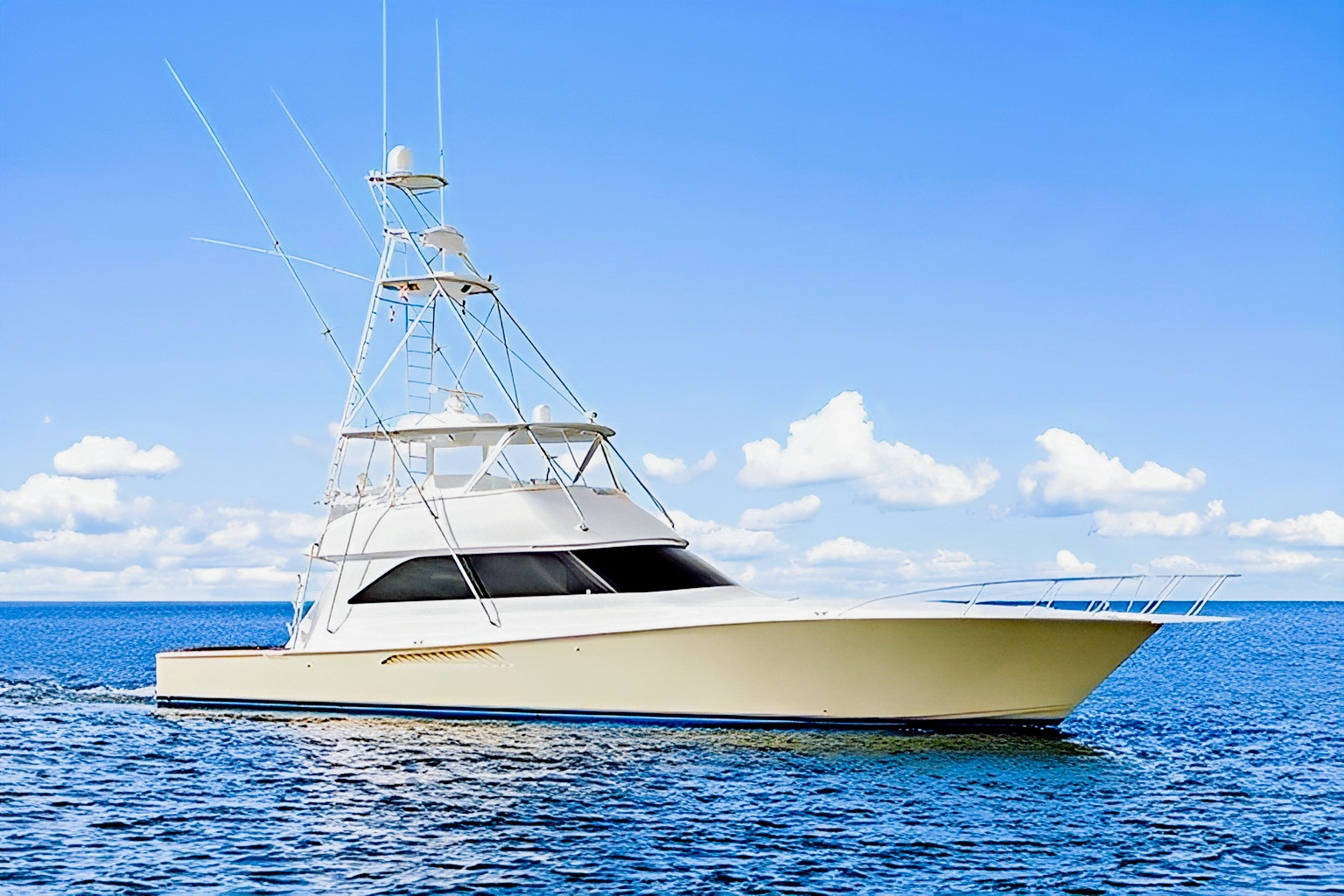
Aboard Out-A-Line, a 61-foot Viking sportfishing yacht, the Arid installation centers on a Series 2×2 24-volt unit. The original photographs show the boat on blue water and the cabinet fitted below deck.

A Viking sportfisher with space below deck

This 2005 Viking 61 has a three-stateroom, three-head layout. The exterior photograph captures its tall fishing tower above the enclosed cabin; the installation photograph offers a closer look at one part of the equipment arrangement below.

Out-A-Line, a Viking 61 sportfishing yacht, photographed on blue water.
Out-A-Line, a 2005 Viking 61 sportfishing yacht.

Out-A-Line’s Series 2 installation

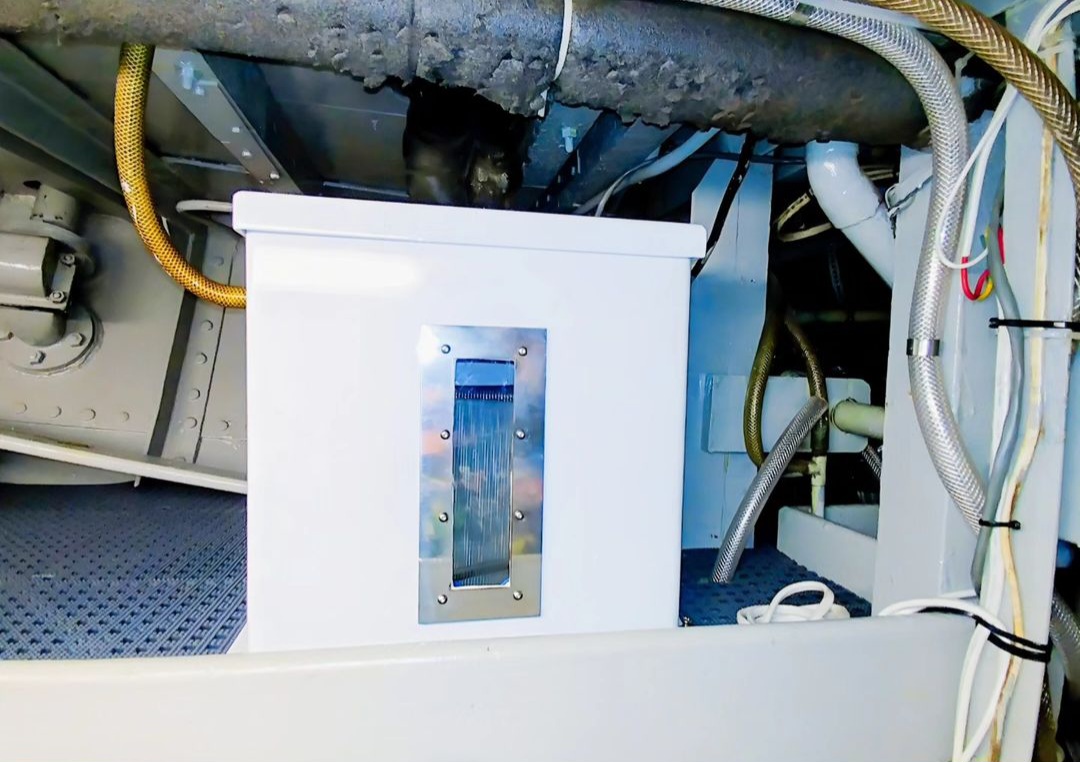
The equipment photograph shows a slim Series 2 cabinet mounted against a bulkhead, with its front panel facing into the compartment. Connected tubing runs beneath it, alongside the larger hoses already aboard.

Arid Series 2 cabinet installed aboard Out-A-Line.
The Arid Series 2 cabinet aboard Out-A-Line.

Our original feature identifies a two-zone setup. Those zones describe the installation featured here; they are not a recommendation based solely on the boat’s length. Pickup locations should follow the actual places where water collects.

A two-zone installation brings two collection areas back to one cabinet. The useful detail here is that a 61-foot boat is documented with a Series 2 setup: hull length alone does not tell an installer how many separate wet points need attention. The layout, drainage paths and chosen collection areas decide that conversation.

The water that remains

Arid’s role is to collect shallow residual water from connected low points. Conventional bilge pumps remain responsible for higher-volume pumping, and recurring water still calls for an inspection of its source.

The close view of the cabinet also shows why installation photographs are worth keeping. A clear view of the panel and the surrounding connections can help an owner explain the arrangement when requesting service or planning later work. Include the tubing route and access opening in your own installation records, along with the model and power-supply details.

For owners planning a similar installation, a look below deck is more useful than a size comparison alone. Identify separate wet areas, check tubing routes and leave room to reach the equipment for inspection and service.

Out-A-Line’s named stern and fishing tower at the dock.
Out-A-Line at the dock, as shown in the original company feature.
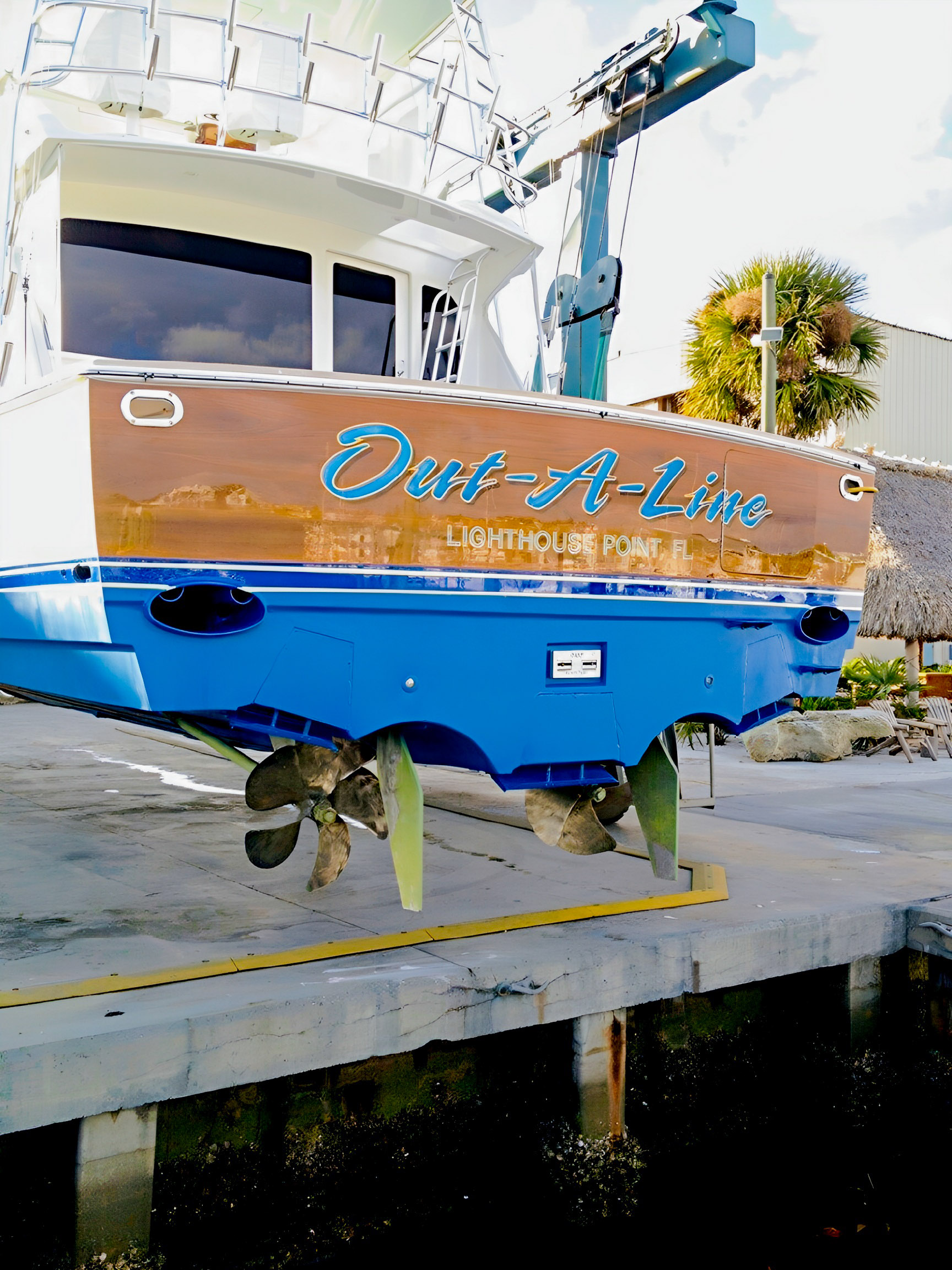
Out-A-Line’s named stern, propellers and hull while the yacht is ashore.
The named stern in another photograph from the original Out-A-Line feature.

See the original Out-A-Line feature and photographs, learn how Arid works, browse the Arid product range, or discuss the layout of your boat with our team.

More sportfishing installations

11 10, 2026
  • Gratitude, a yellow-hulled Spencer sportfishing yacht, underway.

Gratitude: An Arid Installation Aboard a 66-Foot Spencer

By |2026-10-15T19:56:10+00:00October 11, 2026|Blog, Boat Stories, Fishing Boats, Installation Stories|

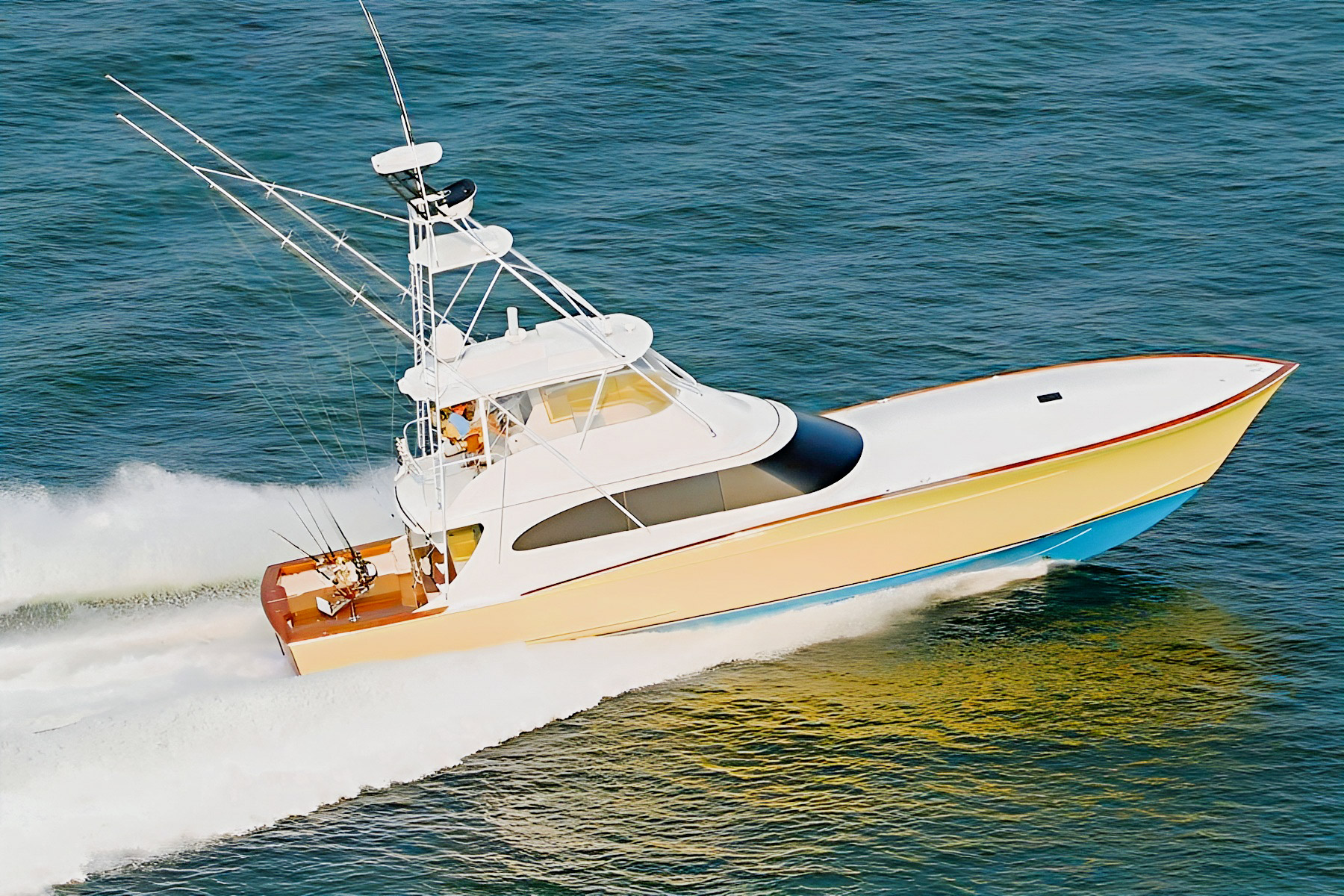
With her yellow hull, tower and long foredeck, Gratitude is easy to pick out underway. Below deck, the 66-foot Spencer convertible sportfish carries an Arid Series 4×4, installed forward in the engine room.

Gratitude, a yellow-hulled Spencer sportfishing yacht, underway.
Gratitude, the 66-foot Spencer featured in Arid’s original installation post.

A Carolina sportfisher from Spencer Yachts

Gratitude is a 66-foot convertible sportfisher built by Spencer Yachts in Wanchese, North Carolina. Spencer’s boats carry the Carolina sportfishing tradition into custom yachts designed around fishing and time offshore. Gratitude’s tower, open cockpit and long foredeck make that purpose clear in the exterior photograph.

The machinery spaces deserve the same care as the visible finishes. Reaching residual water beneath and around equipment helps keep those less accessible areas ready for inspection. A dry-bilge system is one part of that maintenance routine, fitted to the individual boat’s drainage and pickup locations.

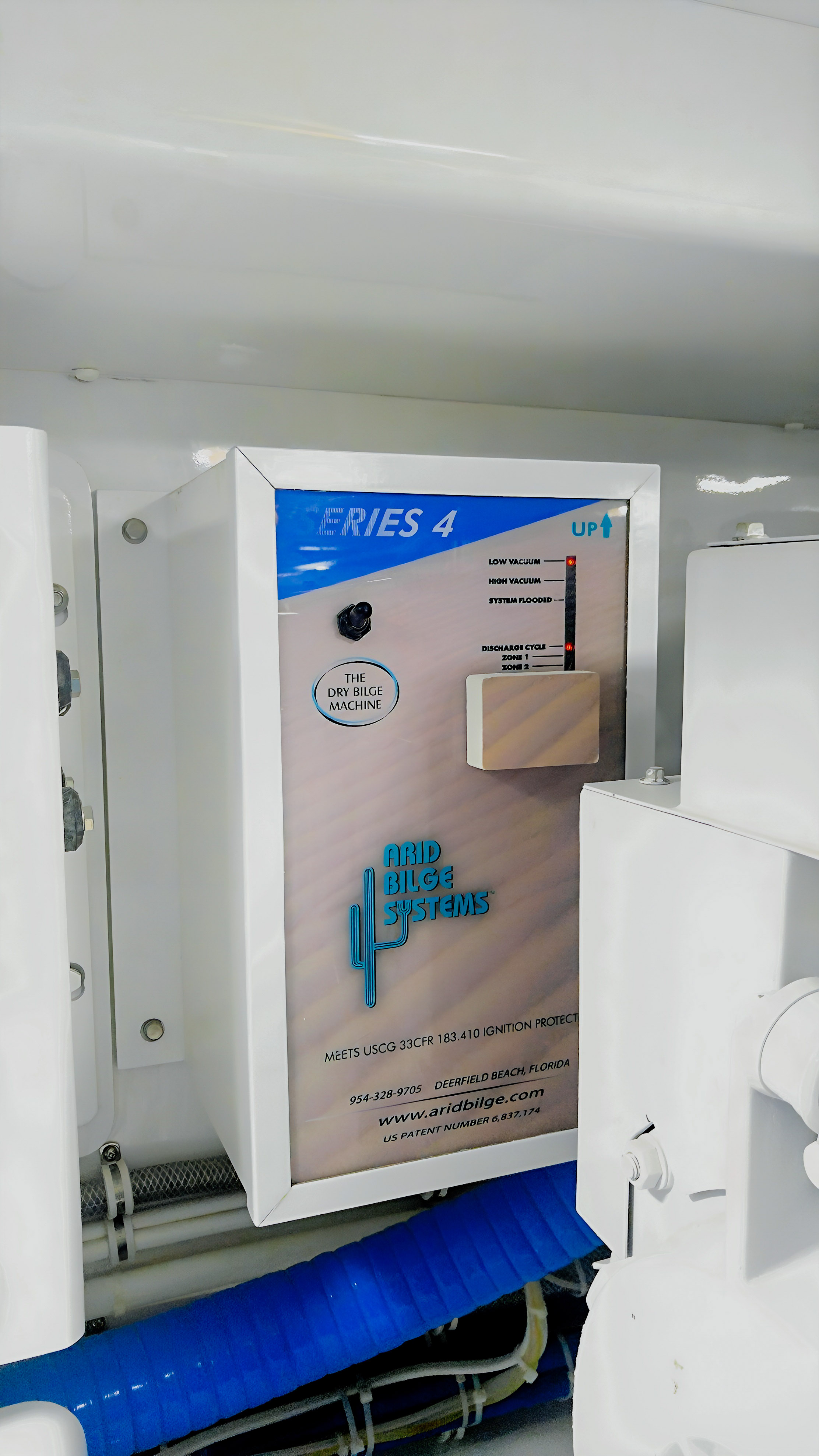
Forward in Gratitude’s engine room

The installation photograph gives a close view of the Series 4 cabinet among the yacht’s machinery. Its blue-topped front panel, control and indicator lights face into the compartment. A large blue hose passes beneath the cabinet, while other equipment stands close beside it.

That view shows how a drying unit becomes part of an existing engine room. Its location is separate from the places it serves: pickup tubing connects the cabinet to low points where residual water collects.
Arid Series 4 cabinet installed forward in the engine room aboard Gratitude.
The Series 4 cabinet forward in Gratitude’s engine room, as shown in the original Arid feature.

Follow the water before choosing pickups

A wet point can be a small pocket of water left after drainage and ordinary pumping. It does not have to mean an entire flooded compartment. Several pockets can need separate attention if water cannot drain freely between them.

For a sportfisher with machinery, hoses and structural divisions below deck, tracing those pockets is a useful first step. Look for the places that remain wet, note whether they communicate with one another, and check how each can be reached. A photograph of the cabinet alone cannot map that work.

Gratitude’s forward engine-room installation provides a concrete example of a cabinet location. Another boat’s pickup plan should come from its own layout, with conventional bilge pumps retained for higher-volume pumping. If water repeatedly returns, investigate its source as well as removing what remains.

Leave room for the next inspection

The close installation view also puts service access in perspective. Before fitting a cabinet into a similar space, consider whether someone can read its indicators, reach its controls and connections, and carry out the maintenance described in the model’s manual. Include the surrounding equipment in planning photographs so those clearances are visible.

Compare the current Series 4 product information with your requirements; Gratitude’s photographed installation records its own configuration. For another sportfishing setup, see the Series 2 installation aboard Out-A-Line.

View Gratitude’s original exterior and engine-room photographs, learn how Arid collects residual bilge water, or discuss your sportfisher’s installation with our team.

Explore current Arid systems.

11 10, 2026
  • Reef Chief motor yacht underway on blue water.

Reef Chief: Two Arid Systems Aboard a 120-Foot Motor Yacht

By |2026-10-11T04:01:58+00:00October 11, 2026|Blog, Boat Stories, Installation Stories, Motor Yachts|

Seen underway, Reef Chief presents the long profile of a 120-foot motor yacht. Below those decks, our original boat feature records an Arid Series 9 and a Series 4, together with a Deckma Hamburg oil monitoring system. The exterior and installation photographs show two sides of the same yacht: the boat at sea and the installation below deck.

Reef Chief motor yacht underway on blue water.
Reef Chief underway, from the original Arid boat feature.

A Lloyds Ships yacht across three decks

Built by Lloyds Ships, Reef Chief arranges living and working spaces across three decks. The pilothouse and sky lounge occupy the upper level; the owner’s stateroom and main living areas sit below. Guest accommodation, crew quarters and the engine room are among the lower-deck spaces described in Denison’s historical profile of Reef Chief.

The layout puts bilge care in context. Alongside the rooms people use are machinery spaces, plumbing and low points that need their own attention. A yacht’s overall length tells only part of that story.

Series 9 and Series 4 aboard Reef Chief

The two Arid units address residual water through connected pickup locations. Instead of carrying a portable vacuum to each wet area, the installation brings tubing back to central collection equipment.

In the installation photograph, the clear-front enclosure reveals a black control panel, a gauge and tubing running along the right-hand side. It is a close view of the installed hardware among the yacht’s other equipment. Controls, hoses and connections are all part of the space that must remain accessible for inspection and service.

Arid equipment in a clear-front enclosure aboard Reef Chief, with gauges and tubing visible.
Arid equipment aboard Reef Chief, shown in the original installation photograph.

Water collection and oil monitoring have different jobs

The Deckma Hamburg monitoring system named in the original feature adds a separate function to the installation. Collecting bilge fluid does not separate oil from water or establish that the fluid is suitable for discharge. The discharge and monitoring arrangements therefore belong in the same planning conversation as the drying equipment.

Conventional bilge pumps remain essential for higher-volume pumping. Arid supplements them by collecting the shallow water that can remain at the connected low points.

What to take from this installation

Reef Chief shows that an installation can include more than one Arid cabinet. The useful question for another owner is which wet areas need collection, where the equipment can fit and how it can be serviced. Two cabinets aboard this yacht do not make two cabinets the right choice for every 120-footer.

See the original Reef Chief feature and photographs, or talk with our team about your boat’s layout.

Related reading

Explore current Arid systems.

11 10, 2026
  • Cortina underway, viewed from above and astern in an original Arid Bilge Systems photograph.

Cortina: Bilge Drying Aboard a 114-Foot Motor Yacht

By |2026-10-11T04:01:28+00:00October 11, 2026|Blog, Boat Stories, Installation Stories, Motor Yachts|

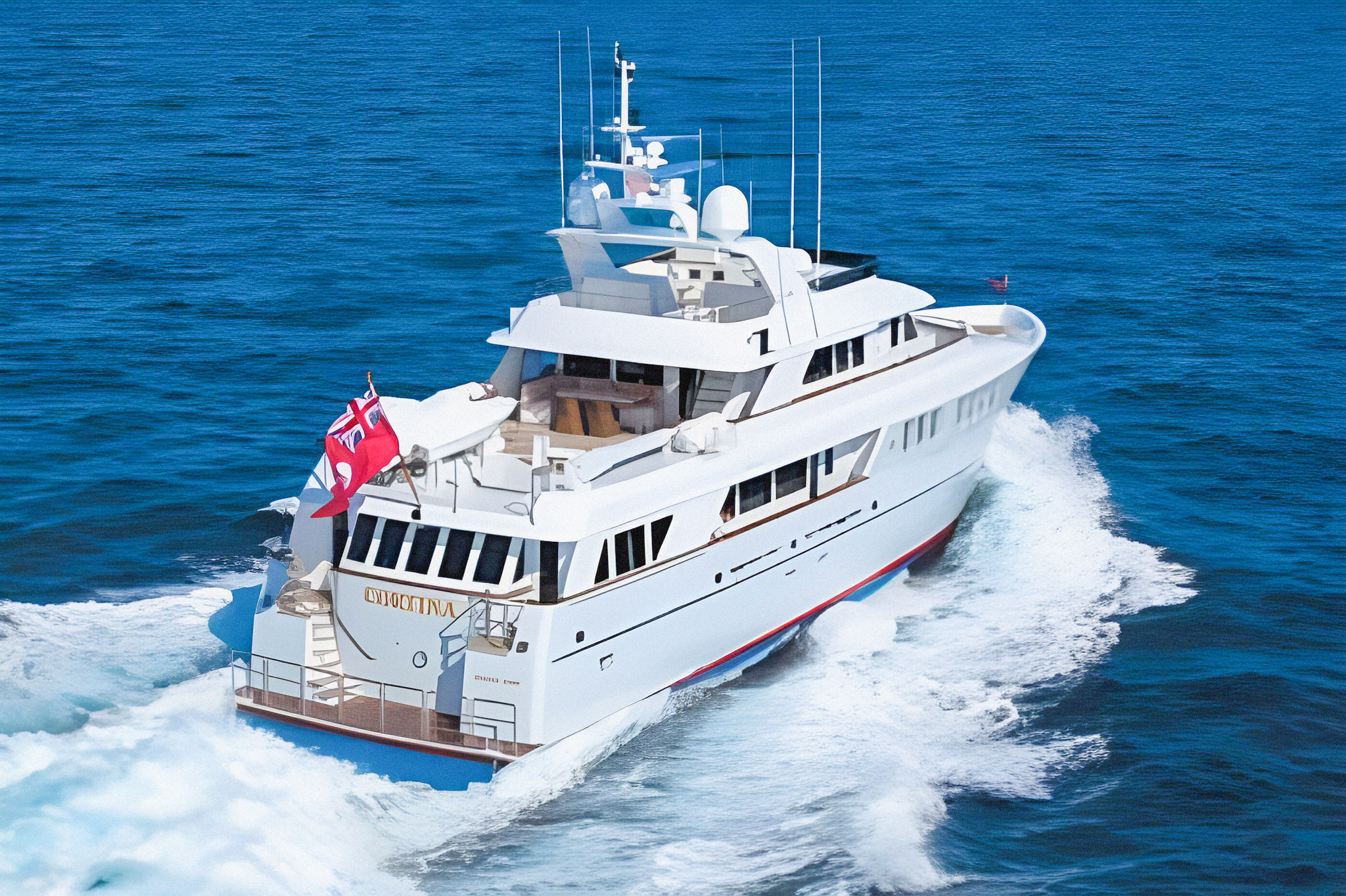
Cortina makes an impression underway: a white hull, three decks and a broad wake behind her. Below deck, another part of the yacht’s story is easier to overlook. Our original photographs document an Arid Series 9 installation arranged alongside discharge and monitoring equipment in the machinery space.

Cortina motor yacht underway, viewed from above and astern.
Cortina underway, from the original Arid boat feature.

The yacht behind the installation

Built by Newcastle in 2010, Cortina is a 114-foot custom motor yacht. In its 2013 listing announcement, Worth Avenue Yachts described her tri-deck layout, four guest cabins and custom Hodgdon Yachts interior. Those details give a sense of the spaces and craftsmanship aboard this particular vessel.

The Arid photographs take us into a different part of that setting. They pair the yacht’s exterior with a close view of the installed equipment, offering a look at the machinery behind everyday bilge care.

A closer look at Cortina’s Arid installation

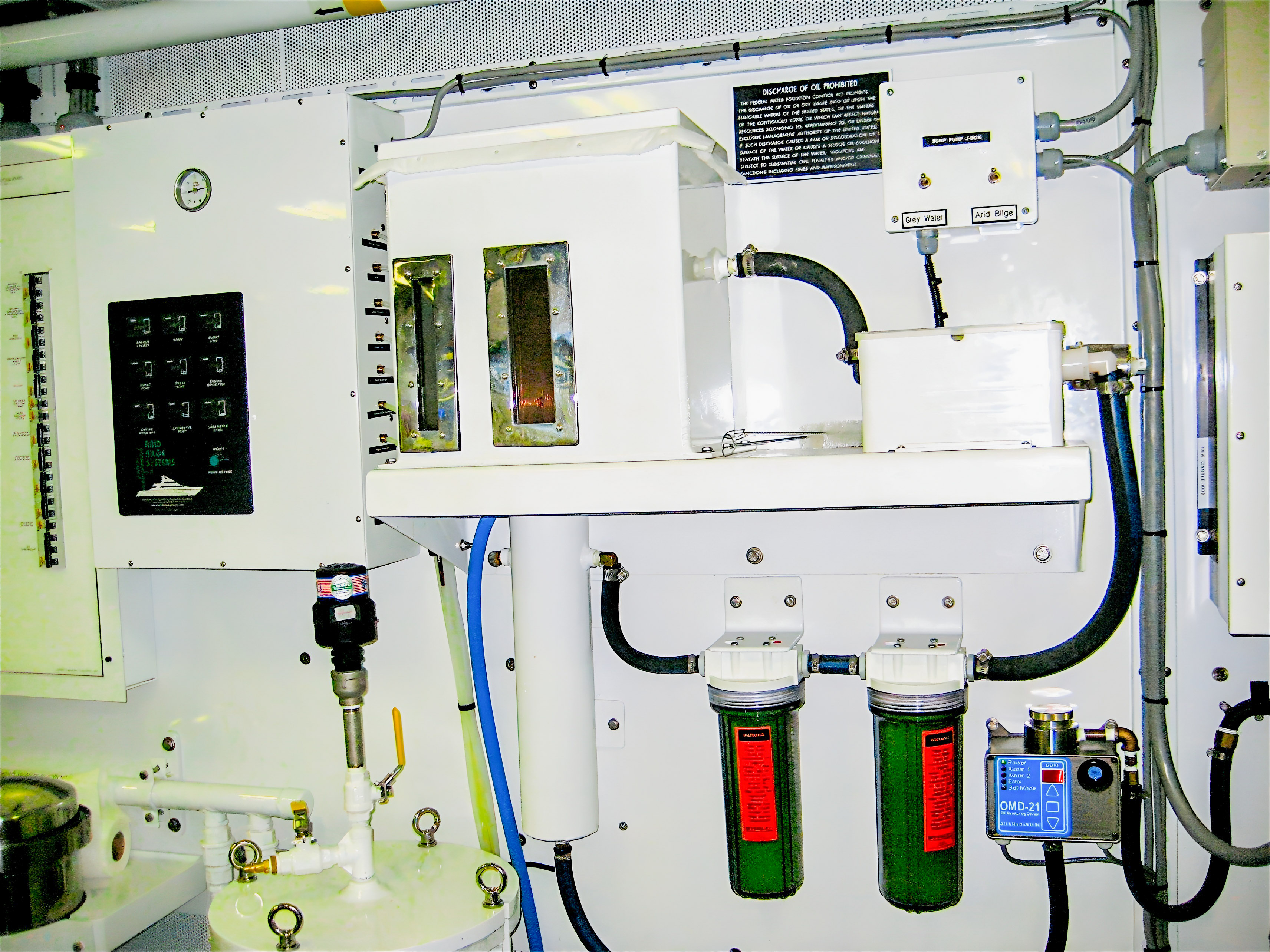
The Series 9 cabinet appears on the left of the installation photograph. Companion equipment occupies the same bulkhead, with controls, hoses and fittings facing into the machinery space. The photograph is useful because it shows the equipment in context: its mounting position, the surrounding pipework and the room available around it.

Arid bilge-drying equipment and connected discharge equipment installed aboard Cortina.
The Arid cabinet and connected discharge equipment aboard Cortina. Open the photograph for a closer view.

Our original Cortina feature also identifies a PP-Monitor for fuel and oil leak detection. Residual-water collection and contamination monitoring serve different purposes. Drawing fluid out of a low point does not itself separate oil, establish that discharge is suitable, or repair the source of a leak.

Why residual water deserves its own system

A conventional bilge pump can finish a cycle while leaving a shallow layer of water below its effective pickup level. In separate compartments, that water may gather in more than one low point. Reaching each area with a sponge or wet vacuum becomes a recurring maintenance job.

Arid addresses that remaining water through pickups connected to a central unit. Vacuum draws fluid into a collection chamber; air pressure then moves the collected fluid along the discharge line. The yacht’s conventional bilge pumps remain responsible for higher-volume pumping. See the pickup-to-discharge process for a closer explanation.

Cortina illustrates why the equipment arrangement matters as much as the yacht’s length. A useful installation plan starts with the separate wet areas, then follows the tubing route back to the unit and through the discharge arrangement. Controls and service points need to remain accessible. The photographed layout is one vessel’s solution, rather than a size-based prescription for every 114-foot yacht.

Explore the systems and the next boat story

Planning an installation aboard your own yacht? Browse the current Arid product range or talk with our team about the layout. Current specifications should be checked for your vessel; the equipment in an earlier installation may differ from today’s options.

View the original Cortina feature and photographs.

18 11, 2025
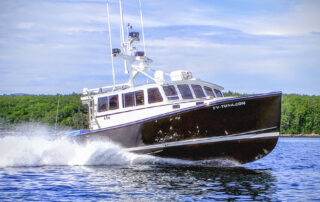
  • FV-TUNA.COM fishing boat underway, viewed from the bow quarter.

Wicked Tuna’s Captain Dave Carraro on Keeping His Bilges Dry

By |2026-10-11T20:42:25+00:00November 18, 2025|Articles, Blog, Boat Stories, Fishing Boats|

Captain Dave Carraro on Dry Bilges Aboard F/V Tuna.com

In this video, Wicked Tuna’s Captain Dave Carraro describes his first experience with an Arid Bilge System. Standing near the shaft at the back of the engine room, he points to the dry bilge and talks about the forward compartment and lazarette.

His account focuses on the result he can see aboard his own boat. The transcript below is lightly edited for readability and retains his acknowledgment of Arid’s sponsorship.


Watch the full Captain Dave testimonial on YouTube.

Beside Captain Dave is the installed Arid Series 2. The close view shows how the unit sits among the engine-room plumbing, adding useful installation context to his account of the boat’s dry bilges.

Captain Dave Carraro beside the installed Arid Series 2 in the engine room aboard F/V Tuna.com.
Captain Dave Carraro and the installed Arid Series 2 aboard F/V Tuna.com. Still from the original interview at 00:44.


Dave Carraro’s Testimonial

“Captain Dave here on the Tuna.com, way back here at the backside of my engine room here by my shaft.

I want to thank you guys at Arid—Arid Bilge Systems—for a great system.

This is the first time I’ve ever used one. I didn’t know anything about it.
I do now.

But I could not be happier.

We got our bilges to stay completely dry—that being up in the front, that being the engine room, and that being in the Lazarette.

This thing is absolutely incredible.

Just looking down there right now, there’s not a drop of water.

And rest assured, there’s not a drop of water up in the front or in the Lazarette.

Again—just a great system.

To me, it’s a new product. And again—I just could not be happier.

Again, thank you very much for your sponsorship.”


Dave Carraro Describes Three Dry Bilge Areas

Captain Dave describes three areas staying dry: the forward bilge, engine room and lazarette. For an owner considering a similar setup, those separate spaces are the useful starting point. Identify where residual water remains and which locations a pickup can reach.

How does Arid keep bilge zones dry?

Arid removes residual water from connected pickup locations using a centralized vacuum system. It complements the boat’s conventional bilge pumps; it does not replace emergency pumping equipment or repair the source of a leak.

See how the dry-bilge system works, explore more owner and captain testimonials, or find installation and maintenance resources.

17 11, 2025
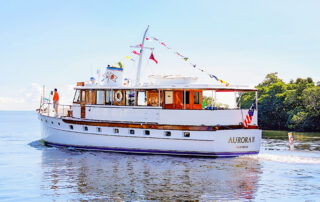
  • Aurora II cruising with signal flags above the wooden cabin.

Protecting Wooden Boats – The Power of a Dry Bilge

By |2026-10-15T19:57:28+00:00November 17, 2025|Articles, Blog, Boat Stories, Motor Yachts|

Wooden boat care starts below deck

We first met Jim Moores through the boat-show community and have known him for many years. He became a longtime personal friend as well as someone whose experience with wooden yachts we value. His story aboard Aurora II brings that experience down to a problem many owners recognize: water collecting out of sight beneath an otherwise beautiful boat.

A lifetime spent caring for classic wooden yachts

Jim founded Moores Marine in 1986, specializing in the restoration and repair of antique and classic wooden boats. His earlier work in Maine included commercial fishing vessels. The company’s restoration history includes Trumpy yachts, the presidential yacht Honey Fitz, and the schooner Summerwind. These are boats whose continued life depends on skilled work inside the hull as much as on the finish above deck.

Aurora II: a 1947 Trumpy and a recurring moisture problem

For wooden boats, lingering bilge water is a maintenance concern as well as a source of musty smells. In this testimonial, restoration specialist Jim Moores describes the mildew he found aboard his 1947 Trumpy, Aurora II, and the changes he noticed after installing an Arid Bilge System.

For a short overview, watch Why Dry Bilges Matter on Wooden Boats | Jim Moores.

Jim Moores’ Account of Aurora II

In the video, Jim explains what he found, what he cleaned and what changed once the system was working aboard his boat.

Jim recalls buying the boat in Florida and finding mildew throughout the interior. He discarded mattresses, cleaned the affected spaces and later repainted the ceiling. He also installed an Arid Bilge System to remove the small amounts of water that continued to collect below deck.

He reports a fresher-smelling interior after that work. During a later electrical interruption, he noticed the smell returning and checked the system. In the video, he shows an enclosed area where visible growth had appeared and explains how little ventilation the compartment had.

His experience connects three separate jobs: cleaning existing contamination, restoring affected finishes and managing recurring water. The water-removal system was one part of that work. His account is specific to Aurora II; it does not establish that removing bilge water alone eliminates mildew or produces a health benefit.

How persistent bilge moisture can damage wood from inside

A wooden yacht can look well cared for on deck while concealed timber stays wet below. Where repeated wetting, oxygen and suitable temperatures support decay fungi, the fungi consume parts of the wood and reduce its strength. The USDA Forest Products Laboratory’s Wood Handbook explains these conditions. Mold on a surface and structural decay are different problems; appearance or smell alone cannot establish how sound a timber remains.

Look beyond the central puddle. Joints, low pockets and enclosed spaces can remain damp after the easily reached water is removed. The maintenance goal is to shorten that repeated wetting, preserve access and investigate changes early. On a traditional wooden hull, a boatwright should guide the care of planking and seams; managing standing bilge water does not mean trying to dry the entire hull indiscriminately.

Jim’s experience illustrates why water removal belongs alongside ventilation, cleaning and repairs. It also connects with Barry Delk’s wooden Gillikin sportfisher, Longer Hours, where Arid personally installed a Series 4×8 in 2008 and the system is still running about 18 years later.

A practical starting point for wooden boats

Begin with an inspection of the spaces you can reach. Record standing water, staining and changes in odor. Then work through the causes and the access needed to maintain those areas:

  • Identify where water enters and where air-conditioning condensate collects.
  • Have timber, coatings and ventilation assessed as part of the maintenance plan.
  • Clean existing contamination using guidance appropriate to the materials and condition.
  • Discuss pickup placement and service access with an installer familiar with the vessel.

A drier baseline can make a new wet patch easier to notice. It does not repair damaged timber or remove the need to investigate a leak. Follow up on changes rather than relying on a fresh smell as proof that every compartment is sound.

Keep the Roles Clear

Arid removes residual water from connected pickup locations. Conventional bilge pumps remain in place for higher-volume pumping. Our wet-zone guide can help organize the inspection before discussing a system.

Watch Jim’s full video for his firsthand account aboard Aurora II.

23 10, 2025
  • Midnight Express and Arid Bilge Systems interview thumbnail with Eric Glaser and Alfred Baurley.

Midnight Express: Eric Glaser on Arid Pickup Locations

By |2026-10-13T16:59:44+00:00October 23, 2025|Articles, Blog, Boat Builders, Boat Stories, Center Consoles, Performance Boats|

Where does the water remain after the bilge pump stops? On a boat with several separate compartments, that question needs more than one answer. Arid supplies Midnight Express, and Eric Glaser’s conversation with Alfred Baurley explains how the builder approaches collection points below deck.

Midnight Express builds performance center consoles in Miami and emphasizes customization. The interview brings that idea into an area an owner may see only through an access hatch: the placement of a central drying unit and the lines serving it.

Start with the compartments

Glaser describes mounting the central unit in the rear bilge, with pickups in the rear and mid-bilge. Depending on the customer’s needs, he says, a collection point may also be fitted near the bow thruster where water can remain.

At the time of the interview, Glaser described Arid as an option offered across the builder’s models. The conversation does not identify one particular Midnight Express model, and a buyer should confirm the equipment and pickup plan for the boat being ordered. The useful detail is the approach: choose collection points for the spaces that need them.

Make the pickup plan easy to follow

When reviewing a build or an existing installation, ask for a simple compartment map. Mark the central unit, each pickup and the access point used to inspect it. If the bow-thruster compartment is included, identify its line rather than assuming it is covered because a system is fitted elsewhere.

Then consider service access. Can someone reach the pickup to inspect it? Can the tubing route be followed without moving unrelated equipment? A short walkthrough with the installer can turn an equipment list into something the owner and service team can use.

The Phenom 34 walkthrough offers another example of why separate bilge areas deserve individual attention. The Hylas H57 conversation adds another consideration: where operating equipment sits in relation to the living space. Both are useful comparisons, rather than specifications for a Midnight Express.

See the water-routing animation

Illustrative Arid water-routing animation. Actual equipment placement and pickup locations vary by vessel and installation.

This silent animation shows pickups in separate low areas connected by tubing to a central Arid unit, with collected water moving through a discharge line.

Keep the jobs of the two systems clear

Arid addresses residual water through pickups connected to a central unit. Conventional bilge pumps retain their own job, and a new source of water still needs investigation. Our guide to how Arid works shows the collection and discharge process.

For the owner, the takeaway from Glaser’s account is concrete: understand which compartments are served, how to reach the equipment and what was specified for this boat. Those details belong in the handover as much as the controls at the helm.

For a brief introduction, watch the Midnight Express interview Short.

The Midnight Express interview

Alfred: Eric, can you tell me a little about your experience—how the Arid Bilge System has worked across your Midnight Express boats?

Eric: Yeah, absolutely. We offer Arid Bilge Systems across all of our models. It helps keep the bilges dry and clean, so you’re not worried about all the corrosion and the mess you’d normally find down there. It’s a great option. You guys have a bunch of different versions—some different power supply options—and it works for us depending on which way we’re powering the boat.

Alfred: Where is the system mounted on the boat?

Eric: We mount them in the rear bilge of the boat on every model.

Alfred: What locations does it vacuum from?

Eric: So we do one in the rear bilge, one in the mid-bilge, and then depending on what the customer asks for, sometimes we do one up by a bow thruster, where it might catch a little bit of water—just to help keep everything dry in those areas too.

Alfred: And this has improved your boats by keeping everything nice and dry versus having a wet, moldy environment—especially when you think about protecting your Seakeeper, your generator, and all the sensitive components that are down in those compartments.

Eric: Of course. It’s all good things. Water messes everything up, and we’re in a wet environment on a boat—so it just makes sense to dry it out.

Alfred: Eric, I really appreciate your time.

Eric: No problem. Thanks for making a great product. Keep it up.

Why builders choose Arid: explore the benefits for builders and owners, and read our boat-building story.

22 10, 2025
  • Everglades Boats and Arid Bilge Systems interview thumbnail with before-and-after bilge photographs.

Everglades Boats and Arid: Aboard the 395

By |2026-10-13T16:59:44+00:00October 22, 2025|Articles, Blog, Boat Builders, Boat Stories, Center Consoles|

Arid supplies Everglades Boats. A conversation aboard the 395 puts that relationship in practical terms: what happens in the bilge while a boat is being used, and how does that affect the spaces around its equipment?

In the interview published with our 2025 story, David Brown speaks as Everglades’ Vice President of Product Development and Engineering. He describes Arid as standard equipment on the 395 at that time. Captain Sean Hickey, speaking as a regional manager and company captain, brings an extended-trip perspective to the discussion.

A captain’s account from an extended trip

Hickey recalls roughly 2,500 miles over three months and reports finding the bilge dry when the boat came out of the water. He connects the condition of that space with the generators, stabilization equipment and other systems carried below deck.

That is his account of a particular trip. For another owner, it suggests a useful habit: make the condition of accessible bilge spaces part of regular checks, including after a trip. Record where water returns, and have its source investigated instead of assuming the same result on every boat.

The 395 combines fishing equipment with cabin systems

Everglades’ current 395CC description shows why access matters. The builder lists a finished hull liner, oversized rigging troughs and a cabin-floor bilge hatch. Its equipment list also includes conventional bilge pumps and a high-water alarm.

Arid’s contribution is residual-water collection at connected pickup locations. The conventional pumps and alarm retain their jobs. Brown’s interview explains the fitment described then; confirm the equipment specification for a new build or a different model year with Everglades.

A separate Everglades installation in our archive

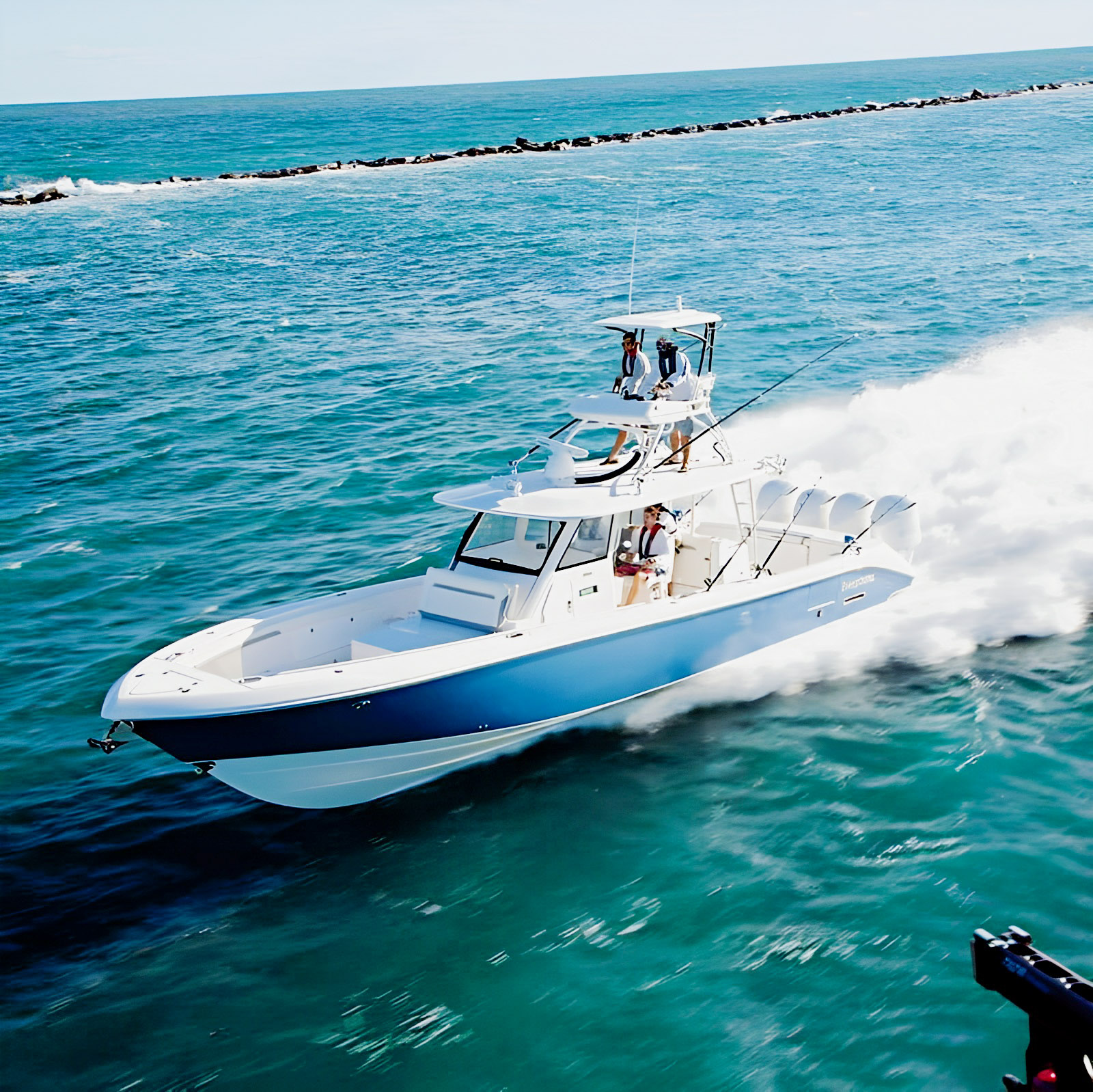
Our original archive photographs show another Everglades: a blue-hulled center console with four outboards, paired with its installed Series 2 cabinet. They are not presented as photographs of the 395 interview boat. Our original installation feature keeps those two views together.

Blue-hulled Everglades center console with four outboards underway near a breakwater.
An Everglades center console featured in Arid’s installation archive.
Arid Series 2 cabinet installed among hoses and wiring aboard an Everglades center console.
Arid Series 2 installed aboard an Everglades center console.

Plan for coverage and future access

The cabinet photograph shows one part of the installation. Planning also needs to identify the separate areas where residual water collects and the route between those pickups and the unit. Bring photographs of the low points and access hatches to that discussion.

See how Arid collects residual water, then compare the service-access discussion in HCB’s Estrella interview and the attention to finished equipment spaces in our Bahama Boat Works story. The layouts differ; planning around the actual boat is the common starting point.

A shorter cut of the Everglades interview is also available.

See the water-routing animation

Illustrative Arid water-routing animation. Actual equipment placement and pickup locations vary by vessel and installation.

This silent animation shows pickups in separate low areas connected by tubing to a central Arid unit, with collected water moving through a discharge line.

The Everglades Boats interview

Alfred: Here to go and talk about the Arid Bilge System on the 395, and how the Arid Bilge System makes the Everglades a better boating dry experience. Here to talk about it with David.

David: Yeah, thanks for being here. You’re on the 395. I’m David Brown, the Vice President of Product Development and Engineering. We partnered with Arid Bilge Systems, and it is now a standard feature on this boat. It really helps keep all of the below deck bilges nice and bone dry.

David: It’s been a huge customer satisfaction item—especially for people who keep their boats in the water. Everglades has been building center consoles for years. We offer a full range of boats from our 245 up to our 455, packed full of technology and patented features. So, we’re really proud to be a partner here with Arid Bilge Systems.

Sean: Hi, I’m Captain Sean Hickey with Everglades Boats. I’m one of their regional managers as well as the captain of the company. At Everglades, our philosophy is using nothing but the best parts we can find on the marketplace.

Sean: The last trip I did was a long trip—over about 2,500 miles over the course of three months. We pulled the boat out of the water at the end of that, and there wasn’t a drop of water in the bilge. And that’s imperative these days with Helm Master systems down there—Seakeepers, generators, you name it.

Sean: The Arid Bilge System delivers as promised. It keeps your bilge dry and keeps your electronics safe.

Why builders choose Arid: explore the benefits for builders and owners, and read our boat-building story.