Why Does My Boat Smell Even After Cleaning?
A freshly cleaned hatch does not tell the whole story below deck. Separate material left behind from water that keeps returning before repeating the same cleanup.


A freshly cleaned hatch does not tell the whole story below deck. Separate material left behind from water that keeps returning before repeating the same cleanup.
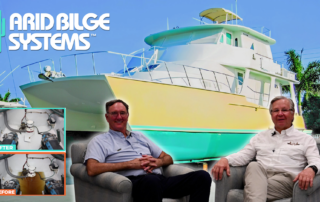
Greg Acerra and other owners describe the water they used to remove by hand. A look back at three videos connects those routines with practical installation details.
A boat’s length is only the start of a useful quote. Bring your installer a simple map of wet areas, photographs and access notes to help plan the right system.
One zone, two or three, or four to eight: compare the Arid models, watch the official videos and build a practical shortlist for your boat.
When you know what a compartment normally looks like, new water is easier to notice. A few photographs and useful notes can make the next inspection more productive.
Brian Schmitt explains why he chose Arid for a plywood-cored powercat, used it again on an aluminum vessel and installed a pickup beneath his chilled-water equipment.
Alfred Baurley and Steve Gilchrist of Straight Up Marine explain how pickups at separate low points feed a central Arid system—and why inspection still matters.
Greg explains why he chose Arid again for KATINSKY, how eight pickup zones serve difficult spaces, and what changing hour-meter readings helped him find.
Follow residual bilge water from the low point to the collection chamber and discharge line, with the DRYVER animation and our How Arid Works illustration.
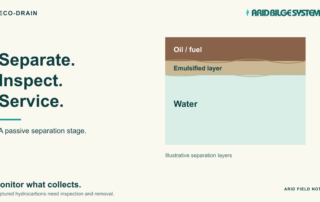
Eco-Drain adds gravity separation after Arid collects residual bilge fluid. Review model compatibility, gravity drainage, service access and the handling of retained hydrocarbons.
Bilge water is the biggest problem you don’t like to think about. Keep the bilge dry and transform your boating experience with Arid Bilge.
1525 NW 3rd St Unit 5, Deerfield Beach, FL 33442