
bilge cleaning

13 11, 2025
  • Thomas Marine and Arid Bilge Systems interview thumbnail.

Thomas Marine on Condensate and Bilge Moisture

By |2026-10-13T20:10:19+00:00November 13, 2025|Articles|

Thomas Marine on Condensate and Bilge Moisture

Air conditioning removes moisture from cabin air, but the resulting water still needs a route out of the boat. That is the practical connection John at Thomas Marine discusses with Alfred in this short interview.

John describes the team’s air-conditioning, refrigeration and custom installation work. He explains how residual-water removal can complement that work by collecting water below deck. Watch his account, then use the questions below to review your own condensate path.

For the shorter clip, watch Thomas Marine on Bilge Moisture & Onboard Comfort.
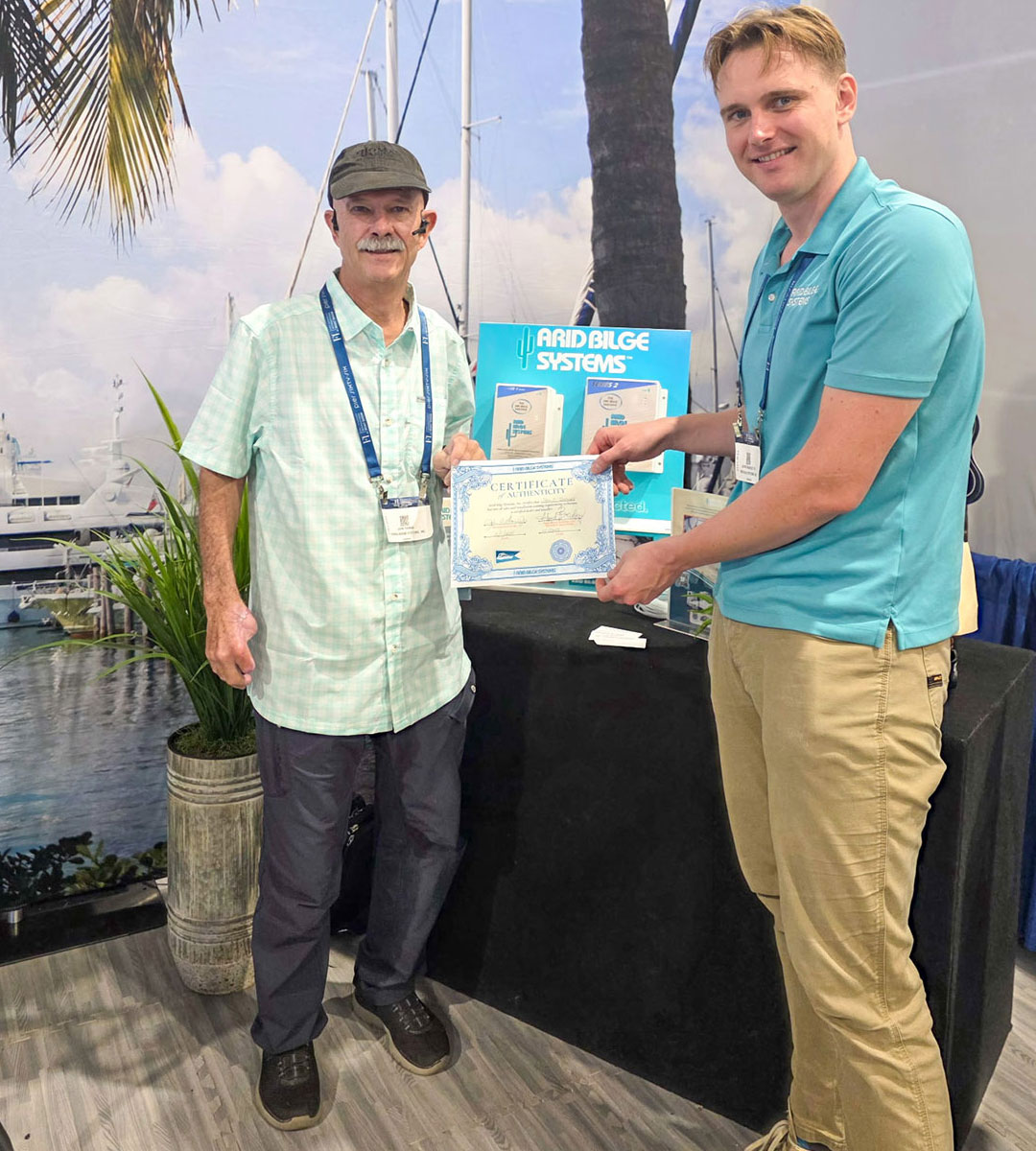
John Thomas and Alfred Baurley holding the dealer certificate, with Thomas Marine’s Arid tabletop demonstration display behind them
John Thomas and Alfred Baurley with the dealer certificate. Thomas Marine’s Arid dummy display sits on the table behind them.

Follow the Water After It Leaves the Air

A dehumidified cabin does not tell you whether a drip pan, drain or sump below it is clear. Inspect those parts as a connected path: where does condensate collect, how does it leave, and what remains after the air conditioner stops?

Record an overflow or recurring pool before choosing equipment. A blocked drain needs attention at the source. A pickup may serve a selected collection point, but it cannot reach every compartment simply because a central unit is installed.

A Focused Conversation with Thomas Marine

Bring photographs of the collection points and describe when water appears. Ask how the proposed arrangement will be inspected, cleaned and serviced. Our wet-zone guide can help organize those observations.

Residual-water removal addresses liquid water at connected pickup locations. It does not remove existing mildew, repair corrosion or replace conventional bilge pumps. Those distinctions matter when turning a general conversation about a drier boat into a specific installation plan.

Visit Thomas Marine’s Arid Bilge landing page to discuss the layout and confirm current service arrangements.

Related Boat-Builder Interviews

For additional perspectives on dry bilges, these separate Arid interviews feature:

This article is an edited overview of the Thomas Marine conversation, not a verbatim transcript. Watch the full video.

13 11, 2025
  • Tuppens Marine and Arid Bilge Systems video thumbnail.

See Arid Bilge Systems at Tuppen’s Marine

By |2026-10-13T20:12:00+00:00November 13, 2025|Articles|

See Arid Bilge Systems at Tuppen’s Marine

In this short visit, Tuppen’s Marine introduces its Arid Bilge Systems dealership and invites boaters to see the display inside the store. The conversation is a starting point for understanding residual-water removal and asking how it could fit a particular boat.

The Tuppen’s representative describes the business as serving local boating customers since 1956. Watch the visit for the team’s own introduction and invitation.

For the shorter clip, watch Tuppen’s Marine on Arid Bilge | Cleaner, Drier Bilges.

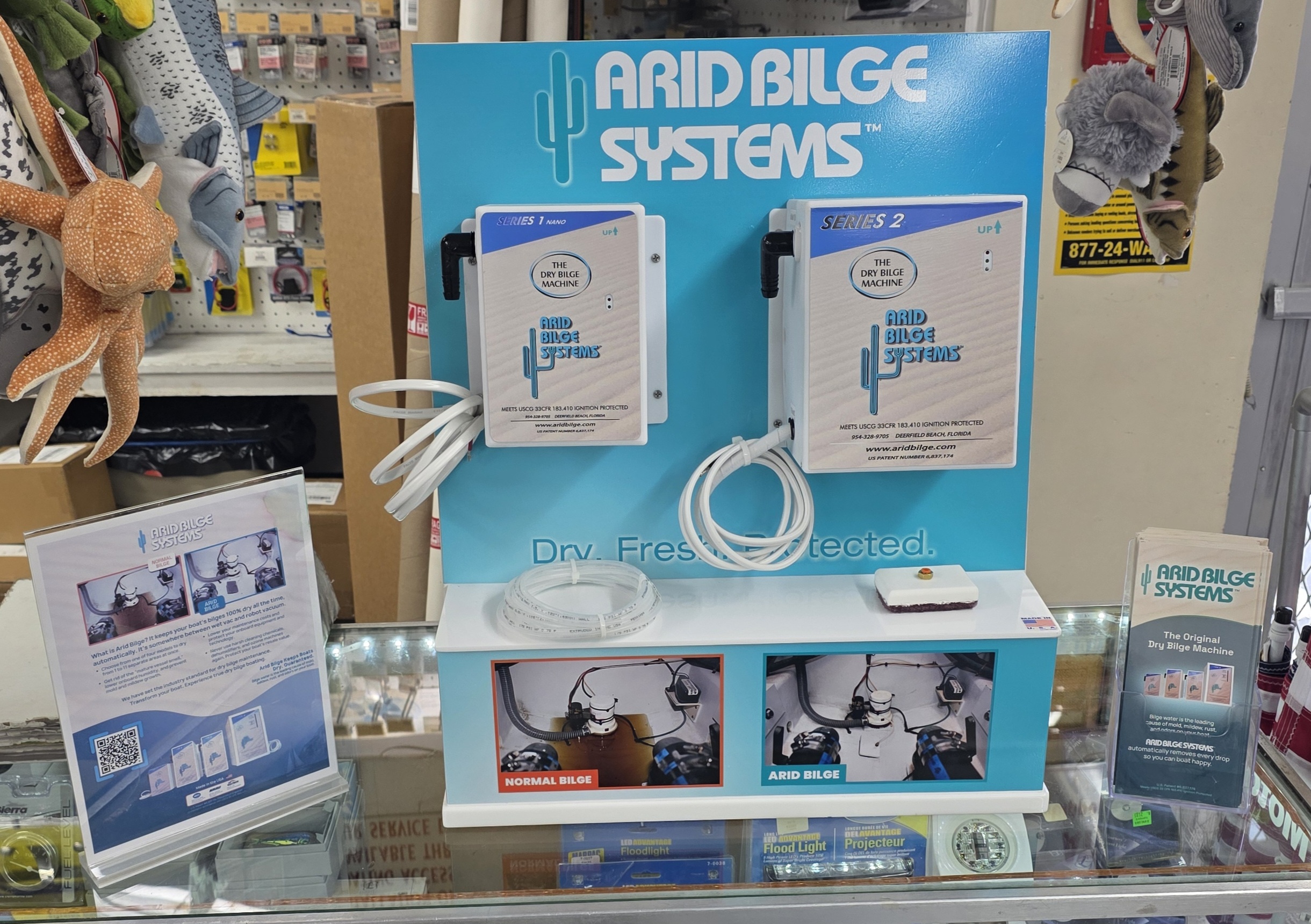
Arid Bilge Systems counter display inside Tuppen’s Marine
The Arid counter display at Tuppen’s Marine. This photograph shows an earlier display edition; contact the store to confirm the current display and available models.

Make a Visit to Tuppen’s Marine Useful

Before visiting, take photographs of the places where water remains after ordinary pumping. Include the nearby structure and access opening so the conversation can cover placement and service, not just the size of the main unit.

Ask which pickup suits each space, where tubing would run and how the owner would reach the pickup for cleaning. Visit Tuppen’s Marine’s Arid Bilge collection to confirm the current equipment on display and the installation support available. The video does not establish today’s stock or every included component.

Our bilge pickup guide explains why compartment shape and model compatibility matter. Bring that information together with your wet-zone notes when discussing a system.

Keep the Job of Each Pump Clear

Arid removes residual water from connected pickup locations. Conventional bilge pumps still handle the job for which the boat is equipped. Neither a showroom demonstration nor a dry patch establishes that a leak has been repaired or that every compartment is covered.

For a useful installation discussion, identify the water source, the collection point and the planned discharge route. Those details are more informative than choosing from boat length alone.

Related Builder Perspectives

These separate interviews show how boat builders discuss dry bilges in their own vessels:

This article is an edited overview of the Tuppen’s Marine visit, not a verbatim transcript. Watch the full video.

22 10, 2025
  • Arid Bilge Systems Interview with Scout Boats

Scout Boats and Arid: Josh Slayton on Dry Bilges

By |2026-10-13T16:59:44+00:00October 22, 2025|Articles, Blog, Boat Builders, Boat Stories|

The deck is clean, the bilge has been attended to, and a shallow puddle remains. Josh Slayton of Scout Boats describes that small unfinished part of the job in our interview: a conventional bilge pump can leave water at the bottom after cleaning.

Arid supplies Scout Boats. Slayton’s account, published in October 2025, makes the relationship tangible. He talks about crews responsible for cleaning below-deck areas on boats used as yacht tenders, and about an Arid installation serving two wet areas. Those details explain a use for residual-water removal without making every Scout installation identical.

Fit and finish includes the spaces you open

Scout’s own history traces the company’s beginnings through Steve Potts and his family. In the interview, Slayton connects that background with the builder’s attention to fit and finish. His example moves the conversation from how a boat looks at delivery to the work involved in keeping its compartments presentable.

That distinction matters to an owner or crew. Cleaning deals with the surfaces; a pickup serves the residual liquid that reaches it. A drying system does not remove the need to inspect the space, investigate returning water or follow the boat’s cleaning instructions.

Understand the two-area example

Slayton describes wet bilge areas containing seacocks and sea strainers. In the conversation, the collection arrangement serves the lazarette and cabin area. The useful point is that separate spaces need to be considered separately when planning the pickups.

For your boat, ask the builder or installer to identify which low points are served, where the central unit sits, and how the pickups can be reached. Confirm the arrangement for the particular model and hull. The interview’s two-area description should not be treated as a current equipment list for the entire Scout range.

Watch the original conversation with Josh Slayton, or see the short washdown explanation.

Finish the job with a clear routine

Arid removes residual fluid from connected pickup locations while the boat’s conventional bilge pumps remain operational. Our guide to how Arid works explains that division of work. Keep the installed system’s maintenance instructions with the rest of the boat’s equipment information so the person cleaning or checking the bilge knows what to inspect.

The Midnight Express interview offers another builder’s view of choosing pickup locations. Albemarle’s Keith Privott discusses finished bilges and owner care. Together, these conversations give an owner useful questions about the spaces below deck and the attention they will need over time.

Transcript: Onboard With Scout Boats

Alfred:
Josh Slayton is going to go ahead and tell us a little about his personal experience, a little bit of the company history, how they’ve been in business for so long—and you get, obviously, the high quality and keen detail on all these boats. They are sharp, they are beautiful, and they last for a long time.

We’re an American-made system, keeping that boating experience nice, fresh, and clean. Josh?

Josh:
Yeah, thanks Alfred. Appreciate the opportunity.

Scout is a family-run business. It was founded in 1989 by Steve Potts, and from then until now, it is still owned and operated by the Potts family. Whether you’re talking about Steve Potts, his son, his two daughters, his son-in-law, his other son-in-law—they’re all part of the family-run company.

Originally founded with high fit and finish, high performance, and high styling. And with the fit and finish, we really appreciate the opportunity to have partnered with Arid Bilge to help enhance that feature of the Scout boats—the fit and finish.

Alfred:
It’s not easy producing a boat, and with the Arid Bilge System, we go ahead and keep that boating experience fresh and clean, just like it came out from the box.

That’s what the Arid Bilge System does. It gets rid of your odor, it gets rid of your mold, it gets rid of your corrosion—the rust, potentially, as well. All that stuff gets sucked out at the source, as opposed to just sitting down there.

We suck it out. A bilge pump doesn’t have to run anymore—only for the emergency. That’s what the Arid Bilge System does, and that’s what the Arid Bilge System experience is. We just vacuum it up and throw it overboard.

Josh:
Right now, our largest boat in the fleet—soon to be 67′ in the fleet—both of those are wet bilges because they have seacocks and sea strainers in them.

And in both of those sections, we utilize the two-ported Arid Bilge System.

Alfred:
So the Arid Bilge System sits in the lazarette of that boat right over there, and it goes and vacuums the fluid from that zone and the cabin zone—is that correct?

Josh:
Yeah, both zones get vacuumed together into the collection box, and then discharged overboard once the collection box is full.

Alfred:
So the Arid Bilge System sits on the aft of your boat. You’ve got some expensive equipment down there. You’ve got your generator, you’ve got your gyro, and just everything in the local environment.

Josh:
Yeah, your ice machines.

Alfred:
So you like to go and see the boat having a nice, dry, clean experience—because as opposed to that water sitting down there, it’s just causing a little bit of mold.

Josh:
Oh, it’s fantastic. And particularly on our quality of boats, we get a lot of boats as tenders to yachts. The crew are responsible for cleaning the top deck, but are actually responsible for also washing and cleaning the bilge areas.

So when they do wash and clean the bilge areas, the bilge pump itself leaves a little bit of water at the bottom that it can’t suck out—but the Arid Bilge is utilized perfectly in that situation to completely dry it out.

Alfred:
Yeah. Thank you so much for your testimonial. Appreciate having business with you.

Josh:
Yeah. Thanks, Alfred.

Alfred:
Thank you.


See the water-routing animation

Illustrative Arid water-routing animation. Actual equipment placement and pickup locations vary by vessel and installation.

This silent animation shows pickups in separate low areas connected by tubing to a central Arid unit, with collected water moving through a discharge line.

Why builders choose Arid: explore the benefits for builders and owners, and read our boat-building story.

6 03, 2024
  • boat bilge pumps, concept image.

A Guide To Boat Bilge Pumps

By |2026-11-07T22:45:03+00:00March 6, 2024|Blog|

What are boat bilge pumps?

Boat bilge pumps remove water that collects in a vessel’s lower spaces. If a bilge pump leaves water behind, the puddle may sit below its intake or automatic shutoff level, drain back from a hose, or collect in a separate compartment. This guide compares common pump types and explains where a supplemental dry-bilge system can help.

Arid complements conventional bilge pumping; it does not replace it. Keep the boat’s specified pumps, alarms and other safety equipment operational. Neither a dry-bilge system nor an ordinary bilge pump should be assumed capable of controlling flooding from hull damage. Follow the boatbuilder’s and equipment manufacturers’ instructions, and investigate unexpected water ingress promptly.

How do common bilge pumps work?

Compare the job before choosing the equipment

  • Conventional bilge pump: removes collected water according to the installed pump’s capacity and controls.
  • Remote-intake pump: draws water through an intake positioned away from the pump; capabilities depend on the model.
  • Supplemental dry-bilge system: removes residual water from designated pickup locations while the boat’s conventional bilge pumps remain in service.

For cleanup and contamination checks, read our guide to treating bilge water.

Centrifugal pumps

A rotating impeller moves water into the discharge hose. Many compact electric bilge pumps use this design. Pump placement, intake geometry and the automatic control’s stop point affect how much water remains. Water in a discharge hose can also drain back after the pump stops, depending on the installation.

Flexible-impeller pumps

Flexible blades change shape as the impeller rotates inside its housing, moving fluid from the inlet toward the outlet. Material compatibility and permitted dry-running time depend on the particular pump. Do not assume a pump tolerates oil, fuel, cleaners or running without water unless its instructions explicitly say so.

Diaphragm pumps

A moving diaphragm and valves draw water through an intake and discharge it. Some designs allow a remote intake at a low point. Self-priming capability, debris handling, dry-running limits and output vary by model; check the specifications and keep any required strainers accessible for cleaning.

Why is my bilge always wet after the pump stops?

A shallow puddle may sit below the pump intake or the automatic switch’s shutoff level. Separate compartments may hold water that cannot reach the pump. Hose drain-back and the boat’s trim can also affect the remaining water.

There is no single residual depth that applies to every bilge pump. Some low-profile pumps and remote pickups remove substantially shallower water than others. Compare the actual model’s specifications and your boat’s installation rather than assuming all pumps leave an inch or more behind.

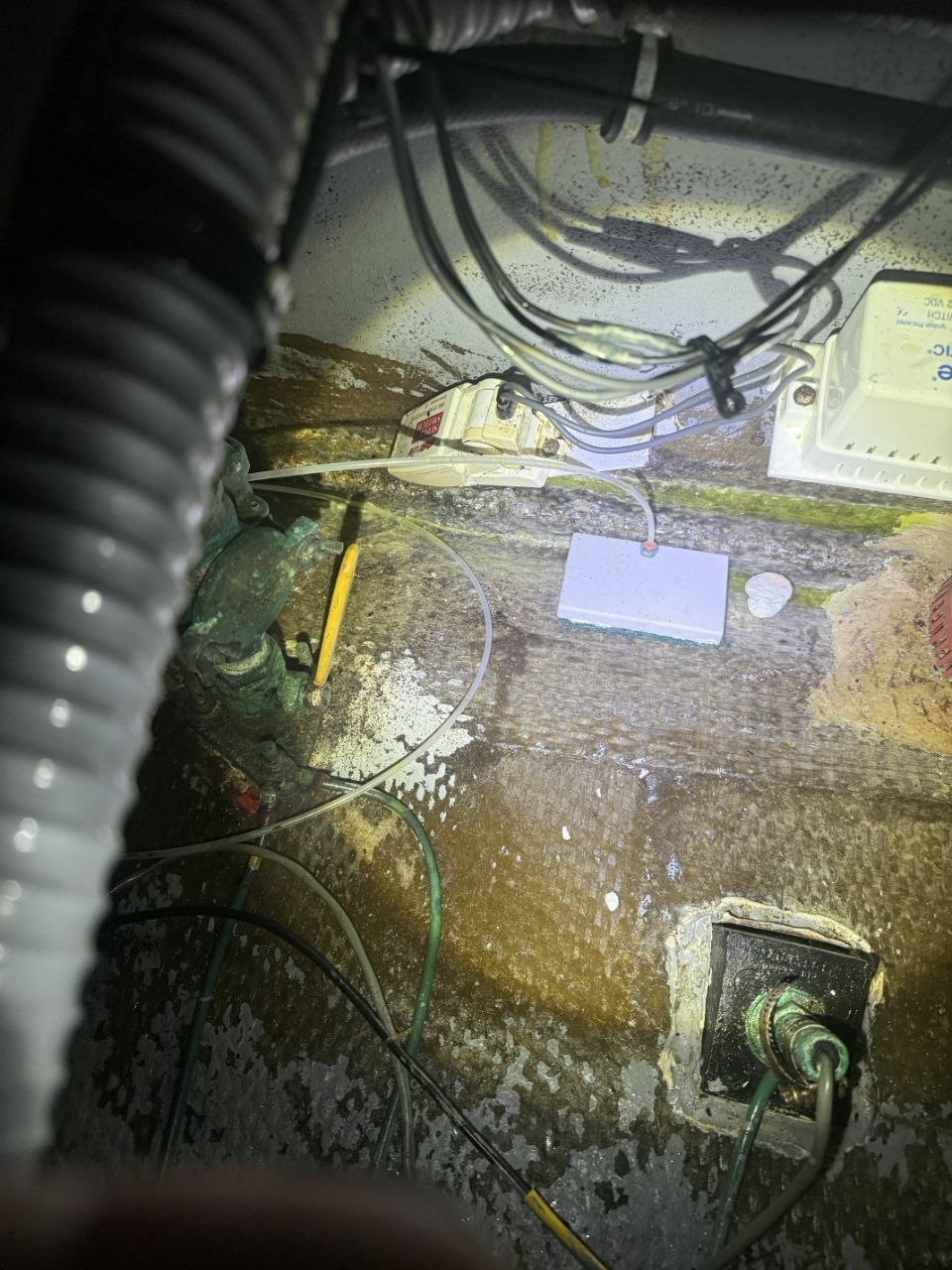
Wet, stained bilge beneath hoses and wiring, with a rectangular pickup pad and small tubing visible.
Wet bilge before-shot. This supplied before-shot shows a wet, stained bilge beneath hoses and wiring, with a pickup pad and tubing already visible. No control unit is shown, so the system model cannot be identified; the view shows the confined low space the tubing needs to reach. View this installation in the collection.

Should you add a check valve?

Do not add one as a universal fix. A valve changes resistance and can affect priming or trap debris. Some manufacturers permit specific valves in particular configurations; others restrict their use. Follow the exact pump instructions. A check valve is not a substitute for a correctly designed anti-siphon arrangement.

Choosing a dry-bilge system for your boat

Start with a map of the boat’s wet zones. Compare the pickup locations a system can serve, its control method, permitted tubing routes, power requirements and access for service. Check the exact model’s instructions rather than assuming one specification applies to every installation.

Plan the installation around the wet areas

If your plan calls for two or three independently controlled wet zones, review the Series 2 configuration and installation guidance. For a different layout, compare the full Arid system range. Confirm the pickup and tubing requirements before choosing a model.

Choose the appropriate Arid Series and configuration using Arid’s model manuals, then bring your wet-zone map to an installer. Our installation preparation guide explains what to gather. Keep the boat’s specified bilge pumps and alarms operational.

How a dry-bilge system addresses residual water

Arid’s automatic dry-bilge system uses small pickups at connected low points and tubing leading to a central unit. Vacuum draws fluid into a collection chamber; air pressure then moves that fluid through the discharge line. The compressor moves air, while the chamber handles the collected fluid.

The number of zones, tubing limits and installation requirements vary by Arid model. Use the appropriate owner manual and installation resources when planning a system. Automatic operation does not eliminate inspection or maintenance.

Removing residual water reduces one source of below-deck moisture and can make new water easier to notice. It does not repair a leak, clean contaminated surfaces or solve every source of boat odor, mildew or corrosion. Our guide to standing bilge water, odor and moisture explains what else to inspect.

Fluid removal alone does not separate oil or make contaminated discharge clean. Review the appropriate Arid add-on devices and their maintenance requirements, or arrange suitable collection and treatment.

Watch the existing Arid system demonstration:

What to check before choosing or changing a system

  • Identify where water enters and which compartments collect it.
  • Check the pump’s intended use, installed output, controls and maintenance requirements with a qualified marine technician.
  • Keep conventional pumps and alarms operational. Address leaks instead of using automatic drying to conceal them.
  • Choose residual-water pickup locations and an Arid model suited to the boat.

Explore Arid dry-bilge systems or find a dealer to discuss the boat’s wet zones and installation.

Manufacturer references

For examples of why model-specific guidance matters, see the Rule Standard Bilge Pump manual, Rule LoPro check-valve guidance, and Whale bilge-pump specifications. These references are not endorsements of Arid by those manufacturers.

Does every pontoon boat have the same bilge arrangement?

No. Check the exact model and the compartment involved. For example, Bennington’s 2015 24 SCWX3 I/O specification lists a manual/automatic bilge pump and an engine compartment. That does not establish the arrangement on another pontoon or make a dry-bilge system suitable for every pontoon tube. Ask the builder to identify the water source and intended drainage before planning changes. Bennington 24 SCWX3 I/O specifications.

28 02, 2024
  • treating bilge water, concept image.

The Do’s and Don’ts of Treating Bilge Water

By |2026-11-07T21:25:56+00:00February 28, 2024|Blog|

What is bilge water?

Bilge water is water that collects in the low interior spaces of a boat. It can carry dirt, oil or other residue, so finding its source and checking for contamination come before choosing how to remove it.

Treating bilge water starts with two questions: where is it coming from, and what is mixed into it? Removing standing water helps, but a recurring leak or oily residue needs attention at its source.

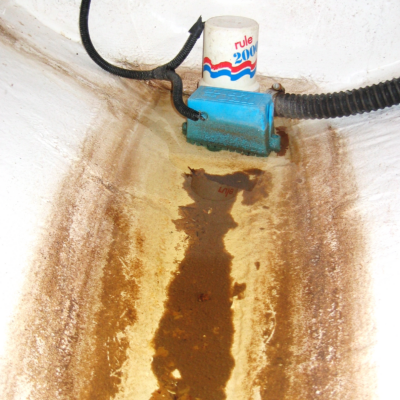
Standing water around a conventional bilge pump and blue float-switch housing.
Water remaining around a bilge pump is a reason to inspect the compartment and investigate its source. Appearance alone does not identify contaminants.

Do find out why the water keeps returning

Check accessible compartments after rain, washdowns and normal boat use. Note where water collects and whether it returns under the same conditions. A photograph and a short note can give your service technician a useful starting point.

A dry surface makes a fresh trail easier to spot. It does not tell you, by itself, whether the source is rainwater, condensate or a plumbing problem. Investigate changes instead of assuming they are normal for the boat.

Why should bilges be kept clean and free of trash?

Loose debris can obstruct a bilge pump intake or strainer and restrict water removal. Keep accessible bilge spaces clear so pumps and service points can be inspected. Cleaning and drying are separate tasks: an automatic dry-bilge system does not remove trash or replace pump maintenance.

BoatUS explains why even new boats can contain pump-clogging construction debris.

Do clean the bilge and keep equipment accessible

Remove loose debris and clean accessible surfaces using products suitable for the boat’s materials and equipment. Follow the product instructions and arrange appropriate disposal of the collected liquid. Keep strainers, switches, pickups and service points accessible for inspection.

Routine cleaning and residual-water removal do different jobs. Cleaning removes accumulated residue; a dry-bilge system helps remove the small pools that return between visits. Neither repairs a leak or replaces scheduled maintenance.

Don’t use detergent to hide oil

If water contains oil or fuel, treat it as contaminated water. Do not add soap to disperse a sheen or pump the mixture overboard. Ask your marina about collection and disposal, and have the leak investigated. The BoatUS Foundation’s bilge-cleaning guidance explains why some cleaners merely suspend oil in the water.

Separation equipment also needs correct installation, compatible media and regular service. Clear-looking discharge alone does not establish that water is suitable for release. Follow the equipment instructions and the requirements that apply where the boat operates.

Don’t replace your conventional bilge pumps with a drying system

Conventional bilge pumps handle water removal at a different scale. Keep the boat’s pumping, switching and alarm arrangements in working order. Arid addresses residual water in designated pickup locations; it is not an emergency flooding pump.

Choose the drying arrangement around the boat’s actual wet zones and access. Water in an isolated compartment will not reach a pickup elsewhere simply because both are below the cabin sole.

Watch a Series 4 installation

This public installation video shows how an Arid system fits into a boat. Use it to understand the layout and the questions to discuss with your installer. Refer to the current manual for your model before making installation decisions.

Make the next inspection easier

A useful routine is straightforward: clean accessible areas, address contamination, investigate returning water, and maintain the equipment that removes it. For the drying side of that routine, see how Arid works and the resources in Owners Central.

What if my boat bilge smells like fuel?

Treat a fuel smell as a possible leak, not ordinary mustiness. If you smell gasoline before starting, do not start the engine or turn on electrical devices. Get everyone off the boat and obtain trained help to find and fix the problem, following your boat’s emergency instructions. Bilge drying does not repair a fuel leak or make contaminated water safe to discharge. Bayliner fuel-vapor safety guidance, page 33.

14 02, 2024

How Does the Arid Bilge System Work?

By |2026-11-06T23:57:07+00:00February 14, 2024|Blog|

A dry bilge system removes the small pools of water that can remain after a conventional bilge pump stops. Arid uses pickups at selected low points and a central vacuum unit to collect that residual water automatically.

Dry-bilge system vs. bilge pump: what is the difference?

A conventional bilge pump performs the water-removal duties specified for the boat. Arid collects residual liquid at connected low points, including shallow pools below a pump’s effective pickup level or in separate compartments. It complements conventional bilge pumps; it is not an emergency flooding pump.

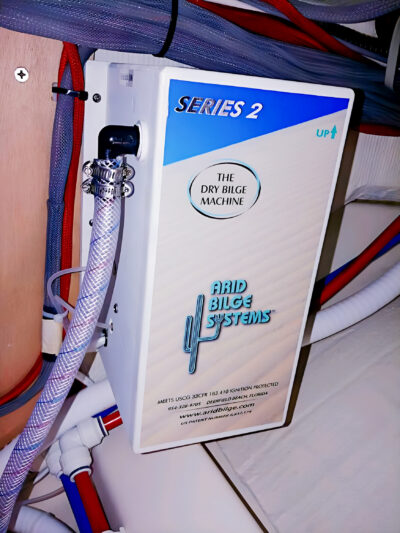
An installed Arid Series 2 cabinet with its connected reinforced hose.
An installed Arid Series 2 cabinet and hose connection. Pickups in separate low areas connect to the central system.

Why water can remain after pumping

A pump’s intake, switching arrangement and installation influence how much water remains. Some water may also return from the discharge line when pumping stops. A second low point elsewhere in the boat may have no route to that pump at all.

That is why a drying plan starts with the compartments, rather than the boat’s length alone. Open the accessible spaces, find the wet areas and work out which ones need their own pickup.

How the dry bilge system moves water

Each pickup connects to the central unit through an intake tube. The system uses vacuum to draw residual fluid into a collection chamber, then moves the collected liquid through its discharge arrangement. The central unit serves the connected pickup locations according to the model’s operating cycle.

Think of the route in three stages: collection at the low point, transport to the central unit, and discharge. Correct placement and a clear fluid path matter at each stage. The current model manual explains the installation and service requirements.

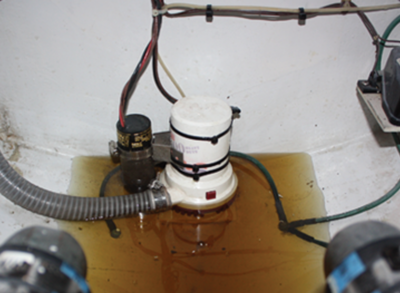
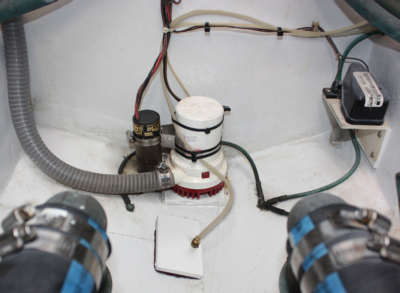
Archived before photograph: Bilge-pump compartment.

Before

Archived after photograph: Bilge-pump compartment.

After

Company archive photographs of the same bilge-pump compartment. In the after view, the rectangular Arid pickup sits beside the conventional pump. Framing and lighting differ between the photographs.

Watch the system overview

This short overview introduces the central vacuum and air-pressure approach, the role of individual pickups, and why residual water deserves attention between boat visits.

Prefer the vertical format? Watch the overview on YouTube Shorts.

See the water’s route in the animation

The animated overview follows water from low points around a boat back to the central unit. It is a useful way to picture the arrangement before discussing pickup locations with an installer.

What a drier bilge helps you see

Removing standing water reduces one source of persistent moisture below deck. It can also make a new wet trail easier to distinguish from an old puddle. That gives you a clearer starting point when investigating a leak.

Drying does not repair the source of incoming water, clean accumulated residue or separate oil from contaminated liquid. Continue routine cleaning, inspection and equipment maintenance, and address oil or fuel contamination separately.

Plan around your boat

Map the wet zones and note access, mounting space and routing constraints. Then use Owners Central for the appropriate manual, or review our guide to boat bilge pumps for pump types and residual-water options.

For a closer look, follow the pickup-to-discharge visual guide.