
What is a dry bilge system?
A dry bilge system removes shallow residual water that a conventional bilge pump can leave behind. Arid draws water from connected low-point pickups into a collection chamber, then uses air pressure to discharge it. It works alongside your boat’s existing bilge pumps and does not replace emergency pumping or leak repairs.
Bilge pumps vs. Arid
A conventional bilge pump moves water through an intake and discharge hose. Automatic models use a switch, sensor or control cycle. Shallow water can remain below the intake or shut-off level, or in a separate low spot, even while the pump works normally.

Arid Bilge Systems
Slimer represents the water and residue that can keep returning to the bilge. Remove the remaining water, clean accumulated residue and investigate its source.
When pumping needs attention
Debris, obstructed float movement, low voltage and a restricted discharge can impair pumping. These are service problems to investigate using the pump’s instructions. Leftover water alone does not establish that a pump has failed.
Arid uses vacuum and connected pickups to collect shallow residual water. Keep conventional bilge pumps and alarms operational: Arid does not replace them, repair leaks or separate oil from water.
How bilge pumps work and why water remains · Bilge-water cleaning and source checks · Inside a “dry pump”: mechanisms and maintenance
Manufacturer references for pump operation and care
See Rule’s standard bilge-pump manual and float-switch instructions. Use the manual for the equipment installed on your boat.
For model comparisons, pickup planning and common questions, read System Details & FAQs.
Dry bilge system vs. bilge pump: which job does each do?
| Task | Conventional bilge pump | Arid dry bilge system |
|---|---|---|
| Moving water | Moves bilge water according to the pump, switch and installation. | Collects shallow residual water at connected pickup locations. |
| Separate low points | Water must reach the pump’s intake; isolated pockets may remain. | Tubing connects planned pickup locations to a central unit. |
| Choosing equipment | Match pump capacity, switch operation and discharge routing to the boat. | Count wet areas and check intake zones, tubing, power and service access against the model’s manual. |
| What stays essential | Keep pumps, switches and alarms operational and inspect them routinely. | Keep conventional pumps in service. Drying does not repair leaks or separate oil from water. |
See why a bilge pump can leave water behind and use the installation manual for your model to plan the pickup and discharge route.
What does an Arid dry bilge system cost?
- Series 1: one intake, $1,095.
- Series 2: two or three intakes, $1,995–$2,995.
- Series 4: four to eight intakes, $3,795–$7,895.
- Series 9 HD 120VAC: nine to eleven intakes, $10,695–$12,695.
USD product prices checked November 7, 2026. These are product prices, not an installed-system quote. Follow each product link for current configurations, pricing and checkout totals.
Start with the boat’s wet areas rather than its length alone. Ask Arid to review your pickup plan or call 954-478-7066.
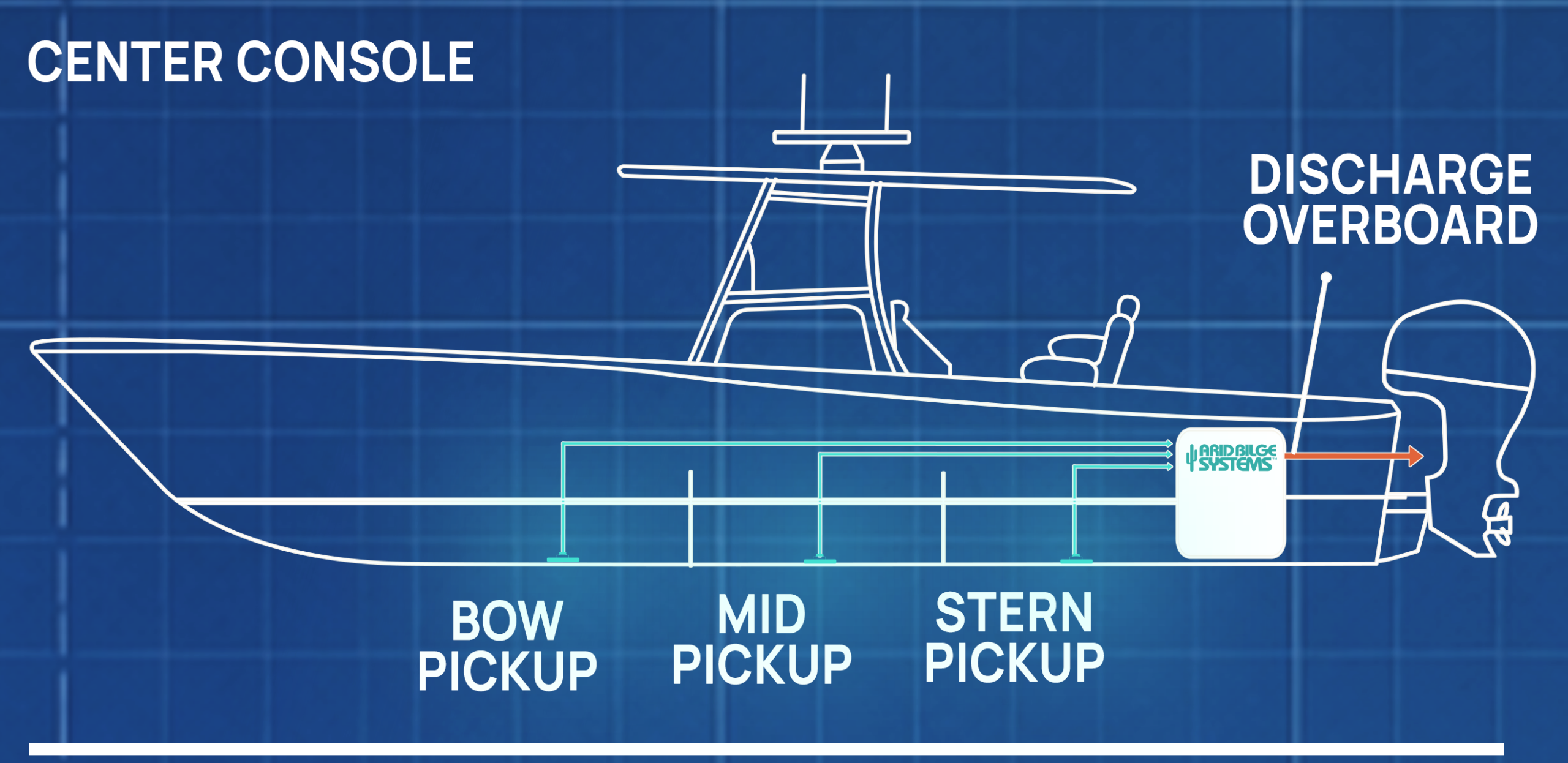
Illustrated center-console layout with pickups at separate low points. Actual pickup positions, tubing and discharge arrangements depend on the boat and installed model. Arid does not separate oil from bilge fluid.
Why does water remain below a bilge pump?
The amount left behind depends on the pump, its intake position, switch settings and installation. Water may also collect in separate compartments that do not drain to the pump. Removing that residual water is a different task from handling a large inflow.
Read why a bilge pump can leave residual water behind.
How Arid removes residual bilge water
The system creates a vacuum in a collection chamber to draw fluid through the pickups. Air pressure then moves the collected fluid through the discharge line. The compressor moves air; the collection chamber handles the bilge fluid. Multiple connected zones let one central system serve separate wet areas.
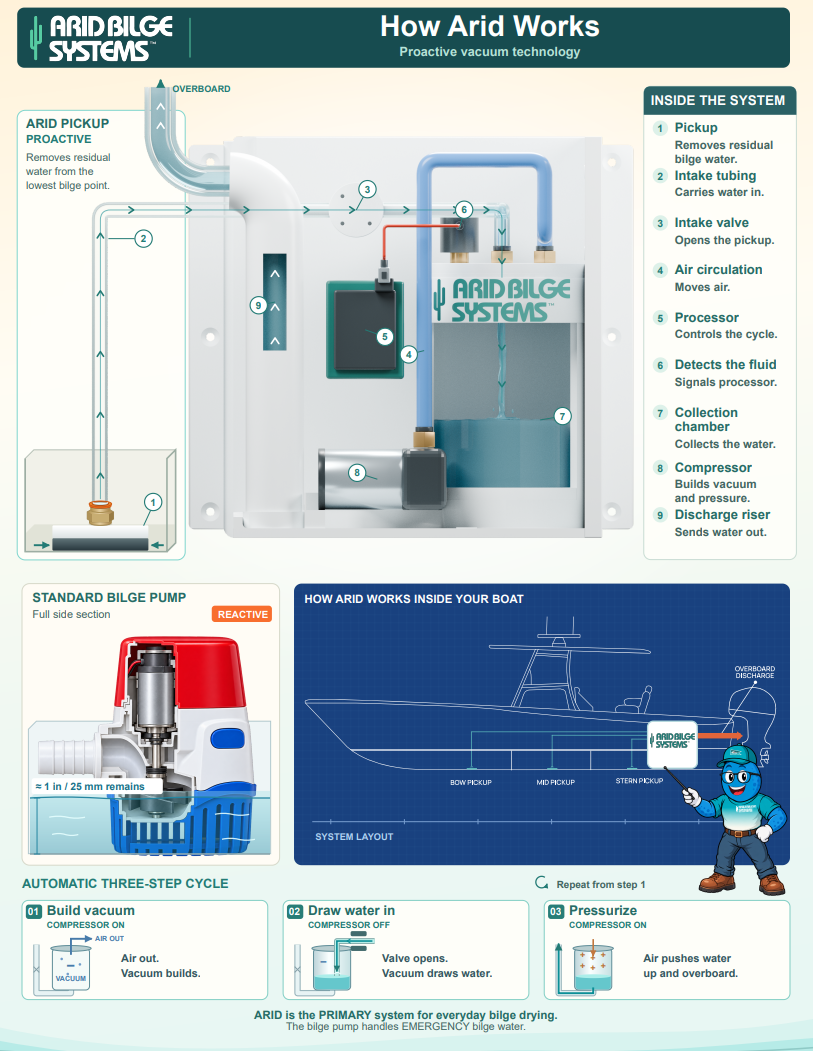
Conceptual illustration of residual water collection and conventional bilge pumping. Remaining water depth varies with the pump, controls and installation; the illustrated depth is not a universal specification.
Watch the route from pickup to discharge
This animated overview shows an example boat layout, pickups and discharge route. It is not a model-specific installation drawing; use the manual for your system.
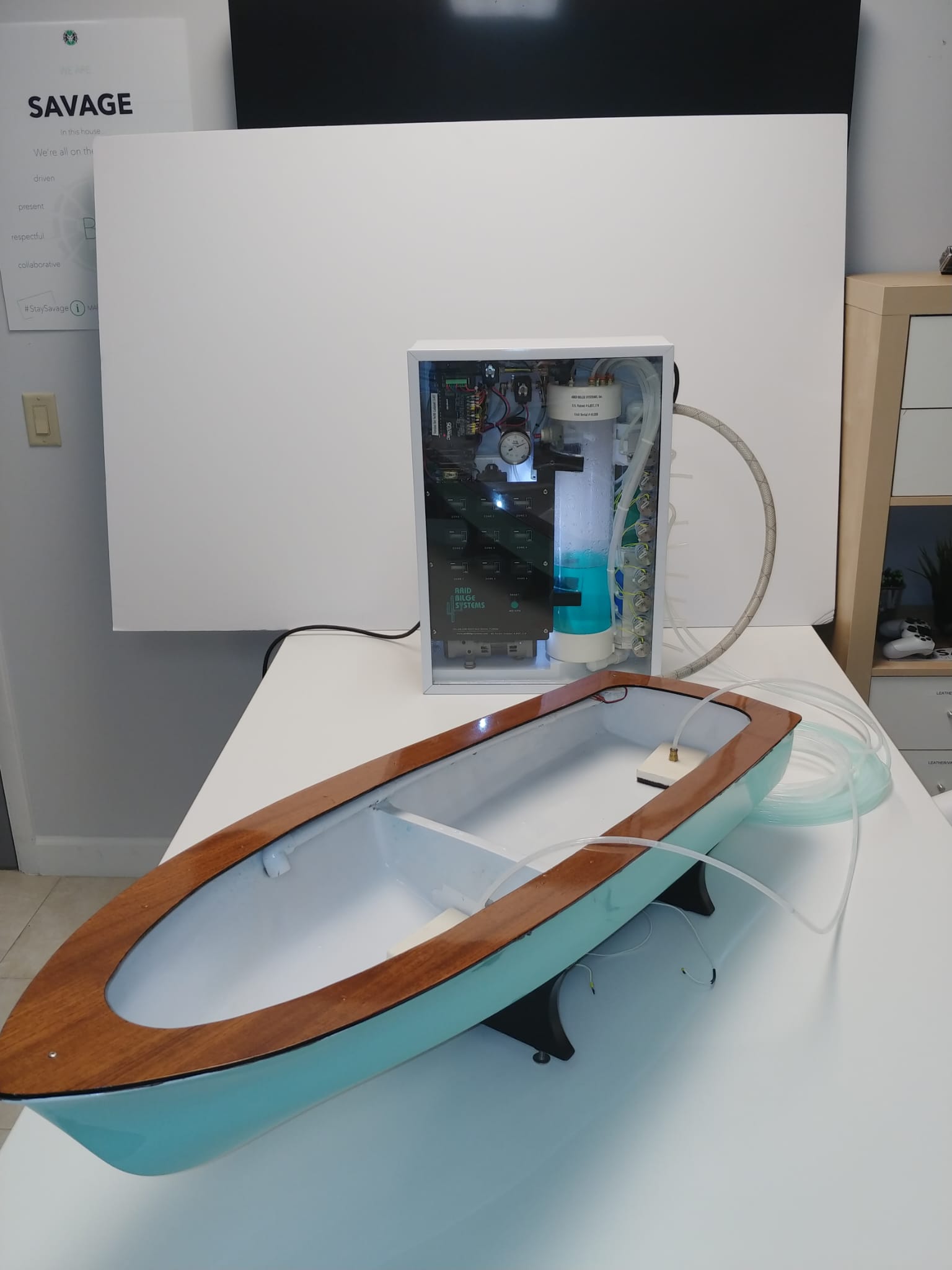
Inside an archive Series 9 demonstration display: the clear cabinet shows the collection chamber, gauge and hour meters, with tubing connected to the model boat's pickup.
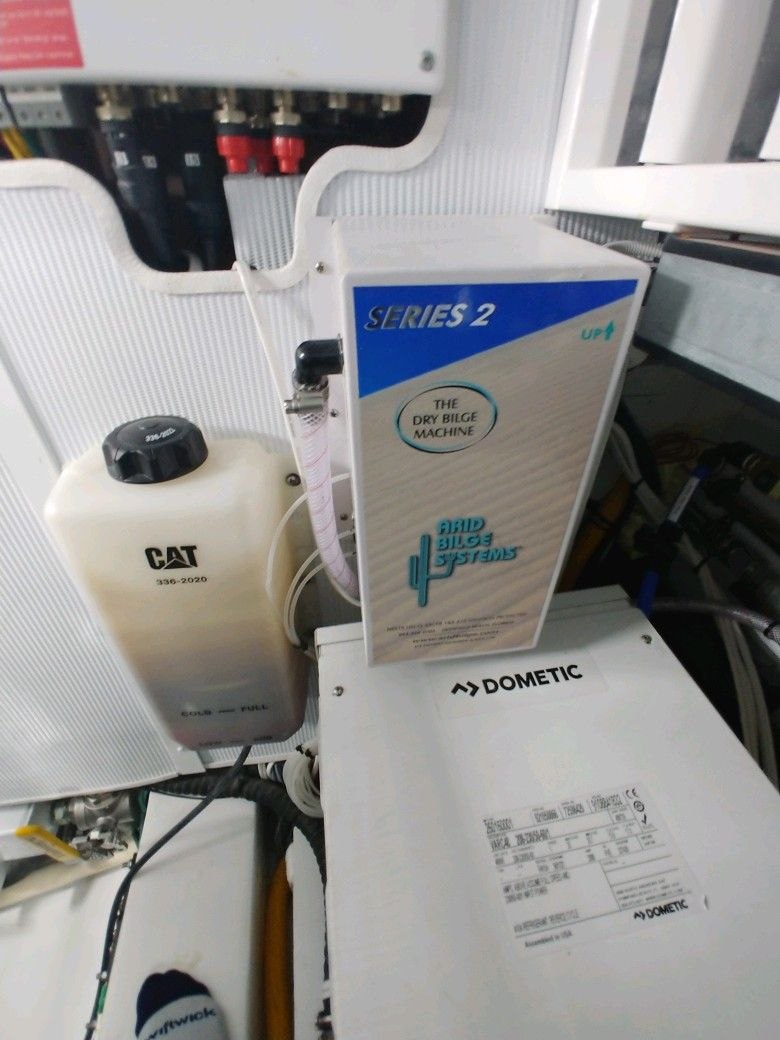
Planning two or three separate wet zones? Review Series 2 zone selection and installation guidance. For other layouts, compare the Arid systems by intake count and check the appropriate manual before choosing.
For examples of mounting positions and tubing routes, see real installations.
What a drier bilge can—and cannot—do
Removing standing water helps reduce a source of below-deck moisture and makes returning water easier to notice. Odor, mold, mildew and corrosion can have other causes too: inspect leaks, ventilation, sanitation systems and existing contamination rather than assuming one product resolves every problem.
Keep conventional bilge pumps operational. Arid supplements them; it does not replace emergency pumping equipment, leak repairs or routine inspection. Moving contaminated fluid does not clean it or separate oil. Use appropriate collection or treatment and follow the system’s installation and maintenance instructions.
For practical cleaning and source checks, read our bilge-water care guide: what to do and what to avoid, with a close-up video of water around a conventional bilge pump.
Start with our boat odor and corrosion checks. If the smell returns after cleaning, use our recurring boat-odor guide.
Explore Arid dry-bilge systems, read owner and captain experiences, or use installation videos and owner manuals to plan the next step.
Step-by-Step Arid Bilge Series 4 Installation – Tips & Best Practices
How to Easily Clean Your Arid Bilge System Pickups
Arid Bilge Systems in Action! Experience the clean sensation of being Dry. Fresh. Protected.


“I’m really happy that I put the system in. It eliminates that little bit of water that just lingers there. The boat is healthier—and so am I.”
James Moores,
Moores Marine Yacht Center
Remove residual bilge water. Keep owner support close.
Arid removes residual water from connected pickup locations. Keep conventional bilge pumps operational and use the installation and maintenance instructions for your model.
The current 12-month limited warranty covers qualifying factory defects, including covered parts and factory labor. Registration is recommended, but it is not a condition of warranty coverage.
Register your Arid system and read the current limited warranty. Use Owners’ Central for manuals and troubleshooting, or request service with your model and serial number.