What is bilge water?
Bilge water is water that collects in the low interior spaces of a boat. It can carry dirt, oil or other residue, so finding its source and checking for contamination come before choosing how to remove it.
Treating bilge water starts with two questions: where is it coming from, and what is mixed into it? Removing standing water helps, but a recurring leak or oily residue needs attention at its source.
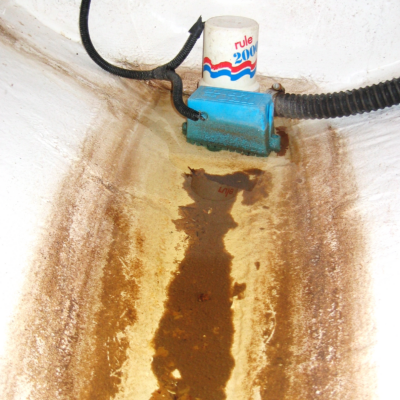
Do find out why the water keeps returning
Check accessible compartments after rain, washdowns and normal boat use. Note where water collects and whether it returns under the same conditions. A photograph and a short note can give your service technician a useful starting point.
A dry surface makes a fresh trail easier to spot. It does not tell you, by itself, whether the source is rainwater, condensate or a plumbing problem. Investigate changes instead of assuming they are normal for the boat.
Why should bilges be kept clean and free of trash?
Loose debris can obstruct a bilge pump intake or strainer and restrict water removal. Keep accessible bilge spaces clear so pumps and service points can be inspected. Cleaning and drying are separate tasks: an automatic dry-bilge system does not remove trash or replace pump maintenance.
BoatUS explains why even new boats can contain pump-clogging construction debris.
Do clean the bilge and keep equipment accessible
Remove loose debris and clean accessible surfaces using products suitable for the boat’s materials and equipment. Follow the product instructions and arrange appropriate disposal of the collected liquid. Keep strainers, switches, pickups and service points accessible for inspection.
Routine cleaning and residual-water removal do different jobs. Cleaning removes accumulated residue; a dry-bilge system helps remove the small pools that return between visits. Neither repairs a leak or replaces scheduled maintenance.
Do investigate bilge rust and persistent odors
If rust or a musty smell persists after cleaning, inspect the areas that stay damp. Our guide to standing water, odor and moisture explains the checks for bilge odor, cabin dampness, mold and mildew.
Corrosion also needs the right diagnosis. Removing residual water can reduce persistent wetness, but it does not correct bonding or electrical faults. See our metal-hull corrosion guidance for those distinctions.
Don’t use detergent to hide oil
If water contains oil or fuel, treat it as contaminated water. Do not add soap to disperse a sheen or pump the mixture overboard. Ask your marina about collection and disposal, and have the leak investigated. The BoatUS Foundation’s bilge-cleaning guidance explains why some cleaners merely suspend oil in the water.
Separation equipment also needs correct installation, compatible media and regular service. Clear-looking discharge alone does not establish that water is suitable for release. Follow the equipment instructions and the requirements that apply where the boat operates.
Don’t replace your conventional bilge pumps with a drying system
Conventional bilge pumps handle water removal at a different scale. Keep the boat’s pumping, switching and alarm arrangements in working order. Arid addresses residual water in designated pickup locations; it is not an emergency flooding pump.
Choose the drying arrangement around the boat’s actual wet zones and access. Water in an isolated compartment will not reach a pickup elsewhere simply because both are below the cabin sole.
Watch a Series 4 installation
This public installation video shows how an Arid system fits into a boat. Use it to understand the layout and the questions to discuss with your installer. Refer to the current manual for your model before making installation decisions.
Make the next inspection easier
A useful routine is straightforward: clean accessible areas, address contamination, investigate returning water, and maintain the equipment that removes it. For the drying side of that routine, see how Arid works and the resources in Owners Central.