
oil in bilge

4 06, 2025
  • Captain Chris Zasky

Customer Success Story: Captain Chris Zasky and the Arid Bilge on 77’ Custom Sportfish

By |2026-01-18T22:22:34+00:00June 4, 2025|Articles|

Captain Chris Zasky of the 77’ custom sportfishing vessel Divine Intervention shares his firsthand experience with the Arid Bilge System in this exclusive testimonial. Built by Sculley in Wanchese, North Carolina, Divine Intervention is a robust, ocean-going powerhouse that underwent extensive retrofitting to elevate performance, comfort, and cleanliness onboard. Among the critical additions? The Arid Bilge System and its eco-friendly oil alarm companion.

In this testimonial, Captain Chris walks us through the technical and operational value of the system, focusing on moisture management, odor elimination, and leak detection. With eight pickups installed across key compartments, the system quietly and efficiently maintains a bone-dry bilge, protecting sensitive components like gyros, generators, and chillers.

See below for a transcript of the entire testimonial.


Good afternoon, this is Captain Chris Zasky aboard the 77-foot sport fishing vessel Divine Intervention. This is a 2008 Sculley Wanchese-built boat out of North Carolina. I’m here to talk to you today about the Arid Bilge System and why we selected it particularly for this boat.

This is a 77-foot custom sport fishing boat, 80 foot overall. It’s a big boat, so it requires a lot of air conditioning. We have two big chiller systems onboard, which is necessary to get the temperatures we’re looking for and keep the boss comfortable on the inside.

The downside is that there are chiller pipes that run throughout the boat that sweat. Even with two-inch-thick insulation around those pipes, they still create a lot of condensation. All that water and condensation drains down into the dark depths of the bilges. I was adamant when the boss bought this boat two years ago, that we find a system that would operate automatically to get the water out of the boat and keep water out of the boat.

It keeps the inside of the boat smelling nice. There are many areas in this boat that you can’t get to on a daily maintenance routine. There are plenty of other, more important things to be doing than climbing into the bilges every other day to disinfect and clean out water.

Another big reason we wanted the Arid Bilge System installed was to keep those bilges clean. It’s important for leak detection in the engine room. Again, this boat’s so big, it’s hard to access every bilge regularly. The smell in the boat when we got it was pretty horrific. Might’ve been mildew. We did a lot of mold remediation on this boat—spent tens of thousands of dollars cleaning and finishing the bilges with Awlgrip paint.

One of the big retrofits we did was we put gyros in the back end of this boat in the lazarette, which was a black hole when we bought the boat. We put about $400,000 into that lazarette between paint, sanding, fairing, fireboy, the two Mitsubishi gyros, and an AC system so we could not only manage the humidity but also maintain ambient temperature down there.

The Arid Bilge System was a perfect complement to what we were trying to achieve in that lazarette. Watertight hatches, keeping the moisture out. We spent quite a bit of time and money down in that lazarette. This system really completed that by keeping the bilges perfectly dry.

One of the other big components with this system was the Eco Oil Alarm System, which will allow me to focus on other things while I’m running the boat, especially offshore during tournaments. If I have an oil leak or some sort of contamination leak, whether it be hydraulic oil, which we’ve had. We blew out a hose on the bow thruster and I was notified within minutes that I had a leak by that Eco Oil Alarm System.

So if I have a diesel, oil, hydraulic leak, or any kind of contamination in any of the eight bilge sections where we have those pickups, I’m notified within minutes by an audio alarm at my helm. That’s invaluable to me. 

The other big plus is that nothing goes overboard. If we were to have a big diesel leak, the Eco Oil system picks it up, I’ll be notified and we can shut everything down and take care of the leak before it ever makes it into the ocean or intracoastal.

We’ve had this boat for two years. One of the reasons why I was adamant about having this Arid Dry Bilge System put in was, it’s a big boat first of all, it’s got a lot of dark, hidden crevices and bilges that you can’t really get to. The boat is cooled by two chiller systems. Throughout this whole 80-foot boat are chiller pipes that sweat. There’s a lot of condensation. It’s not exactly an efficient system to cool the boat, but for a yacht this size, in order to get the air conditioning, the BTU’s that you need, you’ve got to have the chiller system. The downfall of that is you have a lot of sweaty pipes that run through this boat. That’s a lot of extra condensation water down into the bilges in places you can’t really get to. My initial investigation into bilge drying systems led me here. I talked to the boys and laid out a pretty good plan of how and where we were going to install it. You know as well as I do that these boats can hide water on you and have wet spots you just can’t get to on a normal daily maintenance routine. We installed eight pickups in this boat automatically picked up and dried out by the system. 

One of the major problems that we had with this boat when we bought it, one of the big discoveries, was regarding the chiller pipes that run through the ceiling and sweat terribly, especially when the salon door was open. We found that these lights [in the ceiling above the salon] were filling with water. There was no drip pan, nothing to stop that water or pick that water up or even to get the water to shed off of this cathedral ceiling.

So we custom made a drip pan to catch the condensation from the chiller pipes and put one of the pickups in that pan up in the ceiling. When we first opened it up, it was black and wet in the ceiling. So once we custom built that pan and put the Arid Bilge System in there, it’s bone dry. You could open this up, it’s dry, beautiful, you can work with it, it keeps the smell down. There’s no other way we could have achieved what we were looking to do, to stop all that damage that was being done up here. That pickup in here was absolutely necessary and still works fantastic.

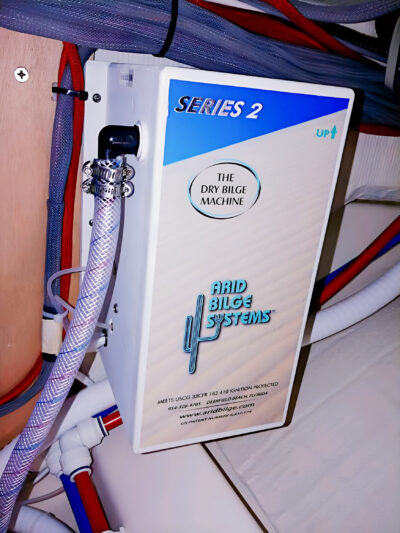
We are in the machine room, this is where kind of the brains of the Arid Bilge System is. It was a great location to put it, we have plenty of room down here. You can hear it just kicking on now. Here is your central vacuum system. All the seven pickups throughout the boat are picked up from here and then discharged into the Eco Friendly box.

This is basically a contamination and clean water separating box. Everything gets dumped into here and gets separated. The water gets separated out, goes into a sump box, and the clean water then gets put overboard. Any of the contaminants that you might pick up in any of the seven locations in the boat will get deposited into this Eco Friendly box. Once they get to a certain level, it’ll set off the sensor and shut the whole system down. Once that contamination makes contact with the sensor, the whole system will get shut down and you will get an audio alarm at the helm. At that point, obviously, you’re notified that you have a problem and you can go fix the problem before anything goes overboard. Not a single drop, which is really invaluable.

For the cost and efficiency of the system, if you didn’t have it and you got caught discharging diesel or hydraulic fluid or anything overboard, I don’t even want to begin to imagine what the fines would be like. Of course you don’t want to put that stuff in the water anyway.

The system is very efficient. You can hear it running right now. Looks like it’s picking up from the forward machine room right now. This room, when we bought the boat, was very dirty. Had a lot of mold. All these chill pipes you see on the ceiling were moldy. The stagnant air down here stunk to high heaven, but as you can see now, I mean you could almost make a crew’s quarters out of this area now. It’s very clean. It smells wonderful. It’s dry. It’s an amazing system.


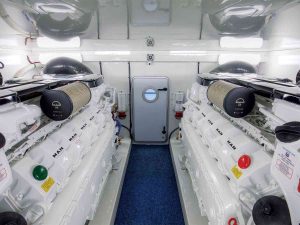
Engine room of a large boat

Keeping the engine room dry and tidy will help maintain all components


Captain Chris Zasky’s experience aboard Divine Intervention is a powerful case study for how the Arid Bilge System can transform even the most complex marine environments. Any vessel with sensitive onboard systems can benefit from precision moisture control and proactive leak detection. Not only the systems, but also all the surfaces including headliners and painted surfaces, benefit greatly from moisture protection. 

With its low power draw, automatic reliability, and optional eco-protective features, the Arid Bilge System is a smart safeguard below deck.

6 03, 2024
  • boat bilge pumps, concept image.

A Guide To Boat Bilge Pumps

By |2026-01-18T22:27:18+00:00March 6, 2024|Blog|

A Guide To Boat Bilge Pumps – What Are They And How They Work

The unsettling thing about bilge pumps is the fact that they are usually a boat’s only line of defense before sinking into the deep blue, yet most boaters don’t know much about them. Rarely do boaters even talk about boat bilge pumps, and even less of their time is spent going down below to maintain them.

Of course, it is important that you get to know more about your boat bilge pumps, as you don’t want to end up being the proverbial old sailor, frantically taking water out of the bottom of his boat with a bucket.

Let’s dive in and take a deeper look into bilge pumps, what they are, what they do, and how to pick the best one.

What Are Bilge Pumps?

The job of a bilge pump is to clear the unwanted water that gets into the bilge on your boat. This water can come in due to errant waves, drip through packing gland, a broken hose or clamp, leaking port holes or hatches, and much more. Essentially, bilge water is almost impossible to avoid. While the stock bilge pump that came with your boat may do the job well, though, you want to be sure that it acts as a serious line of defense in the case that your boat begins sinking out at sea, giving you enough time to call for help or make it back to the marina.

Most well-educated captains who plan to undertake long crossings over open water will upgrade their bilge pumps by adding a higher-volume one, as a backup.

How Do They Work?

There are three common types of electrical bilge pumps that you will find on the market, namely the centrifugal, the rubber lobe and the diaphragm.

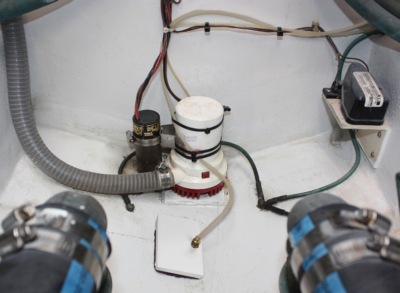
Centrifugal pumps work using a rotating, solid impeller, which like a turbine will push water. This type of pump will propel water up into the discharge hose and usually sits in the lowest, deepest position of the bilge. That water is pumped from the bottom up, but once air comes in contact with the impeller, cavitation usually stops the movement of water completely. Once this type of pump shuts down, all of the water that is still sitting in the discharge hose comes gushing backwards into the bilge. So the base water line left behind, when these pumps shut down, is usually around 1 ½”. The twin seals between the impeller and the motor, protect the pump’s electric motor sitting in the bilge, for a time, limiting the life of the pump. Many boaters have tried to place a check valve on the output side, near these pumps in order to prevent the back wash, only to find that this creates a condition called vapor lock, where the pump can’t prime itself, as air becomes trapped between the pump and the check valve. These are still the most popular of all bilge pumps as they are very quiet, use little power for the volume of water pumped, are relatively inexpensive and usually have a 3 to a 4 year life span in the average wet bilge. Also, if these pumps are accidentally left on, there is usually little damage potential within the first few hours.

Rubber lobe bilge pumps used to be the most popular and common of all bilge pumps, until Clinton Rule invented the Centrifugal bilge pump back in the early 60’s. These pumps have a rubber impeller that spins in a housing where there is a restriction between the intake and outflow, causing the rubber lobes to crush temporarily, attempting to compress the water and forcing it out into the discharge port. These pumps are lower volume and not particularly electrically efficient. They can pull some air with the water, but cannot be left to run dry under any circumstances. Here, the water lubricates the rubber impeller as it spins in the housing. So, without water, the impeller heats up and starts to stick to the housing. Additionally, if oil or fuel ends up being pulled through the impeller, the rubber will usually expand, also locking the pump. They will offer you a brown Nitrile replacement impeller that should not absorb the oil, and then you ask yourself, why didn’t they automatically install the Nitrile one at the factory. Most of the engines on boats today use a mechanically driven rubber lobe pump for their raw water engine cooling systems.

Diaphragm pumps have chambers, and work more like your heart, where they pulse to move the water through the two chambers and two one-way valves. So, this type of pump creates a suction that pulls out the unwanted bilge water.  Diaphragm pumps can be run dry for a time without any damage, and are self-priming. This means that they develop suction and prime themselves without being submerged in water. Unfortunately, they cannot move as much water when compared to centrifugal pumps, and won’t be able to tolerate bits of debris or trash, which can lodge in the pump valves. These pumps will usually have an intake strainer that will fill with small debris and will have to be serviced / cleaned regularly. These pumps are the noisiest of all the pumps and again, these pumps are not as electrically efficient as the centrifugal pumps, but when set up correctly, they can draw the bilge water levels down to ½” in the manual mode. In the auto mode, when they are connected to the average float switch, they will usually still leave over an inch of water behind.

In simple terms, all bilge pumps leave residual bilge water behind and this is what brings us to the Arid Bilge System

The dry bilge system > The Arid Bilge System

For those who are in the market for the best of the best, we recommend the Arid Bilge System. The Arid Bilge System works uniquely as an automated computerized vacuum system, vacuuming up water from the bow to the mid to the stern of your vessel, through small tubing, up to 75 feet away from the central unit. Because it’s an automated system, you never have to think about going down to turn it on manually.

The Arid Bilge System utilizes air sensors/vacuum switches to make sure that the system knows when it is suctioning water vs air. It can be left to run dry forever… with no chance of damage to the internal air compressor. In fact, it does not pump water and there is no contact between the bilge water and any electrical component anywhere in the system. This means that there is no seal to fail, so you can expect excellent longevity from your new Arid Bilge System. The Arid Bilge System vacuums the bilge water into a small collection chamber inside the central unit, and then uses air pressure to push the collected water out through a check valve.

As an added safety feature we offer the Eco Friendly Discharge Companion/oily water separator which captures and stores oil that’s common in small amounts in many bilges. And an additional alarm is available to audibly notify you as oil starts to accumulate in the separator. With this system added to your Arid Bilge System, you can confidentially say that this oil slick surrounding your boat came from someone else’s boat.

You can see how the Arid Bilge System works with the little visual representation below:

Getting the Best Bilge System

Having a solid dry bilge system on your boat can create a happier and safer boating experience for you and the family. Don’t rely on old stock bilge pumps to keep you safe. Get yourself one of the best dry bilge systems around at Arid Bilge Systems!

28 02, 2024
  • treating bilge water, concept image.

The Do’s and Don’ts of Treating Bilge Water

By |2026-01-18T22:27:57+00:00February 28, 2024|Blog|

The Do’s And Don’ts Of Treating Bilge Water

Most of us boaters have to deal with bilge water on a daily basis. There is no question that thinking about it is just as much of a daunting process as dealing with it, though unfortunately, leaving it alone can have far worse consequences. Follow along to understand the do’s and dont’s of treating bilge water.

We’re going to be honest, your boat is often referred to as a vessel, and there is no way to completely avoid getting bilge water down below. It’s just a part of boating life. Of course, what matters most is how you decide to deal with it.

Bilge water can get into the hard-to-reach, lower compartments that sit at the bottom of your boat, leaving you with expensive and labor-intensive consequences in the long run, if not taken care of. Having good bilge pumps can minimize the amount of bilge water that your vessel carries around. But to keep your boat in pristine condition 100% of the time requires a lot of labor, or an Arid Bilge System. Keeping your bilges dry can also help to keep your vessel free from possible failure, while keeping your family, guests and crew safe.

If you’re sick of dealing with the negative consequences of bilge water or the labor intensive wet shop vac, we highly recommend picking up an Arid Bilge System. Simply use our dry bilge vacuum system, and there will be no need to further concern yourself about pesky bilge water. The bilges will remain dusty dry automatically.

It is as easy as installing the Arid Bilge System and leaving it running. It then picks up all of the bilge water before it becomes nasty, keeping your boat’s bilges 100% bone dry. Let’s dive into the do’s and don’ts of treating bilge water, so that you can get a better idea of why an Arid Bilge System might be your best option.

The Do’s And Don’ts

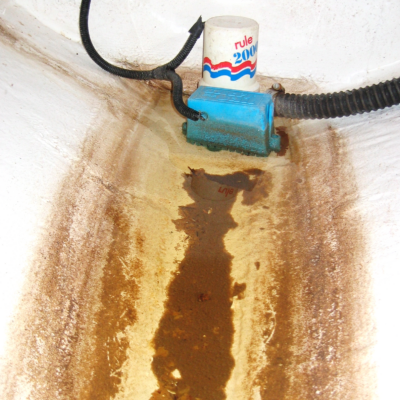
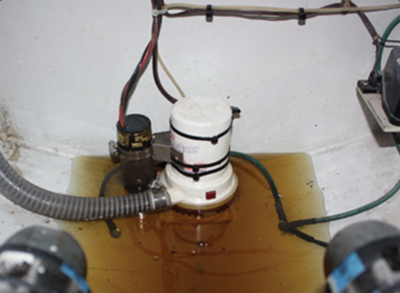
DO make sure to keep your bilge clean as often as you possibly can. A dirty bilge can lead to a whole mess of problems, including rust, corrosion, odor, humidity, mold growth, and more. These problems can lead to a smelly and uncomfortable boat. They can even eat away at the electrical, bonding and electronics systems. These sorts of damages can easily cost you thousands of dollars in repairs.

DON’T continue using temporary “solutions” to clean out your bilge. Many people rely on temporary fixes such as ozone machines which cause other issues, the wet vac which is very labor intensive and bilge cleaners which end up polluting the surrounding waters. All these “solutions” merely put a Band-Aid on the problem. You’ll still have to continuously stress about your bilge water and make sure that you are taking care of it all the time.

DO install a dry bilge vacuum system. Of course, the Arid Bilge System is the only multi-compartment system on the market. It slowly and efficiently vacuums liquids across a range of up to 75 feet from the central unit, keeping all your bilge compartments 100% dusty dry.

DON’T waste your time adding additional pumps. Arid Bilge is a high-quality and functional bilge vacuum system. It is the only system on the market that is proven to keep bilges 100% dry. It doesn’t make sense to go with any of the other companies pumps, when you could be getting the best of the best for a price that doesn’t break the bank.

Why Go With Arid Bilge System

We could think of a long list of reasons as to why you should purchase the Arid Bilge System over the companies that sell just pumps, though we’d have to write you an entire article just for that. The proof is in the vacuuming.

Do Install an Oily Water Separator if you can’t legally discharge overboard without one. Once you have an Arid Bilge System installed, we also offer the Eco Friendly Discharge Companion which is a permanently installed oily water separator. The Eco Friendly will retain the oil-found in many bilges. It holds the oil and fuel inside the separator, passing treated hydrocarbon-free water through, which is then normally discharged overboard. The three different Eco Friendly Discharge Companion models can also be fitted with any one of three different alarm systems, to let you know that oil or fuel is accumulating in the separator. Now, you are often able to identify that there is a developing oil or fuel leak, long before there is a big mess down below. Once there is a big mess down below, you often end up hiring a local company to show up with expensive equipment for the clean-up, and then you still have to locate and fix the leak that caused the big mess in the first place. With the Arid Bilge – Eco Friendly combination on board, you have dry bilges with small trails leading off the the source of a developing leak. Often it may be as easy as changing a hose or fitting, after the alarm had gone off, long before the big mess occurs. So it’s not just about avoiding the high fines, but the main caveat is the preventing of a big mess, and saving your equipment.

It should now be an obvious conclusion, to go with the Arid Bilge System. We have a top-notch line of products for all kinds of boats that work to help keep your bilges dry and oil free so that you can enjoy your boat the way you want to. Our superior marine bilge systems are the best products to help keep your boat clean and healthy for many years to come. Simply install our system and leave it to do its work automatically keeping the bilges clean and bone dry.

We wish you a happy and dry boating experience for years to come!

14 02, 2024

How Does the Arid Bilge System Work?

By |2026-01-18T22:28:31+00:00February 14, 2024|Blog|

Sucking Water Out of the Bilge – How Does the Arid Bilge System Work

Since the invention of the floating vessel in ancient times, boaters have been dealing with stinky bilge water down below in their boats. It is most likely a fact that every boat which you rode on as a kid, had some of this ugly water sloshing around in the hard-to-reach bilge compartments down below. Common statements to deal with this reality would have been…

“It is what it is”  or

“This is just how it is. Get over it.”

Then, we invented the Arid Bilge System to change all of this . . . permanently. Today, boaters can enjoy a vessel that is  fresh and dry down below at all times! And without all the chores normally associated with this.

Bilge pump basics . . .

Before we dive in to find out how the Arid Bilge System works, let’s get on the same page and have a general understanding as to how bilge pumps work. Like their name says: bilge pumps, do pump water. This means that the water is pushed or propelled by an impeller of some type, be it a rubber lobe, centrifugal or similar. Most bilge pumps are generally high volume. Good seamanship skills would demand that you have enough pump(s) on board to prevent the vessel from sinking, in the event of a catastrophic type event, like a broken hose or a hole in the hull for instance. Bilge pumps are usually turned on automatically by a float switch, which won’t trigger until there is well over an inch of water down below. And boaters are usually frustrated when they hit the manual override switch, not being able to get rid of the rest of the bilge water – for two very good reasons: First, as air hits that impeller, the pump’s efficiency goes to zero, as the pump is not designed to move air with water. And secondly, as the pump shuts down, the water that’s in the discharge hose comes rushing back through the pump, returning into the bilge.

What is the Arid Bilge System?

Compared with bilge pumps, the Arid Bilge System works very much like a common shop or wet vac. All Arid Bilge Systems have miniature collection chambers similar the bucket on the wet vac. Air is vacuumed out of the collection chamber, and then bilge water rushes in to fill this void.  There is no priming necessary, all the water moves in one direction only. Then the water is trapped in the collection chamber. Now instead of relying on the  common float switch, the Arid System utilizes vacuum switches that keep these systems running, until air is pulled through the intake tubes, leaving the bilges bone dry and the intake tubes stripped of liquids. These systems are low volume, and are well tuned to the day-to-day needs of the average boat.

Essentially, the aging process of the interior of the boat does slow and nearly stops. Instead of dealing with the odor, condensation damage, mildew, corrosion, or rust, the Arid Bilge will suck up all of the residual water from the source so that you don’t have to deal with the problems caused by standing residual bilge water.

Common, old school solutions . . .

Before the Arid Bilge System, boaters were resorting to pouring bilge cleaners, in order to minimize odors. Yes, wet vacs, ozone machines, dehumidifiers, bilge diapers were all available to provide a partial solution to these common age old problems of the chronically wet bilge. These “solutions” do tend to act as a Band-Aid and work only as long as they are constantly being re-applied. But once the Arid Bilge System is installed, it becomes a game changer which so completely removes all of the standing bilge water, that you can now completely abandon the “Band-Aid solutions”.

See the Arid Bilge System in action below!

Why Buy an Arid Bilge System?

You can think of the Arid Bilge System as the maintenance worker that you thought you’d never have. It is a truly magical system that acts automatically, removing moisture, preventing mildew, and odor at the source. All while slowing the aging process, which helps to keep your boat free from rotting, corrosion, rust and condensation damage! As an added caveat, the Arid Bilge will also help you find small leaks, which will leave a wet trail through the dry bilge back to the source!

We hope that we’ve inspired you to raise the bar for a better boating experience for yourself with a brand new Arid Bilge System on board!