
Blog

22 01, 2026
  • Aluminum yacht hull corrosion damage from bilge water

Preserving Metal-Hulled Yachts: Why a Dry Bilge System Matter

By |2026-01-22T14:45:45+00:00January 22, 2026|Articles, Blog|

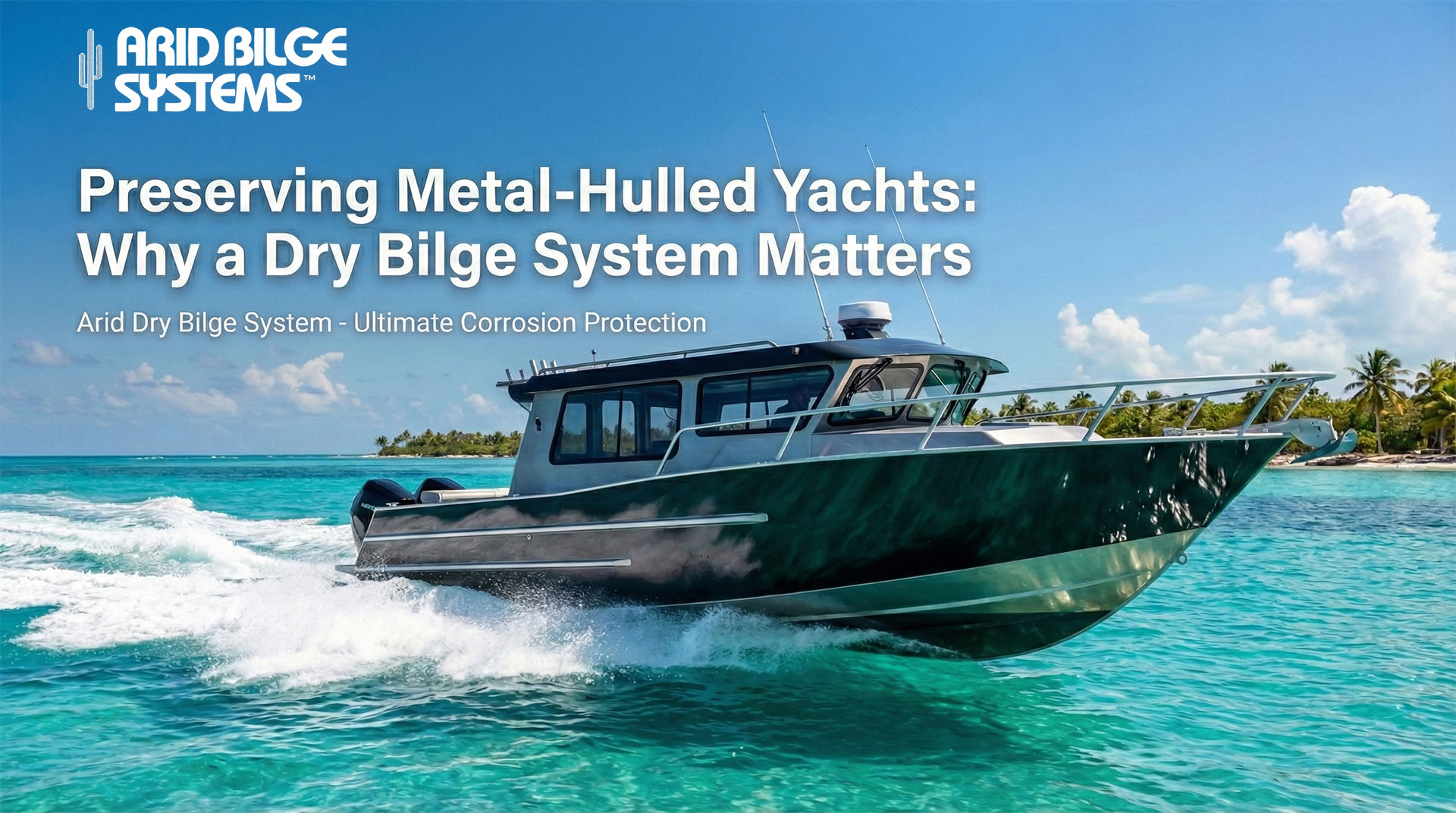
Metal-hulled vessels are built for strength—but they’re also highly vulnerable to one silent threat: bilge water.

Moisture trapped in metal compartments leads to corrosion, electrolysis, and calcification, compromising the structural integrity of even the strongest boats. Without early intervention, this moisture becomes a costly, silent killer.

A Real-World Example: Buckpasser

One powerful case study is the Buckpasser, a 120-foot aluminum motor yacht built in 1985 by Hitachi Zosen. After discovering severe pitting and corrosion due to stagnant bilge water, the captain reached out for help.

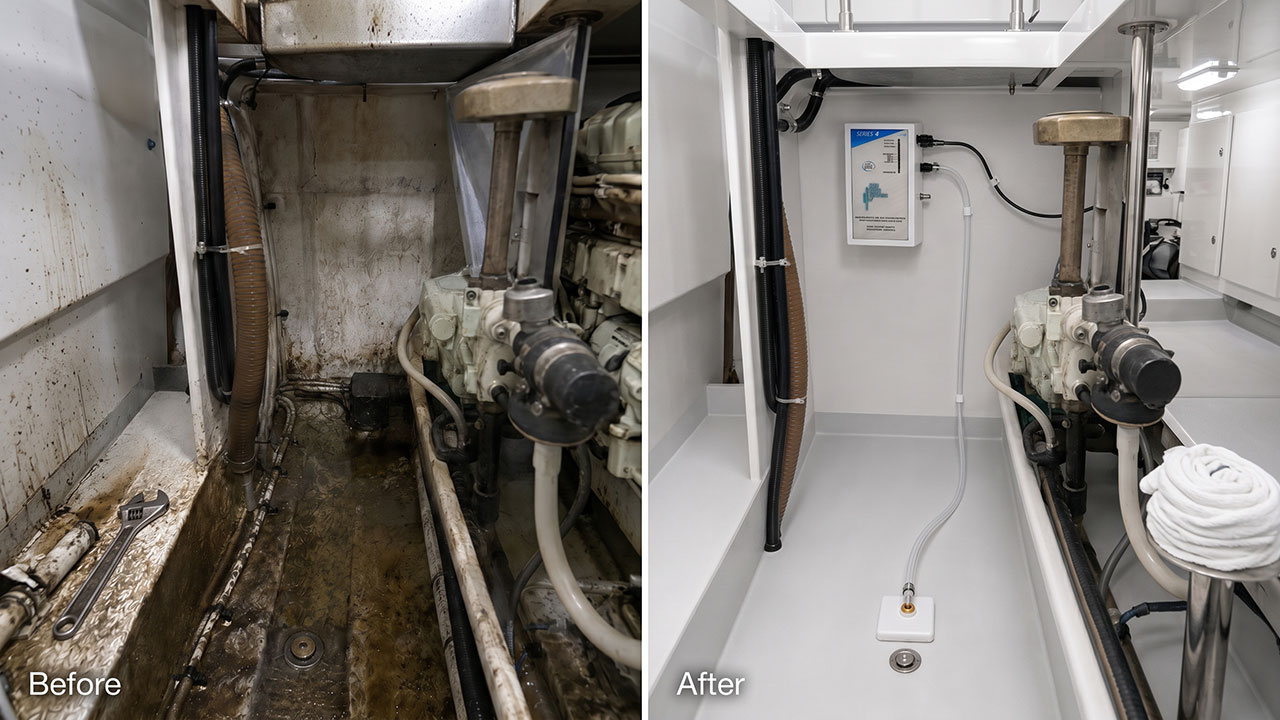
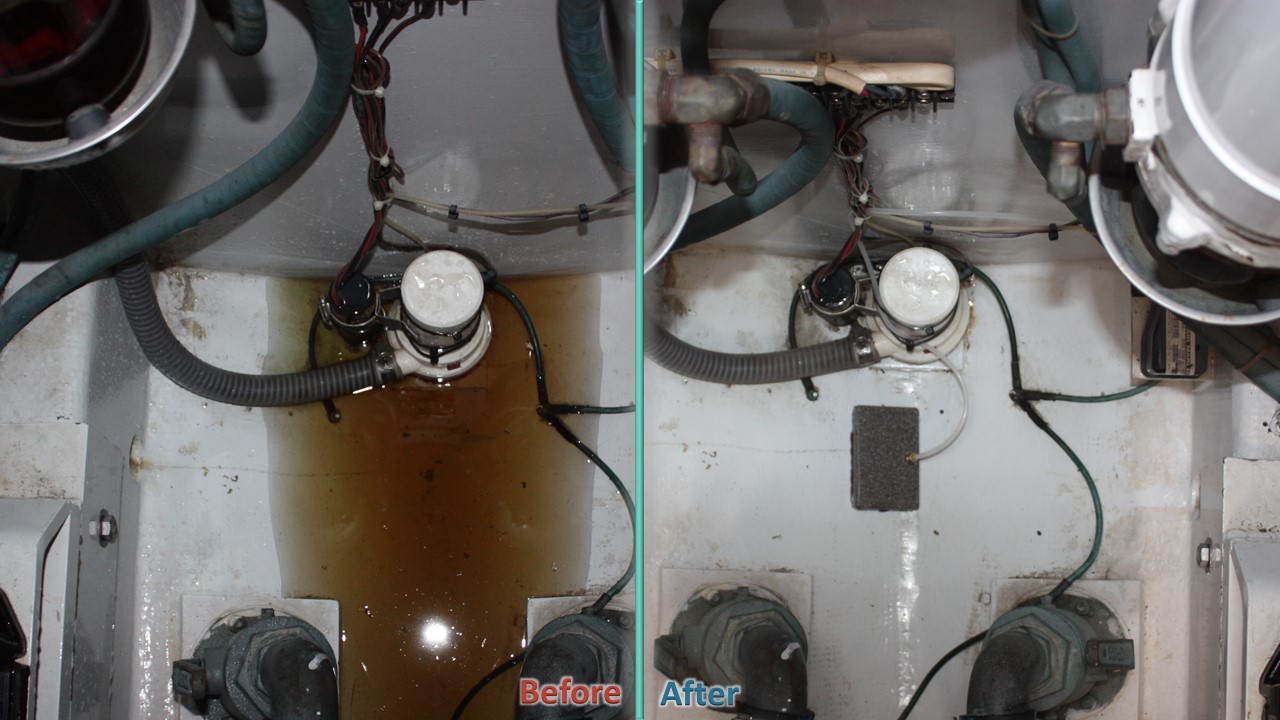
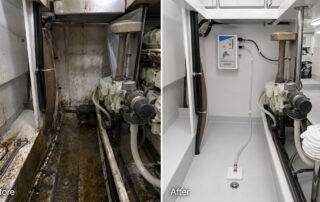
We inspected the vessel at Bradford Marine and recommended an Arid Bilge Series 9 system with nine pickup zones, an Eco-Friendly Discharge Companion, and an Eco Alarm System. Once installed, the transformation was immediate: moisture was eliminated from the bilge zones, and the captain could monitor everything through a clear-view chamber. The crew immediately noticed drier air, fewer odor issues, and a stabilized environment.

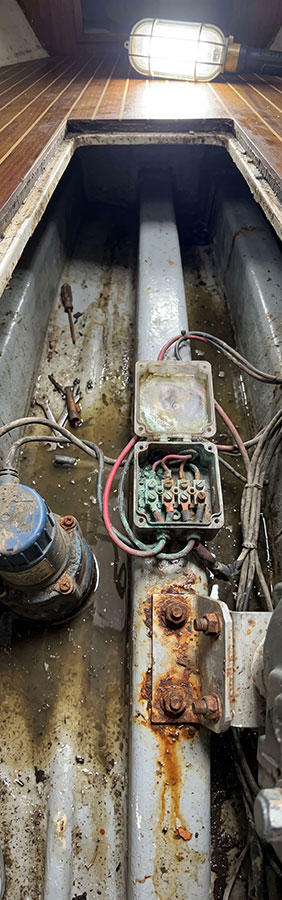
Further inspection revealed a fist-sized cavity caused by hidden moisture under a sealed hatch—damage that cost $40,000–$50,000 in repairs. Had a dry bilge system been installed sooner, this could have been entirely avoided.

Additionally, widespread corrosion and rust bloom were present throughout the lazarette. The Arid Bilge System quickly removed the source of those problems—standing water—without any manual effort from the crew.

Aluminum yacht hull corrosion damage from bilge water

Hidden Dangers of Bilge Water in Metal Boats

  • Electrolysis & Galvanic Corrosion – Accelerated by metal-water contact
  • Calcification – Hard mineral buildup from stagnant water
  • Structural Weakening – Prolonged exposure leads to metal fatigue
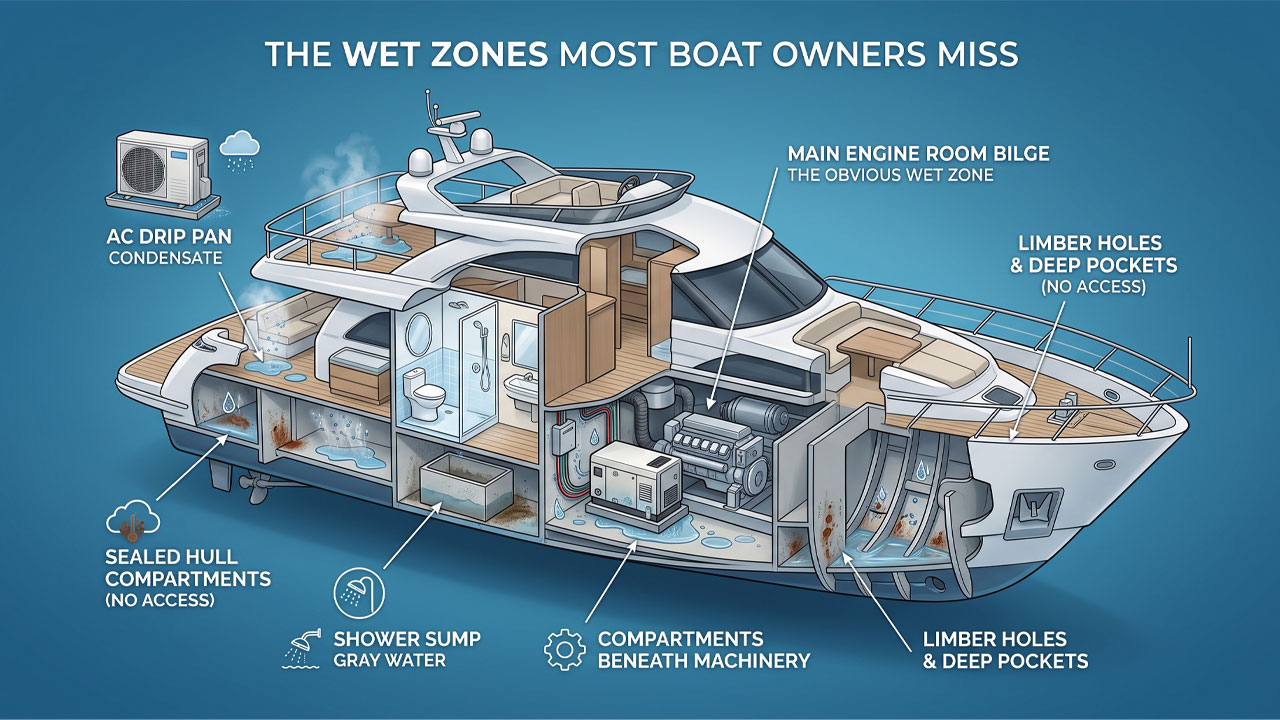
  • Hidden Damage – Sealed compartments can trap water out of sight
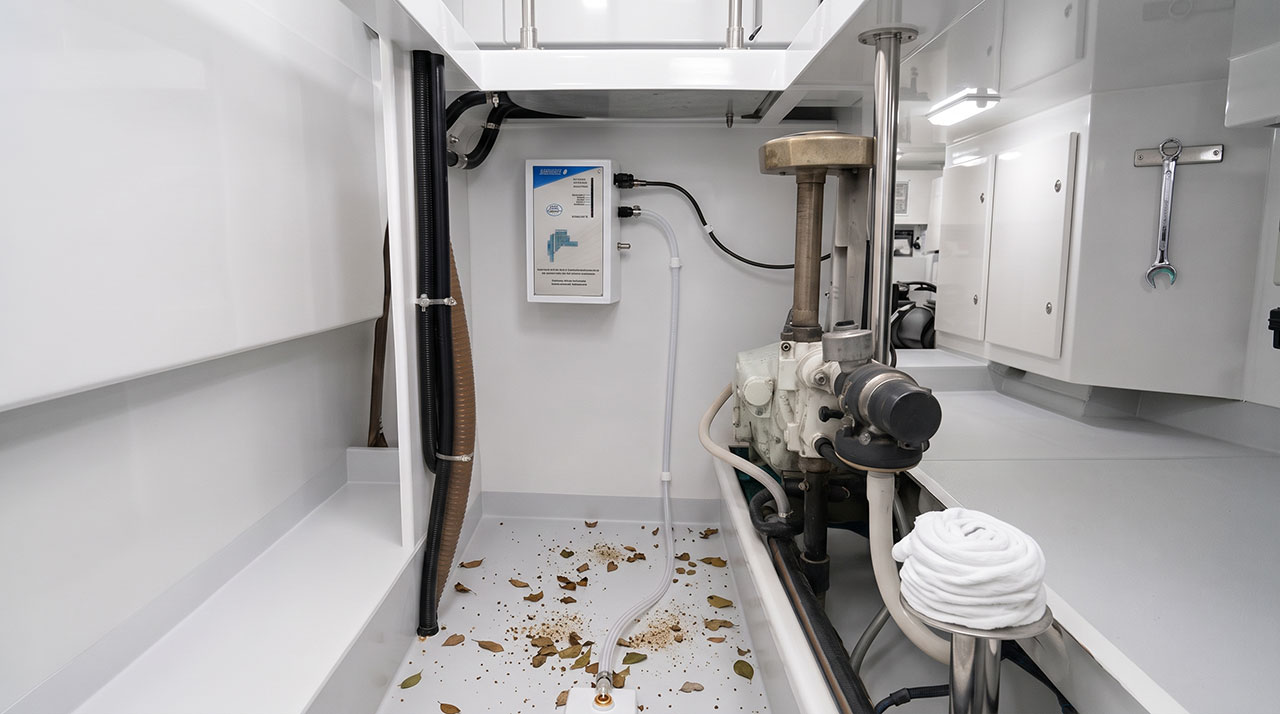
Metal Hull Vessel - Preserving the hull and minimizing corrosion.

These conditions can exist undetected for months or years, quietly degrading your vessel’s most critical systems. By the time corrosion appears visibly, significant damage is already done.

How Arid Bilge Solves It

Arid Bilge Systems provide continuous vacuum removal from every bilge zone. It’s a proactive, automated system that:

  • Keeps compartments bone-dry year-round
  • Uses an Eco-Friendly Oil/Water Separator for clean, compliant discharge
  • Alerts crew instantly to unexpected moisture with a built-in alarm system

Unlike traditional pumps that only activate with standing water, Arid Bilge prevents moisture from accumulating at all.

Long-Term Value

Installing Arid Bilge means:

  • Extending hull life by stopping internal corrosion before it starts
  • Reducing maintenance costs from fewer part replacements and dry service bays
  • Improving air quality for crew and equipment longevity
  • Preserving vessel value by avoiding unsightly rust or rot

A dry bilge system also makes ongoing inspections easier and ensures better working conditions in confined compartments.

Protecting Your Investment

For any metal-hulled vessel—whether it’s a luxury yacht, commercial fishing boat, or military craft—dry bilges are essential.

Arid Bilge Systems protect your hull, your systems, and your reputation. Our technology is trusted by builders, captains, and professionals around the world to stop the invisible threat of corrosion before it begins.

Don’t let trapped moisture eat away at your investment.

Arid Bilge Systems – Dry. Fresh. Protected.

25 11, 2025
  • Why Phenom Yachts Trusts Arid Bilge Systems for a Cleaner, Longer-Lasting Boat

Meet the Phenom 34: Speed, Style, and Smart Design

By |2026-01-22T02:56:37+00:00November 25, 2025|Blog|

Speed, Style, and Smart Design

At the show, Alfred introduced Shaun Reale, National Sales Manager for Phenom Yachts, to discuss what makes the Phenom 34 so distinctive. “Phenom Yachts is a semi-custom center-console brand inspired by family and fishing,” Shaun said. “We build for the 50/50 market—equal parts performance and comfort.” The Phenom 34 features the company’s proprietary Next Step Hull, developed with three naval architects using advanced CAD design and computational fluid dynamics. Before a single mold was built, the team knew exactly how the boat would perform.

Powered by twin 400s, the Phenom 34 cruises around 40 mph, tops out near 65 mph, and still achieves better than one mile per gallon in fuel efficiency. The result is a center console that feels both exhilarating and effortless to drive.


Technology and Craftsmanship at the Helm

Standing at the helm, Shaun pointed out how Phenom replaces traditional buttons and clutter with digital simplicity. “Our EmperorBus control system integrates every light, pump, and switch directly into the Garmin MFDs,” he said. “It keeps the dash clean and intuitive—and between us and our sister brands, we’re one of Garmin’s largest partners.” That seamless integration mirrors what Arid Bilge Systems brings to the mechanical side of the boat: an automated solution that protects the unseen spaces while complementing Phenom’s minimalist aesthetic.

A Natural Fit for High-Performance Boats

The partnership began when a Phenom customer specifically requested Arid Bilge Systems by name for their build. After installation, the benefits were immediate—no damp smell, no hidden corrosion, and a spotless bilge that stays show-ready all season.

“The Arid Bilge System is an automatic vacuum network that keeps the bilge completely dry from bow to stern,” Alfred said. “Instead of getting mold or humidity, the system just clears it out—keeping everything fresh, clean, and protected.”

Shaun agreed, noting how well it complements Phenom’s design philosophy: “Our boats have three separate bilges, and the Arid System ties it all together. It keeps everything perfectly dry, which is especially helpful for customers who show their boats or fish hard on weekends. They come back, lift the hatch, and it’s spotless.”

The Dry Boating Experience

Every Phenom is built with precision, power, and a focus on the details that make ownership enjoyable. Pairing that craftsmanship with Arid Bilge Systems elevates the experience even further—turning a high-performance vessel into a self-maintaining showcase of modern marine technology. Whether at the Miami Boat Show or out on open water, the Phenom 34 with Arid Bilge Systems proves that real innovation is about more than speed—it’s about keeping your investment protected and looking brand new for years to come.

Stay Dry, Fresh, and Protected.

The Phenom 34 and Arid Bilge Systems partnership represents a new standard in smart, clean boating. From its custom hull to its automated bilge maintenance, it’s a perfect match of performance, protection, and perfection—keeping every ride as pristine as the day it left the factory.

13 03, 2024

Bilge System Installation: The Preparation Guide

By |2026-01-18T22:26:52+00:00March 13, 2024|Blog|

How To Prepare Your Boat Before Installing Your Dry Bilge System

Bilge System Installation If you want to keep your boat in pristine condition and prolong its life, it is more than necessary to have an effective dry bilge system installed. If you’ve noticed that your dirty old bilge pump hasn’t been pumping out water as effectively as it should, it is time to look into getting a new bilge vacuum system. Of course, we recommend that you look into our Arid Bilge System, as it is the best of the best! Plus, you can install it yourself. Installing an Arid Bilge System on your boat is relatively simple, usually not requiring the services of a skilled technician! Here is a simple step-by-step guide to prepare for your bilge system installation.

Pre-Installation

Before you begin installing your bilge system, we recommend a few steps to save yourself money and complete the job quickly and efficiently.

1. Determine How Many Zones or Distinct Wet Locations are on Your Boat

Start by assuring that your boat is in its natural static float position. In other words: if it’s up on the hard or with an engine removed it’s going to be a little hard to determine where and how the water pockets around the boat, compared to when it’s sitting at anchor or at the dock and in normal use. Next, bring a common wet vac on board. Take the hose and hold it in the deepest, lowest elevated location, then wait and relax. Water will often travel, slowly, through limber holes from other compartments nearby. Once the water stops flowing and that lowest, deepest, compartment is dried down to a sheen, then you are ready to move to the second lowest, deepest compartment, if there is one. You repeat this process until you come up with a zone count. Make sure that you don’t make the mistake of skipping compartments that don’t have traditional bilge pumps. Also, don’t expect that the existing, factory installed bilge pumps are even at the lowest deepest points in the first place.

2. Determine a Good Mounting Location for the Central Unit

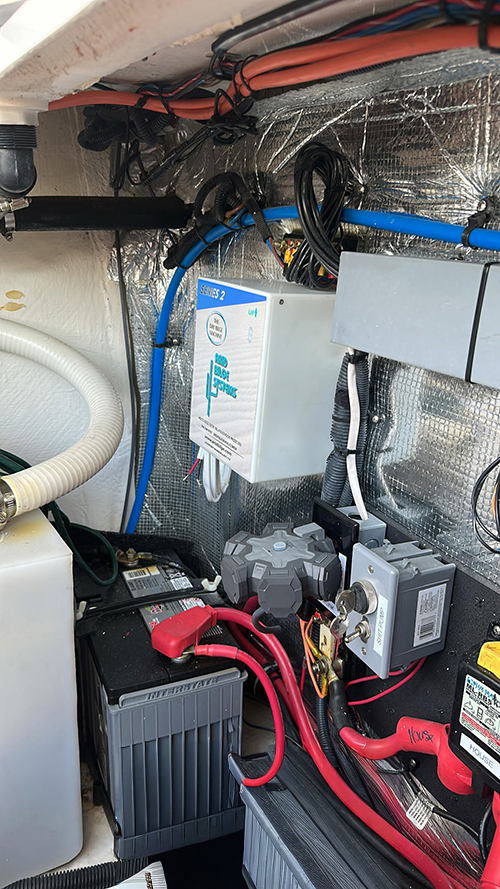
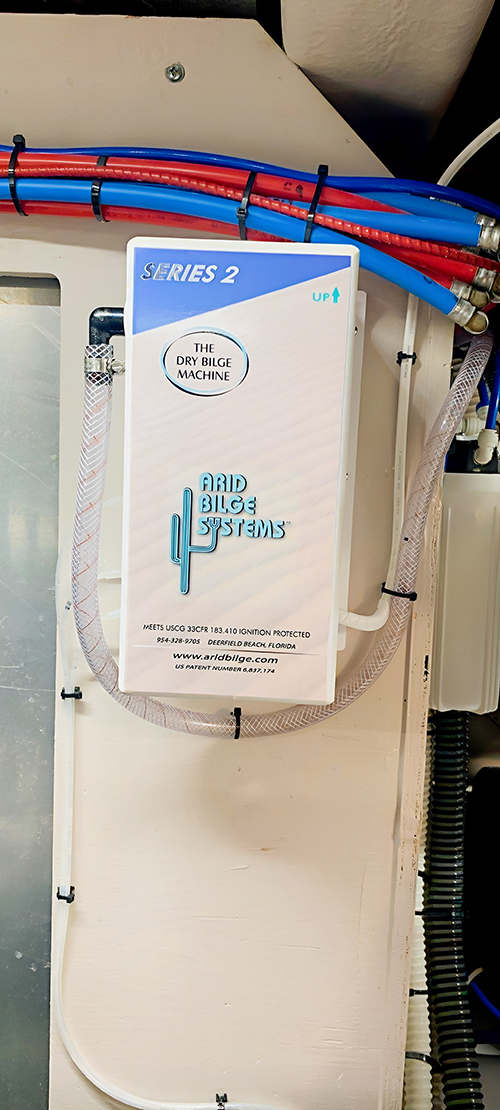
In most boats we would recommend looking around in the engine room first, as it usually pockets the most water and is centrally located in the boat. Outboard boats like larger center consoles will generally have an aft compartment under the floor, hopefully with a large access hatch. You generally try to mount the system as high as possible. Placing the Arid Bilge System near the bottom of the bilge is a no no, as the central units are not water proof. The unit must be mounted upright, because: like the wet shop vac, it does have a collection bucket or chamber that has to fill with the collected bilge water, temporarily, before sending it overboard.

3. Determine Where the Discharge Water Will go

Next, we look for hoses that go to thru hull fittings, and determine if any are used for the occasional discharging of water. Air conditioning cooling water discharges are not recommended, as they can be pumping water overboard, continuously, most of the time. Hoses that are connected to deck, hatch or vent drains, as well as sink drains are usually preferred. We are looking to T connect our Arid Bilge discharge to an existing outflow, as this is usually much easier than drilling another hole in the side of the boat. We try to locate the unit above this discharge hose, so that the water leaving the Arid Bilge System travels downhill to flow overboard more completely. Then, we look for a power source. The Arid Bilge System can usually be connected to 12 or 24 volt DC or 120 volt AC house power. The Arid Bilge draws very little power and often ends up taking power from an existing bilge pump circuit as a matter of convenience. The ideal mounting location will be in close proximity to discharge and power offering enough space to mount the unit upright. Sometimes, this ends up being under the galley or head sink. Next, we have to make sure that the unit that we need, will fit in the available space. Modern boats are often crammed full with all kinds of pumps, systems, battery chargers, electronics etc. So, occasionally you may have to buy a three zone Series 2 instead of a four zone Series 4, just because there is no room for the larger system aboard.

4. Determine the Correct Bilge Pickup Type Needed for each Compartment

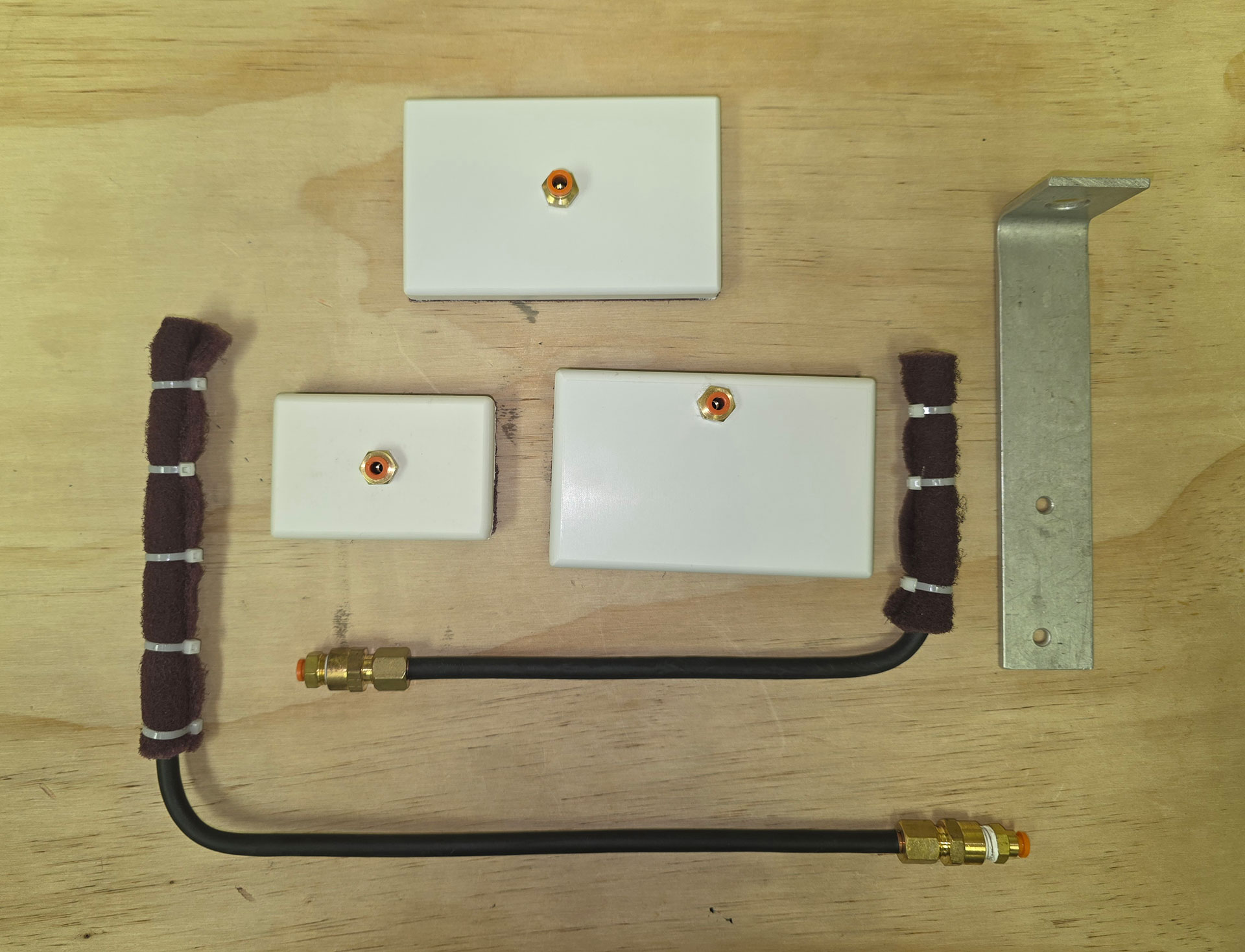
Bilge compartments come in all shapes and sizes. Remember when you held the wet vac hose in place waiting for the water to drain to each of the low points? If the bottom of the compartment was flat – then select the Standard or Mini Standard pickups. If the compartment came to a V at the bottom, then you would select the offset or pickup wand. We do provide a spare for every two zones, so you can often have it both ways when ordering.

Should You Buy An Arid Bilge System?

There are just about a hundred reasons to get an Arid Bilge System. Unlike regular bilge pumps or temporary solutions like bilge cleaners and ozone machines, the Arid Bilge System vacuums slowly and effectively to make sure that your boat remains 100% dusty dry at all times. This will keep the boat young and protect your investment from nasty odors and the damaging effects of rust and corrosion.

When you buy an Arid Bilge System, you are effectively prolonging the life of your boat and enhancing the resale value. If you’re ready to take the plunge check out our shop today. We’re ready to provide you with the best bilge products on the market! Happy boating!

6 03, 2024
  • boat bilge pumps, concept image.

A Guide To Boat Bilge Pumps

By |2026-01-18T22:27:18+00:00March 6, 2024|Blog|

A Guide To Boat Bilge Pumps – What Are They And How They Work

The unsettling thing about bilge pumps is the fact that they are usually a boat’s only line of defense before sinking into the deep blue, yet most boaters don’t know much about them. Rarely do boaters even talk about boat bilge pumps, and even less of their time is spent going down below to maintain them.

Of course, it is important that you get to know more about your boat bilge pumps, as you don’t want to end up being the proverbial old sailor, frantically taking water out of the bottom of his boat with a bucket.

Let’s dive in and take a deeper look into bilge pumps, what they are, what they do, and how to pick the best one.

What Are Bilge Pumps?

The job of a bilge pump is to clear the unwanted water that gets into the bilge on your boat. This water can come in due to errant waves, drip through packing gland, a broken hose or clamp, leaking port holes or hatches, and much more. Essentially, bilge water is almost impossible to avoid. While the stock bilge pump that came with your boat may do the job well, though, you want to be sure that it acts as a serious line of defense in the case that your boat begins sinking out at sea, giving you enough time to call for help or make it back to the marina.

Most well-educated captains who plan to undertake long crossings over open water will upgrade their bilge pumps by adding a higher-volume one, as a backup.

How Do They Work?

There are three common types of electrical bilge pumps that you will find on the market, namely the centrifugal, the rubber lobe and the diaphragm.

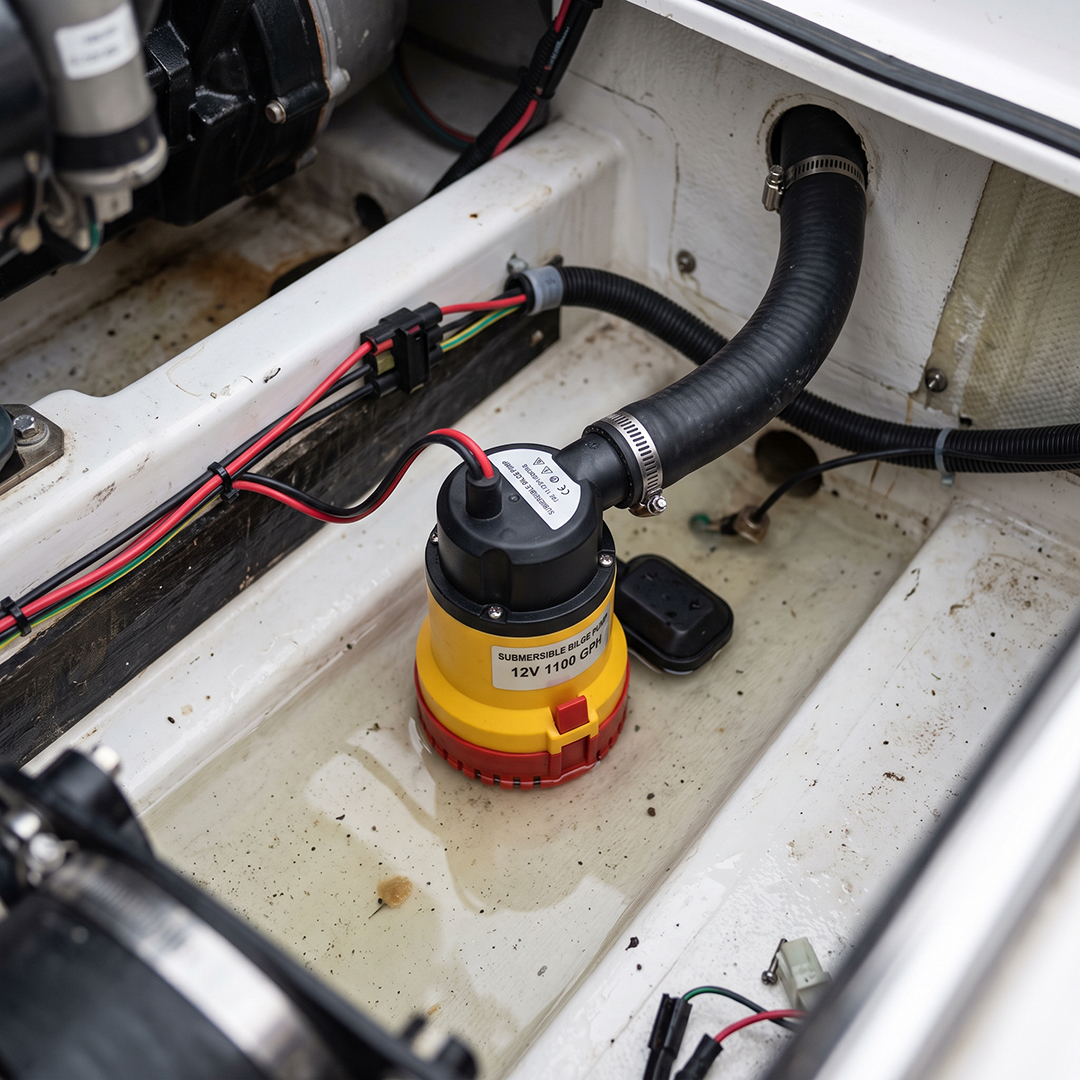
Centrifugal pumps work using a rotating, solid impeller, which like a turbine will push water. This type of pump will propel water up into the discharge hose and usually sits in the lowest, deepest position of the bilge. That water is pumped from the bottom up, but once air comes in contact with the impeller, cavitation usually stops the movement of water completely. Once this type of pump shuts down, all of the water that is still sitting in the discharge hose comes gushing backwards into the bilge. So the base water line left behind, when these pumps shut down, is usually around 1 ½”. The twin seals between the impeller and the motor, protect the pump’s electric motor sitting in the bilge, for a time, limiting the life of the pump. Many boaters have tried to place a check valve on the output side, near these pumps in order to prevent the back wash, only to find that this creates a condition called vapor lock, where the pump can’t prime itself, as air becomes trapped between the pump and the check valve. These are still the most popular of all bilge pumps as they are very quiet, use little power for the volume of water pumped, are relatively inexpensive and usually have a 3 to a 4 year life span in the average wet bilge. Also, if these pumps are accidentally left on, there is usually little damage potential within the first few hours.

Rubber lobe bilge pumps used to be the most popular and common of all bilge pumps, until Clinton Rule invented the Centrifugal bilge pump back in the early 60’s. These pumps have a rubber impeller that spins in a housing where there is a restriction between the intake and outflow, causing the rubber lobes to crush temporarily, attempting to compress the water and forcing it out into the discharge port. These pumps are lower volume and not particularly electrically efficient. They can pull some air with the water, but cannot be left to run dry under any circumstances. Here, the water lubricates the rubber impeller as it spins in the housing. So, without water, the impeller heats up and starts to stick to the housing. Additionally, if oil or fuel ends up being pulled through the impeller, the rubber will usually expand, also locking the pump. They will offer you a brown Nitrile replacement impeller that should not absorb the oil, and then you ask yourself, why didn’t they automatically install the Nitrile one at the factory. Most of the engines on boats today use a mechanically driven rubber lobe pump for their raw water engine cooling systems.

Diaphragm pumps have chambers, and work more like your heart, where they pulse to move the water through the two chambers and two one-way valves. So, this type of pump creates a suction that pulls out the unwanted bilge water.  Diaphragm pumps can be run dry for a time without any damage, and are self-priming. This means that they develop suction and prime themselves without being submerged in water. Unfortunately, they cannot move as much water when compared to centrifugal pumps, and won’t be able to tolerate bits of debris or trash, which can lodge in the pump valves. These pumps will usually have an intake strainer that will fill with small debris and will have to be serviced / cleaned regularly. These pumps are the noisiest of all the pumps and again, these pumps are not as electrically efficient as the centrifugal pumps, but when set up correctly, they can draw the bilge water levels down to ½” in the manual mode. In the auto mode, when they are connected to the average float switch, they will usually still leave over an inch of water behind.

In simple terms, all bilge pumps leave residual bilge water behind and this is what brings us to the Arid Bilge System

The dry bilge system > The Arid Bilge System

For those who are in the market for the best of the best, we recommend the Arid Bilge System. The Arid Bilge System works uniquely as an automated computerized vacuum system, vacuuming up water from the bow to the mid to the stern of your vessel, through small tubing, up to 75 feet away from the central unit. Because it’s an automated system, you never have to think about going down to turn it on manually.

The Arid Bilge System utilizes air sensors/vacuum switches to make sure that the system knows when it is suctioning water vs air. It can be left to run dry forever… with no chance of damage to the internal air compressor. In fact, it does not pump water and there is no contact between the bilge water and any electrical component anywhere in the system. This means that there is no seal to fail, so you can expect excellent longevity from your new Arid Bilge System. The Arid Bilge System vacuums the bilge water into a small collection chamber inside the central unit, and then uses air pressure to push the collected water out through a check valve.

As an added safety feature we offer the Eco Friendly Discharge Companion/oily water separator which captures and stores oil that’s common in small amounts in many bilges. And an additional alarm is available to audibly notify you as oil starts to accumulate in the separator. With this system added to your Arid Bilge System, you can confidentially say that this oil slick surrounding your boat came from someone else’s boat.

You can see how the Arid Bilge System works with the little visual representation below:

Getting the Best Bilge System

Having a solid dry bilge system on your boat can create a happier and safer boating experience for you and the family. Don’t rely on old stock bilge pumps to keep you safe. Get yourself one of the best dry bilge systems around at Arid Bilge Systems!

28 02, 2024
  • treating bilge water, concept image.

The Do’s and Don’ts of Treating Bilge Water

By |2026-01-18T22:27:57+00:00February 28, 2024|Blog|

The Do’s And Don’ts Of Treating Bilge Water

Most of us boaters have to deal with bilge water on a daily basis. There is no question that thinking about it is just as much of a daunting process as dealing with it, though unfortunately, leaving it alone can have far worse consequences. Follow along to understand the do’s and dont’s of treating bilge water.

We’re going to be honest, your boat is often referred to as a vessel, and there is no way to completely avoid getting bilge water down below. It’s just a part of boating life. Of course, what matters most is how you decide to deal with it.

Bilge water can get into the hard-to-reach, lower compartments that sit at the bottom of your boat, leaving you with expensive and labor-intensive consequences in the long run, if not taken care of. Having good bilge pumps can minimize the amount of bilge water that your vessel carries around. But to keep your boat in pristine condition 100% of the time requires a lot of labor, or an Arid Bilge System. Keeping your bilges dry can also help to keep your vessel free from possible failure, while keeping your family, guests and crew safe.

If you’re sick of dealing with the negative consequences of bilge water or the labor intensive wet shop vac, we highly recommend picking up an Arid Bilge System. Simply use our dry bilge vacuum system, and there will be no need to further concern yourself about pesky bilge water. The bilges will remain dusty dry automatically.

It is as easy as installing the Arid Bilge System and leaving it running. It then picks up all of the bilge water before it becomes nasty, keeping your boat’s bilges 100% bone dry. Let’s dive into the do’s and don’ts of treating bilge water, so that you can get a better idea of why an Arid Bilge System might be your best option.

The Do’s And Don’ts

DO make sure to keep your bilge clean as often as you possibly can. A dirty bilge can lead to a whole mess of problems, including rust, corrosion, odor, humidity, mold growth, and more. These problems can lead to a smelly and uncomfortable boat. They can even eat away at the electrical, bonding and electronics systems. These sorts of damages can easily cost you thousands of dollars in repairs.

DON’T continue using temporary “solutions” to clean out your bilge. Many people rely on temporary fixes such as ozone machines which cause other issues, the wet vac which is very labor intensive and bilge cleaners which end up polluting the surrounding waters. All these “solutions” merely put a Band-Aid on the problem. You’ll still have to continuously stress about your bilge water and make sure that you are taking care of it all the time.

DO install a dry bilge vacuum system. Of course, the Arid Bilge System is the only multi-compartment system on the market. It slowly and efficiently vacuums liquids across a range of up to 75 feet from the central unit, keeping all your bilge compartments 100% dusty dry.

DON’T waste your time adding additional pumps. Arid Bilge is a high-quality and functional bilge vacuum system. It is the only system on the market that is proven to keep bilges 100% dry. It doesn’t make sense to go with any of the other companies pumps, when you could be getting the best of the best for a price that doesn’t break the bank.

Why Go With Arid Bilge System

We could think of a long list of reasons as to why you should purchase the Arid Bilge System over the companies that sell just pumps, though we’d have to write you an entire article just for that. The proof is in the vacuuming.

Do Install an Oily Water Separator if you can’t legally discharge overboard without one. Once you have an Arid Bilge System installed, we also offer the Eco Friendly Discharge Companion which is a permanently installed oily water separator. The Eco Friendly will retain the oil-found in many bilges. It holds the oil and fuel inside the separator, passing treated hydrocarbon-free water through, which is then normally discharged overboard. The three different Eco Friendly Discharge Companion models can also be fitted with any one of three different alarm systems, to let you know that oil or fuel is accumulating in the separator. Now, you are often able to identify that there is a developing oil or fuel leak, long before there is a big mess down below. Once there is a big mess down below, you often end up hiring a local company to show up with expensive equipment for the clean-up, and then you still have to locate and fix the leak that caused the big mess in the first place. With the Arid Bilge – Eco Friendly combination on board, you have dry bilges with small trails leading off the the source of a developing leak. Often it may be as easy as changing a hose or fitting, after the alarm had gone off, long before the big mess occurs. So it’s not just about avoiding the high fines, but the main caveat is the preventing of a big mess, and saving your equipment.

It should now be an obvious conclusion, to go with the Arid Bilge System. We have a top-notch line of products for all kinds of boats that work to help keep your bilges dry and oil free so that you can enjoy your boat the way you want to. Our superior marine bilge systems are the best products to help keep your boat clean and healthy for many years to come. Simply install our system and leave it to do its work automatically keeping the bilges clean and bone dry.

We wish you a happy and dry boating experience for years to come!

14 02, 2024

How Does the Arid Bilge System Work?

By |2026-01-18T22:28:31+00:00February 14, 2024|Blog|

Sucking Water Out of the Bilge – How Does the Arid Bilge System Work

Since the invention of the floating vessel in ancient times, boaters have been dealing with stinky bilge water down below in their boats. It is most likely a fact that every boat which you rode on as a kid, had some of this ugly water sloshing around in the hard-to-reach bilge compartments down below. Common statements to deal with this reality would have been…

“It is what it is”  or

“This is just how it is. Get over it.”

Then, we invented the Arid Bilge System to change all of this . . . permanently. Today, boaters can enjoy a vessel that is  fresh and dry down below at all times! And without all the chores normally associated with this.

Bilge pump basics . . .

Before we dive in to find out how the Arid Bilge System works, let’s get on the same page and have a general understanding as to how bilge pumps work. Like their name says: bilge pumps, do pump water. This means that the water is pushed or propelled by an impeller of some type, be it a rubber lobe, centrifugal or similar. Most bilge pumps are generally high volume. Good seamanship skills would demand that you have enough pump(s) on board to prevent the vessel from sinking, in the event of a catastrophic type event, like a broken hose or a hole in the hull for instance. Bilge pumps are usually turned on automatically by a float switch, which won’t trigger until there is well over an inch of water down below. And boaters are usually frustrated when they hit the manual override switch, not being able to get rid of the rest of the bilge water – for two very good reasons: First, as air hits that impeller, the pump’s efficiency goes to zero, as the pump is not designed to move air with water. And secondly, as the pump shuts down, the water that’s in the discharge hose comes rushing back through the pump, returning into the bilge.

What is the Arid Bilge System?

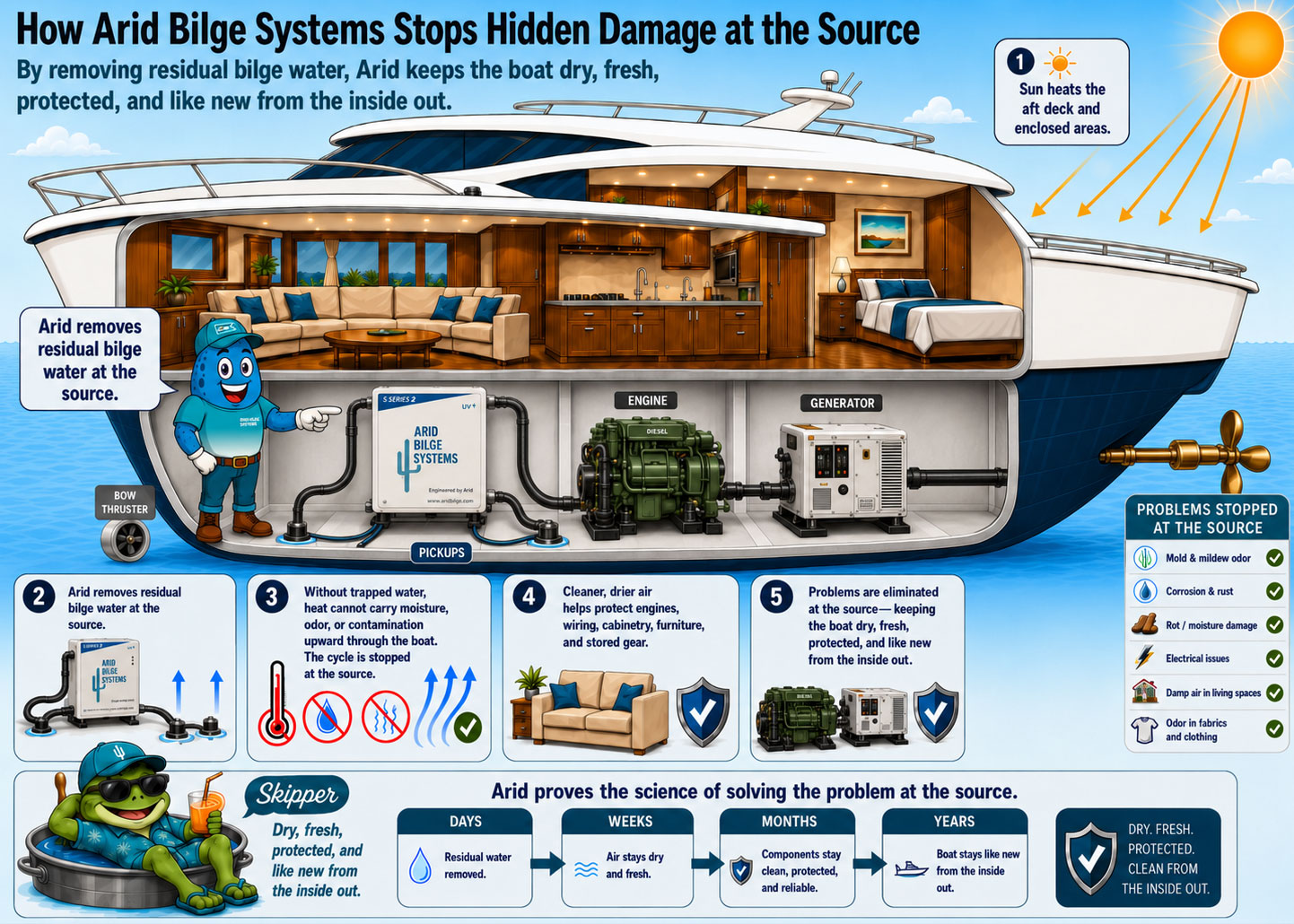
Compared with bilge pumps, the Arid Bilge System works very much like a common shop or wet vac. All Arid Bilge Systems have miniature collection chambers similar the bucket on the wet vac. Air is vacuumed out of the collection chamber, and then bilge water rushes in to fill this void.  There is no priming necessary, all the water moves in one direction only. Then the water is trapped in the collection chamber. Now instead of relying on the  common float switch, the Arid System utilizes vacuum switches that keep these systems running, until air is pulled through the intake tubes, leaving the bilges bone dry and the intake tubes stripped of liquids. These systems are low volume, and are well tuned to the day-to-day needs of the average boat.

Essentially, the aging process of the interior of the boat does slow and nearly stops. Instead of dealing with the odor, condensation damage, mildew, corrosion, or rust, the Arid Bilge will suck up all of the residual water from the source so that you don’t have to deal with the problems caused by standing residual bilge water.

Common, old school solutions . . .

Before the Arid Bilge System, boaters were resorting to pouring bilge cleaners, in order to minimize odors. Yes, wet vacs, ozone machines, dehumidifiers, bilge diapers were all available to provide a partial solution to these common age old problems of the chronically wet bilge. These “solutions” do tend to act as a Band-Aid and work only as long as they are constantly being re-applied. But once the Arid Bilge System is installed, it becomes a game changer which so completely removes all of the standing bilge water, that you can now completely abandon the “Band-Aid solutions”.

See the Arid Bilge System in action below!

Why Buy an Arid Bilge System?

You can think of the Arid Bilge System as the maintenance worker that you thought you’d never have. It is a truly magical system that acts automatically, removing moisture, preventing mildew, and odor at the source. All while slowing the aging process, which helps to keep your boat free from rotting, corrosion, rust and condensation damage! As an added caveat, the Arid Bilge will also help you find small leaks, which will leave a wet trail through the dry bilge back to the source!

We hope that we’ve inspired you to raise the bar for a better boating experience for yourself with a brand new Arid Bilge System on board!

20 03, 2020

Can a Boat Have More Than One Bilge Pump Installed?

By |2026-01-18T22:29:30+00:00March 20, 2020|Blog|

Is it normal for a single boat to have more than one bilge pump installed?

It’s very likely that the average boat builder has installed multiple bilge pumps during the building of your boat. They are usually installed in the area or areas where water collects in the bilge. It’s common sense to the average builder to install multiple bilge pumps because they are inexpensive and generally have poor longevity. So from a safety standpoint, allowing for one pump to fail and another as a backup is just good seamanship skills. Bilge pumps are primarily a safety device and are designed to move a high volume of water, in order to maintain vessel flotation in emergency situations.

Bilge Pumps Have Poor Longevity

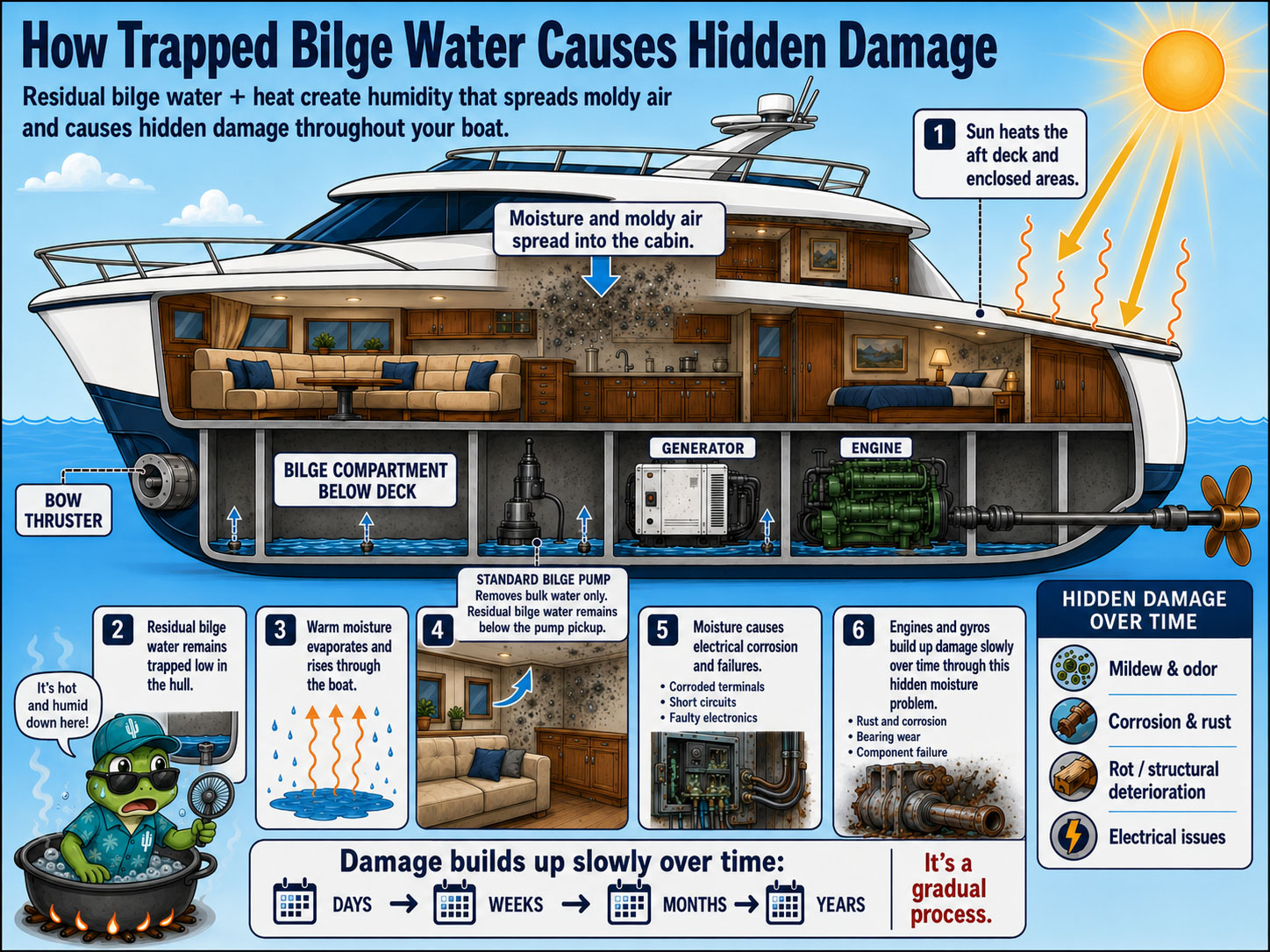
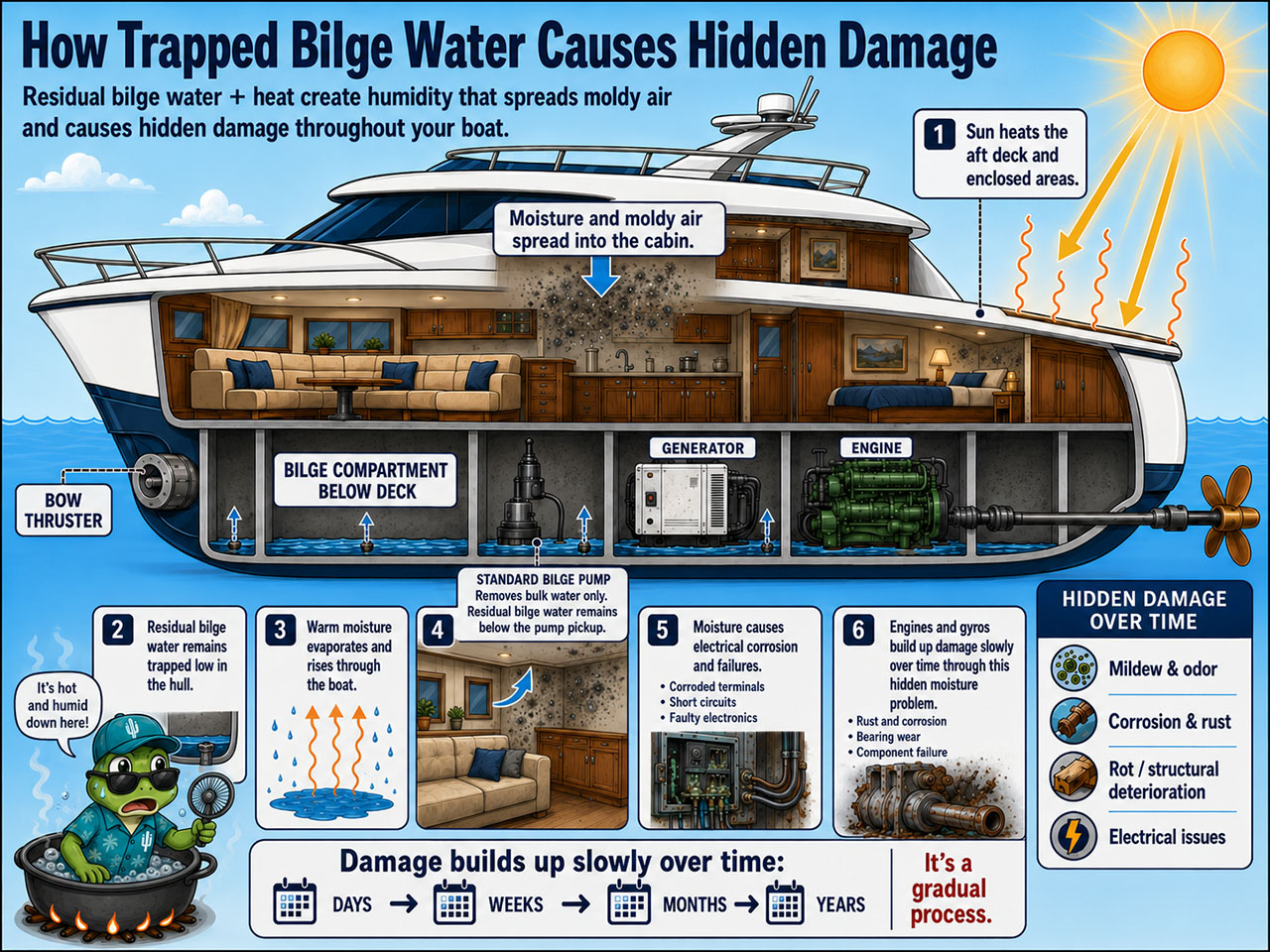
Bilge pumps are very poorly designed to handle the day-to-day moisture aboard the average vessel, where small amounts of water find their way in and gather in certain low spots. In the marine industry, we call this “residual bilge water.” The average broker or boat salesman is not very comfortable about discussing this negative feature inherent in almost all boats. Their level of discomfort is high enough that they will usually resort to doing something about it, like passing a common wet vac around from boat to boat, early in the morning at a boat show, to prepare the boat for its many showings during the day. Is this one of those dirty little secrets in the boat business? Many of the cleaning crews that come in at 7 or 8 in the morning for a 10 AM boat show and perform this bilge duty as well. But once you sign the contract and take delivery of your new found pride and joy, reality starts to set in. Initially, we are so happy and excited with our new boat, and are busy learning how to operate it and all of its systems, and to entertain our friends that we overlook some issues. But over time, a little dirt, fuel, oil etc. starts to mix with the residual bilge water, microbes find their way in, and then in those dark, very damp insides of our new boat, something starts to happen. It’s what we call the condensation cycle.

The Condensation Cycle: Simple Physics

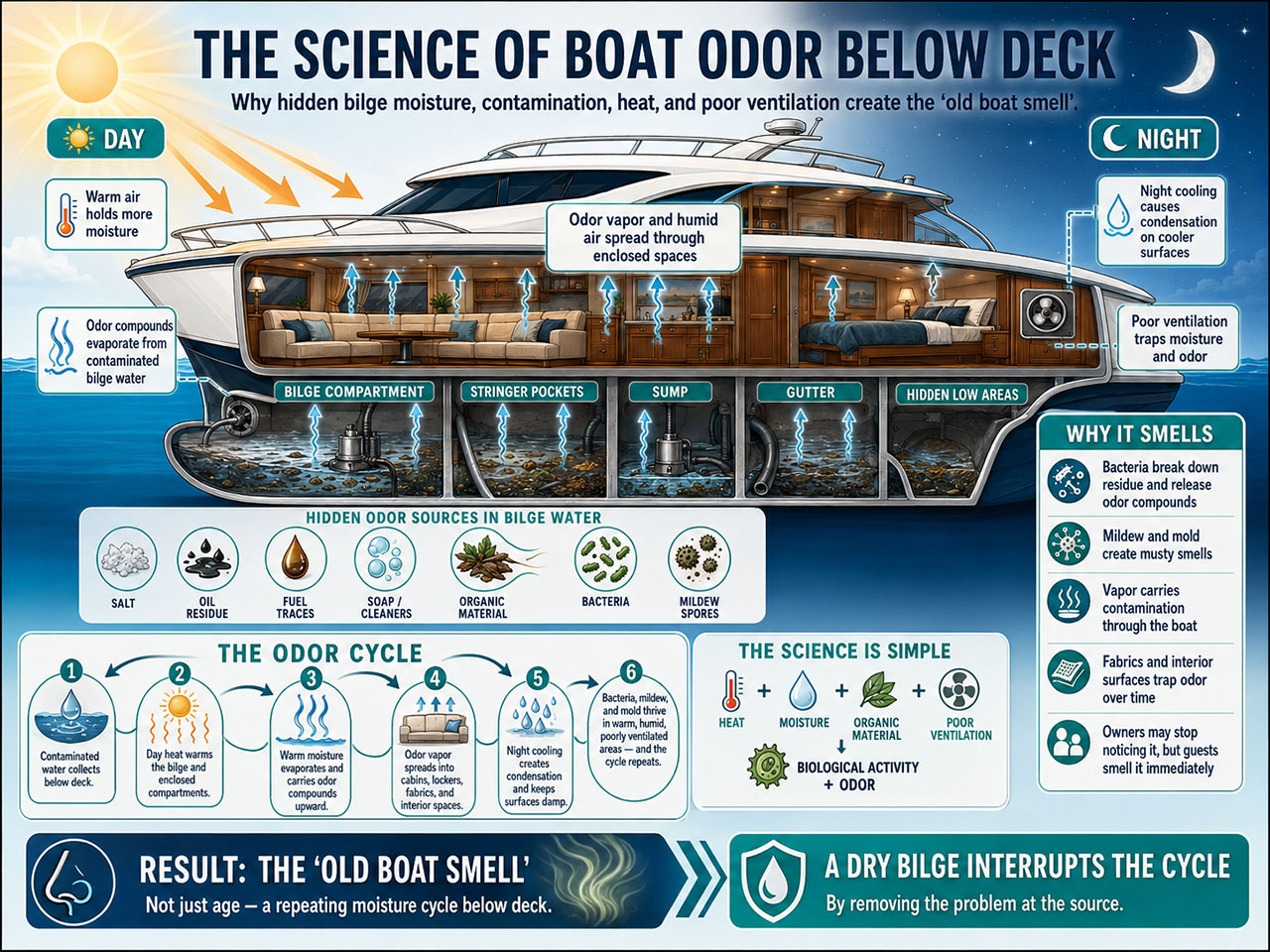
If you were to take a large Tupperware container with a tray shape, pour a half inch of water inside, sprinkle a little dirt and oil inside, seal it and place it out in the sun, what would happen? Condensation droplets would eventually start to form on the inside of the lid. When it comes to our boats and wet bilges, it’s pretty much the same result. The sun beats down on the hull and decks, radiating heat, which permeates into the interior air. The evaporation of the bilge water accelerates as the air warms. Then, later in the day as the sun sets, the air below cools and passes dew point. Condensation droplets or dew starts to form all over your beautiful new boat. This is the aging mechanism that will transform your whole boat over time into an unreliable, smelly old boat that you no longer want, and no one else wants to buy. Rapid depreciation: it’s a common finding when you board your boat early in the morning and raise the cockpit hatch, and as it swings up on its hinges, you see large drops of water running down into the gutter. It would be nice if these drops of water only formed on the bottom side of the hatch, but we know that this moisture is getting all over absolutely everything on board. It is as if there were a little gremlin down below with a fine mist garden hose, spraying water on everything a few times per day.

So what, what’s a little water going to do to my boat?

True, the builder certainly used marine grade components and finishes in the lower compartments

Regardless of how much money the builder spent on marine grade wiring, stainless steel fasteners, marine coatings etc., none of this is a match to this constant attack of heat, humidity and condensation droplets. This gets into the electrical connections. Just ask any marine electrician, and they will tell you about the failed electrical connection that was cut open to reveal black or green powder as the tin plated, multi-stranded copper wire failed and then started the snap-crackle-pop scenario, as the lights started to flicker and then a week later just quit altogether. That same thing happens with the stereo, pumps, generator, gyro stabilizer and everything else below. The droplets allow mildew to grow, followed by mold in the dark bilge water creating that mature vessel smell which starts to rise up out of the bilges, overtaking the living areas of the boat. As paint starts to flake and mildew starts to grow, it is easy to just blame all of this on the fact that the boat is simply getting old.

Are you ready to say “Please give me a solution”, I still love boating?

Yes, the Arid Bilge System is designed to move water overboard like a bilge pump, but that’s where the similarity ends. The Arid Bilge System is a true vacuum cleaner system where, like a wet vac, it suctions water into a small collection chamber, like a miniature wet vac. Like the wet vac, it does not stop until all of the residual bilge water is removed. And better yet, one Arid Bilge System will do all of your different bilge compartments inside the boat. Yes, you will need to leave the standard, factory installed, bilge pumps in place to let them do what they were designed to do: move a large volume of water if and when needed. Yes, in the rare event that your boat is taking on a lot of water, the Arid Bilge System will be of little help.

What changes can I expect aboard, once the Arid Bilge System is installed?
  1. No water in the bilge, and we really mean dry parched without moisture dry.
  2. It’s a leak detector. Small leaks are now are exposed, leaving wet or oily trails back to the source(s).
  3. Clean out the mold and mildew one last time, it won’t be regenerating
  4. The conventional bilge pump will now have a much longer life, as it no longer sits in water, expect 10 to 15 years instead of 2 to 4.
  5. The moisture in the fiberglass laminates will return to the bilge and evaporate away, greatly reducing the possibility of osmosis, blistering and small hull cracks from winter freezing.
  6. The resale value of your boat is greatly enhanced, as it looks like you slaved over the boat keeping it clean and well serviced, when all you did was buy and install the right tool for the job.
  7. Without the mold and mildew growing below, the odors are no longer infesting the living areas, meaning fewer health issues for the elderly and the young.
  8. And most importantly, the peace of mind and spending more time enjoying your boat, not laboring over it.