
THE DETAILS

Eco Add-On Devices.

Optional separation and monitoring

See what happens after the pickup.

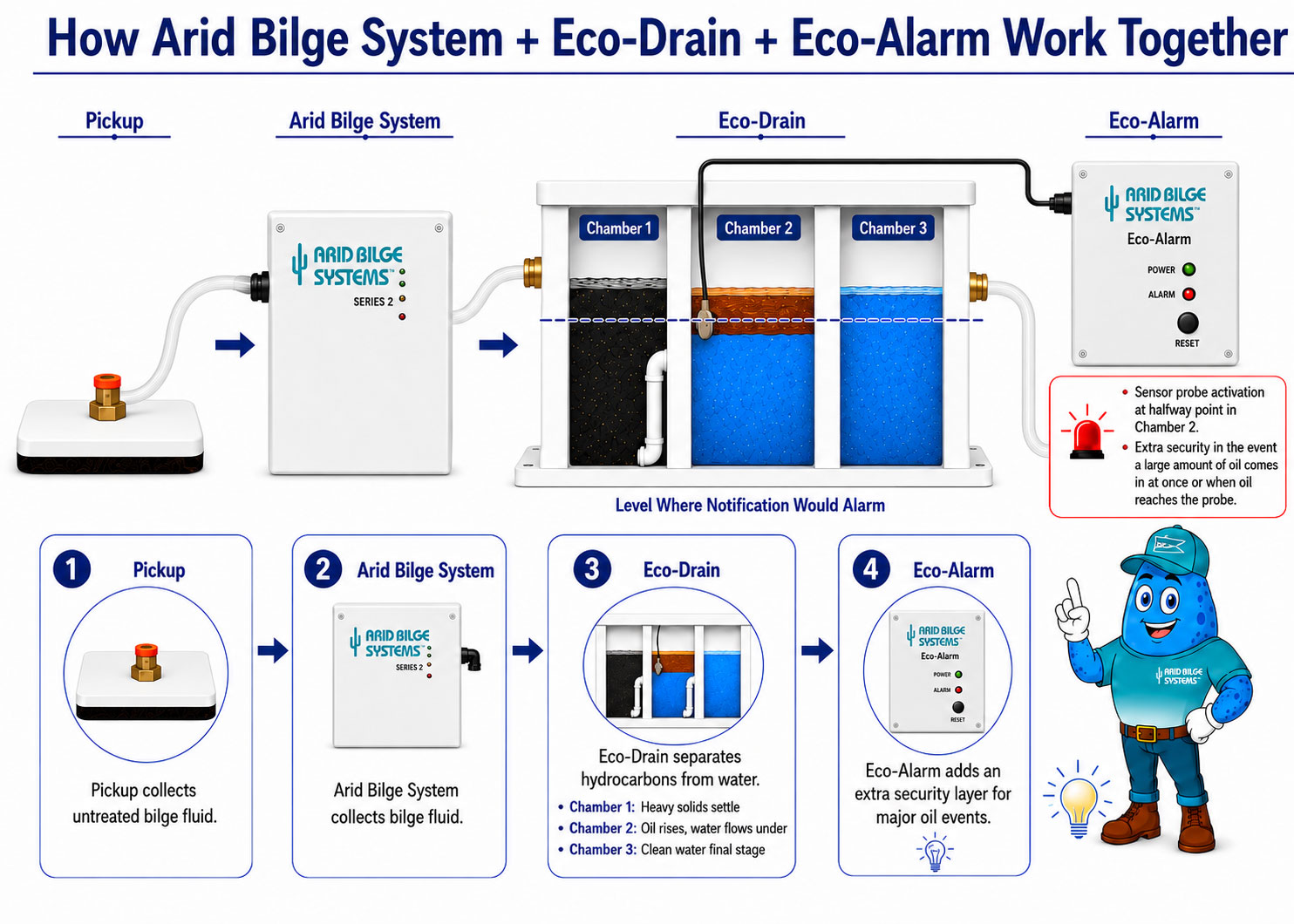
The Arid Bilge System collects residual fluid. Eco-Drain adds an oil-separation stage. Eco-Alarm adds monitoring, so the crew knows when the separator needs attention.

Each has a different job. Together, they help you manage collected bilge fluid and inspect what is accumulating.

  1. Collect the residual fluid. Pickups route fluid from the bilge to the Arid unit, which sends it into the installed discharge arrangement.
  2. Separate and retain hydrocarbons. Eco-Drain allows lighter oil to rise while water follows the chamber route. Retained oil needs removal during service.
  3. Monitor and respond. An optional Eco-Alarm monitors the separator. Choose notification, or notification with Arid shutdown when properly connected.
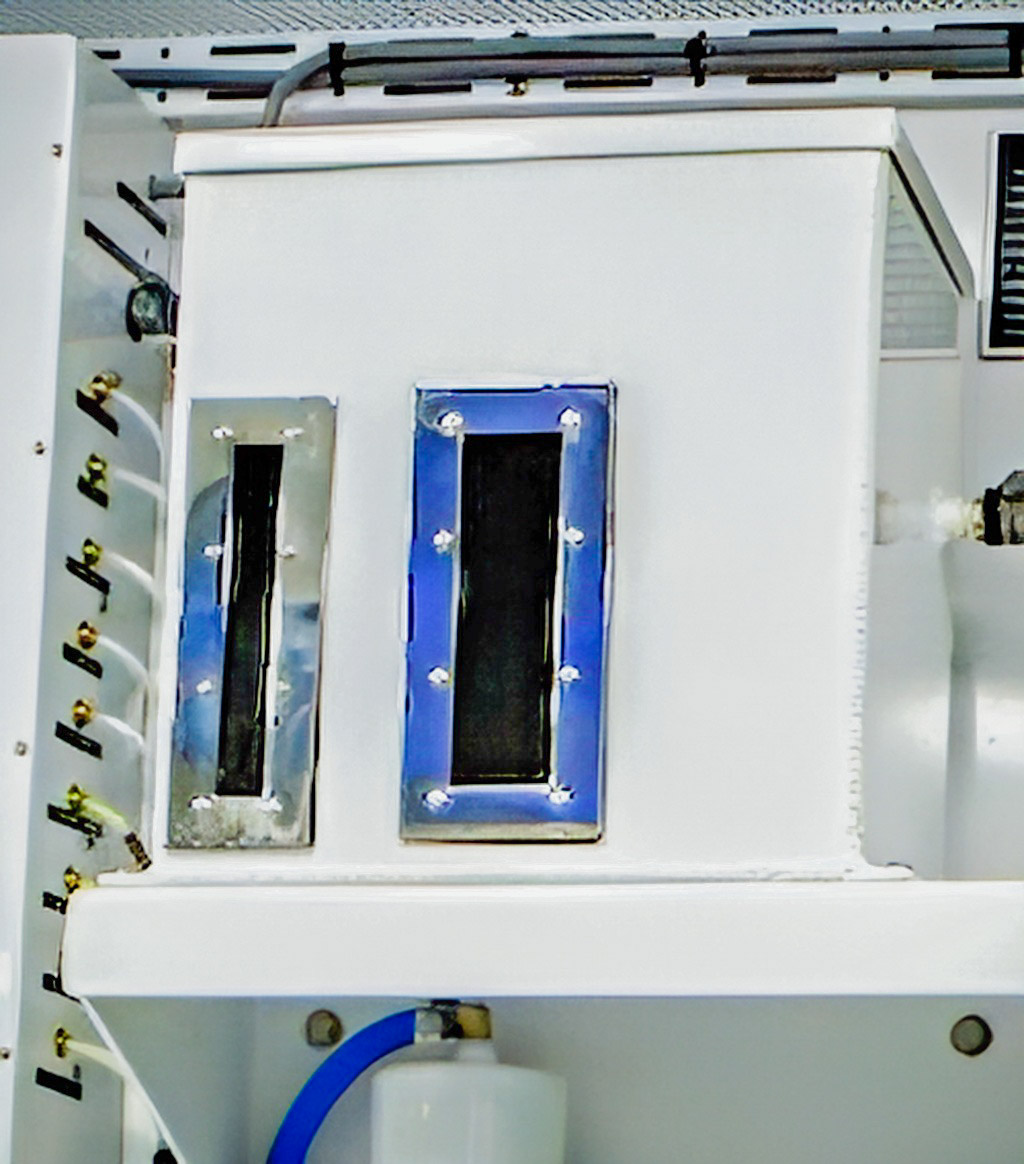
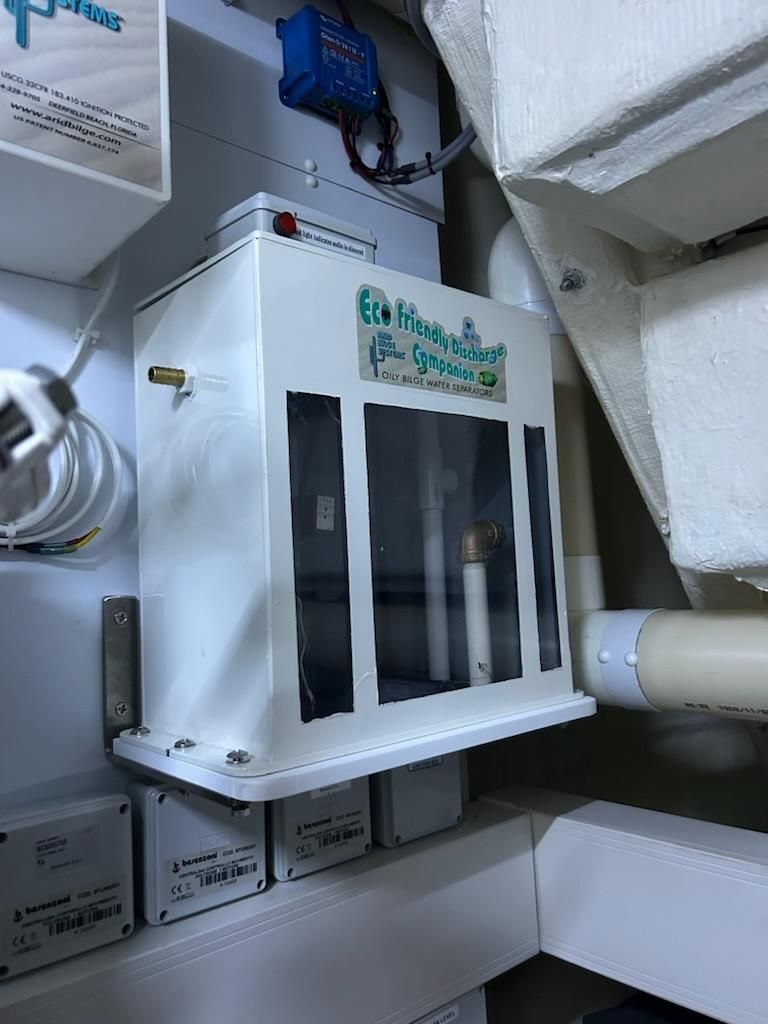
Installed Eco-Drain clear enclosure showing the internal chambers and connected hoses.
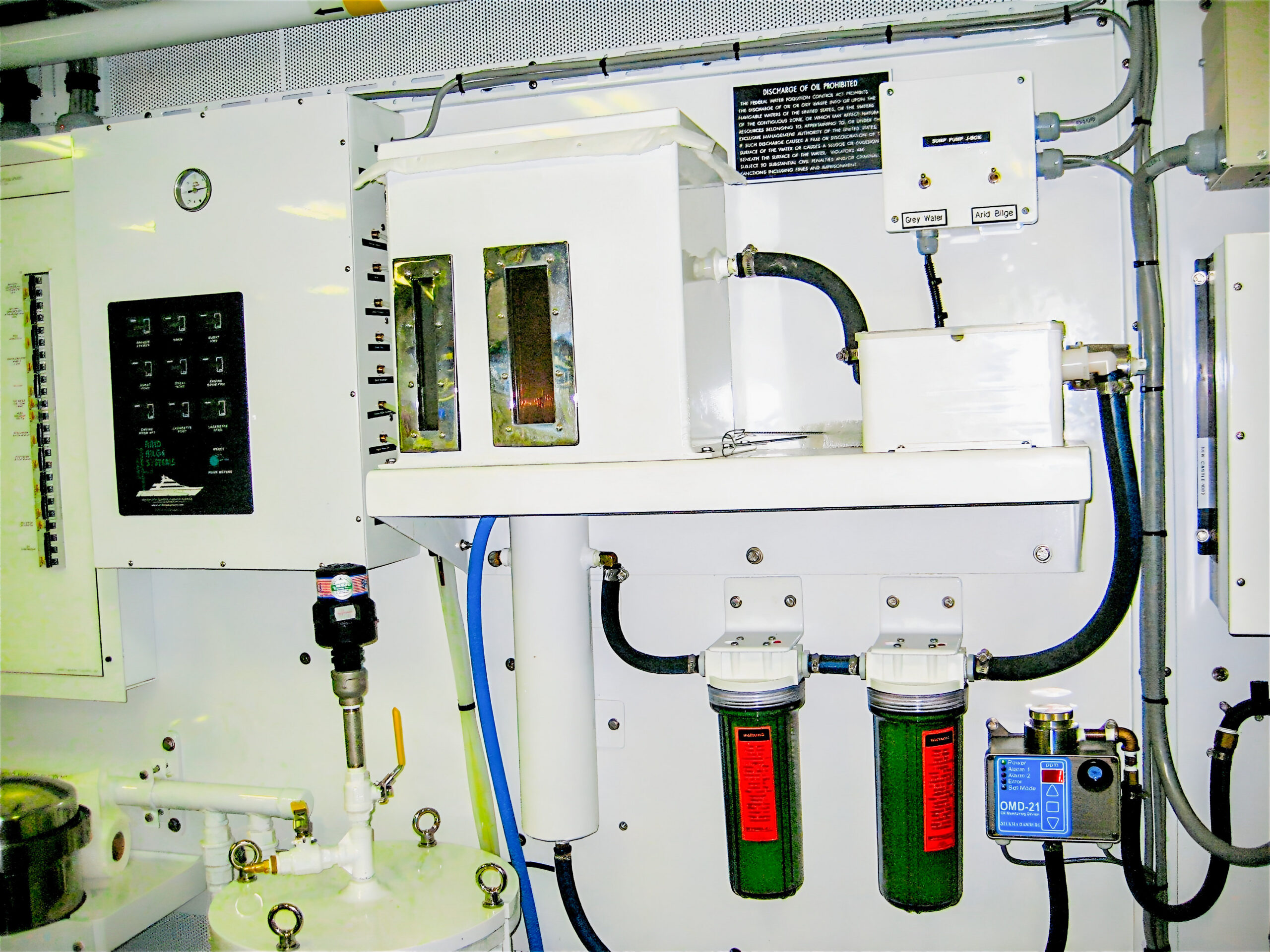
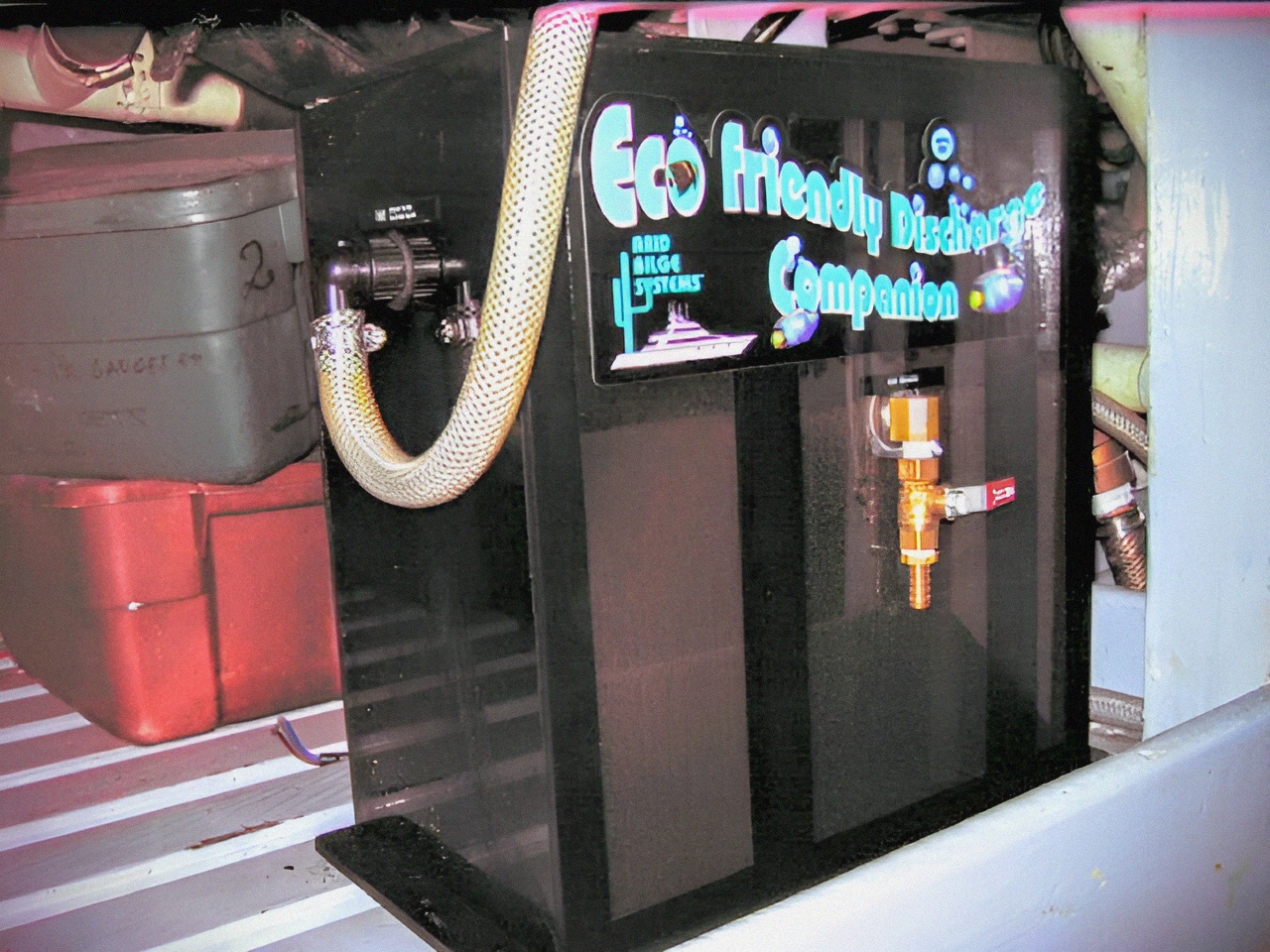
Eco-Drain installed aboard a boat, with the chamber and hose connections visible.
See more Eco-Drain installations · View Eco-Drain separation diagram

Arid Bilge Systems · Eco overview

From bilge to discharge.

Collect residual water. Separate retained oil. Know when the separator needs attention.
Fluid routeSensor connection
1Collect
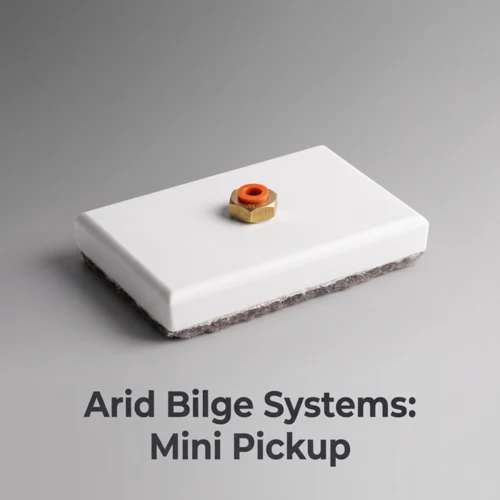
Original photograph of an Arid Mini pickup.

Low-point pickups

Collect fluid where shallow water remains.
2Transfer
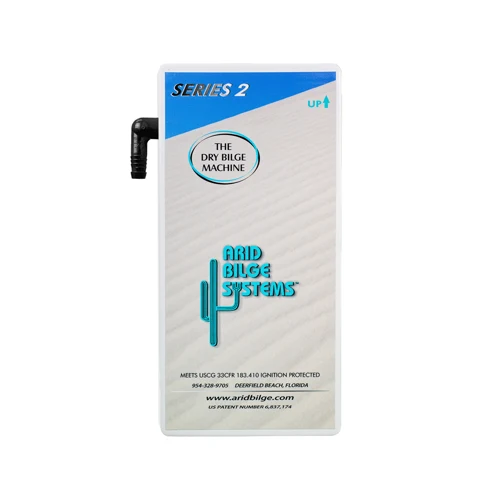
Existing catalogue photograph of a Series 2 enclosure.

Arid system

Vacuum draws fluid in. Air pressure moves it to the discharge line.

3Separate
Original Eco-Drain 2 Pro product photograph with clear front and drain valve.

Eco-Drain

Retains separated oil for removal during service.

OPTIONAL ADD-ON
4Route

Discharge route

Follow the installed model’s routing and discharge requirements.

Probe connection from Eco-Drain
Original Eco-Alarm 1 notifier photograph.

Separate monitoring connection

Eco-Alarm

Eco-Alarm 1: notification.
Eco-Alarm 2: notification plus Arid shutdown when correctly connected.

Conceptual arrangement; example products are not shown to scale. Separation does not remove every contaminant. Inspect and service retained fluid, and follow the instructions for the selected models.

Installation manual ↗

Installation photo archive

Eco-Drain installations aboard real boats.

See installed enclosures, inspection windows and hose connections. Select any photo to view it full size.
Installed Eco-Drain clear enclosure showing the internal chambers and connected hoses.
Clear enclosure with chambers visible
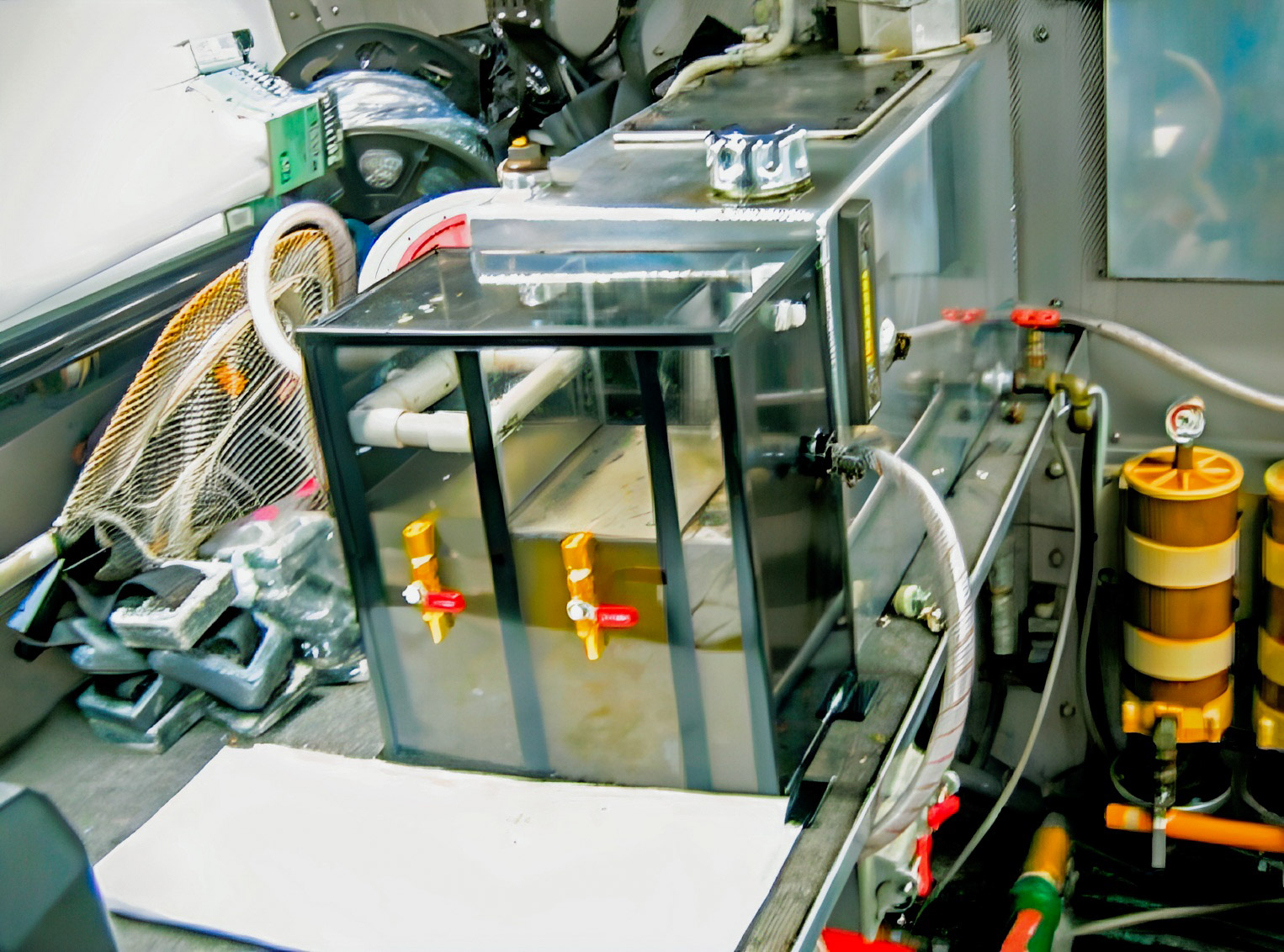
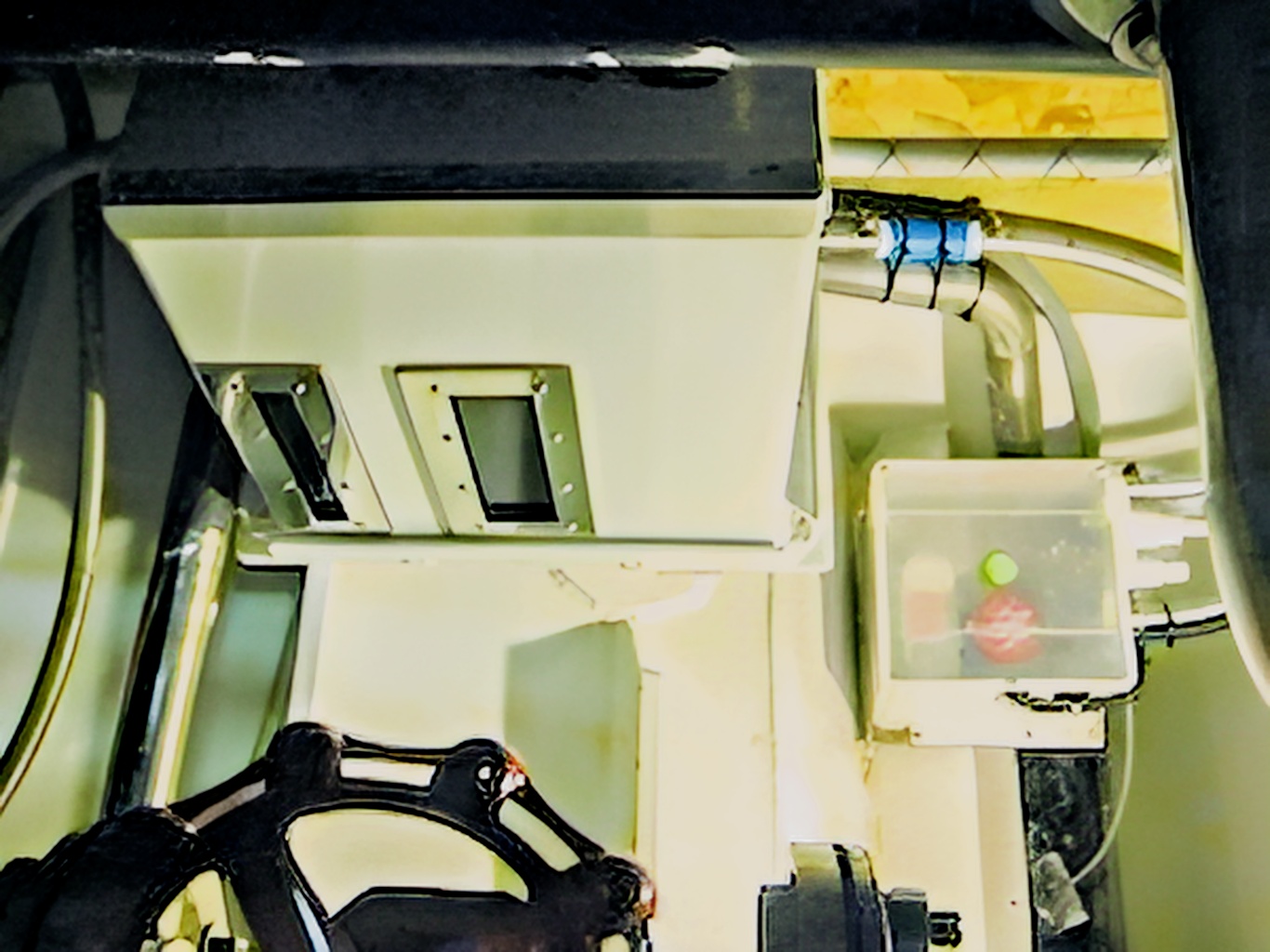
Installed metal Eco-Drain enclosure with two inspection windows beside the onboard equipment.
Twin inspection windows
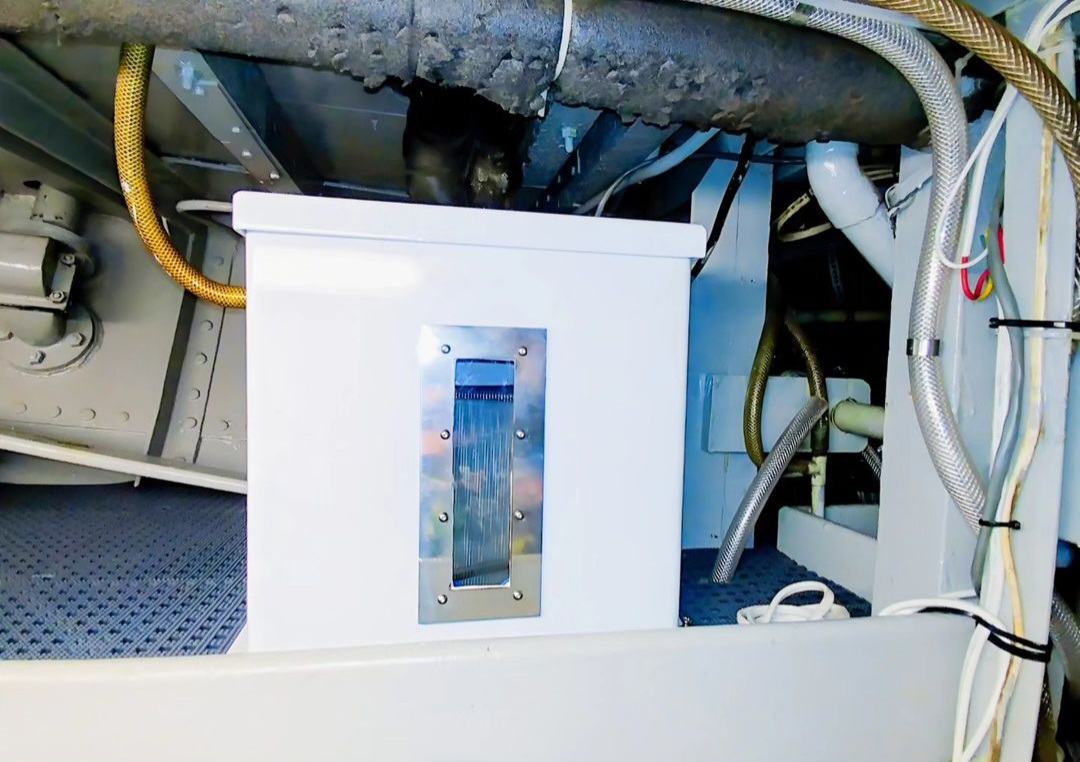
Installed Eco-Drain metal enclosure with a single front inspection window and connected pipework.
Single-window enclosure
Close view of an installed Eco-Drain metal enclosure with two front inspection windows.
Metal enclosure detail
Wider view of the installed Eco-Drain enclosure, nearby Arid system and connected hoses.
The surrounding installation
Installed clear Eco-Drain discharge companion with visible internal pipework and connected hoses.
Discharge companion installation
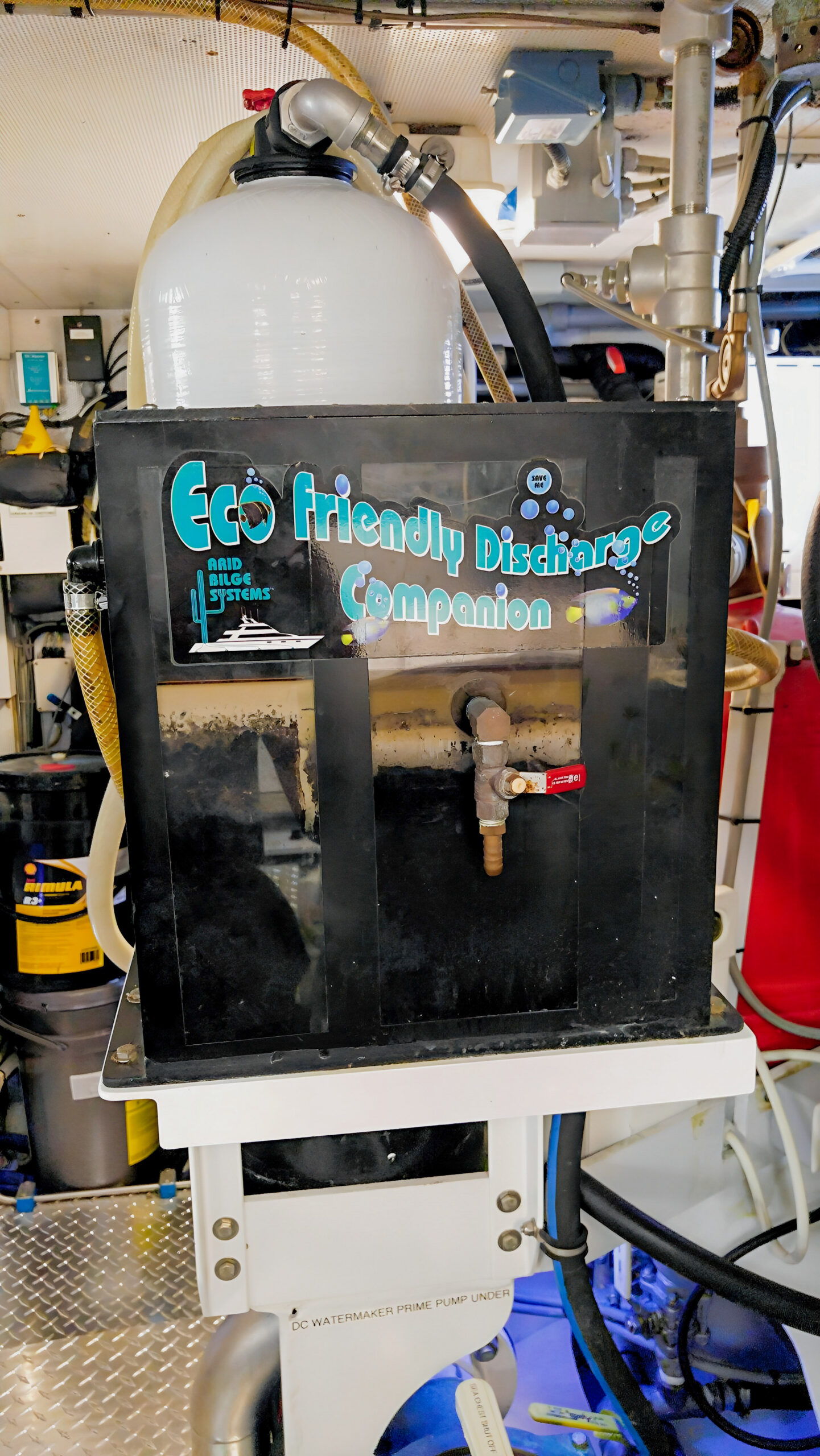
Tall installed Eco-Drain discharge companion showing the clear chamber, lower drain and hose connections.
Chamber and drain access
Installed Arid oily bilge water separator with inspection windows and internal pipework visible beside insulated equipment.
Inspection windows and pipework

The separator range

Compare the Eco-Drain models.

Start with your Arid system, available mounting space and service access. Open each model for its current specifications and ordering options.
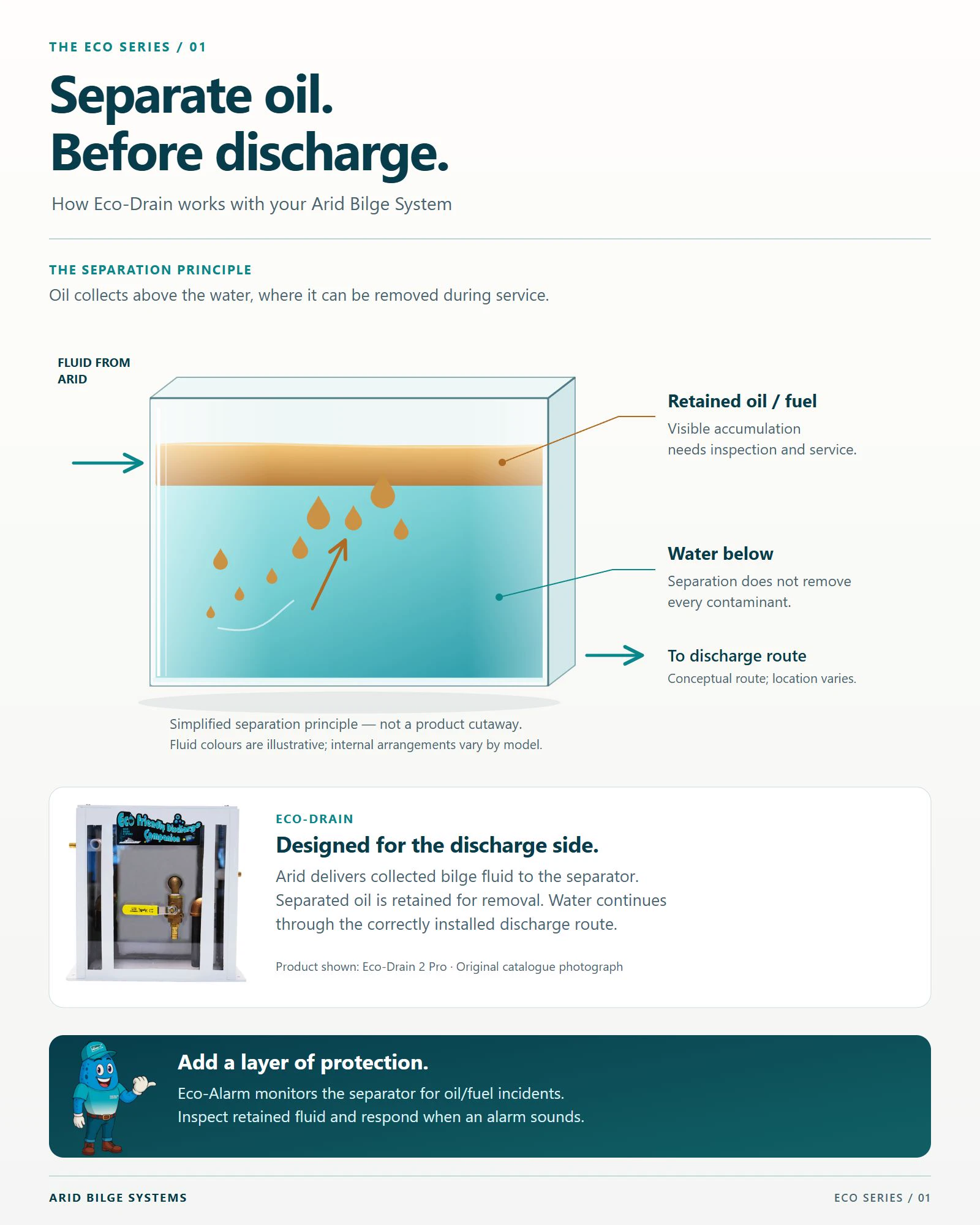
Conceptual Eco-Drain separation diagram showing oil retained above water and a water-out route. Includes an original Eco-Drain product photograph.

Separation principle with an original Eco-Drain product photograph. Conceptual illustration, not a model-specific internal cutaway. View full-size Eco-Drain diagram

Eco-Drain 1 compact Lexan oily bilge water separator.

Compact Lexan enclosure

Eco-Drain 1

The compact separator in the Eco-Drain range, with a front window for inspecting the collected fluid.

Explore Eco-Drain 1

Eco-Drain 2 Pro Lexan separator with its brass drain valve.

Lexan enclosure

Eco-Drain 2 Pro

A larger Lexan separator with a visible fluid chamber and a drain valve for servicing retained fluid.

Explore Eco-Drain 2 Pro
Eco-Drain 3 Premium aluminum separator with a front viewing window.

Aluminum enclosure

Eco-Drain 3 Premium

The aluminum model, with a front viewing window to check fluid levels during routine inspection.

Explore Eco-Drain 3 Premium

Confirm the exact model, installation height, outlet route and service access with Arid or your installer before ordering. Separation does not remove every contaminant or replace repair of the leak or spill.

Know when to inspect

How Eco-Alarm works with Eco-Drain.

A probe monitors conditions inside the separator. Eco-Alarm alerts the crew when attention is needed. The two alarm models differ in whether they provide notification alone or add a shutdown connection to the Arid system.
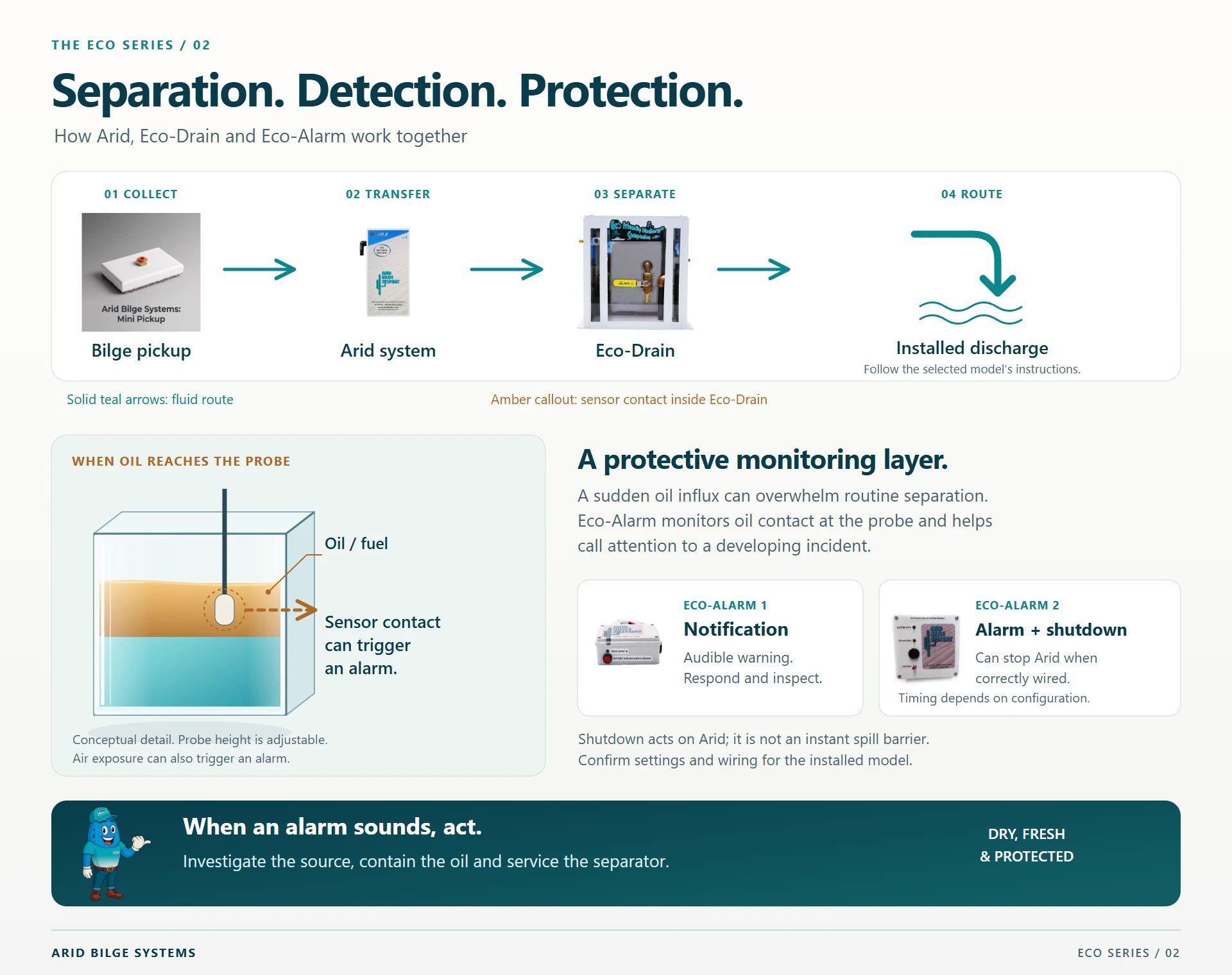
Arid and Eco fluid route with an oil-contact probe detail. Eco-Alarm 1 gives an audible warning; Eco-Alarm 2 can also stop Arid when correctly wired.

Oil-contact monitoring is separate from the fluid route. Alarm and shutdown timing depends on the installed model and configuration. View full-size Eco-Alarm diagram

Conceptual system illustration. Use the correct pickup, fittings, probe position and wiring for the installed models. View full-size Eco-Alarm diagram

Eco-Alarm 1 hydrocarbon notifier with power indicator and audio-silence control.

Notification

Eco-Alarm 1

Alerts you when the monitored oil level calls for attention. This model provides notification; it does not provide Arid shutdown.

View Eco-Alarm 1
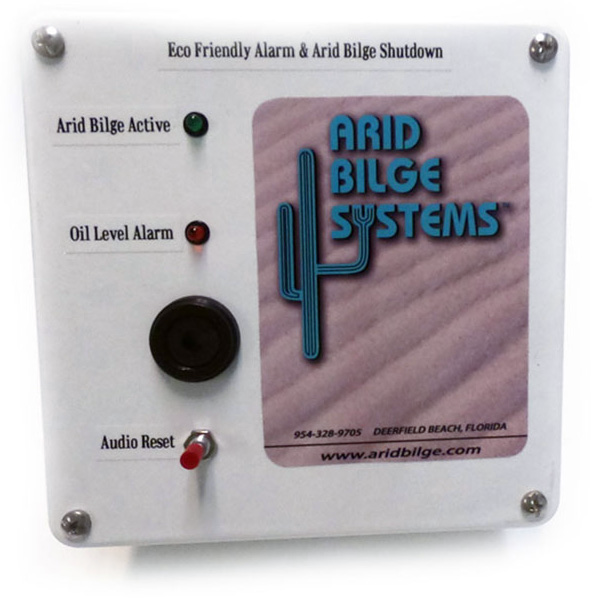
Eco-Alarm 2 alarm and Arid Bilge shutdown panel with status lights and reset control.

Notification and shutdown

Eco-Alarm 2

Adds an Arid shutdown function when correctly wired and configured. Alarm delays and shutdown settings must follow the installation instructions.

View Eco-Alarm 2

Frequently Asked Questions

Eco-Drain adds oily-water separation to a compatible Arid Bilge installation. Eco-Alarm provides monitoring, with notification and shutdown options. These answers explain what to plan for before adding either product.


Find and repair the source of the oil. An Arid Bilge System collects residual fluid; by itself, it does not separate oil from water. Eco-Drain adds a chamber that retains separated hydrocarbons for removal during service. Inspect the unit, remove accumulated material using the model’s instructions, and arrange appropriate disposal. Separation is not a guarantee that the outlet fluid is free of all contamination.

Eco-Drain allows time for lighter hydrocarbons to rise while water follows the lower chamber route. Retained hydrocarbons need to be removed during service. This physical separation process is not designed to remove every contaminant or dissolved chemical. Use the instructions for the selected model to plan its mounting position, outlet arrangement and maintenance.

Eco-Drain is designed around the flow from a compatible Arid Bilge System. Do not connect it to a conventional high-flow bilge pump without written confirmation from Arid. Keep the boat’s existing bilge pumps, alarms and emergency arrangements in service; these optional accessories serve a different purpose.

Match the separator to the installed Arid Series, available space and intended fluid route. Allow access to inspect the chamber and remove retained hydrocarbons before its service limit. Eco-Alarm 1 provides notification. Eco-Alarm 2 adds Arid shutdown when properly connected and configured. Confirm model-specific capacity, probe settings and wiring with Arid and the current installation instructions.