


bilge vacuum

22 10, 2025
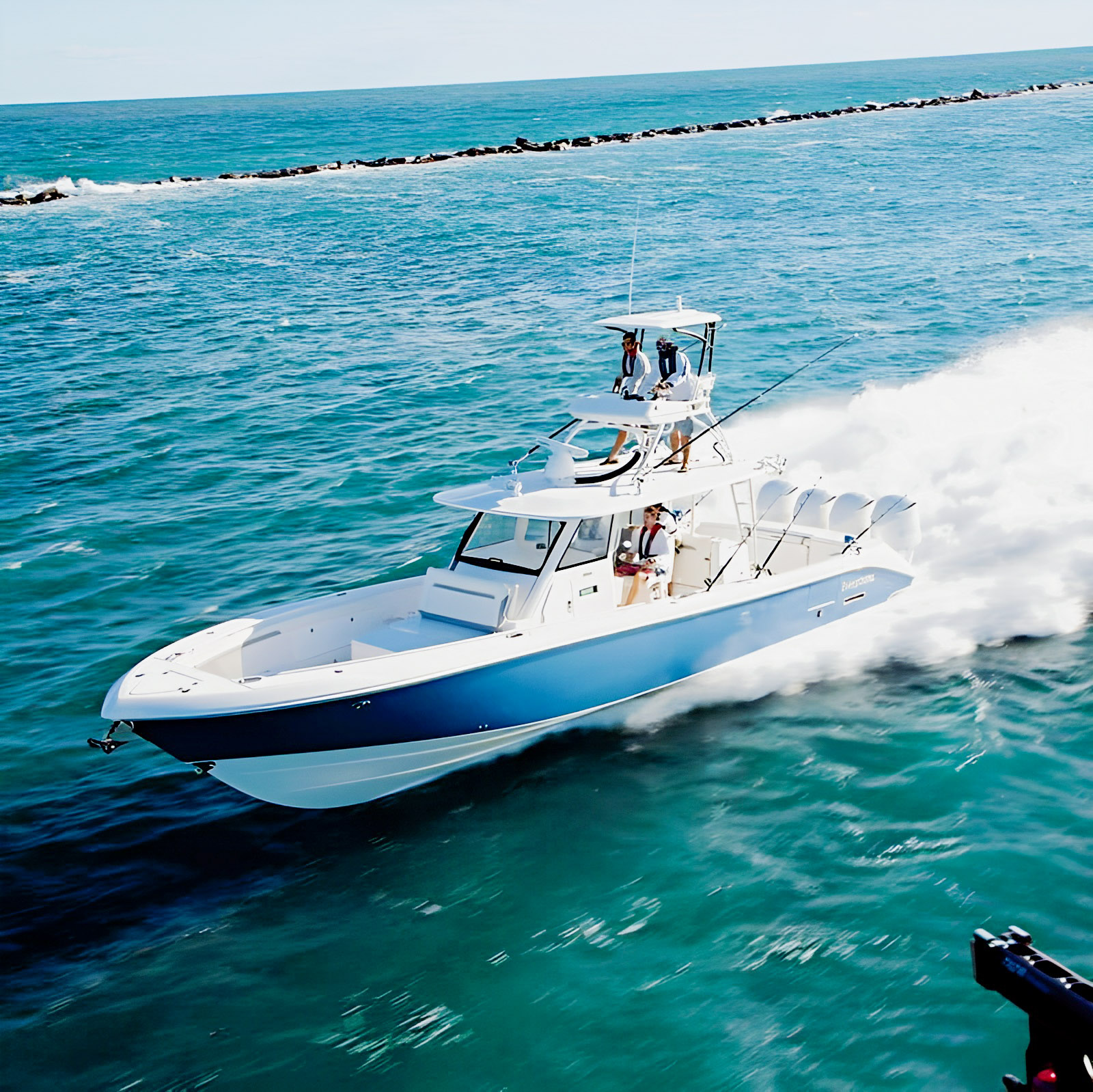
  • Arid Bilge Systems joins forces with Everglades boats.

Everglades Boats + Arid Bilge: A Standard for Dry, Protected Performance on the Water

By |2026-01-18T22:20:36+00:00October 22, 2025|Articles|

Everglades Boats – Known for its Commitment to Innovation, Reliability, and Performance

From their smallest 245 model to the flagship 455, every vessel is engineered with cutting-edge features and premium components. In this testimonial, we speak with David Brown, Vice President of Product Development and Engineering at Everglades Boats, as well as Captain Sean Hickey, a seasoned regional manager and company captain. Together, they share how the Arid Bilge System has become a crucial addition to their boats—delivering a cleaner, drier, and more protected boating experience for every customer.


Arid Bilge Systems Conversation with Everglades Boats

Alfred: Here to go and talk about the Arid Bilge System on the 395, and how the Arid Bilge System makes the Everglades a better boating dry experience. Here to talk about it with David.

David: Yeah, thanks for being here. You’re on the 395. I’m David Brown, the Vice President of Product Development and Engineering. We partnered with Arid Bilge Systems, and it is now a standard feature on this boat. It really helps keep all of the below deck bilges nice and bone dry.

David: It’s been a huge customer satisfaction item—especially for people who keep their boats in the water. Everglades has been building center consoles for years. We offer a full range of boats from our 245 up to our 455, packed full of technology and patented features. So, we’re really proud to be a partner here with Arid Bilge Systems.

Sean: Hi, I’m Captain Sean Hickey with Everglades Boats. I’m one of their regional managers as well as the captain of the company. At Everglades, our philosophy is using nothing but the best parts we can find on the marketplace.

Sean: The last trip I did was a long trip—over about 2,500 miles over the course of three months. We pulled the boat out of the water at the end of that, and there wasn’t a drop of water in the bilge. And that’s imperative these days with Helm Master systems down there—Seakeepers, generators, you name it.

Sean: The Arid Bilge System delivers as promised. It keeps your bilge dry and keeps your electronics safe.

From long-distance journeys to day-to-day reliability, Everglades Boats trusts the Arid Bilge System to keep every compartment bone dry—no mold, no odors, no corrosion.

It’s a testament to how premium engineering and proven innovation come together to create a better boating experience. When you’re designing boats for the future, every detail counts. That’s why Everglades chooses to stay

See the full video here: https://youtu.be/nZHmrzSJS-s

13 03, 2024

Bilge System Installation: The Preparation Guide

By |2026-01-18T22:26:52+00:00March 13, 2024|Blog|

How To Prepare Your Boat Before Installing Your Dry Bilge System

Bilge System Installation If you want to keep your boat in pristine condition and prolong its life, it is more than necessary to have an effective dry bilge system installed. If you’ve noticed that your dirty old bilge pump hasn’t been pumping out water as effectively as it should, it is time to look into getting a new bilge vacuum system. Of course, we recommend that you look into our Arid Bilge System, as it is the best of the best! Plus, you can install it yourself. Installing an Arid Bilge System on your boat is relatively simple, usually not requiring the services of a skilled technician! Here is a simple step-by-step guide to prepare for your bilge system installation.

Pre-Installation

Before you begin installing your bilge system, we recommend a few steps to save yourself money and complete the job quickly and efficiently.

1. Determine How Many Zones or Distinct Wet Locations are on Your Boat

Start by assuring that your boat is in its natural static float position. In other words: if it’s up on the hard or with an engine removed it’s going to be a little hard to determine where and how the water pockets around the boat, compared to when it’s sitting at anchor or at the dock and in normal use. Next, bring a common wet vac on board. Take the hose and hold it in the deepest, lowest elevated location, then wait and relax. Water will often travel, slowly, through limber holes from other compartments nearby. Once the water stops flowing and that lowest, deepest, compartment is dried down to a sheen, then you are ready to move to the second lowest, deepest compartment, if there is one. You repeat this process until you come up with a zone count. Make sure that you don’t make the mistake of skipping compartments that don’t have traditional bilge pumps. Also, don’t expect that the existing, factory installed bilge pumps are even at the lowest deepest points in the first place.

2. Determine a Good Mounting Location for the Central Unit

In most boats we would recommend looking around in the engine room first, as it usually pockets the most water and is centrally located in the boat. Outboard boats like larger center consoles will generally have an aft compartment under the floor, hopefully with a large access hatch. You generally try to mount the system as high as possible. Placing the Arid Bilge System near the bottom of the bilge is a no no, as the central units are not water proof. The unit must be mounted upright, because: like the wet shop vac, it does have a collection bucket or chamber that has to fill with the collected bilge water, temporarily, before sending it overboard.

3. Determine Where the Discharge Water Will go

Next, we look for hoses that go to thru hull fittings, and determine if any are used for the occasional discharging of water. Air conditioning cooling water discharges are not recommended, as they can be pumping water overboard, continuously, most of the time. Hoses that are connected to deck, hatch or vent drains, as well as sink drains are usually preferred. We are looking to T connect our Arid Bilge discharge to an existing outflow, as this is usually much easier than drilling another hole in the side of the boat. We try to locate the unit above this discharge hose, so that the water leaving the Arid Bilge System travels downhill to flow overboard more completely. Then, we look for a power source. The Arid Bilge System can usually be connected to 12 or 24 volt DC or 120 volt AC house power. The Arid Bilge draws very little power and often ends up taking power from an existing bilge pump circuit as a matter of convenience. The ideal mounting location will be in close proximity to discharge and power offering enough space to mount the unit upright. Sometimes, this ends up being under the galley or head sink. Next, we have to make sure that the unit that we need, will fit in the available space. Modern boats are often crammed full with all kinds of pumps, systems, battery chargers, electronics etc. So, occasionally you may have to buy a three zone Series 2 instead of a four zone Series 4, just because there is no room for the larger system aboard.

4. Determine the Correct Bilge Pickup Type Needed for each Compartment

Bilge compartments come in all shapes and sizes. Remember when you held the wet vac hose in place waiting for the water to drain to each of the low points? If the bottom of the compartment was flat – then select the Standard or Mini Standard pickups. If the compartment came to a V at the bottom, then you would select the offset or pickup wand. We do provide a spare for every two zones, so you can often have it both ways when ordering.

Should You Buy An Arid Bilge System?

There are just about a hundred reasons to get an Arid Bilge System. Unlike regular bilge pumps or temporary solutions like bilge cleaners and ozone machines, the Arid Bilge System vacuums slowly and effectively to make sure that your boat remains 100% dusty dry at all times. This will keep the boat young and protect your investment from nasty odors and the damaging effects of rust and corrosion.

When you buy an Arid Bilge System, you are effectively prolonging the life of your boat and enhancing the resale value. If you’re ready to take the plunge check out our shop today. We’re ready to provide you with the best bilge products on the market! Happy boating!

6 03, 2024
  • boat bilge pumps, concept image.

A Guide To Boat Bilge Pumps

By |2026-01-18T22:27:18+00:00March 6, 2024|Blog|

A Guide To Boat Bilge Pumps – What Are They And How They Work

The unsettling thing about bilge pumps is the fact that they are usually a boat’s only line of defense before sinking into the deep blue, yet most boaters don’t know much about them. Rarely do boaters even talk about boat bilge pumps, and even less of their time is spent going down below to maintain them.

Of course, it is important that you get to know more about your boat bilge pumps, as you don’t want to end up being the proverbial old sailor, frantically taking water out of the bottom of his boat with a bucket.

Let’s dive in and take a deeper look into bilge pumps, what they are, what they do, and how to pick the best one.

What Are Bilge Pumps?

The job of a bilge pump is to clear the unwanted water that gets into the bilge on your boat. This water can come in due to errant waves, drip through packing gland, a broken hose or clamp, leaking port holes or hatches, and much more. Essentially, bilge water is almost impossible to avoid. While the stock bilge pump that came with your boat may do the job well, though, you want to be sure that it acts as a serious line of defense in the case that your boat begins sinking out at sea, giving you enough time to call for help or make it back to the marina.

Most well-educated captains who plan to undertake long crossings over open water will upgrade their bilge pumps by adding a higher-volume one, as a backup.

How Do They Work?

There are three common types of electrical bilge pumps that you will find on the market, namely the centrifugal, the rubber lobe and the diaphragm.

Centrifugal pumps work using a rotating, solid impeller, which like a turbine will push water. This type of pump will propel water up into the discharge hose and usually sits in the lowest, deepest position of the bilge. That water is pumped from the bottom up, but once air comes in contact with the impeller, cavitation usually stops the movement of water completely. Once this type of pump shuts down, all of the water that is still sitting in the discharge hose comes gushing backwards into the bilge. So the base water line left behind, when these pumps shut down, is usually around 1 ½”. The twin seals between the impeller and the motor, protect the pump’s electric motor sitting in the bilge, for a time, limiting the life of the pump. Many boaters have tried to place a check valve on the output side, near these pumps in order to prevent the back wash, only to find that this creates a condition called vapor lock, where the pump can’t prime itself, as air becomes trapped between the pump and the check valve. These are still the most popular of all bilge pumps as they are very quiet, use little power for the volume of water pumped, are relatively inexpensive and usually have a 3 to a 4 year life span in the average wet bilge. Also, if these pumps are accidentally left on, there is usually little damage potential within the first few hours.

Rubber lobe bilge pumps used to be the most popular and common of all bilge pumps, until Clinton Rule invented the Centrifugal bilge pump back in the early 60’s. These pumps have a rubber impeller that spins in a housing where there is a restriction between the intake and outflow, causing the rubber lobes to crush temporarily, attempting to compress the water and forcing it out into the discharge port. These pumps are lower volume and not particularly electrically efficient. They can pull some air with the water, but cannot be left to run dry under any circumstances. Here, the water lubricates the rubber impeller as it spins in the housing. So, without water, the impeller heats up and starts to stick to the housing. Additionally, if oil or fuel ends up being pulled through the impeller, the rubber will usually expand, also locking the pump. They will offer you a brown Nitrile replacement impeller that should not absorb the oil, and then you ask yourself, why didn’t they automatically install the Nitrile one at the factory. Most of the engines on boats today use a mechanically driven rubber lobe pump for their raw water engine cooling systems.

Diaphragm pumps have chambers, and work more like your heart, where they pulse to move the water through the two chambers and two one-way valves. So, this type of pump creates a suction that pulls out the unwanted bilge water.  Diaphragm pumps can be run dry for a time without any damage, and are self-priming. This means that they develop suction and prime themselves without being submerged in water. Unfortunately, they cannot move as much water when compared to centrifugal pumps, and won’t be able to tolerate bits of debris or trash, which can lodge in the pump valves. These pumps will usually have an intake strainer that will fill with small debris and will have to be serviced / cleaned regularly. These pumps are the noisiest of all the pumps and again, these pumps are not as electrically efficient as the centrifugal pumps, but when set up correctly, they can draw the bilge water levels down to ½” in the manual mode. In the auto mode, when they are connected to the average float switch, they will usually still leave over an inch of water behind.

In simple terms, all bilge pumps leave residual bilge water behind and this is what brings us to the Arid Bilge System

The dry bilge system > The Arid Bilge System

For those who are in the market for the best of the best, we recommend the Arid Bilge System. The Arid Bilge System works uniquely as an automated computerized vacuum system, vacuuming up water from the bow to the mid to the stern of your vessel, through small tubing, up to 75 feet away from the central unit. Because it’s an automated system, you never have to think about going down to turn it on manually.

The Arid Bilge System utilizes air sensors/vacuum switches to make sure that the system knows when it is suctioning water vs air. It can be left to run dry forever… with no chance of damage to the internal air compressor. In fact, it does not pump water and there is no contact between the bilge water and any electrical component anywhere in the system. This means that there is no seal to fail, so you can expect excellent longevity from your new Arid Bilge System. The Arid Bilge System vacuums the bilge water into a small collection chamber inside the central unit, and then uses air pressure to push the collected water out through a check valve.

As an added safety feature we offer the Eco Friendly Discharge Companion/oily water separator which captures and stores oil that’s common in small amounts in many bilges. And an additional alarm is available to audibly notify you as oil starts to accumulate in the separator. With this system added to your Arid Bilge System, you can confidentially say that this oil slick surrounding your boat came from someone else’s boat.

You can see how the Arid Bilge System works with the little visual representation below:

Getting the Best Bilge System

Having a solid dry bilge system on your boat can create a happier and safer boating experience for you and the family. Don’t rely on old stock bilge pumps to keep you safe. Get yourself one of the best dry bilge systems around at Arid Bilge Systems!